
Tokelau Strengthens Inter Atoll Transport as Tourism Remains Bound to Apia Sea Access

Updated
Published
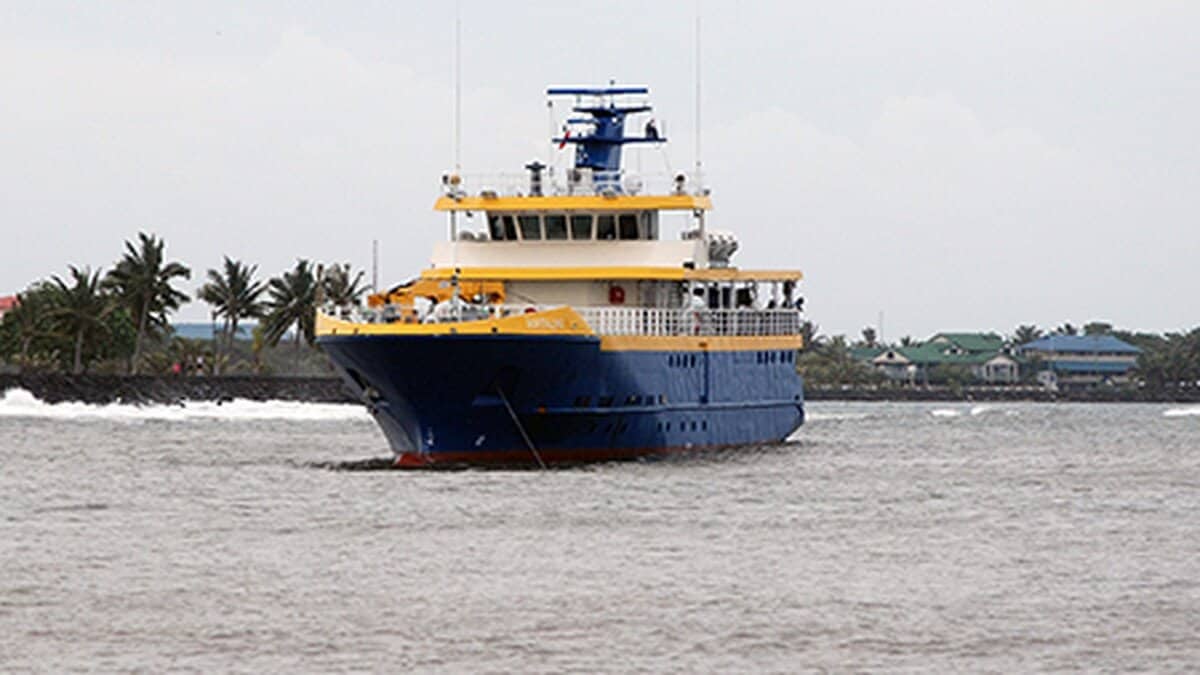
Tokelau begins September 2026 with a tourism constraint. Tokelau has no airport and international access to Tokelau is available by sea through Apia. The government‑owned Mataliki can carry up to sixty passengers internationally on a schedule that’s about every two weeks. New Zealand is backing work on an inter‑atoll vessel but that project does not increase the scheduled inbound capacity, from Samoa. Meanwhile, the latest visible official procurement for proposed air infrastructure on Nukunonu remains conditional. For the travel trade, reliable maritime inventory therefore remains the immediate barrier to scaling Tokelau tourism.
Tokelau Tourism Has a Distribution Problem Before It Has a Demand Problem
Tokelau sits in an extraordinary position within Pacific tourism. According to the Government of Tokelau, the territory still has no established tourist industry. Most existing visitors are Tokelauans or people of Tokelauan descent travelling from places including New Zealand, Australia and Hawaii.
That fact changes the normal tourism-development equation.
A destination can build rooms, promote experiences and seek new markets, but international visitors still require a dependable way to arrive. Tokelau currently has no airport. Official visitor guidance requires travellers to reach Apia in Samoa and continue by sea. The boat journey normally takes about 24 to 32 hours depending on the destination atoll.
Advertisement
Advertisement
The Government of Tokelau states separately that international access is available only by sea through Apia. Passenger services are provided by Mataliki, while cargo and freight are handled by Kalopaga.
Advertisement
Advertisement
This makes maritime capacity much more than a transport statistic. It is effectively the gateway through which any conventional international visitor economy must currently pass.
The Verified Tokelau Tourism Access Picture
| Tourism access factor | Official position as of 8 September 2026 | Significance for travel sellers |
|---|---|---|
| International access | Available only by sea via Apia, Samoa | Every conventional international itinerary requires a Samoa-to-Tokelau maritime connection. |
| Airport | Tokelau has no operational airport | Air-inclusive Tokelau packages cannot currently terminate in Tokelau. |
| Main passenger ship | Government-owned Mataliki | It forms the core scheduled passenger connection between Apia and Tokelau. |
| International passenger capacity | Up to 60 passengers | This is regular vessel capacity, not a dedicated allocation of 60 tourist seats. |
| Inter-atoll Mataliki capacity | Up to 120 passengers | Domestic carrying capacity differs materially from the international limit. |
| Published frequency | Approximately fortnightly | The destination cannot presently support the arrival flexibility associated with daily or multiple-weekly aviation gateways. |
| Journey to Fakaofo | Approximately 24 hours from Apia | Travel time itself becomes a product consideration. |
| Fakaofo to Nukunonu | Around another 3.5 hours | Multi-atoll itineraries require substantial additional sea time. |
| Nukunonu to Atafu | Around another 6 hours | Northern access further extends itinerary duration. |
| Mataliki round journey | Around 4 to 10 days depending on activities | A sailing is part of a wider operational cycle rather than a simple point-to-point ferry rotation. |
The 60 Passenger Number Is a Bottleneck but Not a Hard Tourism Ceiling
The distinction is important for accurate tourism reporting.
Mataliki can carry up to 60 passengers internationally. However, those places are not exclusively tourist inventory. The vessel supports Tokelau’s wider movement needs and can also be used for medical evacuations, search and rescue and emergency support. The government says unplanned medical evacuations can disrupt schedules and leave passengers waiting until the vessel completes its return journey to Apia.
The same official transport information also states that Samoa Shipping Company vessels may provide additional charters during peak travel periods between Apia and Tokelau.
Therefore, 60 passengers should not be described as an absolute legal or physical annual ceiling on Tokelau tourism.
Advertisement
Advertisement
It is better understood as the capacity of Tokelau’s principal scheduled international passenger vessel. For a tour operator attempting to build repeatable packages, that scheduled capacity is commercially more relevant than exceptional charter capacity.
This distinction creates the new tourism angle: Tokelau currently lacks deep, frequent and easily scalable bookable international transport inventory even before visitor demand reaches the point at which large accommodation expansion becomes necessary.
A New Inter Atoll Vessel Is Advancing but It Does Not Solve International Access
There is, however, a significant transport programme under way.
According to the New Zealand Government Electronic Tender Service, New Zealand’s Ministry of Foreign Affairs and Trade and the Government of Tokelau are working together on a new inter-atoll vessel designed to improve services between Fakaofo, Nukunonu and Atafu.
The project covers the design, procurement and delivery of a vessel intended to support more reliable, safe, comfortable and accessible inter-atoll transport. Its project-management scope also extends to schedules, fare structures and maintenance planning.
Advertisement
Advertisement
The technical project-management procurement was awarded to TSA Riley Limited on 14 November 2025 for a two-year contract, and the GETS record was updated on 26 January 2026.
That is meaningful for tourism.
Better inter-atoll transport could make multi-stop itineraries easier to structure after travellers reach Tokelau. It could improve circulation between the three communities and potentially strengthen the practicality of longer cultural or special-interest journeys.
But it is essential not to confuse domestic connectivity investment with additional inbound access. The procurement specifically concerns transport between Tokelau’s three atolls. It does not state that Mataliki’s international 60-passenger capacity between Apia and Tokelau will increase.
Where Current Transport Investment Actually Changes Tourism
| Development | Verified status | Potential tourism impact | What it does not yet establish |
|---|---|---|---|
| New inter-atoll vessel | Project-management contract awarded for two years | Could improve reliability, comfort and movement between Fakaofo, Nukunonu and Atafu | Additional international capacity from Apia |
| Nukunonu airfield concept | Air services and infrastructure have been under official consideration | Could fundamentally alter access if eventually approved, built and served | An operational airport or confirmed airline service |
| 2025 construction advance notice | Completed procurement notice | Demonstrates that runway and terminal construction were formally contemplated | Confirmation that construction subsequently entered delivery |
| Current GETS Tokelau procurement search | Still shows the 2025 air-services notice alongside older airfield procurements | Gives the travel trade a current official procurement reference point | A newer visible Nukunonu construction RFP in the current Tokelau search results |
Nukunonu Air Access Cannot Yet Be Sold as Tokelau’s Tourism Breakthrough
The proposed airfield deserves particular caution.
Advertisement
Advertisement
The New Zealand Government issued an advance procurement notice in September 2025 covering prospective construction of airfield infrastructure on Nukunonu, including a runway and airport terminal.
Yet the wording was explicitly conditional. The notice said the possibility of establishing air services was under consideration and made a subsequent request for proposals dependent on the project receiving necessary approvals.
A review of the current GETS results for Tokelau on 8 September 2026 shows the September 2025 air-services construction advance notice together with earlier airfield procurement records. It does not show a newer Nukunonu airfield construction RFP in those Tokelau search results.
That does not prove the project has been cancelled.
It does mean that travel companies should not build future Tokelau products around an assumed opening date, airline route or airport capacity unless a subsequent official announcement establishes those facts.
Advertisement
Advertisement
For now, maritime access through Apia remains the verified operating reality.
Apia Is More Than a Transit Point in the Tokelau Visitor Journey
Apia consequently functions as the practical international gateway for Tokelau tourism.
The Samoa Ports Authority identifies Apia International Port as Samoa’s sole commercial port. For Tokelau visitors, the more important connection is established by Tokelau’s own government, which directs travellers through Apia for the onward sea journey.
Travel agents must therefore account for Samoa entry formalities when structuring an itinerary.
According to Samoa’s Ministry of the Prime Minister and Cabinet, foreign visitors eligible for a visitor permit on arrival must satisfy entry requirements including appropriate passport validity, a return or onward ticket, accommodation arrangements and evidence of sufficient funds.
Advertisement
Advertisement
The commercial consequence is clear. A Tokelau booking is not merely a ferry reservation. It is a multi-stage international itinerary connecting aviation into Samoa with maritime transport onward from Apia, plus accommodation and contingency planning around a sailing schedule that is subject to operational change.
Public Sailing Visibility Adds Another Layer of Booking Risk
A particularly important finding for the travel trade appears on Tokelau’s own government homepage.
As checked on 8 September 2026, the government homepage still prominently links a Tentative Annual Sailing Schedule covering January to May 2024, even though current transport information describes Mataliki as operating approximately fortnightly.
This does not mean there have been no subsequent sailings or operational schedules. The government transport page clearly says the service operates fortnightly.
It does mean agents should not regard the static public timetable link as sufficient evidence for a 2026 booking.
Advertisement
Advertisement
Tokelau’s official visitor FAQ instructs travellers seeking boat bookings and tentative schedules to contact the transport service directly.
For B2B distribution, that difference matters. Transport capacity can exist physically while remaining difficult to package at scale if inventory, dates and contingencies cannot be treated like conventional real-time tourism distribution.
Accommodation Is Limited but It Is Not the Only Constraint
Tokelau’s accommodation base is unquestionably small.
Official visitor information says accommodation is available through private village guest houses or homes. The government FAQ identifies the Luana Liki Hotel on Nukunonu, while stating that Atafu and Fakaofo do not currently have hotels and instead offer guest accommodation that should be arranged before arrival.
That limited room supply will matter if tourism expands.
Advertisement
Advertisement
Yet adding beds alone would not remove the access constraint. New accommodation would still depend on travellers obtaining places on an infrequent international maritime connection.
Historical context reinforces this relationship. Tokelau’s 2010–2015 National Strategic Plan identified isolation and insufficient infrastructure as reasons tourism had developed only minimally and linked any future tourism growth to appropriate transport, communications, accommodation and community capacity. The plan is historical rather than a current 2026 policy document, but it demonstrates how long connectivity has sat at the centre of Tokelau’s tourism-development challenge.
Analysis Why Tokelau’s Tourism Development Sequence Is Reversed
Tokelau presents a reverse version of the tourism-capacity problem seen in many island destinations.
Established destinations often attract visitors first and then encounter pressure on hotels, airports, roads or local communities. Tokelau starts much earlier in that chain. Its government still describes the territory as having no established tourism industry, while the international transport system supplies only a small, approximately fortnightly scheduled maritime pathway.
That makes reliably sellable access the scarce tourism resource.
Advertisement
Advertisement
Even a substantial increase in accommodation would not automatically produce additional arrivals because it would not create more scheduled international passenger capacity. Conversely, the planned inter-atoll vessel could improve the experience and operational resilience of a Tokelau itinerary after arrival without removing the Apia gateway constraint.
For travel businesses, the near-term opportunity is therefore unlikely to resemble conventional volume island tourism. Tokelau is structurally better suited to carefully managed, small-scale, longer-stay and specialist travel until international access becomes more frequent or gains another transport mode.
Any eventual Nukunonu air service could transform that equation. But until approval, construction, certification, route planning and commercial air services are formally established, aviation remains a future possibility rather than tourism inventory.
Critical Actions for Travel Agents and Tour Operators
- Confirm every sailing directly before selling. Do not build a September 2026 itinerary solely around the older timetable currently linked on the government homepage.
- Treat 60 passengers as Mataliki’s international vessel capacity, not 60 guaranteed tourist places. Other passenger and government requirements use the same transport system.
- Build schedule flexibility into Apia stays. Official transport information confirms that medical evacuations and other operational requirements can alter sailing plans.
- Pre-arrange accommodation. Guest accommodation is central to the existing visitor model, particularly outside Nukunonu.
- Check Samoa entry documentation separately. Tokelau itineraries begin operationally through the Samoan gateway and visitors must satisfy applicable Samoan entry requirements.
- Do not market a Nukunonu airport as confirmed infrastructure. Current official procurement evidence establishes consideration and planning, not an operational airport or confirmed opening date.
- Avoid high-volume group commitments without transport confirmation. Additional Samoa Shipping Company charters can be used at peak periods, but they should not be assumed as permanently available scheduled tourist capacity.
- Watch the inter-atoll vessel programme closely. Its two-year project-management contract could materially improve itinerary design between Fakaofo, Nukunonu and Atafu even though it does not directly expand international arrivals.
Tokelau’s Long Term Tourism Opportunity Will Be Decided by Connectivity Before Scale
Tokelau does not presently need mass-tourism demand to expose its most important structural challenge. The constraint is already visible in the architecture of the journey.
Visitors must reach Samoa, connect through Apia, secure maritime passage and then spend many hours travelling across the Pacific before reaching individual atolls. The main ship that handles travelers can hold up to 60 people while the current official funding is working on another boat that will connect different islands within the country.
Advertisement
Advertisement
At the time Nukunonu is still a key part of long-term plans for flying but there is no clear evidence yet that shows when the airport will be built or when there will be a regular airplane service.
This leaves Tokelau with an order, for developing tourism as of September 8 2026: first make sure there is a good way to get there then make it easier to move between the islands then make it simpler to track and send things around then build places to stay carefully and only after that think about increasing the number of visitors.
For the people who work in travel this might be exactly what makes Tokelau important. It is a place where tourism ability can be checked before a lot of people arrive giving a chance to plan future visitors based on the buildings the rules of the community and how well things work, instead of trying to fix everything after too many people have already come.
Advertisement
