
Germany Along With France and Others Faces a European River Cruise Crisis as Rhine, Danube and More Rivers Hit Low Water Levels in 2026

Published
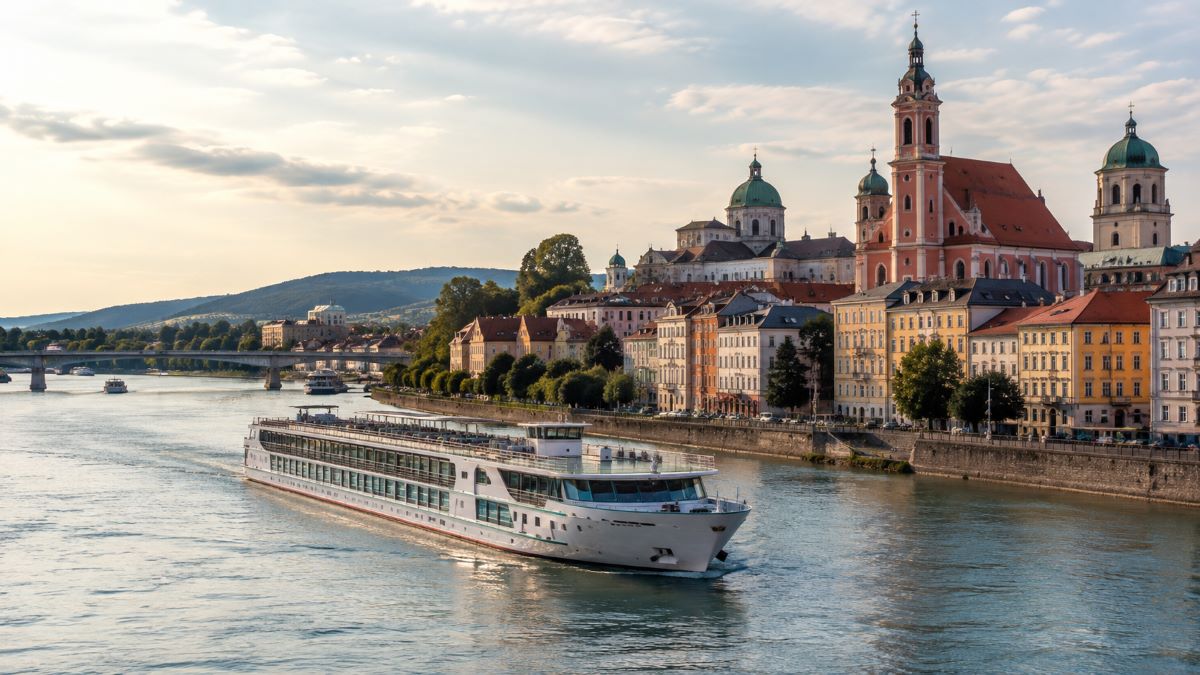
Image generated with Ai
Germany along with France and others faces a European river cruise crisis in 2026 as Rhine, Danube and more rivers hit low water levels, creating navigation challenges, itinerary changes and operational pressure for cruise operators across major European waterways affected by prolonged dry conditions.
Europe’s celebrated river cruise network is facing a difficult 2026 season as Germany, Austria, Hungary, Romania, Bulgaria and parts of France confront low water conditions across the Rhine, Danube and other waterways. The disruption has exposed how vulnerable multi-country cruises can become when prolonged dry weather and summer heat reduce navigable river depths.
Advertisement
Advertisement
Germany has emerged as one of the most important pressure points. The Rhine around Kaub has experienced exceptionally low gauge readings, while the Upper Danube has also faced navigation challenges. Austria has reported unusually low Danube conditions through the Wachau and east of Vienna. Hungary has experienced severe low water around the Danube, while Romania and Bulgaria have faced major pressure farther downstream.
France presents a more complex picture. Its major managed waterways have generally shown greater resilience than the hardest-hit sections of the Rhine and Danube, although drought has also produced restrictions on some French canals. The result is not a uniform European shutdown, but a country-by-country river cruise crisis requiring ship swaps, coaches, altered ports and flexible itineraries.
Advertisement
Advertisement
Germany Emerges as a Major Battleground for Rhine River Cruises
Germany sits at the center of the crisis because some of Europe’s most important river cruise itineraries pass through the country. The Rhine and Danube together connect Germany with the Netherlands, Switzerland, Austria, Hungary and destinations farther into Eastern Europe. On the Rhine, the most serious pressure has centered around Kaub, a critical navigation reference point on the Middle Rhine. During August, the gauge fell below 10 centimeters at one stage, compared with the previous record low of 25 centimeters recorded in 2018. Rain subsequently improved conditions, but restrictions continued to affect vessels requiring greater navigable depth.
Advertisement
Advertisement
Kaub Creates a Critical Break in the Rhine Cruise Corridor
The significance of Kaub extends far beyond one German riverside community. It sits within a crucial section of the classic Rhine tourism corridor linking Amsterdam, Cologne, Koblenz, the Middle Rhine, Strasbourg and Basel. When the navigable channel becomes too shallow, some vessels cannot safely cross the affected stretch even when conditions remain suitable elsewhere. That can effectively split a long cruise itinerary into two sections. The tourism consequences are substantial because the Middle Rhine is one of Europe’s signature cruising landscapes, combining castles, vineyards, medieval settlements and the Lorelei. Low water therefore threatens not only transportation but a central part of the passenger experience.
Ship Swaps Become the Rhine’s Emergency Solution
River cruise companies have increasingly turned to ship swaps to keep passengers moving when vessels cannot navigate a shallow section.
The system can involve:
Advertisement
Advertisement
- Sailing normally to the navigable limit
- Disembarking passengers from the first vessel
- Moving travelers by coach around the affected section
- Boarding a sister ship downstream
- Continuing the remaining cruise itinerary
- Adjusting excursions and docking locations where necessary
Operators with several similar vessels have an important advantage because ships can be positioned on opposite sides of a bottleneck. For travelers, this can prevent complete cancellation. However, the holiday may include more coach travel and less actual river cruising than originally expected.
Germany’s Upper Danube Adds a Second Major Problem
Germany is also vulnerable on the Upper Danube, where routes through Regensburg and Passau connect with Austria and Central Europe. This corridor forms the opening section of many popular cruises continuing towards Melk, Vienna, Bratislava and Budapest.
Advertisement
Advertisement
Longer journeys can continue through Serbia, Bulgaria and Romania.
That interconnected network means low water in Germany can create consequences far downstream. Passau is particularly important because it serves as a major embarkation and transit point for Danube cruises.
When water becomes too shallow, operators may need to change ports, move passengers overland or position another ship farther downstream. One difficult German section can therefore reshape an itinerary involving several European countries.
Austria Battles Low Water Through the Wachau Valley
Austria has experienced its own navigation difficulties along the Danube. During the most severe period, authorities reported exceptionally low water, with some free-flowing sections approximately 60 centimeters below long-term low-water levels.
Navigable water in the main channel was around 2 meters through parts of the Wachau, while conditions east of Vienna were around 1.8 meters at one stage.
Advertisement
Advertisement
These figures matter because the Austrian Danube is one of Europe’s premier river tourism corridors.
Cruise itineraries frequently connect Passau, Melk, Dürnstein, Vienna, Bratislava and Budapest, allowing travelers to experience monasteries, vineyards, historic settlements and major capitals during a single journey.
Wachau Shows the Limits of Luxury River Cruising
The Wachau Valley demonstrates an unavoidable reality for the river cruise industry: even the most advanced vessel cannot sail without sufficient water beneath its hull.
The region around Melk, Dürnstein and Krems is among Austria’s most recognizable river tourism areas. When water levels become problematic, cruise companies can still preserve excursions by transferring passengers overland.
Travelers may continue visiting monasteries, vineyards and historic towns even when their ship cannot reach every scheduled port.
Advertisement
Advertisement
But that creates a different holiday experience. What was sold as a continuous river journey can temporarily become a combination of ship, coach and land-based touring.
Hungary Faces Severe Pressure Around Budapest
Hungary has experienced some of the most dramatic consequences of the low-water period, with exposed sandbanks and exceptionally shallow conditions appearing along sections of the Danube.
The situation is particularly important because Budapest is one of Europe’s most valuable river cruise destinations.
The Hungarian capital frequently serves as an embarkation, disembarkation or turnaround point. Westbound itineraries connect Budapest with Bratislava, Vienna, Melk, Passau and Germany. Eastbound cruises can continue towards Serbia, Bulgaria and Romania.
This makes Budapest much more than a single port call. Navigation difficulties in Hungary can affect the structure of an entire Central or Lower Danube itinerary.
Advertisement
Advertisement
Budapest Remains a Tourism Highlight Even When Ships Struggle
Budapest’s relationship with the Danube makes low water particularly visible to visitors.
The city’s famous riverfront brings together the Hungarian Parliament, Buda Castle, Chain Bridge and historic embankments, making arrival by ship an important part of the tourism experience.
Low water does not necessarily stop every vessel. Ships have different drafts, and smaller sightseeing vessels may continue operating when larger cruise ships encounter difficulties.
For international cruise passengers, however, exceptionally low water can mean altered docking locations, shorter sailing sections, timetable changes or coach transfers.
Budapest may remain firmly on the itinerary even when the journey into the city cannot be completed exactly as originally planned.
Advertisement
Advertisement
Romania Sees Danube Water Levels Fall to a Three-Decade Low
Romania has faced one of the most serious hydrological situations along the Lower Danube.
During the crisis, Danube levels fell to their lowest since 1996, affecting shipping, agriculture and tourism.
Water flow where the Danube enters Romania fell to around 1,700 cubic meters per second, compared with a normal July average of approximately 4,700 cubic meters per second.
That represents a major reduction for a river supporting both commercial shipping and international passenger vessels.
Romania is particularly important to longer river cruises because itineraries can connect Central Europe with Bucharest, the Danube Delta and the wider Black Sea region.
Advertisement
Advertisement
Lower Danube Cruises Face a Cross-Border Chain Reaction
The Lower Danube creates a different operational challenge because a single itinerary can cross numerous countries before reaching Romania.
Long-distance routes may include:
- Budapest
- Mohács
- Belgrade
- Iron Gates
- Vidin
- Ruse
- Giurgiu
- Bucharest
- Danube Delta extensions
The Danube runs approximately 2,860 kilometers towards the Black Sea, making it one of Europe’s great international waterways.
Cruise operators therefore have to monitor numerous river gauges, ports and navigation channels. Conditions can be suitable at the start of a journey and considerably worse hundreds of kilometers downstream.
That uncertainty makes long Danube cruises particularly complicated during sustained drought.
Advertisement
Advertisement
Bulgaria Faces Extreme Low Water Around Ruse
Bulgaria has also experienced exceptional Danube conditions.
At Ruse, one of the country’s most important river ports, the gauge fell to around minus 123 centimeters relative to its local reference level during August.
A negative gauge reading does not mean the river itself is only that deep. The measurement represents water relative to a predetermined local datum. Nevertheless, such readings demonstrate the severity of the low-water conditions.
Navigation restrictions were required along sections of the Bulgarian Danube, creating difficulties for commercial and passenger vessels.
Ruse is particularly significant to cruise tourism because it serves as a major gateway for travelers connecting between Danube vessels and Bucharest.
Advertisement
Advertisement
Different Ships Face Different Risks on Bulgaria’s Danube
Bulgaria demonstrates why low water does not automatically close an entire river.
The crucial factor is often vessel draft.
A smaller or shallower ship may be capable of navigating a stretch that a larger or more heavily loaded vessel cannot safely cross.
This means cruise companies operating similar itineraries can make different decisions on the same day.
Conditions around areas such as Belene and Batin have highlighted the difficulty of navigating the Bulgarian stretch during severe low water.
Advertisement
Advertisement
For passengers, the result can be confusing. One cruise may continue, another may require a ship swap and a third may alter its route entirely—all because the vessels have different operating requirements.
France Faces Drought but Major Cruise Rivers Show Greater Resilience
France is part of Europe’s wider low-water story, but its experience differs substantially from the hardest-hit Rhine and Danube countries.
Major French waterways benefit from extensive locks, reservoirs, dams and managed navigation infrastructure. These systems can provide authorities with greater control over water conditions.
France has not been completely protected. Some canals have experienced restrictions and temporary closures because of insufficient water resources.
However, major river cruise corridors have generally avoided disruption on the scale seen at critical locations in Germany, Austria, Hungary, Romania and Bulgaria.
Advertisement
Advertisement
This makes France an important comparison when examining how infrastructure can influence the resilience of river tourism during prolonged drought.
Seine Rhône and Saône Provide Important Alternatives
France’s Seine, Rhône and Saône offer some of Europe’s most established alternatives to Rhine and Danube cruising.
Seine itineraries commonly connect Paris, Rouen, Normandy and communities along the river, while Rhône and Saône journeys can combine Lyon, Burgundy, Avignon, Arles and Provence.
These routes offer travelers a different mix of cities, vineyards, gastronomy, heritage and countryside.
Managed waterways cannot eliminate the effects of drought, but locks and water-control infrastructure can give operators more flexibility than on some free-flowing sections of Europe’s major rivers.
Advertisement
Advertisement
For travelers concerned about low-water disruption, the structure of the waterway itself is increasingly becoming part of the itinerary decision.
How Europe’s 2026 Low-Water Crisis Is Affecting Major Cruise Countries
| Country | Critical River or Area | 2026 Condition | Main Cruise Impact |
|---|---|---|---|
| Germany | Rhine at Kaub | Gauge below 10 cm at one stage | Ship swaps, coaches and route changes |
| Germany | Upper Danube | Abnormally low water | Itinerary modifications |
| Austria | Wachau Danube | Around 2 m navigable channel | Navigation restrictions |
| Austria | East of Vienna | Around 1.8 m navigable channel | Vessel draft constraints |
| Hungary | Danube around Budapest | Exceptionally low conditions | Docking and itinerary pressure |
| Romania | Lower Danube | Lowest levels since 1996 | Tourism and shipping disruption |
| Romania | Danube inflow | 1,700 m³/s versus 4,700 m³/s normal July average | Severe navigation pressure |
| Bulgaria | Ruse | Around -123 cm against local reference | Vessel draft restrictions |
| France | Seine Rhône and Saône | Generally more resilient | Most major routes maintained |
| France | Selected canals | Local drought pressure | Restrictions and some adjustments |
Rhine and Danube Itineraries Face Major Changes
The crisis matters because the Rhine and Danube support some of the world’s most recognizable river cruise itineraries.
Classic Rhine Route
A typical journey can follow:
Amsterdam → Cologne → Koblenz → Middle Rhine → Strasbourg → Basel
The Kaub bottleneck sits directly within this important tourism corridor.
Advertisement
Advertisement
Upper and Central Danube Route
A traditional Danube itinerary can connect:
Regensburg → Passau → Melk → Vienna → Bratislava → Budapest
Low water in Germany or Austria can therefore affect several destinations during one holiday.
Lower Danube Route
Longer journeys can continue:
Budapest → Belgrade → Iron Gates → Vidin → Ruse → Giurgiu → Bucharest
Advertisement
Advertisement
Some cruises extend towards the Danube Delta and Black Sea region.
These itineraries demonstrate why a problem affecting a relatively short stretch of river can have consequences across several countries.
Cruise Companies Turn to Ship Swaps Coaches and Flexible Fleets
The 2026 crisis has made contingency planning almost as important as itinerary design.
Cruise companies can respond with:
- Ship swaps using sister vessels
- Coach transfers around shallow sections
- Alternative embarkation ports
- Different disembarkation locations
- Replacement hotel accommodation
- Modified shore excursions
- Shortened sailing sections
- Alternative docking points
- Future cruise credits in selected circumstances
- Cancellation when no workable alternative remains
Companies operating larger fleets have a particular advantage because they can position ships on different sides of a navigation bottleneck.
Advertisement
Advertisement
The approach can preserve most of a holiday, but it cannot always preserve the exact river cruise originally advertised.
Low Water Changes What Travelers Need to Know Before Booking
Europe’s 2026 conditions have introduced another layer of planning for river cruise passengers.
Travelers may increasingly want to ask:
- Does the cruise company have sister ships available?
- Can passengers be transferred between vessels?
- What happens when a river section becomes unnavigable?
- Are replacement coaches included?
- Can the embarkation port change?
- What compensation applies when sailing days are lost?
- Are excursions maintained after itinerary changes?
- What does travel insurance cover?
- Can passengers cancel if major modifications occur?
These questions are particularly relevant for long itineraries crossing several countries because every additional river section creates another potential point of disruption.
European River Cruising Faces a Major Climate and Operational Test
The 2026 low-water crisis does not mean European river cruising is coming to a halt.
Advertisement
Advertisement
Far from it.
The Rhine and Danube remain among the world’s most important tourism waterways, while France’s Seine, Rhône and Saône continue to support major cruise programs.
What has changed is the level of operational uncertainty.
River conditions can improve rapidly after rain and deteriorate again during another prolonged dry spell. A cruise operating normally one week may require significant changes later.
Germany, Austria, Hungary, Romania and Bulgaria demonstrate how a single river system can produce radically different problems as it moves across Europe. France demonstrates how managed infrastructure can provide greater resilience, although it cannot remove drought risk completely.
Advertisement
Advertisement
For travelers, the implications are increasingly clear.
Choosing a European river cruise in 2026 is no longer simply about finding the most attractive ship, cabin or collection of destinations. The resilience of the cruise operator, availability of sister ships, flexibility of the itinerary and vulnerability of the river itself have become important parts of the booking decision.
Europe’s castles, vineyards, medieval towns and historic capitals remain as compelling as ever. But the low-water crisis has introduced a new reality: on the Rhine, Danube and other European waterways, the journey printed in the brochure may increasingly represent the intended route rather than a guarantee that every mile will be traveled by ship.
Germany along with France and others faces a European river cruise crisis in 2026 as Rhine, Danube and more rivers hit low water levels, forcing cruise operators to adjust routes, manage ship changes and respond to navigation challenges across key European waterways.
In conclusion, Germany along with France and others faces a European river cruise crisis in 2026 as Rhine, Danube and more rivers hit low water levels, creating navigation challenges, itinerary disruptions and operational pressure for cruise operators. The situation highlights how changing water conditions across Europe’s major waterways are forcing the river cruise industry to adapt while protecting passenger experiences through flexible routes and contingency planning.
Advertisement
