
Bangkok and More Cities Lead ASEAN’s Digital Travel Revolution as QR Payments and Biometric Borders Transform Tourism

Published
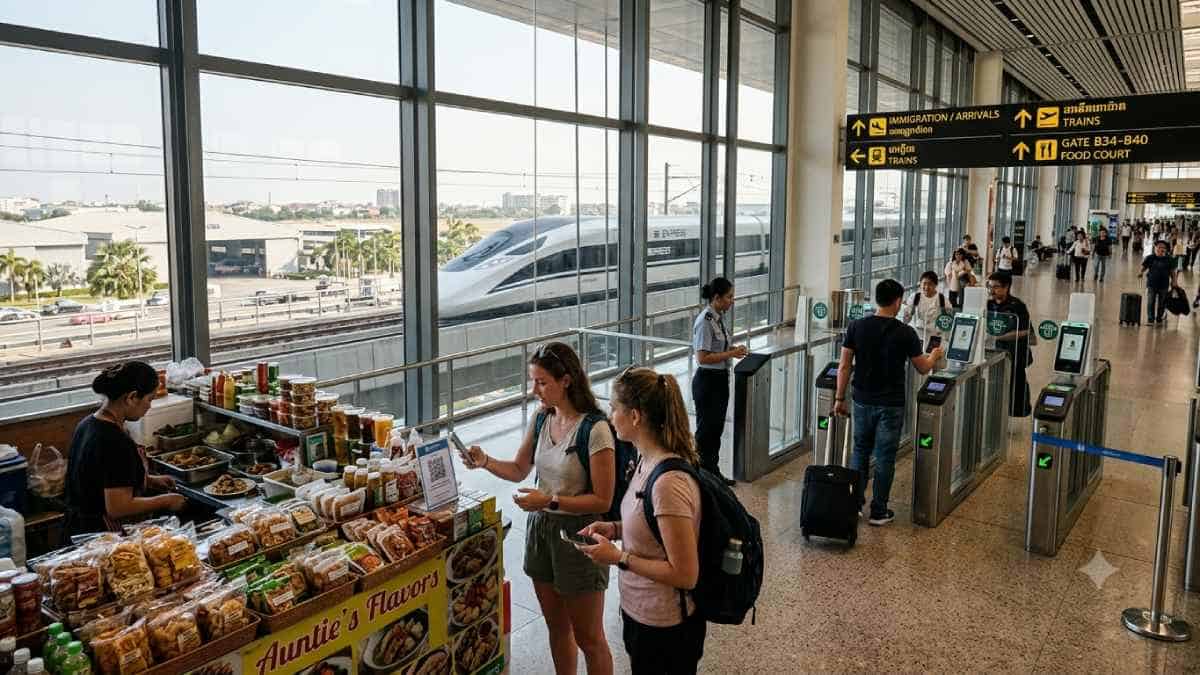
There are new regional rules under of the operational restructuring of Southeast Asian mobility, as movements, as spends, as experiences become reallocated for the international visitor. Low and free regional visa regimes, multi-modal transit, biometric border automation are all replacing abstract processes with a seamless regional corridor. Embedded in this structural reconfiguration is the ASEAN cross-border payment interoperability, of real-time settlements across central bank switches enabled through mobile wallets. As direct capital injections into local economies enable aircraft hubs to be by-passed by land-rail connections and the more granular yield management enabled through the algorithmic logic of distribution systems, travelers exist at the center of a dispersed & digitized travel ecosystem of places both big & small.
The Transformation of Southeast Asian Mobility Infrastructure
Historically, the travel architecture of Southeast Asia was structured around a centralized aviation gateway model. Primary air hubs, such as Singapore Changi Airport and Kuala Lumpur International Airport, were utilized by incoming international travelers before regional destination networks were accessed. However, regional passenger routing dynamics have been altered by the introduction of cross-border overland transit corridors, particularly the Pan-Asian High-Speed Railway network anchored by the China-Laos Railway. High-speed rail corridors extending through Luang Prabang to Vientiane are being leveraged by outbound passengers departing from Southwestern Chinese urban centers, such as Yunnan and Sichuan provinces. At Nong Khai, Thailand, the Mekong River border is crossed from the Laotian capital, after which connections are made directly into domestic rail grids or regional low-cost carrier flight routes.
Advertisement
Advertisement
Through this overland rail-to-air bridge, conventional, high-cost international gateways are circumvented. Substantial reductions in travel expenditures and overall transit times are achieved by avoiding peak-hour air congestion, elevated landing charges, and ground handling tariffs associated with primary metropolitan hubs. A high-throughput transit channel has been established via the integration of overland rail lines, multimodal corridors, and budget aviation, serving as a primary feeder mechanism for secondary urban centers across Indochina and Peninsular Malaysia.
Emergence of Secondary Transit Gateways
To capture these decentralized passenger streams, specialized sister hubs are being developed across secondary Southeast Asian gateways. Rather than direct competition being mounted against primary capital gateways on long-haul capacity, unique multimodal geographic positions are utilized:
Advertisement
Advertisement
- Da Nang (Vietnam): Operated as the central maritime, air, and highway gateway for the East-West Economic Corridor, connecting landlocked Lao PDR and Northeastern Thailand to shipping channels and regional budget flight networks.
- Penang (Malaysia): Functioned as a sub-regional transit node by linking short-haul ferries and railway connections from Southern Thailand into northern low-cost air operations.
- Luang Prabang (Laos): Utilized as a primary rail-to-air feeder station along the Kunming–Vientiane corridor, allowing overland passenger arrivals to be converted into short-haul flight links across ASEAN capitals.
Narrow-body aircraft are being redeployed by regional carriers to point-to-point routes, allowing primary airport bottlenecks to be bypassed. As a consequence, accelerated economic activity is experienced across secondary urban centers as foreign expenditures are dispersed into non-metropolitan economies rather than being restricted to capital cities.
FinTech Interoperability and National Payment Switches
In parallel with physical infrastructure, an advanced cross-border retail payment network has been established across Southeast Asia. Under the Regional Payment Connectivity initiative led by regional central banks, legacy credit card rails have largely been bypassed in favor of direct, account-to-account mobile wallet transactions. Digital payment transaction volumes have expanded substantially across the region.
Advertisement
Advertisement
The cross-border architecture is sustained by bilateral and multilateral linkages connecting national fast payment switches. Local unified Quick Response codes can be scanned by foreign travelers using domestic banking or e-wallet applications, enabling real-time foreign currency settlements to be executed at transparent wholesale exchange rates.
| Country | Unified National QR Standard | Governing Authority & System Operator | Cross-Border Linkages Activated |
| Thailand | Thai QR Payment (PromptPay) | Bank of Thailand / National ITMX | Cambodia, Vietnam, Malaysia, Singapore, Indonesia, Laos |
| Malaysia | DuitNow QR | Bank Negara Malaysia / PayNet | Thailand, Singapore, Indonesia, Cambodia |
| Indonesia | QRIS | Bank Indonesia | Thailand, Malaysia, Singapore, South Korea, Japan, China |
| Singapore | SGQR+ / NETS QR | Monetary Authority of Singapore / IMDA | Thailand, Malaysia, Indonesia |
| Vietnam | VietQR | State Bank of Vietnam / NAPAS | Thailand, Cambodia, Laos, China, Singapore |
| Cambodia | KHQR | National Bank of Cambodia / Soramitsu | Thailand, Laos, Vietnam, Malaysia |
| Laos | LAO QR | Bank of the Lao PDR | Cambodia, Thailand, Vietnam |
Mechanics of National Payment Interoperability
Unified national standards have been deployed by participating ASEAN economies, aggregating commercial banks and non-bank payment service providers into a coordinated system:
- Thailand and PromptPay: Regulated by the Bank of Thailand, PromptPay serves as the core of digital retail settlements. To allow visitors without domestic accounts to utilize these rails, prepaid tourist card services have been introduced by platforms such as TAGTHAi in partnership with foreign exchange kiosks, enabling foreign currency to be linked directly to local QR rails. Furthermore, digital banking licenses were issued to major consortiums to support the expansion of the digital wallet ecosystem.
- Malaysia and DuitNow QR: Operated under Bank Negara Malaysia’s Interoperable Credit Transfer Framework by PayNet, DuitNow QR connects domestic bank applications and e-wallets directly with merchant networks across Thailand, Singapore, Indonesia, and Cambodia.
- Indonesia and QRIS: Developed by Bank Indonesia, standardized merchant acceptance has been mandated nationwide, allowing foreign visitors from linked partner nations to execute payments to local micro-enterprises directly through their native applications.
- Vietnam and VietQR: Administered by the National Payment Corporation of Vietnam, retail payment rails have been upgraded to standardize cross-border transactions, with regional linkages established alongside bilateral connections into China.
Economic Disintermediation and Capital Redistribution
The adoption of cross-border wallet interoperability is primarily driven by financial disintermediation. Traditional credit card payment processing involves multi-tiered intermediary chains—encompassing issuing banks, card networks, acquiring entities, and currency handlers—through which processing fees are extracted and merchants are subjected to settlement delays and currency spreads.
In contrast, mobile wallets are connected directly through real-time central bank exchange switches to merchant accounts via interoperable QR rails. Transactions are settled instantly at regulated rates, eliminating high intermediary surcharges. Micro-vendors, night market sellers, street food operators, and local transport drivers are enabled to accept foreign digital payments without credit card terminal hardware being installed. Centralized online travel agencies and multinational hotel chains are bypassed, allowing tourist expenditures to flow directly into informal urban economies and local accounts.
Furthermore, linkages are being extended beyond ASEAN borders. Bilateral cross-border QR implementations have been activated between Indonesia, South Korea, and Japan, while reciprocal mobile QR payment arrangements have been launched between Vietnam and China.
Digital Border Governance and Biometric Infrastructure
As transport corridors expand and payment friction decreases, paper-based border clearance procedures are being replaced by automated biometric border control installations. Destination competitiveness is increasingly evaluated based on transit processing speed.
Advertisement
Advertisement
Passport-less clearance procedures have been deployed across passenger terminals at Singapore Changi Airport by the Immigration & Checkpoints Authority, utilizing facial and iris biometrics to clear eligible travelers without physical passport inspection. Similar automated clearance systems are being implemented across major regional hubs:
- Kuala Lumpur International Airport: Automated biometric gates are being expanded for multi-national passenger processing.
- Suvarnabhumi and Don Mueang Airports: Pre-registered travelers are cleared rapidly via automated biometric gates.
- Denpasar Ngurah Rai Airport: Electronic Visa-on-Arrival portals have been integrated with automated passport control gates to streamline arrivals.
- Tan Son Nhat International Airport: Digital entry clearance mechanisms are being upgraded to handle expanding transit volumes.
Pre-Arrival Digital Declarations
Automated biometric clearance is supported by mandatory pre-arrival digital declaration platforms, where itinerary information, health declarations, and passport details are collected prior to departure.
The Malaysia Digital Arrival Card was implemented by the Immigration Department of Malaysia as part of the Visa Liberalisation Plan. Completion of the online declaration is required for most foreign travelers prior to arrival via official online channels or mobile applications without processing fees. Exemption categories are maintained for select travelers, including Singaporean citizens, diplomatic passport holders, permanent residents, and regional border pass holders.
Concurrently, entry policies are periodically adjusted. Multiple Entry Visas have been restricted to eligible nationalities, and automated photograph verification algorithms have been deployed across entry visa portals to confirm documentation compliance automatically.
Fraud Mitigation, AML-CFT Compliance, and Digital Identity Management
While passenger throughput is accelerated by real-time payments and automated borders, regulatory supervision is maintained regarding financial fraud, cybercrime, and identity misrepresentation. It has been highlighted by central banking officials that the velocity of fraudulent transactions across borders can be increased by accelerated payment switches.
To counteract cross-border financial crime, Anti-Money Laundering and Counter-Financing of Terrorism protocols are enforced by regulatory authorities. Automated Know Your Customer verification, real-time transaction screening, and inter-bank fraud reporting mechanisms are implemented to ensure suspicious capital transfers are identified and isolated without legitimate spending being disrupted.
Advertisement
Advertisement
Compressed Booking Cycles and Algorithmic Hospitality Dynamics
Traveler booking behavior has been fundamentally reshaped by the removal of visa barriers, the implementation of digital clearance platforms, and the adoption of instant payments. Leisure trips that were once organized months in advance are being replaced by spontaneous, short-horizon micro-vacations.
Trips are increasingly arranged by regional travelers based on immediate schedule availability, local weather conditions, or trending media. Weekend journeys can be finalized shortly before departure, with reservations completed via mobile applications, entry registrations submitted online, and destinations reached with minimal lead time.
Hourly Yield Optimization and Dynamic RevPAR Strategies
Legacy thirty-day revenue forecasting frameworks have been challenged by the compression of booking lead times. Historical occupancy curves are inadequate for managing rapid demand surges caused by short-horizon travel patterns.
In response, real-time algorithmic revenue management systems have been adopted by regional hotel operators. Room rates are updated dynamically based on real-time data inputs:
- Search volumes recorded across regional flight aggregators and travel super-apps.
- Aggregated mobile wallet transaction and search patterns originating from primary source markets.
- Local weather shifts, concert schedules, and public holiday calendars.
When sudden surges in travel interest are detected by algorithmic engines, room rates are adjusted automatically to optimize revenue per available room. Conversely, unreserved inventory is discounted via targeted mobile notifications close to the arrival date.
Airline Fleet Allocation and Shuttle Operations
Network management practices have similarly been adjusted by regional airlines to capture short-horizon demand. High-frequency shuttle services connecting primary and secondary hubs are increasingly utilized for aircraft scheduling. Rather than static seasonal timetables being maintained, narrow-body aircraft are redeployed dynamically to accommodate short-horizon passenger surges, allowing load factors and yields to be maximized.
Advertisement
Advertisement
The Bifurcated Tourist Economy and Mid-Market Compression
A structural division has emerged across regional tourism expenditure, resulting in a bifurcated market where conventional mid-market providers are placed under operational pressure:
- Experience-Driven Volume Segment: Prioritized by younger demographics, digital nomads, and budget-conscious travelers seeking local cultural immersion, street dining, and independent neighborhood exploration. Mobile wallets are predominantly utilized, with independent boutique properties and heritage accommodations preferred over conventional mid-scale hotels.
- High-Value Luxury and Wellness Segment: Characterized by affluent travelers and health-focused visitors seeking customized private services. Expenditure is concentrated in longevity clinics, specialized medical facilities, eco-resorts, and private transportation, with hubs such as Phuket, Chiang Mai, and Bali serving as primary centers.
- Squeezed Mid-Tier: Conventional mid-range chain hotels and fixed-itinerary group tour operators face significant margin pressure. Due to historical reliance on group bookings made far in advance, adjustments to shortened booking windows and shifting consumer patterns have proven difficult. Lacking both the cost flexibility of boutique establishments and the specialized infrastructure of luxury wellness destinations, compressed profit margins are experienced.
Direct capital distribution has been facilitated by decentralized transit nodes and interoperable QR rails. Expenditures that were once captured by international carriers, multinational hotel chains, and intermediary booking platforms are transferred directly from foreign mobile wallets to local bank accounts held by micro-merchants, local drivers, and homestay operators, enabling tourism revenue to be retained within local communities.
Policy Frameworks and Regional Outlook
The development of this frictionless regional corridor is supported by policies coordinated between central banks and government ministries. Inbound arrival volumes continue to be driven largely by short-haul regional travelers, with cross-border overland and budget air links providing steady visitor flows.
The Regional Payment Connectivity framework continues to be expanded by participating central banking authorities. These frameworks function alongside Local Currency Settlement agreements, whereby the utilization of domestic ASEAN currencies for bilateral trade and travel transactions is promoted, reducing structural reliance on intermediate global currencies. By settling payments directly in local currencies through official clearing channels, transaction risks and foreign exchange spreads are minimized, fostering regional financial stability and liquidity.
An integrated travel corridor is being established through the confluence of multimodal rail lines, digital border facilitation, real-time payment interoperability, and dynamic pricing systems. As FinTech partnerships are broadened to incorporate external partner economies, Southeast Asia’s model demonstrates how travel friction can be mitigated through digital infrastructure. Transport providers, hospitality operators, and policy planners are required to maintain continuous operational adaptation to ensure resilience amid compressed booking horizons and evolving payment technologies.
Conlusion
Integrated rail networks, biometric borders, and interoperable digital payments are transforming ASEAN’s tourism scene. They are alleviating frictions to travel and transactions that have traditionally concentrated regional tourists’ spend within main gateways, and redistributing them to secondary cities and local retailers. A connected tourism ecosystem like this could increase competitiveness regionally and boost innovation, agility, and economic inclusion.
Advertisement
