
France is Putting Wine Tourism in the Spotlight as Cognac Builds New Links to Unlock More Trips and Stays

Published
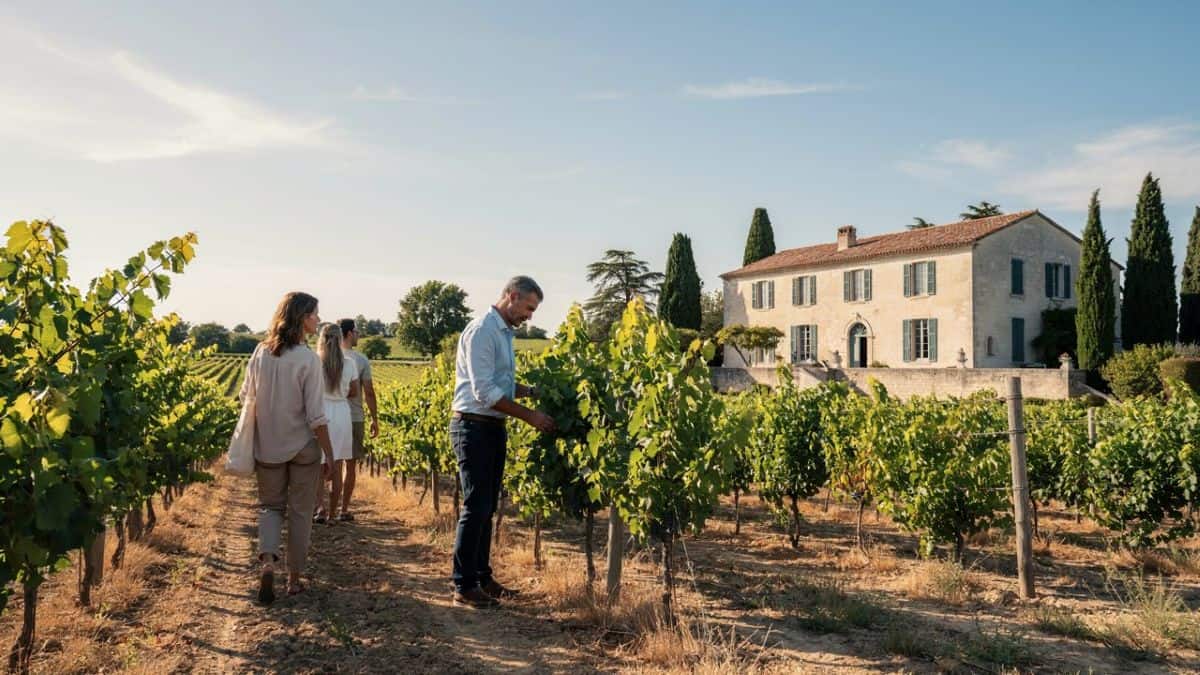
France’s national tourism agency brought 170 French exhibitors and 161 international buyers from 43 countries together in Cognac on 6–7 October 2026. The eleventh Destination Vignobles promoted Wine Tourism in Cognac through business meetings and organised destination visits. An official report published on 8 October confirmed record participation. The gathering matters to travel planners, accommodation providers and visitors interested in vineyard experiences. It created commercial contacts, but announced no entry-rule changes, new public travel package or measured increase in bookings.
Wine Tourism Evidence Establishes the Scope of the Story
The evidence concerns travel distribution, regional discovery and visitor experience development. The percentages below are an editorial assessment of the story’s emphasis, not official statistics, market shares or measured economic effects. They total 100% and separate the central announcement from background research.
Advertisement
Advertisement
| News Component | Share of Story | Officially Verified Finding | Relevance to Travellers | Official Source Link |
|---|---|---|---|---|
| Travel-trade development | 45% | October 2026: 170 exhibitors, 161 buyers, 43 countries and 4,860 scheduled meetings | Commercial contacts between suppliers and distributors | Official event report |
| Regional discovery | 25% | 19 discovery programmes, including nine in Nouvelle-Aquitaine | Travel professionals experienced destinations | Official event report |
| Innovation and accessibility | 20% | Winning projects from France, Slovenia and Germany | Recognition of environmental, creative and accessible experiences | Official competition results |
| National market context | 10% | 12 million vineyard tourists across France in 2023 | Historical demand, not an event outcome | Official visitor research |
The findings establish professional engagement and recognised innovation priorities. They do not establish higher visitor spending, completed contracts or additional overnight stays. Travellers should understand this as destination development, with individual booking arrangements and border requirements remaining separate.
A Completed Event With an Established International Role
The chronology starts in 2004, when the professional gathering began. It follows a biennial format, rotating between different French vineyard regions. The 2026 edition took place in Cognac, within the Charentes area of Nouvelle-Aquitaine. Destination visits preceded the business gathering, followed by the official results announcement on 8 October. As of 25 October 2026, this was a completed event. The reviewed release provided participation figures rather than a timetable for consumer product launches.
Advertisement
Advertisement
Its importance lies in connecting services that travellers usually need together. Estates, accommodation providers, restaurants, attractions and transport businesses can participate in the professional format. Their commercial discussions concern how individual experiences reach international customers. For hotels and rural businesses, the relevant opportunity is inclusion in wider itineraries. That is an interpretation of the event’s commercial purpose, not evidence that occupancy or sales increased. The announcement’s scale is international, while any eventual benefit must be assessed for individual destinations.
Understanding the Context Behind the Development
Wine Tourism in Cognac Connects Local Products and Travel Services
Official material describes commercial objectives rather than identifying a single cause for record attendance. Local participation centred on Cognac, Pineau des Charentes and Charentais IGP wines through a destination partnership. Familiarisation programmes, meaning organised visits for travel professionals, let buyers experience products directly. Nine of 19 programmes, or approximately 47.4%, took place in Nouvelle-Aquitaine. This calculated share measures programme allocation, not the region’s share of visitors or contracts. Combining supplier meetings with destination discovery was the confirmed operating model. The local setting also includes museums, riverside discovery and neighbouring historic towns. These existing attractions help explain the scope for broader itineraries without implying that a new combined package has already launched.
Advertisement
Advertisement
Wine Tourism Figures Explain the National Background
National research published in February 2025 recorded 6.6 million domestic and 5.4 million international vineyard tourists in 2023. Their calculated split was 55:45. Total demand rose 20% over seven years, compared with the 2016 benchmark; international numbers increased 29%, against 14% domestically. British, Belgian and American visitors led the overseas markets. This historical evidence provides context, not proof of why attendance increased. A separate official sector overview, updated in February 2025, estimates €5.4 billion in spending across France: €1.8 billion directly and €3.6 billion on related services. The resulting 1:2 ratio illustrates tourism’s wider economic reach, not this event’s earnings. Related expenditure includes accommodation, mobility and cultural activities. The overview also identifies 17 major vineyard regions and around 10,000 cellars open to visitors. Together, these details explain why the commercial audience extends beyond producers.
Innovation Awards Set Priorities for Visitor Experiences
The European Wine Tourism Innovation Challenge recognised sustainable solutions in France, creative experiences in Slovenia and accessibility in Germany. The results concern individual projects and do not rank these countries by tourism performance. The international programme identifies environmental management, cultural interpretation and disability access as development priorities. Its published benefits include mentoring, tailored support, international visibility, opportunities to test or expand projects, innovation-network access and scholarship opportunities.
The national strategy also emphasises innovation, environmental improvements, quality of welcome and accessibility. These officially stated aims explain the direction of development without proving completed improvements. Recognition does not guarantee that every cellar, hotel or transfer meets a visitor’s needs. Similarly, sustainability objectives do not establish measured emissions reductions. The strongest verified conclusion is that practical visitor experience development accompanied commercial promotion. The available evidence does not quantify subsequent project expansion, funding or resulting consumer demand. The national ambition is to become Europe’s leading vineyard destination. That is a strategic objective, not evidence of a current comparative ranking or a confirmed advantage over neighbouring countries.
Practical Steps for Wine Tourism in Cognac
Independent visitors can continue planning around published services and individual venue conditions. This announcement provides no basis for changing existing holidays. The following checks apply when arranging vineyard visits, rather than responding to a new restriction or disruption. Existing rail services connect Cognac with Angoulême. Official station information also covers local connections, bicycle facilities and assistance. Travellers should check dated service information rather than treat the trade event as a transport announcement.
- Visits: Confirm opening dates, tour languages, prices and booking conditions.
- Accessibility: Check the complete visit, including accommodation and transfers.
- Documents: Use France’s official visa assistant for requirements applying to your circumstances.
- Transport: Check current services; the event’s carrier partnership announced no new route.
The next confirmed business deadlines concern France’s vineyard destination label: 31 December 2026 for initial applications and 22 May 2027 for renewals. Introduced in 2009, the three-year label recognises complementary services, including accommodation, food and cellar experiences. These dates concern destination applicants, not tourists. The innovation programme also provides a framework for project support, but the reviewed sources give no dated consumer launch arising from the meetings. Travellers should monitor actual product announcements rather than assume new holidays are already available.
Trade Exposure Is Confirmed; Commercial Results Remain Unmeasured
Cognac’s gathering connected French tourism suppliers with international buyers through meetings and destination visits. The record concerns participation, while the awards highlighted environmental, creative and accessibility priorities. For travellers, Wine Tourism in Cognac remains an experience requiring individual booking, transport and entry checks. Historical national figures explain the sector’s importance but cannot measure this event’s results. Confirmed support programmes and destination-label deadlines provide the next development framework. Additional visitors, higher revenue and newly launched packages remain unmeasured in the reviewed releases. Future assessment should follow official updates and judge commercial progress through published outcomes rather than the scale of attendance.
Advertisement
