
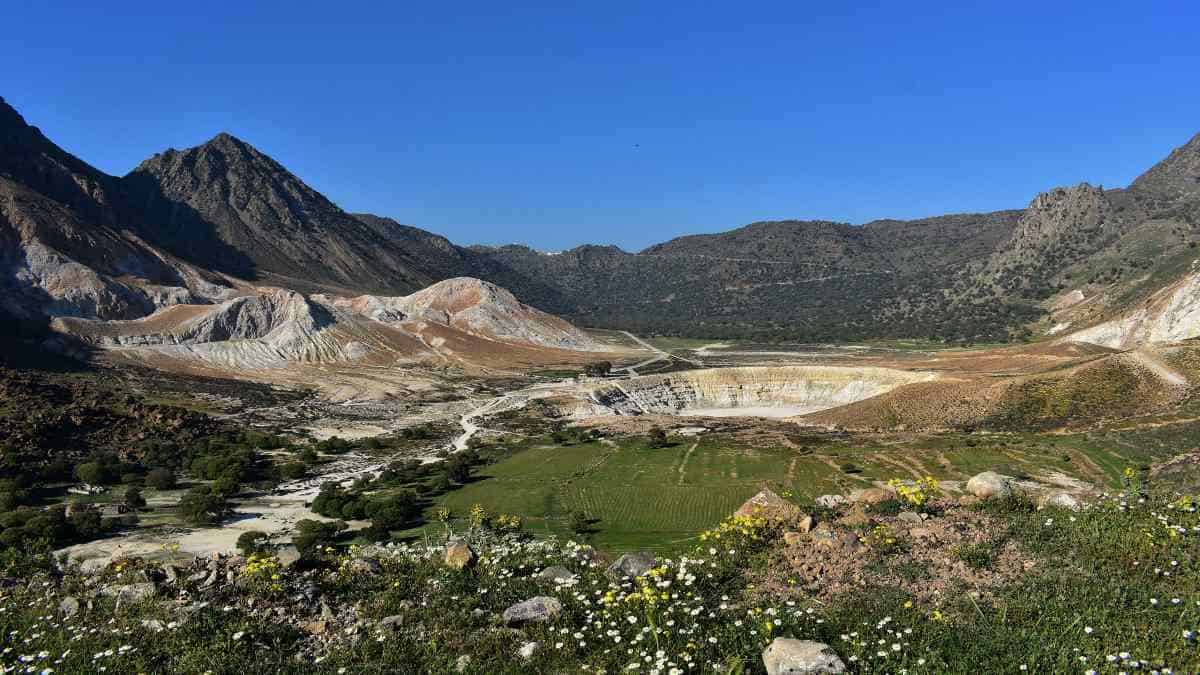
Image generated with Ai
Nisyros, the volcanic island, has officially secured one of the most significant international recognitions of its history, with a formal induction ceremony held at the UNESCO headquarters in Paris. This designation confirms Nisyros as a world-class natural laboratory and a top geotourism destination for international visitors looking for sustainable, off-the-beaten-track destinations in the Aegean. If you are planning a Mediterranean itinerary, it is important to understand how this global recognition affects local infrastructure, scientific preservation efforts, and the experience of visitors.
A UNESCO Global Geopark is defined as a unified geographical area where sites and landscapes of international geological significance are managed with a holistic concept of protection, education, and sustainable development. Unlike traditional archaeological sites or strict nature reserves, geoparks intentionally integrate local communities into the preservation of their natural assets, marrying earth sciences with cultural heritage.
For Nisyros, this distinction emphasizes the island’s unique geological identity within the active South Aegean Volcanic Arc. The expansive 481-square-kilometre geopark encompasses the main volcanic island itself, surrounding uninhabited islets such as Strongyli, Pachia, Pergousa, and Kandeliousa, and marine zones containing 24 distinct geosites. By binding geological conservation with community involvement, the designation guarantees that future generations will protect the dramatic hydrothermal craters, rare endemic flora, and traditional architecture that make the island distinct. According to data released by UNESCO and municipal authorities, this framework balances intense scientific interest with rigorous environmental defence.
The official ceremony marking the inclusion of Nisyros in the global network acts as a catalyst for structured tourism reform rather than unchecked expansion. Rather than inviting mass tourism, the strategic framework implemented by local authorities uses the distinction to manage visitor flow carefully, protect fragile calderas, and encourage slow, mindful travel.
Advertisement
Advertisement
The international recognition serves as an important shield against environmental degradation, addressing historical challenges like overgrazing and sustainable geothermal resource management. By aligning tourism development with strict conservation metrics established by international experts, Nisyros shifts away from superficial checklist tourism toward educational, immersive exploration.
Travelers are increasingly drawn to destinations that prioritize ecological integrity over commercialization. The newfound status empowers local enterprises, mountain guides, and hospitality providers to showcase earth sciences, traditional farming terracing, and unique volcanic products authentically. Ultimately, the UNESCO designation ensures that tourism functions as a preservation tool rather than a threat, safeguarding the quiet, rugged charm of the Dodecanese for decades to come.
As Nisyros has emerged on the world stage as a well-known UNESCO destination, future travellers often ask, How can you visit its rough landscape responsibly? As geotourism has become more organised, foot traffic has been increasingly confined to formalised, marked paths to protect delicate fumaroles and thermal crusts. Now, day-trippers from neighbouring islands like Kos are encouraged to stay longer, rubbing shoulders with local geologists and village cooperatives in places such as Nikia and Emborios.
Plus, educational visitor centres go deep into the mechanics of the youngest active stratovolcano in the Aegean. Nisyros turns the visitor mind-set from passive sightseeing to active geologic learning, making every ticket, guided walk and local purchase directly preserve its fragile ecosystem. Conscious travellers now have the rare opportunity to experience this living laboratory for a balanced model of modern island tourism.
Advertisement
Advertisement
Advertisement
Advertisement
Advertisement













Friday, September 4, 2026

Friday, September 4, 2026

Friday, September 4, 2026
Friday, September 4, 2026

Thursday, September 3, 2026

Wednesday, September 2, 2026
Friday, September 4, 2026

Friday, September 4, 2026


