
Emirates Capacity Reaches 93% of Pre-Disruption Levels as Airline Adds Helsinki and More Flights

Published
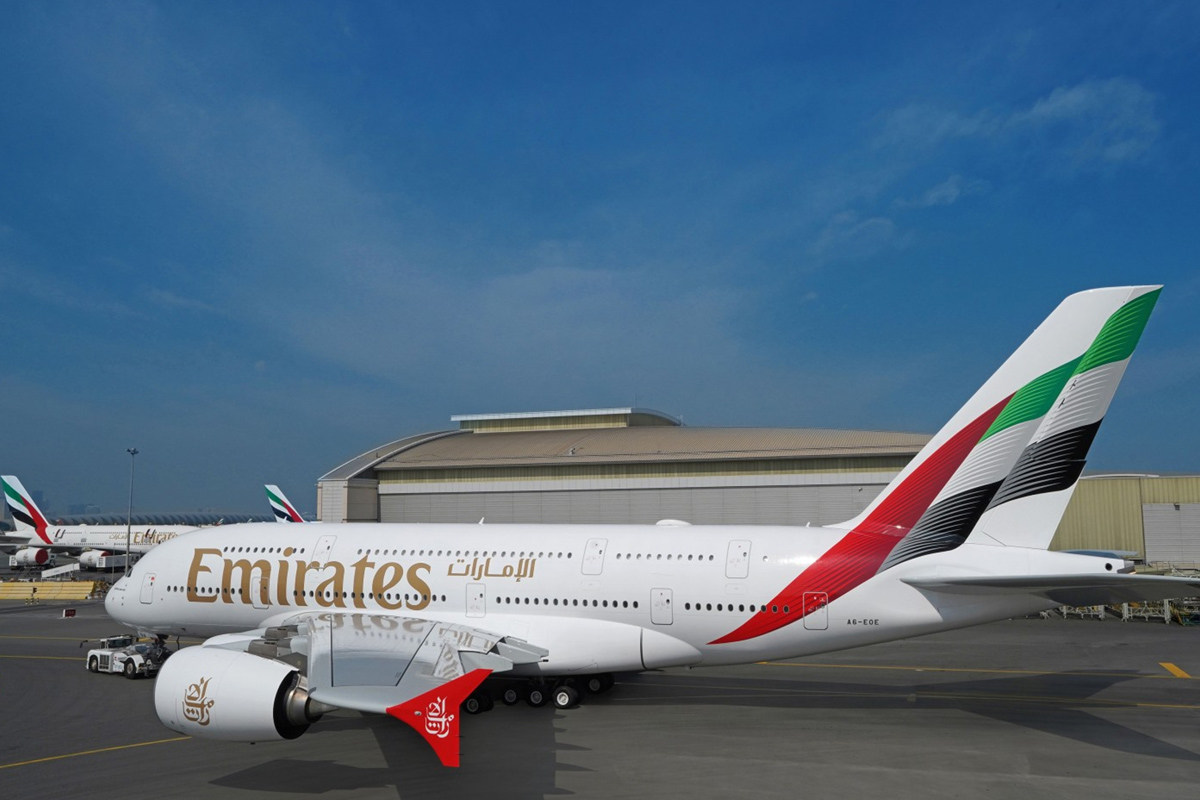
Emirates has recovered to around 93% of its pre-disruption operating capacity, signalling a significant expansion of the Dubai-based airline’s network as winter travel demand strengthens across international markets.
The airline carried more than 8.6 million passengers during July and August, with Emirates reporting that summer demand exceeded expectations.
Advertisement
Advertisement
As the winter travel season approaches, the airline says bookings are tracking positively, prompting further capacity increases across its global network.
The recovery is being supported by new routes, additional frequencies and the deployment of newer aircraft on selected services. Emirates has also launched a new daily connection to Helsinki, strengthening its presence in Northern Europe while adding capacity across several other international markets.
Advertisement
Advertisement
How close is Emirates to its pre-disruption capacity?
Emirates is now operating at approximately 93% of its pre-disruption capacity, putting the airline significantly closer to the level of operations it maintained before the disruption period.
The figure is important because it reflects the scale of the airline’s network recovery at a time when international aviation continues to adjust to changing travel patterns and operational conditions.
Advertisement
Advertisement
Rather than simply restoring existing services, Emirates is combining capacity recovery with targeted network expansion.
The airline’s latest schedule changes include additional frequencies to major international destinations and the introduction of the Airbus A350 on several routes.
Advertisement
Advertisement
How strong was Emirates’ summer passenger demand?
Emirates carried more than 8.6 million passengers in July and August, with the airline saying summer demand exceeded its expectations.
The strong passenger performance has provided momentum heading into the winter travel period.
Emirates says demand is continuing to build even though passengers are increasingly making travel decisions closer to their departure dates.
The airline is therefore entering the winter season with both strong recent passenger volumes and positive forward bookings.
Advertisement
Advertisement
That combination is helping support the continued restoration of capacity towards pre-disruption levels.
Which markets are driving Emirates’ winter bookings?
Emirates says bookings for the winter season are tracking positively, with demand from several markets currently ahead of last year.
The airline identified South Africa, Brazil, India, Portugal and Saudi Arabia among the markets where demand is performing ahead of the previous year.
The strength of these markets is particularly significant for a global airline operating through Dubai, where its extensive network allows passengers to connect between regions.
Strong demand across multiple geographical markets also provides Emirates with opportunities to adjust capacity according to where passenger demand is strongest.
Why is Emirates adding more flights?
The airline is responding to stronger demand by increasing capacity across its network.
Advertisement
Advertisement
Emirates plans to introduce second daily services to Accra, Tokyo Narita, Ho Chi Minh City and Hanoi.
These additional frequencies increase the number of seats available on established international routes and provide passengers with greater scheduling flexibility.
For Emirates, increasing frequency can also strengthen connectivity through Dubai by providing more opportunities for passengers to connect onwards to destinations across the airline’s global network.
The additional flights form part of the wider capacity recovery that has taken Emirates to around 93% of its pre-disruption level.
How does the new Helsinki service support Emirates’ capacity recovery?
Emirates launched its new daily Helsinki service on 2 October, establishing a year-round connection between Dubai and the Finnish capital.
The route is operated using the Airbus A350, adding another Northern European destination to Emirates’ network.
Advertisement
Advertisement
Helsinki joins Copenhagen, Oslo and Stockholm as part of the airline’s Nordic network.
The service is particularly significant for winter travel because it provides a direct Dubai-Helsinki connection during the coming season.
It also gives travellers from Finland access to Emirates’ wider international network through Dubai.
Why is Helsinki important for winter travel demand?
The Helsinki service arrives at a time when interest in winter holidays is increasing.
The route provides access not only to Helsinki but also to wider Finnish tourism experiences, including travel onwards towards Lapland.
Demand for skiing and other winter experiences is also increasing among UAE travellers, according to dnata, the Emirates Group’s travel services business.
Advertisement
Advertisement
Dnata Group CEO Nabil Sultan Al Murr has highlighted growing interest in skiing and other winter experiences, including trips focused on the Northern Lights.
That emerging demand creates an additional opportunity for Emirates as it expands its capacity into Northern Europe.
Which aircraft are supporting Emirates’ capacity expansion?
The Airbus A350 is playing an increasing role in Emirates’ network expansion.
The aircraft is being introduced on services to Larnaca, Malta, Nairobi and Hamburg from late October, followed by Mauritius in November.
The A350 will also enter scheduled US operations on 1 November, when it replaces the Boeing 777 on Emirates’ existing daily Orlando service.
The deployment gives Emirates an opportunity to increase or modernise capacity on selected routes while strengthening the role of the A350 within its international network.
Advertisement
Advertisement
How much additional capacity is Emirates adding across its network?
The airline’s strategy extends beyond the launch of Helsinki.
Second daily flights to Accra, Tokyo Narita, Ho Chi Minh City and Hanoi will increase frequency on existing routes, while the introduction of A350 aircraft on several destinations will alter the aircraft capacity available on those services.
Together, these changes demonstrate how Emirates is using multiple methods to rebuild its network.
Rather than relying on a single large-scale expansion, the airline is combining new destinations, additional frequencies and aircraft changes to move progressively towards full pre-disruption operations.
What does 93% capacity mean for Emirates travellers?
For passengers, Emirates reaching 93% of pre-disruption capacity means a broader network and more available flight options as the winter season begins.
Additional frequencies can provide greater flexibility for travellers, particularly on major international routes.
Advertisement
Advertisement
The Helsinki launch also gives passengers another direct connection between Northern Europe and Dubai, while the airline’s extensive onward network provides access to destinations across Asia, Africa, the Middle East and beyond.
The increased capacity could also be particularly relevant during periods of strong winter travel demand when passengers are competing for seats on popular routes.
How is winter travel changing the Emirates network?
The winter season is becoming increasingly diverse, with travellers seeking traditional city breaks alongside skiing, nature experiences and Northern Lights trips.
Emirates’ expanded Northern European network places the airline in a strong position to benefit from this demand.
Helsinki provides access to Finland’s winter attractions, while connections through Copenhagen, Oslo and Stockholm extend the airline’s reach across the Nordic region.
At the same time, additional frequencies to major Asian and African destinations demonstrate that Emirates’ capacity recovery is being driven by a broad international demand base rather than a single travel trend.
Advertisement
Advertisement
What does Emirates’ capacity recovery mean for global aviation?
Emirates reaching approximately 93% of its pre-disruption capacity is an important indicator of the airline’s broader operational recovery.
The combination of more than 8.6 million passengers carried during July and August, positive winter bookings and additional network capacity points to continued confidence in international travel demand.
The airline’s strategy also shows how major global carriers are responding to demand by restoring frequency, adding destinations and deploying newer aircraft.
For passengers, the result is a larger range of travel options as the winter season approaches.
Emirates is now operating at around 93% of its pre-disruption capacity, marking a major step in the Dubai-based airline’s network recovery. More than 8.6 million passengers travelled with Emirates during July and August, while winter bookings are tracking positively across markets including South Africa, Brazil, India, Portugal and Saudi Arabia.
The airline is supporting the recovery through new and expanded capacity, including a daily Helsinki service, second daily flights to Accra, Tokyo Narita, Ho Chi Minh City and Hanoi, and wider deployment of the Airbus A350. With winter demand building and interest in skiing, Northern Lights experiences and European travel increasing, Emirates is moving closer to full network capacity.
Advertisement
