

UAE Aligns with Bahrain, Kuwait, Qatar and Others for Air Travel Relief as EASA Lifts Wider Gulf Airspace Bulletin, Raising Hopes for New Lower Fares and Smoother Summer Flights: Could This Transform Peak Season Travel?

Published
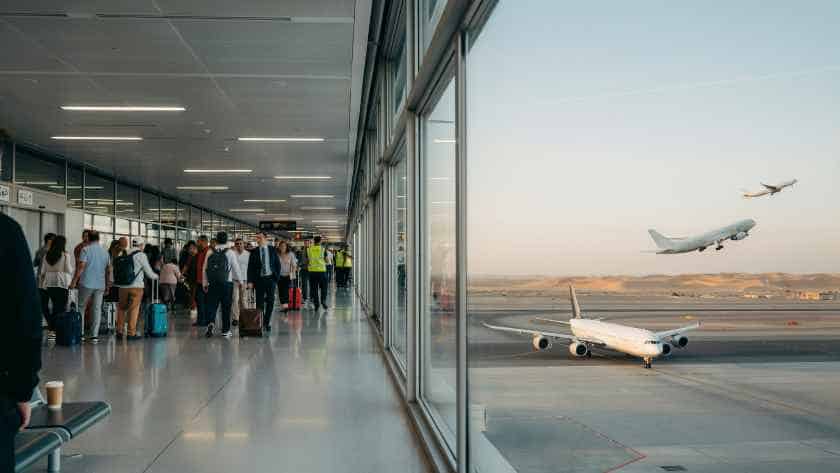
UAE Aligns with Bahrain, Kuwait, Qatar and Others for Air Travel Relief as EASA Lifts Wider Gulf Airspace Bulletin, Raising Hopes for New Lower Fares and Smoother Summer Flights. Middle East air travel could be entering a more stable phase just as the busy summer holiday season gathers pace. Waiting to see whether flights across the Gulf would remain disrupted? The latest decision from the European Union Aviation Safety Agency (EASA) offers encouraging news for airlines and travellers alike. After reviewing the regional security situation, EASA chose not to extend its wider Conflict Zone Information Bulletin (CZIB) covering the Middle East and Persian Gulf, which expired on 8 July. Instead, the agency replaced the broad regional advisory with a lower-level Information Note for several Gulf countries while maintaining separate high-risk bulletins for Iran, Iraq and Lebanon, where significant aviation risks remain.
A Shift That Could Ease Flight Operations
The change marks an important development for airlines operating between Europe, the Middle East, Asia and Africa.
The previous bulletin advised European operators to exercise heightened caution across a wide section of Gulf airspace, including Bahrain, Kuwait, Qatar, Saudi Arabia, Oman, the United Arab Emirates, Jordan and Israel. With the broader bulletin now withdrawn, airlines can carry out route planning using updated risk assessments rather than operating under a blanket regional advisory. EASA stated that the decision reflects ceasefire developments and a reduction in immediate regional tensions, although operators are still expected to assess operational risks carefully.
High-Risk Areas Still Require Caution
Before anyone assumes everything has returned to normal, there is an important distinction.
Advertisement
Advertisement
EASA has introduced separate Conflict Zone Information Bulletins covering Iran, Iraq and Lebanon, advising airlines to avoid those airspaces because of continuing security concerns and the possibility of renewed military activity. Meanwhile, Bahrain, Kuwait, Qatar, Saudi Arabia, Oman, Jordan, Israel and the UAE now fall under an Information Note rather than the stricter regional bulletin, signalling a lower—but not eliminated—level of operational risk.
Why Travellers Could Notice the Difference
So, what does this mean if you’re flying this summer?
Advertisement
Advertisement
For many airlines, fewer restrictions across major Gulf air corridors can simplify route planning, reduce lengthy diversions and improve aircraft scheduling. During previous periods of heightened regional tension, carriers often rerouted flights around restricted airspace, increasing flying times, fuel consumption and operational costs.
With more direct routing opportunities available across parts of the Gulf region, airlines may be able to improve schedule reliability, increase available capacity and reduce pressure on heavily congested alternative flight paths. While ticket prices continue to depend on demand, fuel costs and airline pricing strategies, improved operational efficiency may help ease some of the upward pressure experienced during peak travel periods.
Major Transit Hubs Remain Fully Connected
The updated advisory is particularly significant for some of the world’s busiest international aviation hubs.
Dubai International Airport, approximately 15 kilometres from Downtown Dubai, continues serving as one of the largest global connecting airports linking Europe, Asia, Africa and Oceania.
Hamad International Airport in Doha, located around 15 kilometres from central Doha, remains a major transit hub for long-haul travellers.
Other important gateways include Abu Dhabi’s Zayed International Airport, King Khalid International Airport in Riyadh, King Abdulaziz International Airport in Jeddah, and Muscat International Airport in Oman, all of which play vital roles in regional and international connectivity.
Advertisement
Advertisement
These airports are supported by extensive road networks, metro systems in cities such as Dubai, Doha and Riyadh, and convenient access to hotels, shopping centres and tourism districts.
Tourism Could Benefit Across the Gulf
The easing of broader operational restrictions arrives during one of the busiest travel seasons of the year.
Travellers connecting through Dubai can easily explore attractions including Burj Khalifa, Dubai Mall, Dubai Marina and Palm Jumeirah. Visitors transiting through Doha have convenient access to Souq Waqif, The Pearl-Qatar and the Museum of Islamic Art. Riyadh offers cultural landmarks such as Diriyah, while Muscat attracts visitors with the Mutrah Corniche, traditional souqs and coastal scenery.
Improved flight efficiency could make these stopover destinations more attractive for international passengers planning multi-city holidays across the Gulf.
Airlines Continue Monitoring the Situation
Although the broader bulletin has expired, airlines are unlikely to stop monitoring developments.
Aviation operators routinely conduct independent safety assessments alongside guidance issued by regulators. EASA has confirmed that it will continue working with European institutions and member states to monitor regional developments and issue further recommendations whenever necessary. Should security conditions change, new advisories or updated restrictions can be introduced at short notice.
Advertisement
Advertisement
Key Stats
- Wider Middle East and Persian Gulf CZIB expired: 8 July 2026
- Broad regional bulletin not extended
- Separate high-risk CZIBs remain for Iran, Iraq and Lebanon
- Information Note now covers Bahrain, Kuwait, UAE, Saudi Arabia, Qatar, Oman, Jordan and Israel
- EASA continues monitoring regional aviation risks
Timeline and Events
- 1 July 2026: Existing CZIB extended until 8 July.
- 8 July 2026: EASA decides not to renew the wider Middle East and Persian Gulf bulletin.
- 8 July 2026: Information Note replaces the broader advisory for several Gulf countries.
- Until 31 August 2026, separate advisories remain in force for Iran, Iraq and Lebanon.
Frequently Asked Questions
Why did EASA withdraw the broader Middle East bulletin?
EASA cited reduced short-term regional tensions and replaced the broader advisory with a lower-level Information Note for several Gulf countries while maintaining stricter guidance for higher-risk airspace.
Can airlines now fly normally across the Gulf?
Many routes may become more straightforward, but airlines must continue conducting their own operational risk assessments, and separate advisories remain for Iran, Iraq and Lebanon.
Will this reduce airfare prices?
More efficient routing may lower operational pressures, although ticket prices also depend on demand, fuel costs, airline capacity and commercial pricing decisions.
Conclusion
UAE Aligns with Bahrain, Kuwait, Qatar and Others for Air Travel Relief as EASA Lifts Wider Gulf Airspace Bulletin, Raising Hopes for New Lower Fares and Smoother Summer Flights. The withdrawal of EASA’s wider Middle East and Persian Gulf Conflict Zone Information Bulletin represents an important operational change for international aviation, offering airlines greater flexibility across key Gulf air corridors while preserving strict safety measures for higher-risk areas. As major transit hubs continue connecting millions of travellers between Europe, Asia and Africa, the updated guidance could contribute to smoother flight operations throughout the summer—but could this be the turning point that restores greater confidence in one of the world’s busiest aviation regions?
Advertisement
