
United States Sees Sharp Drop in Overseas Visitors as High Travel Costs and Trade Tensions Weigh on Tourism

Updated
Published
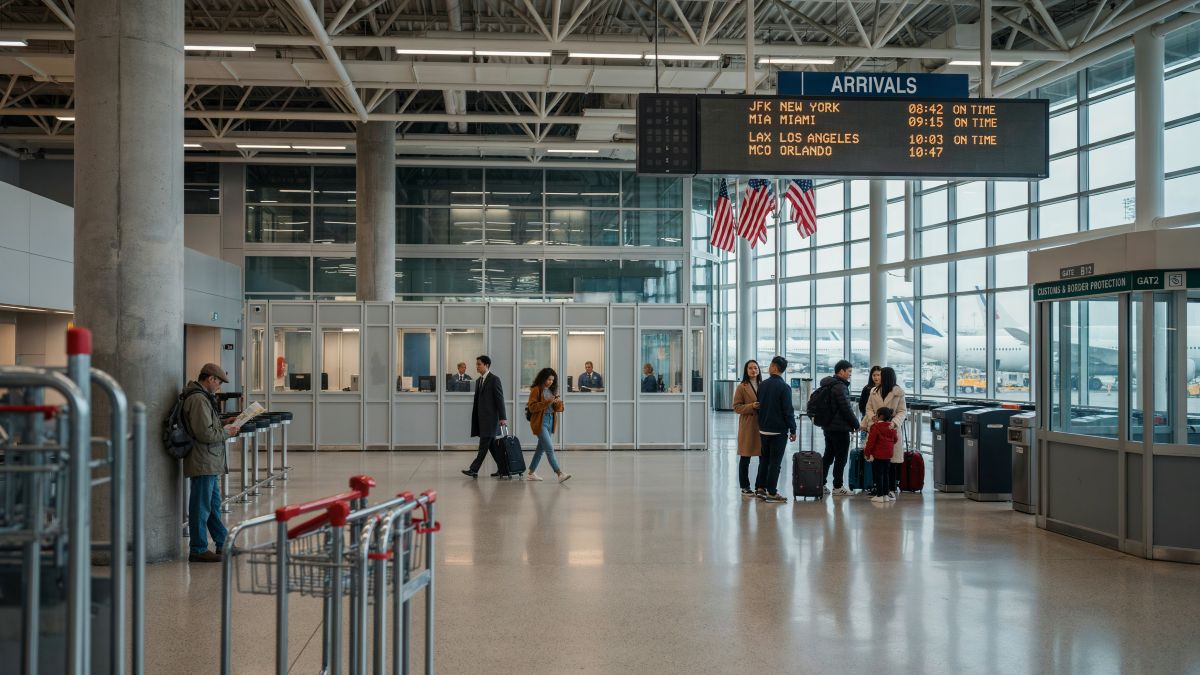
New York, Miami and Orlando are facing a tougher international tourism market after overseas visitor arrivals to the United States fell 11.8% in August, adding to concerns about the cost of travelling to America and the impact of political and economic tensions on demand.
The latest U.S. Travel Association data show overseas arrivals were also down 5.8% for the year through August. The decline comes during a year when the United States had expected a major boost from the 2026 FIFA World Cup, making the latest figures particularly significant for airlines, hotels, attractions and tourism businesses across the country.
Advertisement
Advertisement
Overseas travel takes a sharp turn
August marked a particularly weak month for international arrivals. Overseas visitors fell 11.8% from the same month last year, while total air passenger traffic was down 4.4%.
The figures come from the latest U.S. Travel Insights Dashboard. The National Travel and Tourism Office, part of the U.S. Department of Commerce, is responsible for the US government’s international travel statistics and uses its I-94 programme to track arrivals.
Advertisement
Advertisement
The decline does not mean Americans have stopped travelling or that every part of the US tourism market is struggling. Instead, it points to a more specific problem: attracting international visitors is becoming harder at a time when travellers have plenty of alternative destinations.
A US holiday is costing more
Price is one of the clearest pressures facing people considering a trip to America.
Advertisement
Advertisement
The Travel Price Index increased 7.4% in August compared with a year earlier, while the broader US Consumer Price Index rose 3.4%. That gap matters to visitors because travel costs cover much more than the price of an airline ticket.
Accommodation, rental cars, restaurants, attractions and domestic connections can quickly push up the total cost of a US holiday.
For travellers comparing several long-haul destinations, a more expensive American trip can make Europe, Asia, Mexico or other destinations look more attractive.
Political tensions are changing travel choices
The tourism slowdown is also unfolding alongside trade disputes and strained relations between the United States and some of its traditional source markets.
Canada is particularly important. Canadian visitors have historically represented a major part of inbound US tourism, supporting destinations ranging from Florida and California to cities and attractions close to the northern border.
Changes in Canadian travel behaviour can therefore have an impact far beyond border communities.
Advertisement
Advertisement
For some travellers, the decision may not be about whether America remains an attractive destination. It can simply come down to where they feel more comfortable spending their holiday money at the moment.
Confusion over entry rules adds uncertainty
Another challenge for the US tourism industry is the amount of uncertainty surrounding changing travel policies.
The U.S. Travel Association has been working to correct what it describes as traveller misconceptions surrounding entry procedures, visa costs and proposed requirements.
That distinction is important. Some policies being discussed publicly have not yet taken effect, yet travellers who encounter conflicting information online may assume that proposed measures are already mandatory.
For someone planning an expensive international holiday, uncertainty can be enough to delay a booking or push the trip towards another country.
The industry’s concern is therefore not only about the rules themselves. It is also about how those rules are understood by potential visitors.
Advertisement
Advertisement
Some international markets are still performing strongly
The overall decline also masks a very uneven picture.
According to the latest U.S. Travel Association data, air arrivals from Mexico were at 148% of their 2019 level in August. India stood at 126%, while Colombia reached 124%.
That is important for the US travel industry because it shows that international demand has not disappeared.
Instead, the composition of that demand is changing.
Strong arrivals from India and Latin America could become increasingly important for destinations and tourism businesses looking to compensate for weaker performance in some traditional European and neighbouring markets.
Tourism spending remains resilient
There is another reason not to describe the situation as a complete collapse in US tourism.
Advertisement
Advertisement
Travel spending remained relatively strong in August, reaching $116.6 billion, up 2.5% from the same month a year earlier.
The difference between visitor numbers and spending is significant. Fewer overseas travellers do not automatically mean that every tourism business is seeing revenue fall. Higher prices and spending by visitors who do travel can partly offset weaker volumes.
The challenge for the industry is that sustained declines in visitor numbers can eventually affect the wider tourism ecosystem, particularly businesses that depend heavily on international customers.
The World Cup boost has not changed the wider picture
The 2026 FIFA World Cup was expected to provide a major opportunity for US tourism.
Matches across American cities brought international fans into the country and created additional demand for hotels, flights and local attractions. But the latest overseas arrival numbers suggest that the tournament has not been enough to eliminate the broader pressures facing inbound tourism.
That leaves the US travel industry with a difficult balancing act: capitalise on the country’s enormous tourism appeal while addressing the cost, policy and perception issues that may be discouraging some international visitors.
Advertisement
Advertisement
America still expects long-term tourism growth
The current decline does not necessarily point towards a permanent downturn.
The US Department of Commerce continues to forecast growth in international visitation over the coming years. Its outlook puts international visitor numbers at 70.5 million in 2026 and 85.2 million by 2030.
The gap between those forecasts and the industry’s more ambitious goal of attracting 100 million international visitors shows how much work remains.
For travellers, America’s major attractions have not suddenly disappeared. New York’s landmarks, Florida’s theme parks, California’s coastline, Las Vegas and the country’s national parks remain powerful draws.
But in an increasingly competitive global travel market, being an attractive destination is only part of the equation.
The US also needs to make the journey feel affordable, predictable and welcoming.
For now, the August figures suggest that many international travellers are taking a harder look at that calculation before deciding where their next holiday should be.
Advertisement
