
Russia Explores New Digital Tourist Payments at Major International Airports

Published
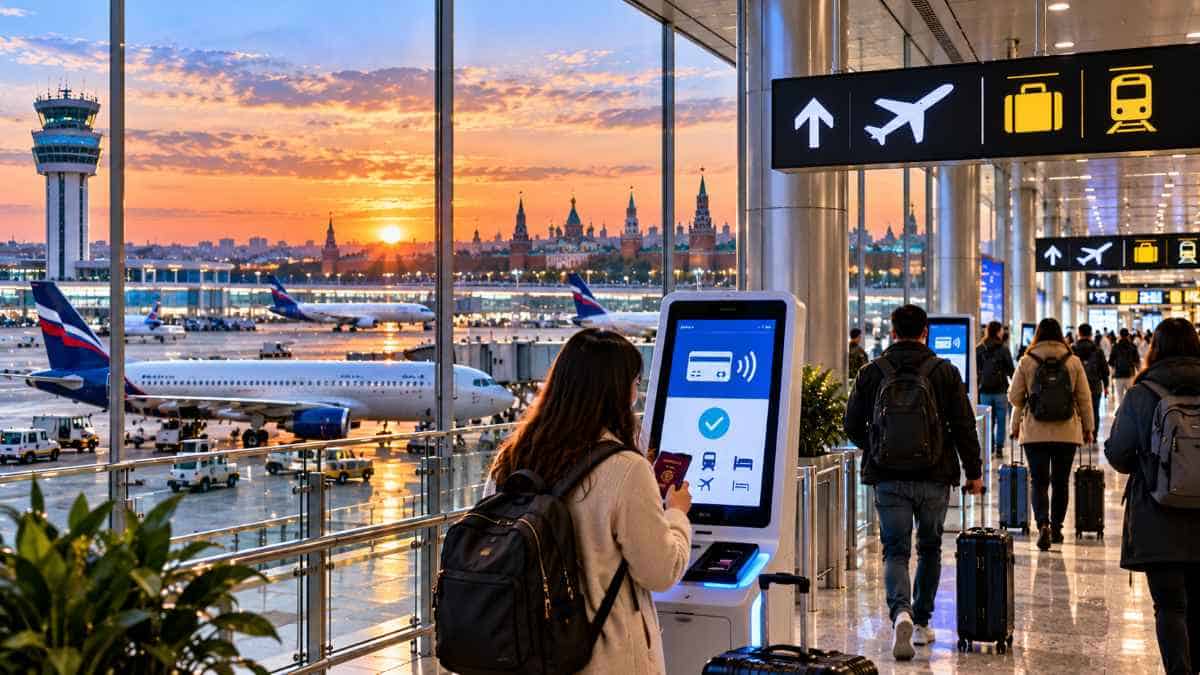
At the same time, Russia continues to seek opportunities to facilitate payment for travel by foreigners coming to visit the country, reportedly working on some kind of digital onboarding that would enable international visitors to use their mobile phone for travel-related payments at major airports in Moscow and St. Petersburg. According to reports, the project Tourist Mir is supposed to connect travellers’ registration with a digital payment service and an electronic visa for the country. The initiative is credited to the Ministry of Economic Development and the Federal Air Transport Agency (Rosaviation) of Russia, along with national payment processors. The goal of the project is to let eligible overseas visitors prepare for their trip to Russia by arranging access to a virtual payment wallet before departure and thus pay for their travel inside the country, including transport, accommodation and other expenses. The project is planned to be launched at Sheremetyevo and Domodedovo airports in Moscow, as well as at Pulkovo airport in St. Petersburg. However, the exact nature of the Tourist Mir integration and its availability through the unified electronic visa website need to be confirmed. The mentioned service cannot be treated as an already established facility for any international passenger.
Why Payment Access Matters for International Visitors
Payment arrangements can influence the experience of travelling in Russia, particularly for visitors arriving from countries whose banking systems have limited compatibility with Russian payment networks.
Advertisement
Advertisement
International travellers often rely on bank cards for hotel payments, restaurant bills, domestic transport and online bookings. When a foreign-issued card is not accepted, visitors may need to arrange alternative payment methods before or after arrival.
Russia’s Mir payment system provides a domestic card network used for transactions within the country. Its role has become particularly important as international payment restrictions have affected the availability of some foreign financial services in Russia.
Advertisement
Advertisement
A digital tourist payment facility could offer overseas visitors another way to access local payment services. Rather than arranging a physical card after landing, eligible travellers might be able to complete registration before departure and activate a supported virtual payment option.
The practical value would depend on which nationalities and financial institutions are eligible, how funds are loaded and where the payment method can be used.
Advertisement
Advertisement
Moscow and St Petersburg Airports at the Centre
The reported framework identifies three major international gateways.
Sheremetyevo International Airport is one of Moscow’s principal aviation hubs and a major base for international and domestic air services. Its passenger network connects the Russian capital with destinations across several regions.
Domodedovo International Airport also serves Moscow’s metropolitan area, handling domestic and international traffic. Its role in the wider aviation network makes it relevant to any initiative aimed at improving the arrival experience for overseas passengers.
Pulkovo Airport serves St. Petersburg, Russia’s second-largest city and one of its most important cultural tourism destinations. International visitors arriving there may need access to local transport, hotels, restaurants and domestic connections.
A digital payment facility available through these gateways could help travellers manage initial expenses without immediately searching for currency exchange services. It could also provide a more consistent arrival experience across different airports.
However, the availability of a payment service at an airport does not automatically mean that every shop, transport operator or hotel accepts it. Merchant participation and payment-network coverage would determine how useful the facility is beyond the terminal.
Advertisement
Advertisement
How Tourist Mir Could Connect With E-Visas
The reported Tourist Mir proposal links payment registration with Russia’s unified electronic visa application process. Such an arrangement could bring two important parts of travel preparation into a more coordinated digital experience.
An electronic visa allows eligible foreign nationals to apply for permission to enter Russia online, subject to nationality, destination and other applicable conditions. Linking a payment registration option to the same digital journey could give visitors an opportunity to prepare for financial transactions before travelling.
Under the reported model, travellers would complete their payment onboarding before departure and activate a virtual wallet for use after arrival.
This could be particularly useful for visitors planning multi-city itineraries. Travellers arriving in Moscow, for example, may need to arrange onward domestic flights or rail journeys. Those continuing to St Petersburg may also need to pay for accommodation and local transport.
Nevertheless, visa approval and payment eligibility are separate matters. An approved e-visa would not automatically guarantee access to a Tourist Mir account, and visitors would need to meet the payment provider’s registration and verification requirements.
Domestic Flights, Rail and Hotel Payments
The proposed system is intended to support payments across several parts of the visitor economy, including domestic flights, high-speed rail and accommodation.
Advertisement
Advertisement
Russia’s extensive domestic transport network makes payment access particularly relevant for international visitors planning journeys beyond Moscow and St Petersburg.
Rail services connect major cities and regional destinations, while domestic aviation provides access to locations spread across the country’s vast territory. For tourists, the ability to book onward travel using a recognised local payment method could make itinerary planning more straightforward.
Hotels and other tourism businesses could also benefit if international visitors gain access to a convenient payment option. A more predictable payment process may reduce friction during check-in and when purchasing additional services.
However, the proposed system’s reach would depend on agreements with transport providers, hotel operators and payment processors. It should not be assumed that all domestic airlines, rail services or accommodation businesses would accept the virtual wallet from the outset.
The Importance of Financial Security and Transparency
Digital payment onboarding involves the collection and processing of personal and financial information. Any tourist payment platform would need clear procedures for identity verification, account security and the protection of sensitive data.
International travellers would also need transparent information about transaction fees, exchange rates, wallet limits, refund arrangements and the process for adding funds.
Advertisement
Advertisement
Currency conversion is another important consideration. Visitors should understand whether payments are charged in roubles, how funds are converted and whether additional charges apply when money is transferred from overseas.
The availability of a virtual wallet would not remove the need for travellers to check current financial restrictions and the rules applicable to their home countries. Payment services operating in Russia may not be accessible to every foreign national or international bank.
What the Initiative Could Mean for Russian Tourism
However, from the perspective of Russia, better access to payments is just one of the factors related to the facilitation of international travel for foreign tourists. Easy access to payments can help tourism businesses and encourage tourists to choose destinations other than major international entry points. Moscow and St. Petersburg still represent an important point for the planning of international routes; however, foreign tourists might be interested in visiting other cities or sites in Russia as well. It can be stated that the provision of proper payment systems can help them in organising these routes. At that, the mentioned Tourist Mir system can resolve one of the practical problems associated with incoming tourism in Russia in case it becomes available and easy to use. However, the efficiency of the system depends on whether it will be implemented and how it will work.
Advertisement
