

Australia’s NSW Scraps 40-Year Racetrack Red Tape to Unlock Regional Motorsport Tourism and Private Investment

Published
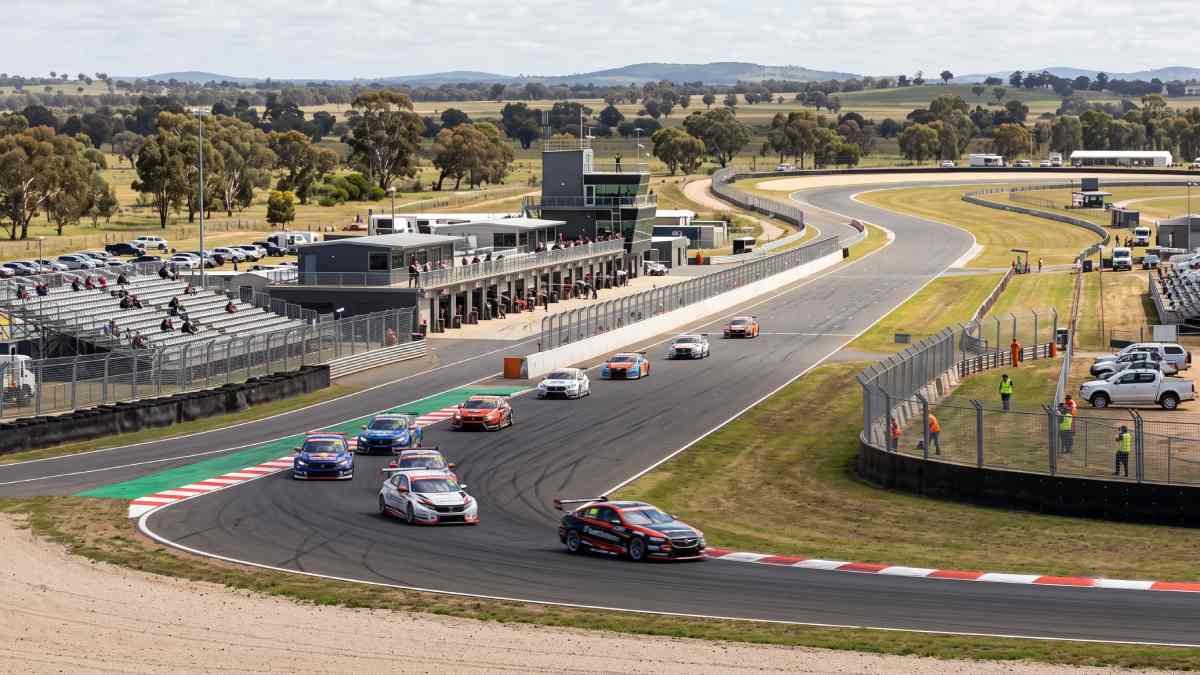
The statutory repeal of the four-decade-old New South Wales racing legislation marks a structural economic transformation across regional Australia. By replacing restrictive government licensing with industry self-regulation, vital private capital is unblocked and high-yield regional motorsport corridors linking regional communities are established. The transition of regional venues from seasonal racetracks into year-round sports hubs is enabled by the removal of duplicative bureaucratic barriers. Institutional investment is de-risked by this regulatory realignment, while decentralized drive-tourism is driven, accredited vocational training is accelerated, and secondary local business supply chains are boosted. Ultimately, sustained visitor expenditure is delivered through modernised governance, positioning regional motorsport infrastructure as an enduring catalyst for national economic growth.
Background and Legislative Evolution: Scrapping the 1985 Red Tape
For more than four decades, motorsport facilities across New South Wales were operated under the statutory framework of the Motor Vehicle Sports (Public Safety) Act 1985. Ministerial oversight was originally established by the legislation following historical safety incidents, creating an administrative regime administered by the NSW Office of Sport. Under this statutory regime, an annual, state-issued licence was mandated for every facility hosting vehicular speed competitions. Broad discretionary authority was granted to the Minister for Sport to grant, condition, suspend, or cancel track licences based on physical track inspections, barrier specifications, curvature gradients, track width dimensions, and spectator proximity buffers.
Advertisement
Advertisement
While public safety was originally intended to be protected by the statute, modern professional racing standards were increasingly conflicted with by its practical operation. Permanent circuits were treated by the statutory framework as high-risk anomalies requiring prescriptive state intervention. Chronic administrative backlogs were faced by track operators because dual layers of compliance were required for minor safety modifications, catch-fence enhancements, pit-lane expansions, or track resurfacing: technical approval from national sporting sanctioning bodies and statutory sign-offs from departmental inspectors assessing facilities against 1980s regulations.
Statutory Bottlenecks and Multi-Agency Administrative Friction
Substantial administrative friction was introduced by the 1985 Act, which discouraged commercial planning and capital investment. Circuit licences were tied to annual expiry cycles, creating systemic uncertainty for operators seeking commercial finance or private equity capital. Because venue licences were subject to ministerial cancellation or unilateral variation rather than strictly objective engineering criteria, venue capital expenditure was categorised by institutional financiers as high-risk investments.
Advertisement
Advertisement
Furthermore, a fragmented compliance landscape spanning the NSW Office of Sport, local government planning authorities under the Environmental Planning and Assessment Act 1979, local police commands, and state environmental regulators was navigated by venue operators. This duplicative governance contrasted with interstate jurisdictions. Industry-led self-regulation had long been operated under by states such as Victoria, Queensland, and South Australia, where safety and technical oversight are managed directly by recognized national sporting organisations (NSOs). In those states, risk governance is aligned with international sporting homologation standards rather than standalone government licensing statutes. Consequently, severe competitive disadvantages were faced by New South Wales motorsport venues, resulting in delayed race scheduling, constrained track allocations, and capital underinvestment.
Latest Official Developments and Government Announcements
In October 2026, the total repeal of the Motor Vehicle Sports (Public Safety) Act 1985 was confirmed by the NSW Minns Labor Government, with legislation introduced to transition the state’s motorsport sector to industry-led self-regulation. New South Wales is aligned with national and international regulatory standards through this reform, formalising a streamlined regime scheduled for operational commencement in April 2027 following transitional arrangements.
Advertisement
Advertisement
The rationale behind dismantling the statutory regime was outlined by the Minister for Sport, Steve Kamper, who stated that New South Wales served as home to some of Australia’s largest motorsport events and possessed the nation’s premier participation base.
The operational foundation of the forthcoming NSW Motorsport Strategy is formed by the legislative repeal, creating an overarching framework designed to modernise facility infrastructure, encourage regional tourism dispersal, and expand vocational engineering training.
| Period / Target Date | Policy Milestone & Regulatory Action |
| October 1985 | Assent and gazettal of the Motor Vehicle Sports (Public Safety) Act 1985. |
| October 2019 | Public review initiated via NSW Office of Sport Consultation Paper. |
| 2021–2024 | Industry-led advocacy coordinated by the Australian Motorsport Council. |
| 10–12 October 2026 | Ministerial announcement of statutory repeal and red tape reduction. |
| 13 October 2026 | Introduction of the Repeal Bill into the NSW Legislative Assembly. |
| October 2026–March 2027 | Inter-agency transition period and rollout of the NSW Motorsport Strategy. |
| April 2027 | Full commencement of industry-led self-regulation framework across NSW. |
Endorsement from Peak Sporting Bodies
The statutory overhaul was welcomed by peak governing bodies across the Australian motorsport sector, affirming that public safety standards are reinforced rather than compromised by industry self-regulation. It was highlighted by Motorsport Australia Chief Executive Officer Josh Blanksby that a clearer pathway for competitors, volunteers, and officials was supported by the proposed changes while standards were rigorously maintained.
The alignment of safety with capital investment was affirmed by Supercars Executive Chairman and acting CEO Barclay Nettlefold, who conveyed that the NSW Government’s decision to modernise the regulatory framework for motorsport in New South Wales was warmly welcomed by Supercars.
It was emphasised by Speedway Australia General Manager Matthew Casburn that operational safety is upheld directly through commercial insurance frameworks. It was noted by Casburn that motorsport regulation in NSW would be aligned with the rest of the country by this change if approved, placing less strain on governing body resources and supporting a more accessible approach across Australia. It was further asserted that delivery of safe, accessible, and inclusive motorsport would be focused on by governing bodies without statutory red-tape restrictions, while Speedway Australia safety standards would not be compromised because their maintenance was strictly mandated by independent insurance requirements.
Economic Mechanics and Tourism Dynamics of Regional Corridors
The emergence of interconnected regional motorsport corridors is driven by the economic mechanics of statutory deregulation. Historically, motorsport tourism across regional Australia has been heavily episodic, dominated by major events such as the Bathurst 1000 at Mount Panorama, which generates more than $41 million to $55 million in direct regional economic output over a single weekend. While substantial short-term economic windfalls are delivered by these premier events, the chronic economic underutilisation of regional facilities during the rest of the year is obscured by them.
Advertisement
Advertisement
By removing bureaucratic barriers to circuit sanctioning and facility upgrades, regional venues can be integrated into continuous tourism and industrial corridors by regional councils and circuit owners. Event calendars, manufacturer test programmes, corporate track days, and club competitions can be coordinated across facilities in Bathurst, Orange, Goulburn, and the Hunter Region to generate steady visitor traffic throughout the year.
Macroeconomic Yield and Visitor Spend Profile Analysis
The aggregate financial return generated by an integrated motorsport corridor under self-regulation is evaluated by economic analysts through the combined assessment of direct event spending, private infrastructure capital expenditure, vocational multipliers, and year-round drive-tourism yield. Under statutory licensing constraints, vocational multipliers and year-round drive-tourism yield were constrained by restrictive operating caps and complex permit processes. Under self-regulation, multi-functional commercial assets can be operated by circuits, ensuring ongoing regional revenue across all operational indicators.
An Average Daily Expenditure (ADE) that exceeds baseline figures for general leisure visitors is generated by the demographic profile of motorsport participants and spectators. The bulk of travel budgets is allocated by standard regional leisure visitors to general accommodation, casual dining, and passive recreation. In contrast, specialized logistics, heavy vehicle transport, mechanical consumables, high-octane fuels, and technical support teams are entailed by motorsport travel.
Length of Stay (LOS) is increased when circuits are transitioned from rigid, single-day racing events to multi-day, multi-category sports festivals. Paddock assembly, technical scrutineering, and track acclimatisation are routinely conducted by competing race teams arriving 48 to 72 hours prior to an event, with teams remaining post-race for technical teardowns and freight management. A conventional weekend fixture is turned by this schedule into a week-long regional economic surge, supporting high occupancy across regional accommodation providers and local businesses.
Secondary Regional Supply Chains and Multiplier Effects
Capital is dispersed throughout regional economies by major motorsport events, as indicated by data from Tourism Research Australia and regional council economic assessments. In the Central West region around Bathurst and Orange, visitor spending during major race meetings routinely overflows into adjacent local government areas such as Oberon, Blayney, and Cabonne.
Precision mechanical workshops absorb high demand through in-season fleet preparation, maintenance, and dyno testing; freight and haulage transport services are engaged for trackside equipment mobilization; boutique accommodation providers and agritourism operators absorb overflow spectator demand; and local food producers and hospitality venues are patronised throughout multi-day events.
Advertisement
Advertisement
Calendar Capacity Expansion and Operational Asset Utilisation
The difference in operational capacity between state-governed licensing and self-regulated calendar management is significant. Under the 1985 Act, operators were discouraged from hosting mid-week or community-level track sessions by the administrative overhead of securing individual permits for minor events. Between 12 and 25 licensed race days were hosted annually by regional venues, leaving substantial capital assets underutilized for long periods.
Under self-regulation overseen by accredited bodies such as Motorsport Australia and Speedway Australia, diverse non-speed and speed-regulated events can be scheduled by track operators under a unified annual sanctioning and risk-underwriting architecture. Permitted operational allocations expand from restricted competition thresholds to over 150 to 220 operational days annually. Approval lead times are compressed from multi-month departmental reviews into standardised digital sanctioning, enabling mid-week manufacturer research, driver training, tyre testing, and diverse commercial activities.
Regional racetracks are shifted by this expanded operational capacity from seasonal tourist destinations into permanent commercial employment precincts, ensuring recurring income for track safety personnel, technical workers, marshals, and local accommodation providers.
Regulatory Legal De-Risking and Capital Velocity
A significant barrier to private infrastructure investment in sports venues has historically been posed by statutory red tape. When sequential, discretionary sign-offs from government departments were required alongside local planning approvals for venue upgrades, higher risk premiums were demanded by institutional financiers, delaying critical capital expenditure (CAPEX) programs. This barrier is removed by the transition to self-regulation, accelerating capital deployment across regional facilities.
An arduous approvals pathway was faced by proposed facility improvements under the historical regime. Municipal development consents had to be secured, discretionary state ministerial reviews under the 1985 Act had to be endured, and independent police and safety conditions had to be negotiated by circuit operators. Projects were routinely delayed by 18 to 36 months, deferring returns on invested capital. In contrast, facility upgrades are integrated into standard local planning schemes under the modern self-regulation model, validated directly against national sporting body homologations and private insurance risk assessments. Approval timelines are compressed, borrowing is de-risked, and capital payback cycles are accelerated by this clarity.
Unlocking Institutional Capital and Payback Compression
Under self-regulation, capital improvements such as pit-lane expansions, race telemetry networks, track lighting, and lodging facilities can be designed directly to the published circuit standards of Motorsport Australia, the Fédération Internationale de l’Automobile (FIA), and the Fédération Internationale de Motocyclisme (FIM). Development cycles are shortened from years to months by the elimination of redundant ministerial inspections.
Advertisement
Advertisement
The commercial advantages of regulatory predictability are demonstrated at Sydney Motorsport Park, where $55.4 million has been invested by the Australian Racing Drivers’ Club (ARDC) and the NSW Government since 2012. The $9.4 million Australian Motorsport Innovation Precinct (AMIP) and 2022 circuit lighting that expanded usable operating capacity by 30% were funded through this program. With predictable regulatory parameters, commercial interest for more than $330 million in private precinct projects, including industrial battery storage facilities, has been secured. Private investment can be attracted by regional venues in Bathurst, Goulburn, and the Hunter Valley through streamlined approvals, shortening the payback period on major facility upgrades from 12–15 years to 5–7 years.
Risk Underwriting and Insurance-Led Safety Standards
A frequent misconception regarding statutory deregulation is that public safety oversight is weakened by repealing the 1985 Act. In practice, motorsport safety across modern racing jurisdictions is governed primarily by technical homologation standards and private commercial risk underwriting rather than public statutory mechanisms.
Strict compliance with international safety protocols is required by underwriting syndicates operating across international and Australian markets before venue liability coverage is issued. Verified track design, certified impact barriers, standardized run-off areas, FIA-rated catch fencing, and comprehensive on-site medical rescue systems are required for coverage. If these engineering standards fail to be maintained by a track operator, sanctioning approval is revoked, public liability insurance is voided, and track operations are halted. Contemporary motorsport safety is bound and enforced directly by commercial insurance requirements independent of statutory legislation.
Public-Private Partnerships and Municipal Circuit Leasing Frameworks
A viable model for Public-Private Partnerships (PPPs) between municipal councils and commercial venue operators is established by the transition to self-regulation. Substantial land parcels zoned for recreational and sporting use are frequently owned by regional councils, yet the technical expertise and capital reserves required to develop high-performance automotive venues are often lacked.
Long-term land leases with private circuit managers under standard local planning instruments can be executed by councils under the reformed framework. Distinct mutual benefits are provided by this PPP structure:
- Predictable land lease revenues and concession dividends are secured by councils without bearing operational risk or maintenance costs.
- The multi-decade tenure necessary to secure debt financing for infrastructure such as skid pans, driver education centres, and corporate hospitality pavilions is gained by private track operators.
- Permanent civic facilities hosting learner-driver safety courses, emergency services training, and local sporting events are enjoyed by regional communities.
Vocational Training, Workforce Mobility, and Regional Human Capital
Specialized workforce skills applicable across the wider industrial economy are fostered by modern motorsport facilities serving as high-tech engineering hubs. Expertise in high-tolerance mechanical assembly, data telemetry, composite fabrication, rapid event logistics, and incident management is required for running a modern motorsport operation.
Advertisement
Advertisement
Cross-industry destination sectors absorb these competencies directly:
- Precision powertrain and chassis tuning (engine blueprinting, dynamometer testing, CNC machining) transitions into commercial heavy road transport, mining operations, and defence vehicle R&D.
- High-voltage EV systems and telemetry (battery thermal management, CAN-bus logging, motor inverters) feed clean energy microgrids, commercial fleet electrification, and civil aerospace.
- Emergency track safety and marshalling skills transition into regional fire services, the State Emergency Service (SES), and paramedic teams.
- Event logistics management feeds major cultural festivals, regional logistics hubs, and intermodal freight facilities.
Technical Education Integration: TAFE NSW and University Partnerships
A framework to expand vocational education across regional centres is created by the development of the NSW Motorsport Strategy alongside the repeal of the 1985 Act. Accredited Certificate III and Certificate IV courses in Light Vehicle Mechanical Technology, Automotive Underbody Technology, and specialized motorsport mechanical units are provided by TAFE NSW.
Curriculum delivery is tied directly to trackside automotive engineering at regional facilities such as TAFE NSW Bathurst—located on Panorama Avenue next to Mount Panorama—and through educational partnerships with regional universities. Hands-on experience in engine diagnostics, suspension geometry, electronic telemetry, and safety scrutineering is gained by students within operational track environments. Regional students are equipped with high-value engineering skills through this technical training, establishing regional career pathways that reduce the migration of young technical talent to metropolitan centres.
Formalising the Volunteer-to-Professional Career Pipeline
An extensive network of volunteer flag marshals, technical scrutineers, timekeeping specialists, and incident officials is relied upon by Australian motorsport. Historically, volunteer progression was hindered by fragmented administrative processes and outdated statutory requirements.
Workforce training has been consolidated into unified, accredited development pathways under the self-regulated structure coordinated by Motorsport Australia and Speedway Australia. Volunteers enter through grassroots club competition, completing standardized online theory and practical trackside training modules to obtain nationally recognized safety credentials. A continuous supply of certified officials capable of running safe sporting events is provided by this formalized development model, enabling skilled personnel to progress into professional, salaried roles across national championships and international events.
Environmental, Social, and Acoustic Governance in Circuit Design
Balancing high-performance motorsport with environmental sustainability and community amenity is essential for preserving an operational social licence. Longstanding operational issues regarding community noise and emissions management are directly addressed by the modernisation of the NSW motorsport sector.
Advertisement
Advertisement
A key case study in contemporary acoustic management is provided by the operational overhaul of Wakefield Park Raceway—reopened in 2024 as One Raceway near Goulburn. After circuit activity ceased in August 2022 following a Land and Environment Court ruling, comprehensive noise engineering solutions were introduced by private owners. Supported by a $1 million NSW Government noise mitigation grant, 10-metre earthen bunds and acoustic barrier walls were constructed along northern and southern boundaries.
Acoustic Management and Social Licence: The One Raceway Model
Beyond static physical earthworks, a responsive operational framework was introduced by One Raceway through re-engineering the circuit into Australia’s first bi-directional track. Real-time meteorological conditions and ambient wind directions are monitored by circuit management to determine the appropriate track layout for scheduled events.
When prevailing winds blow towards northern residential boundaries, an anti-clockwise direction (the Shelley Circuit) is run by the facility, shifting high-load acceleration zones away from noise-sensitive receivers. Conversely, the clockwise layout (the Wakefield Circuit) is deployed when southerly wind conditions prevail. By integrating physical bunding with directional scheduling and vehicle noise profiling, operation within strict environmental compliance is achieved, offering a repeatable model for regional facilities seeking to operate harmoniously alongside residential communities.
Clean-Tech Integration: High-Power EV Infrastructure and Synthetic Fuels
Next-generation automotive technologies and low-carbon fuels are also proven across modern regional motorsport corridors. As ambitious decarbonisation targets are committed to by global vehicle manufacturers, permanent charging infrastructure and alternative fuel systems are increasingly built into track paddocks. High-power megawatt DC fast charging systems and temperature-controlled bulk synthetic fuel bunds provide testing grounds for zero-petroleum operations.
The potential of environmental modernization is demonstrated by Sydney Motorsport Park. Holding FIA 2-star Environmental Accreditation, 100% of skid-pan water is recycled, more than 75% of major-event waste is diverted from landfill, and plans for commercial grid-connected battery storage are being advanced. Event audiences are also expanded by alternative-fuel series and electrified categories, attracting younger, technology-oriented travelers into regional tourism corridors.
International Policy Precedents and Long-Term Strategic Outlook
The long-term industrial benefits of regulatory stability are demonstrated internationally. In the United Kingdom’s “Motorsport Valley,” £16 billion in turnover is generated across 4,000 specialized enterprises employing 25,000 engineers. Because technical standards and venue compliance are overseen directly by Motorsport UK and the FIA rather than government departments, private capital flows into advanced research campuses around Silverstone and Donington Park.
Advertisement
Advertisement
In New Zealand, the private development of Highlands Motorsport Park in Cromwell demonstrates how private investment is attracted by self-regulation. Operating under national sporting authority sanctioning, circuit operations were combined with outdoor recreation, automotive museums, trackside residential villas, and destination dining, transforming Cromwell into an international, year-round destination. Similar integrated commercial models can be adopted by regional venues in Bathurst, Goulburn, and the Hunter Valley through the elimination of statutory red tape.
The opening phase of a broader strategic realignment for the state’s motorsport economy is represented by the repeal of the Motor Vehicle Sports (Public Safety) Act 1985. As the comprehensive NSW Motorsport Strategy is finalized ahead of full self-regulation in April 2027, focus is shifted toward private capital delivery and regional venue coordination. Regional motorsport facilities will increasingly evolve from isolated weekend racing circuits into integrated technological and sports tourism precincts, establishing resilient, decentralized economic corridors across New South Wales.
Conclusion: Enduring Regional Economic Growth
A transformative economic era is signalled by repealing outdated statutory licensing in New South Wales. Commercial certainty is secured, private capital investment is accelerated, and visitor length of stay is expanded across year-round multi-use hubs. Supported by rigorous industry safety standards and vocational partnerships, long-term regional prosperity is sustainably achieved.
Advertisement
