
Alaska Airlines Awaits Boeing 737 MAX 10 Certification With 52 Aircraft Set to Join Its Fleet by 2028

Published
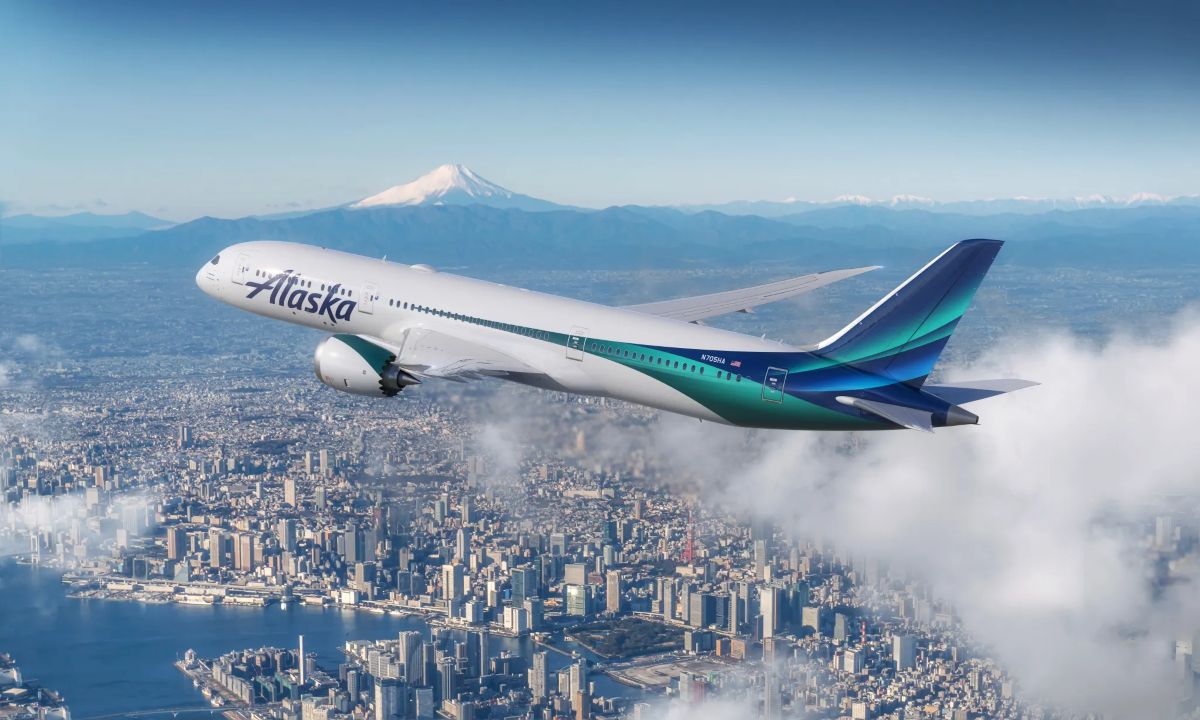
Alaska Airlines expects Boeing 737 MAX 10 certification by the end of September 2026. The carrier plans its first aircraft delivery next spring, followed by passenger service between April and mid-May. Alaska expects 22 MAX 10 deliveries in 2027 and 30 in 2028, giving the aircraft a significant role in its growth strategy. The airline placed an order for 105 Boeing 737-10 aircraft in January, alongside five Boeing 787s and rights for another 35 MAX 10s. However, the schedule remains dependent on US regulatory approval and further airline-specific certification work. The aircraft could add capacity on high-demand routes without requiring additional frequencies.
Certification Moves Into Its Final Phase
The Boeing 737-10 programme has entered its final regulatory stage after years of development and testing. Boeing completed its final planned certification flight in July, marking a major step towards approval. The programme accumulated 976 flights and more than 2,060 flight hours during certification testing.
The remaining process involves closing development assurance reviews, completing system safety assessments and submitting final certification material. Boeing said in July that its certification flight-testing programme was complete. The company was then working through the remaining regulatory deliverables with the FAA.
Boeing chief executive Kelly Ortberg subsequently described certification as coming “very soon” on 16 September. That statement reinforced expectations that the programme is approaching its regulatory finish line.
Advertisement
Advertisement
For Alaska Airlines, however, aircraft certification does not immediately translate into passenger operations. Chief Operating Officer Jason Berry said the carrier would still need to complete certification work associated with the aircraft’s pilot head-up display.
Advertisement
Advertisement
That additional process could take several months. Consequently, Alaska’s targeted spring 2027 introduction leaves relatively little room for regulatory or delivery slippage.
| Key Development | Current Position |
|---|---|
| Aircraft | Boeing 737-10 |
| Expected FAA certification | By end of September 2026 |
| Alaska’s first delivery | Spring 2027 |
| Planned passenger launch | April to mid-May 2027 |
| Expected 2027 deliveries | 22 aircraft |
| Expected 2028 deliveries | 30 aircraft |
| Alaska firm 737-10 order | 105 aircraft |
| Additional 737-10 rights | 35 aircraft |
| Final certification flight testing | Completed July 2026 |
| Certification flight programme | 976 flights |
| Certification flight hours | More than 2,060 |
A Larger Jet for High-Demand Routes
The aircraft’s importance to Alaska extends beyond fleet renewal. The carrier intends to use the larger narrowbody to increase seat capacity across routes where demand already supports additional seats.
Berry indicated that the aircraft could help Alaska add capacity on markets such as New York and Boston without adding flights. That strategy matters at constrained airports, where securing additional take-off and landing slots can be difficult.
Advertisement
Advertisement
The 737-10 is the largest member of Boeing’s 737 MAX family. Boeing lists a maximum capacity of 230 passengers, while its typical two-class configuration ranges from 185 to 210 seats. Its published range reaches 3,100 nautical miles, or about 5,740 kilometres.
The aircraft therefore occupies an important space between smaller narrowbodies and larger widebody aircraft. Airlines can deploy it on dense domestic and regional markets without committing to the higher capacity of a widebody.
Advertisement
Advertisement
For travellers, that distinction could eventually translate into more seats on popular city pairs. It does not necessarily mean more daily flights, however. Alaska’s stated strategy is partly about increasing aircraft gauge rather than simply expanding frequency.
Alaska Builds Around A Major Fleet Shift
Alaska’s commitment to the aircraft is unusually substantial. In January 2026, the airline announced its largest aircraft order in history. The deal included 105 Boeing 737-10s and five Boeing 787s, together with rights for another 35 MAX 10 aircraft.
The investment forms part of Alaska Air Group’s broader fleet expansion. The group has said its fleet is expected to reach 475 aircraft by 2030 and more than 550 by 2035.
That expansion also follows Alaska’s integration with Hawaiian Airlines. The two carriers achieved a single operating certificate, marking a major milestone in the integration process.
The MAX 10 will therefore arrive during a period of substantial network development. Its role will extend beyond replacing ageing aircraft. It will also provide additional capacity as Alaska grows its combined network.
Advertisement
Advertisement
| Aircraft | Alaska Air Group Fleet Count* | Seats | Published Range |
|---|---|---|---|
| Boeing 737-9 MAX | 80 | 178 | 3,250 nm |
| Boeing 737-8 MAX | 20 | 159–161 | 3,500 nm |
| Boeing 737-900ER | 79 | 178 | — |
| Boeing 737-800 | 59 | 159–161 | 3,500 nm |
| Boeing 737-700 | 11 | 124 | 2,985 nm |
| Boeing 787-9 | 5 | 300 | — |
| Airbus A321neo | 18 | 189 | — |
How the MAX 10 Changes Traveller Capacity
The 737-10’s principal travel-market advantage is its ability to carry more passengers than smaller MAX variants. Boeing lists the MAX 8 at up to 210 seats and the MAX 9 at up to 220 seats. The MAX 10 can accommodate up to 230 passengers in its maximum configuration.
That difference may appear modest on an individual flight. Across a large network, however, additional seats can materially increase available capacity.
The aircraft also has a longer fuselage than the MAX 9. Boeing has strengthened the landing gear and braking system to accommodate its greater weight. Its maximum take-off weight is listed at 89,760 kilograms.
For travellers, aircraft type remains less important than the final cabin configuration. Alaska has not announced plans to install lie-flat seats on the MAX 10. Berry said the option remains under consideration.
Passengers should therefore focus on the eventual seat map rather than assuming the larger aircraft will bring a premium-cabin transformation.
Advertisement
Advertisement
What Certification Means for Travelers
Aircraft certification is a regulatory process rather than an airline marketing milestone. The FAA evaluates whether an aircraft complies with applicable design and safety requirements before approving it for commercial operation.
The agency has maintained close oversight of Boeing’s certification and production processes. In August, the FAA certified the Boeing 737-7 after an extensive review involving flight controls, system safety, human factors and flightcrew alerting.
That development provides useful context for the MAX 10’s final stage. Certification does not depend solely on the completion of flight testing. Regulatory reviews, documentation and safety assessments also form part of the process.
The FAA also restored Boeing’s ability to issue certain airworthiness certificates under FAA oversight in July 2026. The decision followed eight months of production-quality data and safety review.
For passengers, the practical message is straightforward. A future booking showing a 737-10 does not mean the aircraft is already cleared for service. Alaska must receive the aircraft, complete its own regulatory work and introduce it into scheduled operations.
Advertisement
Advertisement
Why New York and Boston Matter
Alaska’s planned use of the aircraft on markets such as New York and Boston highlights a broader trend in US aviation. Airlines increasingly use larger single-aisle aircraft to absorb demand on busy routes.
The strategy can offer additional capacity without the operational requirements of widebody aircraft. It can also allow airlines to adjust capacity while maintaining existing departure patterns.
This matters particularly in large metropolitan markets. Airports around New York and Boston face infrastructure constraints, while passenger demand remains concentrated around commercially important time periods.
A higher-capacity narrowbody can therefore become a network-management tool. Alaska can potentially move more passengers during peak periods without automatically adding another aircraft movement.
That approach could also influence fare availability. More seats on a flight can increase inventory, although ticket prices will continue to depend on demand, seasonality, competition and broader airline capacity.
Advertisement
Advertisement
Alaska’s Delivery Schedule Leaves Little Slack
Alaska expects 22 MAX 10 deliveries in 2027, followed by 30 in 2028. That represents 52 aircraft across the first two years of the carrier’s planned introduction programme.
The delivery profile is significant because aircraft certification and aircraft production are separate milestones. Even after regulatory approval, Boeing must deliver completed aircraft, while Alaska must complete its own acceptance and operational preparations.
The airline’s spring 2027 passenger target therefore depends on several linked steps.
| Stage | Expected Timing | Importance for Travellers |
|---|---|---|
| FAA aircraft certification | September 2026 target | Clears aircraft design for commercial operation |
| First Alaska delivery | Spring 2027 | Begins airline fleet integration |
| Airline certification work | Following aircraft approval | Supports Alaska’s operational introduction |
| First passenger service | April–mid-May 2027 target | Opens aircraft to scheduled travellers |
| 2027 deliveries | 22 aircraft | Supports initial capacity expansion |
| 2028 deliveries | 30 aircraft | Accelerates fleet growth |
What Passengers Should Watch Next
Travellers should watch Alaska’s schedule announcements rather than relying solely on the aircraft order. Airlines can change aircraft assignments according to demand, operational requirements and fleet availability.
The first commercial routes will provide the clearest indication of how Alaska intends to deploy the aircraft. High-demand trunk routes are likely to remain important to the strategy because the airline has explicitly linked the aircraft with markets such as New York and Boston.
Advertisement
Advertisement
The cabin configuration will also matter. Alaska currently operates several 737 variants with different seat counts and cabin layouts. Its existing 737-9 MAX has 178 seats, while its 737-8 MAX aircraft carry 159 or 161 passengers.
That means the MAX 10 could provide a meaningful capacity increase on selected routes. Nevertheless, the passenger experience will depend on the final Alaska configuration, including seat pitch, premium seating and onboard services.
A Crucial Moment for Boeing and Alaska
The 737-10 now stands at an important junction for both Boeing and Alaska Airlines. Boeing has completed its planned certification flight programme and is closing the remaining regulatory work. Alaska, meanwhile, has built its expansion strategy around substantial deliveries beginning in 2027.
The immediate milestone is therefore certification. The larger question concerns how quickly approval converts into aircraft deliveries and scheduled passenger service.
For Alaska travellers, the aircraft could eventually mean more seats on important domestic and transcontinental markets. For the airline, it offers a way to increase capacity while retaining the flexibility of a single-aisle fleet.
The timetable remains ambitious. Yet if certification arrives as expected, Alaska could begin introducing the largest 737 MAX variant into its network within months. That would mark a significant new chapter in the carrier’s fleet expansion and US narrowbody aviation.
Advertisement
