
Hundreds of Travelers Affected Over Asia as Jakarta, Larnaca and 45 More Airports Cancel 235 and Delay 3,115 Flights

Published
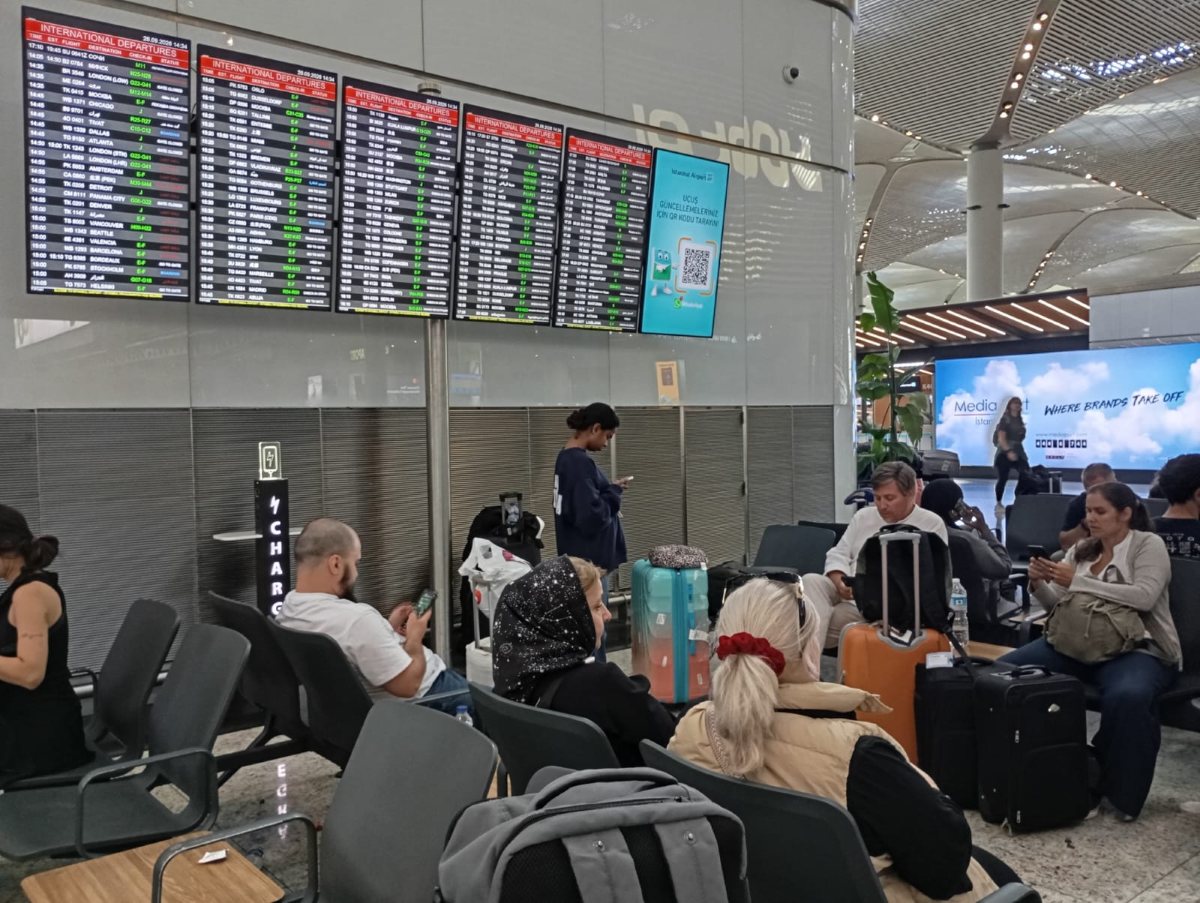
Major aviation networks are severely disrupted, affecting hundreds of travelers around Asia as 235 flights are canceled and 3,115 are delayed at Jakarta, Larnaca, and 45 other airports. One of the biggest causes is still severe weather. Parts of Indonesia, India, Vietnam, and China have experienced operational disruptions due to heavy rain, thunderstorms, high winds, and poor visibility. In the meanwhile, East Asian operating hazards have grown due to tropical weather systems. Some airlines have also been forced to reroute, halt, or extend services due to Middle East airspace limitations. As a result, travelers should keep a careful eye on airline updates because itineraries are still being impacted by weather, traffic, and airspace restrictions.
Which Airports of Asia Are Facing the Heaviest Flight Disruption?
China Sees Disruption Across Several Major Aviation Markets
Chongqing Jiangbei International recorded 101 delays and three cancellations, while Chengdu Tianfu International had 84 delays and eight cancellations. Beijing Capital International registered 81 delays and five cancellations, and Chengdu Shuangliu International recorded 76 delays and five cancellations.
Advertisement
Advertisement
Elsewhere, Guiyang Longdongbao reported 56 delays and three cancellations, Wuhan Tianhe had 45 delays and three cancellations, Tianjin Binhai International recorded 31 delays and three cancellations, and Harbin Taiping International also had 31 delays and three cancellations.
Ningbo Lishe International registered 29 delays and six cancellations. Qamdo Bangda had nine delays and five cancellations, Pan Zhi Hua Bao An Ying recorded five delays and two cancellations, and Daocheng Yading registered four delays and five cancellations.
Advertisement
Advertisement
Vietnam, Japan and India Add to Delays and Cancellations
Indira Gandhi International Airport recorded 187 delays and four cancellations, giving Delhi one of the highest delay totals in the entire dataset.
Bengaluru International followed with 141 delays and four cancellations. Sardar Vallabhbhai Patel International Airport in Ahmedabad recorded 20 delays and four cancellations, while Pune/Lohegaon Air Force Base registered 17 delays and three cancellations.
Advertisement
Advertisement
Navi Mumbai International reported 12 delays and 12 cancellations, producing an unusually high cancellation count relative to its reported delays. Jammu recorded two delays and three cancellations.
Tokyo International Airport, commonly known as Haneda, registered 184 delayed flights and three cancellations. Its delay count places it among the most heavily affected airports in the supplied data.
Advertisement
Advertisement
Vietnam’s Tan Son Nhat International Airport recorded an even higher 199 delays, alongside three cancellations.
Middle Eastern Airports Add Another Layer of Disruption in Asia
Saudi Arabia’s King Khalid International recorded 222 delays and 11 cancellations, while King Abdulaziz International reported 129 delays and eight cancellations. Abha Regional registered 32 delays and four cancellations.
Gizan Regional recorded no delays but four cancellations. Najran Domestic likewise reported no delays and four cancellations, while Yanbu Domestic also had no delays and four cancellations.
In the UAE, Dubai International recorded 146 delays and 10 cancellations. Abu Dhabi International reported 99 delays and five cancellations, while Sharjah International registered 54 delays and two cancellations.
Advertisement
Advertisement
Elsewhere, Ben Gurion International recorded 173 delays and five cancellations. Bahrain International had 22 delays and eight cancellations, Kuwait International recorded 14 delays and two cancellations, and Queen Alia International reported 25 delays and one cancellation.
Ramon Airport recorded two delays and three cancellations, while Larnaca International registered 63 delays and two cancellations.
Turkey also features prominently. Istanbul Airport recorded 166 delays and two cancellations, while Antalya reported 85 delays and one cancellation.
Islamabad International Airport recorded 26 delays and five cancellations, while Jinnah International registered 23 delays and four cancellations.
Which Airlines across Asia Are Most Affected?
Chinese Airlines Account for Large Numbers of Delayed Flights
Tianjin Airlines recorded six cancellations at 1% and 62 delays at 14%. Sichuan Airlines reported four cancellations at 0% and 91 delays at 11%.
Spring Airlines registered three cancellations at 0% and 69 delays at 10%, while China Southern Airlines recorded two cancellations at 0% and 147 delays at 5%.
Advertisement
Advertisement
Shandong Airlines reported two cancellations at 0% and 59 delays at 9%. Dalian Airlines recorded two cancellations at 2% and two delays at 2%.
Tibet Airlines had one cancellation at 0% and 34 delays at 14%.
The figures demonstrate why absolute numbers and percentages need to be considered together. A carrier can report a substantial number of affected flights while still showing a comparatively small disruption percentage because of its larger overall operation.
Indonesian, Indian and Southeast Asian Airlines Feel the Impact
Indonesia’s Citilink recorded six cancellations at 2% and 54 delays at 21%. Garuda Indonesia reported one cancellation at 0% and 49 delays at 20%, while Pelita Air Service recorded one cancellation at 1% and 10 delays at 15%.
In India, SpiceJet registered five cancellations at 7% and 24 delays at 38%. Its delay percentage is considerably higher than Akasa Air’s 6%, although Akasa recorded substantially more cancellations.
Vietnam Airlines reported three cancellations at 0% and 57 delays at 15%.
Advertisement
Advertisement
Philippines AirAsia recorded two cancellations at 2% and 41 delays at 56%. Its 56% delay rate is the highest percentage among the airlines listed.
Thai Vietjet Air registered one cancellation at 0% and 30 delays at 23%.
Myanmar’s MAI recorded four cancellations at 6% and 13 delays at 19%.
Middle Eastern Airlines Record Significant Delay Rates
Israir recorded four cancellations at 5% and 41 delays at 51%. That means more than half of the flights represented in the supplied dataset were delayed.
Flydubai recorded two cancellations at 0% and 66 delays at 22%.
Etihad Airways reported one cancellation at 0% and 80 delays at 24%, while flyadeal recorded one cancellation at 0% and 44 delays at 26%.
Advertisement
Advertisement
Kuwait Airways recorded two cancellations at 2% and one delayed flight at 1%. Royal Jordanian reported one cancellation at 0% and nine delays at 6%.
Japan, Taiwan and Pakistan Complete the Wider Disruption Picture
Japan’s ANA Wings recorded two cancellations at 0% and 25 delays at 7%. Jetstar Japan reported one cancellation at 1% and 23 delays at 25%.
| IATA | Airport | Origin cancelled % | Destination cancelled % |
|---|---|---|---|
| AHB | Abha Regional | 5% | 4% |
| AMD | Sardar Vallabhbhai Patel Int’l (Ahmedabad) | 1% | 1% |
| AUH | Abu Dhabi Int’l | 0% | 1% |
| BAH | Bahrain Int’l | 4% | 4% |
| BLR | Bengaluru Int’l | 0% | 0% |
| BPX | Qamdo Bangda | 30% | 20% |
| CGK | Jakarta-Soekarno-Hatta Int’l | 2% | 1% |
| CKG | Chongqing Jiangbei Int’l | 0% | — |
| CTU | Chengdu Shuangliu Int’l | 0% | 0% |
| DCY | Daocheng Yading | 40% | 60% |
| DEL | Indira Gandhi Int’l | 0% | 0% |
| DJB | Sultan Thaha | — | 12% |
| DXB | Dubai Int’l | 0% | 0% |
| EAM | Najran Domestic | 50% | — |
| HLP | Halim Perdanakusuma Int’l | — | 7% |
| HND | Tokyo Int’l (Haneda) | 0% | — |
| HRB | Harbin Taiping Int’l | — | 0% |
| ISB | Islamabad International Airport | 5% | 3% |
| IXJ | Jammu | 14% | — |
| JED | King Abdulaziz Int’l | 1% | 1% |
| KHI | Jinnah Int’l | 2% | 2% |
| KMG | Kunming Changshui Int’l | 0% | 0% |
| KNO | Kuala Namu International | — | 2% |
| KWE | Guiyang Longdongbao | — | 0% |
| LCA | Larnaca Int’l | 1% | — |
| LUW | Bubung | 40% | — |
| MDC | Sam Ratulangi Int’l | 7% | 6% |
| NGB | Ningbo Lishe Int’l | 1% | 2% |
| NKG | Nanjing Lukou Int’l | 0% | — |
| NMI | Navi Mumbai International | 8% | 10% |
| PEK | Beijing Capital Int’l | 0% | 0% |
| PLM | Sultan Mahmud Badaruddin II | 6% | 9% |
| PNQ | Pune / Lohegaon Air Force Base | 1% | — |
| PZI | Pan Zhi Hua Bao An Ying | 50% | — |
| RUH | King Khalid Int’l | 1% | 1% |
| SGN | Tan Son Nhat Int’l | 0% | — |
| TFU | Chengdu Tianfu Int’l | 0% | 0% |
| TLV | Ben Gurion Int’l | 0% | 1% |
| TSN | Tianjin Binhai Int’l | — | 0% |
| UPG | Sultan Hasanuddin Int’l | 2% | 4% |
| WUH | Wuhan Tianhe | — | 0% |
| YNB | Yanbu Domestic | — | 50% |
What Should Affected Passengers Travelling throughout Asia Do Now?
- Passengers travelling through the affected airports in Asia should check their individual flight status before leaving for the terminal. A high airport delay count does not mean every flight will depart late, while a cancellation elsewhere in an airline’s network can affect later aircraft rotations.
- Travellers should use the airline’s official website or mobile application for the latest departure time, gate information and cancellation notices. Those with connecting journeys should pay particular attention to the time available between flights.
- Passengers whose flights have been cancelled should contact their airline or booking provider to determine available rebooking, refund or alternative travel options.
- Travellers should also keep boarding passes, booking confirmations, receipts and written airline notifications. These documents can become important when requesting reimbursement, making an insurance claim or establishing what happened during the journey.
- Those travelling through highly affected airports such as Jakarta, Riyadh, Ho Chi Minh City, Delhi, Tokyo, Istanbul, Dubai and Bengaluru should allow additional flexibility in their plans.
- Most importantly, passengers should rely on their own flight number rather than the airport-wide figures alone. The data confirms extensive disruption across Asia, but individual flights can still operate normally while hundreds of other services at the same hub face delays or cancellations.
Data Verification Notice
The data presented in this report for airports in Asia has been carefully curated by our editorial team using real-time aviation figures recorded on 4 October 2026 at 3:12 p.m. ET in the United States, corresponding to 6 October 2026 at 4:12 a.m. Tokyo Time (GMT+9).
Primary Source: FlightAware, Local Correspondent
Editorial Verification: Our human editorial desk independently reviewed and cross-checked the reported statistics for accuracy. Timestamped records, aviation data logs and relevant feed snapshots have been securely archived internally to maintain historical accuracy, accountability and editorial transparency.
Important Note: Real-time flight-tracking statistics reflect continuously changing operational and airspace conditions. Therefore, minor differences may occur between these figures and information displayed by individual airlines, airport terminals or departure gates as schedules and flight statuses are updated.
Yesterday, more than 220 flight cancellations and 2,979 delays disrupted air travel across airports of Asia. Click here to read the full report.
Advertisement
Verified by Rana Pratap
