
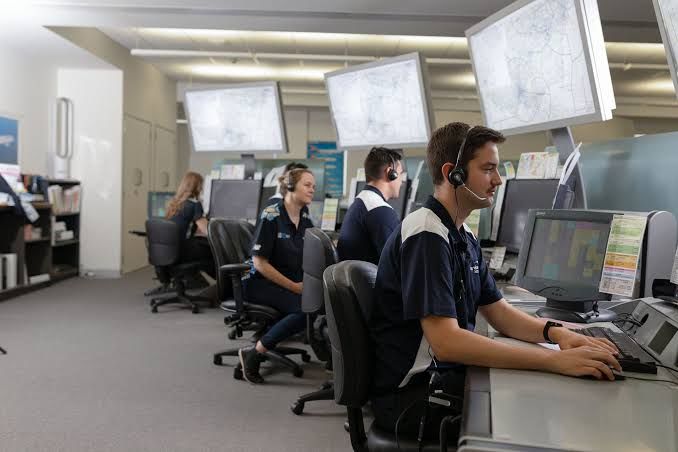
Thanks to modern technology, air traffic controllers can look through camera lenses and computer vision overlays to manage flight traffic from a distance. In other words, controllers can see through fog and darkness with ease.
Virtual towers are a revolutionary development for the modern aviation industry, an area where the UK is at the forefront of the changes. Conventional control towers are disappearing as camera arrays, infrared sensors, and computer vision overlays relay information to regional command centers hundreds of miles away. By doing so, air traffic controllers bypass challenges posed by bright lights and dense fog. Not only that, the adoption of the new technology cuts costs associated with maintaining infrastructure while enhancing operational efficiency.
Synthetic vision and virtual control towers represent a transformative paradigm shift in modern aviation, replacing physical brick-and-mortar structures with high-definition digital camera arrays and computer vision overlays. Air navigation service providers across the globe are rapidly embracing remote tower technology to reduce infrastructure overheads, improve operational resilience, and maximize airspace safety. Leading international aviation hubs and regional networks are demonstrating how centralized control centres can successfully manage complex flight operations from hundreds of miles away.
Traditional air traffic control relies entirely on the naked human eye looking through physical glass windows, which leaves operations vulnerable to blinding glare, heavy fog, and severe nocturnal darkness. Advanced digital towers bypass these limitations by deploying synchronized arrays of high-definition cameras and thermal infrared sensors strategically positioned around the airfield perimeter. These optical systems stream uncompressed panoramic video feeds via redundant fiber-optic networks directly to centralized regional control rooms with virtually imperceptible sub-second latency.
Advertisement
Infrared imaging layers allow controllers to pierce through dense fog, heavy rainstorms, and low-altitude cloud cover that would normally cripple standard visual flight rules at regional strips. High-magnification pan-tilt-zoom lenses give personnel the unprecedented ability to inspect aircraft landing gear or foreign object debris on runways with microscopic clarity. This technological leap fundamentally redefines visual capability by transforming raw optical input into an enhanced digital medium that surpasses traditional human perception.
The integration of artificial intelligence and computer vision overlays injects an unprecedented layer of proactive safety directly into the daily workflow of busy air traffic controllers. As aircraft move across tarmac networks, automated tracking algorithms project real-time callsigns, altitude indicators, and predictive trajectory vectors straight onto panoramic display screens. These intelligent software suites constantly monitor surface movements to issue immediate visual and acoustic warnings whenever a potential runway incursion or routing conflict arises.
Synthetic vision systems seamlessly fuse radar telemetry with live video feeds to create a comprehensive digital twin of the entire airport environment. By automating routine surveillance tasks and highlighting anomalies instantly, the technology drastically reduces cognitive fatigue and human error during high-stress operational peaks. Consequently, busy commercial hubs can safely optimize traffic flow and squeeze extra capacity out of existing infrastructure without compromising safety margins.
Regulatory frameworks and safety standards for these virtual systems are overseen nationally by the UK Civil Aviation Authority (CAA).
Global adoption of remote tower infrastructure is accelerating rapidly as national air navigation service providers seek cost-effective ways to maintain connectivity across diverse geographical landscapes. Sweden established early industry leadership when LFV and Saab successfully connected multiple regional airfields to a single centralized control centre operated from hundreds of miles away. Meanwhile, Norway’s Avinor has systematically rolled out extensive remote digital programs to safeguard lifeline air services across rugged, weather-challenged northern territories where physical towers are economically unviable.
In the United Kingdom, London City Airport made aviation history by transitioning its entire commercial flight schedule to a digital remote facility operated from Swanwick, Hampshire. Airservices Australia is actively evaluating similar virtual tower solutions to modernize secondary airport surveillance networks and future-proof regional aviation assets. These pioneering implementations prove that centralized multi-airport management models are fully capable of handling rigorous commercial airline schedules on a national scale.
“The rapid transition toward virtual air traffic control towers represents an extraordinary leap forward for global aviation safety and operational efficiency. By leveraging high-definition optical arrays, infrared sensors, and advanced computer vision, air navigation service providers can permanently eliminate traditional blind spots and weather-related disruptions. As pioneering nations continue to prove the scalability of centralized remote operations, this digital evolution ensures that airports worldwide remain resilient, cost-effective, and fully equipped to handle future traffic demands without compromising on rigorous safety standards.”
— Anup Kumar Keshan, Founder and Editor-in-Chief, Travel And Tour World
Transitioning from a physical viewing window to a digital screen interface introduces complex human factors challenges that require specialized psychological and technical training programs. Controllers accustomed to natural depth perception must adapt quickly to trusting flat-screen panoramic video stitching and automated tracking tags without experiencing spatial disorientation or cognitive overload. Furthermore, because critical video streams, audio channels, and radar telemetry rely entirely on network architecture, securing these digital pathways against sophisticated cyber attacks remains an absolute priority.
Air navigation service providers must implement robust cryptographic protocols, military-grade encryption, and isolated backup networks to prevent malicious signal jamming or unauthorized system interference. Balancing the immense operational flexibility of virtual towers with uncompromising cybersecurity resilience will ultimately determine the long-term success of next-generation global air traffic management.Country / Provider Operational Approach Key Implementation Milestone Sweden (LFV / Saab) Centralized multi-airport remote management Pioneered the world’s first multi-remote tower center operating regional airfields from hundreds of miles away. United Kingdom (NATS / London City) Full single-airport digital transition Transferred 100% of commercial air traffic control operations to a 50-meter digital camera mast system. Norway (Avinor) Nationwide regional network rollout Systematically deploying digital towers across rugged, weather-challenged northern domestic routes. Australia (Airservices Australia) Secondary surveillance and trial modernization Evaluating virtual tower infrastructure solutions to upgrade aging regional airport networks.
This innovative change occurs because current control towers have blind spots, high maintenance costs, and are very susceptible to weather issues that delay flights. By using virtual towers, these problems can be solved by using optical image from cameras and automated tracking software to allow air traffic controllers to view the airfield as if they were on site. Airports can then save money by not having to maintain a physical tower.
As the world moves towards a safer and more efficient system of managing air traffic, the need for more secure and powerful digital networks will be very helpful. In the future, as more countries move toward a centralized remote tower system, physical air traffic control towers will become a thing of the past.
Advertisement
Tags: Air Navigation Service Providers, aviation technology, digital remote towers, UK comes along with other countries, virtual air traffic control towers
Advertisement
Advertisement












Sunday, September 6, 2026

Sunday, September 6, 2026

Sunday, September 6, 2026

Sunday, September 6, 2026

Sunday, September 6, 2026

Saturday, September 5, 2026

Sunday, September 6, 2026

Sunday, September 6, 2026



