
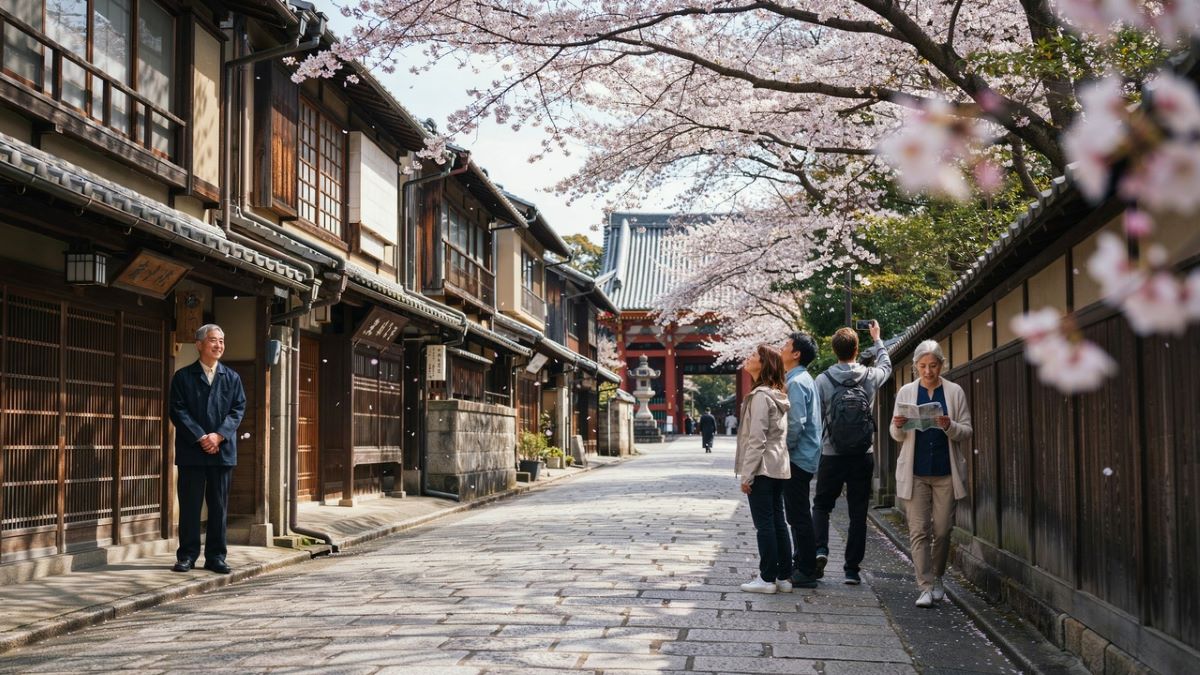
Image generated with Ai
Japan tourism is getting a lot of attention around the world. Private surveys done with travelers show that people from Japan are some of the polite tourists in the world. This is helping more people want to visit Japan. They are interested in the values the way people behave politely and the idea of traveling in a responsible way. The ranking comes from what people think not from numbers.. Japans tourism is doing well because of good management of the country as a destination efforts to promote it around the world and the experiences that visitors have. The country keeps bringing in millions of travelers from countries because of its history, the kindness of its people the food and the special traditions. Official numbers from the Japan National Tourism Organizations show that there is a lot of interest from, outside the country. This is helping Japan stay one of the places to visit in the world.
Japan’s reputation as a destination shaped by hospitality, cultural awareness and orderly travel experiences has gained renewed international interest following private surveys that identified Japanese tourists as among the most polite travellers globally. The findings have sparked discussions about how traveller behaviour influences destination reputation, international relations and the wider tourism industry.
The ranking should be understood as a perception-based result rather than an official measurement of visitor behaviour. However, it highlights a broader global conversation about responsible tourism, cultural sensitivity and how travellers represent their countries abroad.
Japan’s tourism growth has been supported by official strategies focused on improving visitor experiences, expanding regional destinations and encouraging sustainable tourism development. The country’s official tourism organisations continue to collect detailed visitor data, monitor travel trends and promote Japan as a destination combining tradition, innovation and high-quality hospitality.
Advertisement
Advertisement
The claim that Japanese tourists are the “most polite in the world” originates from private surveys and international traveller perceptions rather than government research. Such surveys typically collect opinions from tourism professionals, travel operators or respondents who evaluate visitor behaviour based on personal experiences.
These rankings often consider factors such as respect towards local customs, cleanliness, interaction with communities, awareness of cultural differences and general travel manners. However, politeness is a subjective concept that can vary between cultures and destinations.
Despite this limitation, the attention surrounding Japanese travellers reflects a long-standing international perception of Japan as a country associated with discipline, courtesy and social responsibility.
For the global tourism sector, traveller behaviour has become an increasingly important part of destination branding. Governments and tourism authorities worldwide are focusing not only on increasing visitor numbers but also on improving the quality and sustainability of tourism experiences.
Japan’s image as a respectful destination contributes to its appeal among international visitors seeking authentic cultural experiences. Traditional customs, historic neighbourhoods, religious sites and community-based tourism experiences remain key attractions for travellers exploring the country.
The concept of hospitality in Japan is often connected with the traditional idea of “omotenashi”, a cultural approach centred on thoughtful service, attention to detail and anticipating the needs of guests.
Although cultural values cannot be measured through a single tourism indicator, Japan’s service standards have become an important part of its international tourism identity.
Visitors frequently associate Japan with organised public transport, well-maintained public spaces, efficient services and careful preservation of cultural heritage. These elements contribute to the overall visitor experience and influence how international travellers perceive the destination.
The country’s tourism industry has developed around a combination of modern infrastructure and traditional experiences. Travellers can explore advanced cities such as Tokyo and Osaka while also discovering historic areas including Kyoto’s temples, rural villages, traditional festivals and natural landscapes.
The Japan National Tourism Organizations promotes these diverse experiences through global marketing campaigns and destination information platforms designed to encourage international travel across different regions.
The growing discussion around Japanese traveller behaviour comes as Japan continues to maintain strong international tourism momentum.
The Japan National Tourism Organizations provides official statistics covering foreign visitor arrivals, travel purposes, source markets and visitor spending patterns. These figures show Japan remains one of the world’s most competitive tourism destinations.
Japan’s tourism recovery has been supported by strong demand from international markets, improved air connectivity, major cultural attractions and government-backed destination promotion.
Official tourism monitoring also tracks how visitors distribute across Japan’s regions, helping authorities reduce concentration in popular areas and encourage travel to lesser-known destinations.
This regional tourism approach is increasingly important as Japan manages the opportunities and challenges created by rising visitor demand. While major destinations such as Tokyo, Kyoto and Osaka continue attracting international travellers, authorities are encouraging visitors to discover rural communities, coastal areas and regional cultural experiences.
Japan’s tourism authorities have increasingly shifted their focus from simply increasing visitor numbers towards improving tourism quality, regional economic benefits and sustainability.
The Japan Tourism Agency, under the Ministry of Land, Infrastructure, Transport and Tourism, has worked on policies supporting sustainable tourism development, local destination management and improved visitor experiences.
The government’s tourism strategy aims to create a balanced relationship between visitors, residents and local economies. This includes encouraging longer stays, promoting regional travel and improving infrastructure to support international visitors.
A key priority has been reducing excessive visitor concentration in highly popular locations while helping more communities benefit from international tourism.
This approach aligns with global tourism trends where destinations are increasingly measuring success through economic contribution, environmental responsibility and community benefits rather than visitor numbers alone.
The discussion around Japanese tourist etiquette reflects a wider shift in international travel expectations.
Destinations are increasingly seeking visitors who respect local cultures, protect natural environments and contribute positively to communities. Responsible tourism has become an important factor influencing destination reputation.
For travellers, understanding local customs can significantly improve the quality of their experience. In Japan, visitors are often encouraged to respect traditions around temples, public behaviour, food culture and community spaces.
Tourism authorities worldwide are placing greater emphasis on visitor education, particularly as international travel volumes continue expanding.
Japan’s global reputation demonstrates how cultural values and visitor experiences can influence the way a country is perceived internationally.
The growing international recognition of Japanese travel culture comes at a time when Japan tourism continues to expand as a major contributor to the national economy. International visitors support a wide range of sectors, including accommodation, transport, retail, food services, cultural attractions and regional businesses.
Official tourism statistics from the Japan National Tourism Organizations (JNTO) provide detailed monitoring of international visitor arrivals, travel patterns, spending behaviour and regional distribution. These statistics help policymakers understand how overseas demand is changing and where tourism opportunities are emerging.
The economic value of inbound tourism extends beyond major cities. When international travellers explore smaller towns, rural communities and regional attractions, tourism income can support local employment and preserve traditional industries.
Japan’s tourism model increasingly focuses on encouraging visitors to experience a wider range of destinations rather than concentrating only on internationally famous locations.
This approach creates opportunities for local communities while helping manage pressure on popular tourism hotspots.
One of Japan’s key tourism priorities has been encouraging international travellers to discover destinations beyond the traditional gateways of Tokyo, Kyoto and Osaka.
Regional tourism development has become a central part of Japan’s destination strategy because many communities rely on tourism to support local economies, cultural preservation and business growth.
The country offers diverse travel experiences, including:
The official Travel Japan platform operated by JNTO promotes destinations across Japan, highlighting cultural experiences, responsible travel options and regional attractions for international visitors.
For international travellers, this means Japan’s appeal increasingly extends beyond famous landmarks. Visitors can explore lesser-known prefectures while experiencing local traditions, seasonal events and community-based tourism.
The growth of regional tourism also supports the government’s wider goal of creating a more balanced tourism economy.
The global discussion around Japanese tourist etiquette connects closely with the wider movement towards responsible tourism.
As international travel grows, destinations are placing greater importance on how visitors interact with communities, cultural sites and natural environments.
Responsible tourism includes:
Japan has become widely recognised for its organised public systems, preservation of cultural assets and attention to visitor experiences. These characteristics contribute to its reputation as a destination where travellers can enjoy a safe, structured and culturally rich holiday.
However, tourism experts increasingly emphasise that responsible travel is a shared responsibility between visitors, businesses, governments and communities.
A traveller’s behaviour can influence the reputation of their home country and shape how destinations respond to future visitor demand.
The discussion surrounding Japanese tourists demonstrates how cultural awareness has become part of the modern tourism conversation.
Japan’s tourism policies have increasingly moved from simply increasing visitor numbers towards creating higher-value and more sustainable travel experiences.
The government has focused on improving tourism infrastructure, strengthening regional destinations and managing visitor concentration.
The Japan Tourism Agency, part of the Ministry of Land, Infrastructure, Transport and Tourism, has supported initiatives related to sustainable tourism, destination management and improved visitor services.
The policy direction reflects a global shift within tourism governance. Destinations are increasingly evaluating tourism success through economic contribution, community benefits and environmental protection rather than only arrival numbers.
The OECD Tourism Trends and Policies 2026 report highlights Japan’s focus on competitiveness, sustainability, resilience and balanced tourism development.
These priorities are becoming increasingly important as destinations worldwide face challenges linked to rapid tourism growth.
Japan’s tourism sector has also embraced digital transformation to improve convenience for international visitors.
Technology plays an important role in helping travellers navigate the country through:
Japan’s advanced transport networks remain one of its strongest tourism advantages. Efficient rail connections allow visitors to travel between major cities and regional destinations with reliability and convenience.
Digital improvements also help tourism businesses better understand visitor preferences and provide personalised experiences.
For international travellers, these developments reduce barriers and make independent travel easier.
The combination of technology, infrastructure and cultural experiences strengthens Japan’s position as a competitive global destination.
Japan’s tourism appeal is strongly connected to its cultural identity.
Visitors are attracted by a combination of:
Cultural tourism allows visitors to experience Japan beyond sightseeing. It provides opportunities to understand local traditions, community values and historical development.
The country’s reputation for hospitality supports these experiences by creating a travel environment where visitors often feel encouraged to engage respectfully with local communities.
Food tourism is another major component of Japan’s international appeal. Regional cuisine, traditional cooking methods and local products provide travellers with opportunities to explore different parts of the country through gastronomy.
From sushi and ramen to regional specialities, Japanese food culture has become an important part of global tourism demand.
The tourism industry in Japan continues to adjust to changing international visitor expectations.
Modern travellers increasingly seek:
Hotels, tour operators, transport companies and local attractions are responding by developing more specialised products.
Private surveys identifying Japanese travellers as highly polite have also highlighted the importance of visitor behaviour in tourism marketing.
While such rankings should not be treated as official measurements, they contribute to international conversations about travel culture and destination reputation.
For tourism businesses, reputation matters because travellers often choose destinations based on perceived safety, hospitality and overall experience quality.
Tourism contributes to employment, regional development and business activity across Japan.
International visitors generate demand across multiple industries, including:
The recovery and expansion of international travel have provided opportunities for businesses that depend on visitor spending.
Official tourism data systems operated through JNTO track visitor arrivals, spending patterns and travel behaviour to support tourism planning.
The government’s focus on regional tourism also aims to ensure economic benefits reach communities outside major urban centres.
For small businesses, tourism can provide new revenue streams while helping maintain traditional skills and cultural practices.
This connection between tourism and local development is one of the reasons governments worldwide are investing in sustainable destination strategies.
Japan’s tourism future is expected to depend on balancing strong international demand with sustainable destination management.
The country has significant advantages, including:
However, continued growth requires careful management of visitor flows, environmental protection and community participation.
The increasing attention around Japanese traveller etiquette demonstrates that tourism is not only about destinations attracting visitors. It is also about how travellers behave and how countries are represented internationally.
As global tourism becomes more competitive, destinations that combine memorable experiences with responsible travel practices are likely to gain stronger long-term appeal.
Japan’s approach shows how culture, infrastructure and policy can work together to create a resilient tourism economy.
Japan tourism keeps growing stronger around the world by offering cultural experiences encouraging responsible travel and managing destinations well. Even though private surveys say Japanese tourists are very polite these views come from opinions and are not part of official rankings. Still they show how traveller behaviour can shape a country’s image in tourism. With support from government plans local development efforts and programs designed for visitors Japan stays one of the choices for international travelers. The mix of traditions, modern innovation and warm hospitality gives Japan lasting chances to grow its tourism in a sustainable way. As travel changes across the globe Japan’s way of doing things shows what happens when visitor needs meet respect for culture and benefits, for communities.
[Source:- Visit Ukraine]
Advertisement
Advertisement
Advertisement













Sunday, September 6, 2026

Sunday, September 6, 2026

Sunday, September 6, 2026

Sunday, September 6, 2026

Sunday, September 6, 2026

Saturday, September 5, 2026

Sunday, September 6, 2026

Sunday, September 6, 2026



