
How Is Osaka’s Unprecedented Real Estate Expansion Sparking A Massive International Travel Surge To Japan?

Published
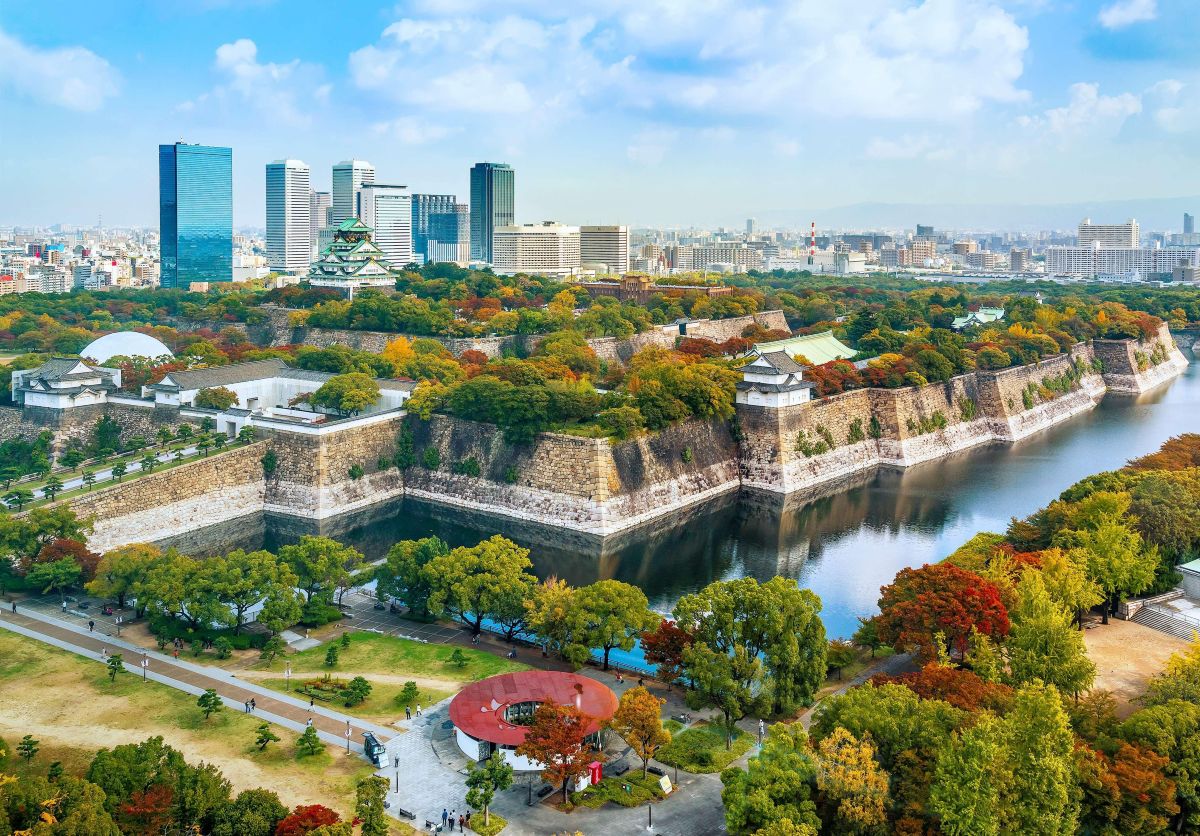
Image generated with Ai
Image Credit Japan National Tourism Organization
What makes Osaka so impressive goes beyond construction and investment statistics. Osaka’s balanced combination of contemporary and classic architecture is visible when touring the urban back streets. While most of Osaka is under construction, the statistics draw in tourists, but it is the construction that drives the opportunities for people to experience Osaka’s culture and wonder. The city is as warm and welcoming as the people of Osaka, and it is easy to see why the construction doesn’t deter people from the opportunities Osaka has to offer. Activities to help visitors integrate the Osaka lifestyle are friendly and welcoming, and the rapid growth of building in Osaka does not diminish the comfort and the welcome that is felt in the city. Behind the noise of construction in Osaka, comfort and welcome make visitors feel at home. We can understand why some people cannot leave the city, it is easy to feel at home in the relaxed, welcoming Osaka.
Advertisement
Advertisement
Understanding the Osaka Real Estate Capital Expansion and Global Travel Surge Overview
Osaka is experiencing a massive transformation in its commercial and residential markets today! Investors are redirecting capital into Osaka, Japan, to capture substantial returns and fuel an unprecedented tourism boom. Favorable governmental policies and massive infrastructure upgrades continue to draw global capital into the city. Consequently, property developments are multiplying, creating new hospitality choices for international visitors. This dynamic interplay between real estate growth and visitor flow guarantees a bright future for global travelers throughout Japan.
Advertisement
Advertisement
Furthermore, institutional capital influxes are actively reshaping the hospitality ecosystem across the entire Kansai region. As new commercial towers and luxury residential complexes rise, local lodging capacity expands rapidly. Travelers now encounter a dynamic market where high-end accommodations blend seamlessly with modern transit hubs. Ultimately, this economic wave cements Osaka as an essential destination for international commerce, tourism, and real estate investment!
Regulatory Advantages Freehold Rights and Currency Dynamics for Overseas Investors
Advertisement
Advertisement
Japan maintains an remarkably stable, transparent, and legally secure framework for foreign property buyers! International investors enjoy full freehold ownership rights identical to Japanese citizens, without facing discriminatory foreign buyer levies or complex residency constraints. Additionally, transaction costs on property acquisitions remain remarkably low at approximately 3.5% of the total purchase price. Paired with a historically soft Japanese Yen relative to the US Dollar and other foreign currencies, international buyers benefit from an extraordinarily lucrative currency discount when acquiring prime assets.
For the international traveling public, this favorable investment environment yields tangible perks and higher hospitality standards. A weak local currency provides overseas tourists with exceptional purchasing power across local dining, transportation, retail, and sightseeing activities. Simultaneously, open ownership regulations incentivize overseas hospitality developers to launch unique residential and boutique lodging ventures. Thus, Osaka stands out as a highly attractive, frictionless, and cost-effective hub for travelers and investors alike!
Urban Renewal Programs and Modern Transportation Infrastructure Near Key Transit Nodes
Massive municipal revitalization efforts serve as a major cornerstone of the ongoing economic evolution in Osaka! A prime example is the Umekita redevelopment project, formally known as Grand Green Osaka, positioned right next to JR Osaka Station. This expansive 22-acre project has transformed central land into an international hub for technology, life science innovation, and sustainable urban living. The master plan balances vibrant green parklands with cutting-edge commercial infrastructure, completely transforming the city center.
From the perspective of a global explorer, these massive improvements around JR Osaka Station greatly streamline transit navigation! Sightseers can transition effortlessly between high-speed rail lines, commercial hubs, and pedestrian-friendly entertainment districts. Additionally, the Umekita precinct offers international guests an energetic urban space filled with world-class dining, shopping, and leisure facilities. This transit-oriented upgrade ensures Osaka remains an exceptionally convenient jumping-off point for exploring the entire Kansai region!
Macroeconomic Tourism Policy Targets and the Economic Legacy of World Expo Host Facilities
Advertisement
Advertisement
National economic policies across Japan continue to champion the ambitious “Tourism Nation” initiative, aiming to attract 60 million international visitors annually by 2030! Major global gatherings serve as powerful catalysts within this national framework. Specifically, the 2025 Osaka-Kansai World Expo generated an astounding 3.6 trillion yen (roughly $22.56 billion USD) in economic ripple effects across the regional economy. This massive financial injection strengthened the foundational infrastructure required to handle high-density passenger traffic for decades to come.
The long-term impact of hosting such world-scale events dramatically elevates the day-to-day experience of international visitors entering Japan. Capital allocated toward event preparations resulted in upgraded airport connectivity, modernized train terminals, and widespread multilingual traveler support throughout Osaka. Furthermore, continuous national backing for tourism expansion guarantees that public transportation networks and visitor centers receive ongoing updates. Consequently, holidaymakers and business travelers alike enjoy an urban destination perfectly engineered to welcome global crowds!
The Hospitality Disruptions Driven by the Yumeshima Island Integrated Resort Development
The most groundbreaking catalyst in the local property landscape is the $8.1 billion integrated resort on Yumeshima Island! Having broken ground in 2025, this landmark venue is slated to open in 2030 as the very first legal casino resort in Japan. Industry observers emphasize that construction activity on Yumeshima Island is already driving real estate values upward across nearby districts. Forecasts predict the mega-resort will draw an astounding 15 to 20 million visitors annually by the early 2030s, generating an immense influx of international guests.
This massive influx of expected visitors will test existing regional hotel capacity, creating significant lodging demand across Osaka. To capture this demand spillover, property investors are rapidly developing short-term rental properties and boutique accommodations near transit corridors. While this resort project promises premier entertainment and leisure amenities for global travelers, it also points to fierce competition for lodging reservations. Visitors planning future trips to Japan should expect tighter accommodation availability and higher peak-season room rates as the 2030 launch date draws near!
Comparative Affordability and Rising Property Valuations Across Central Japan
Advertisement
Advertisement
In 2026, Osaka earned the top spot globally for real estate price growth, surpassing New York with a 3.3% increase over just six months! Despite this rapid rise, the market retains an approachable “secondary city” entry price while offering “primary city” commercial rewards. Property acquisition costs remain roughly 30% to 40% lower than those seen in Tokyo, while delivering noticeably higher rental yields for owners. Furthermore, while premier residential properties in Tokyo’s prestigious Minato Ward command top dollar, comparable luxury real estate in Osaka sells at roughly a 27% discount, representing a value gap that is closing rapidly.
This pricing dynamic is actively redefining hospitality offerings for international travelers and long-term visitors! As property buyers seek maximum rental returns, the market is seeing a surge in upscale short-term rentals and fully equipped serviced apartments. Consequently, tourists visiting Japan enjoy a diverse selection of lodging options beyond conventional hotel brands. Because overall price levels in Osaka remain far more accessible than in Tokyo, budget-conscious international travelers can easily extend their stay in Japan without overspending on lodging!
Understanding the Accelerating Inflow of Institutional Private Equity and Cross-Border Capital Assets
Cross-border institutional investment into Japanese real estate expanded rapidly, with foreign capital participation climbing from 18% in 2024 to 27% in 2025. Within this capital shift, residential property transactions alone reached 740 billion yen (approximately $5 billion USD). On a broader scale, the overall domestic property market valuation rose to $464.04 billion USD in 2026, with long-term forecasts projecting total valuation to reach $576.21 billion USD by 2034. Private equity funds originating from North America, Europe, and major Asian financial hubs continuously reallocated portfolio assets away from saturated Western markets toward Kansai.
This significant reallocation of private equity assets directly reshaped the lodging infrastructure across Osaka. Institutional developers increasingly converted legacy commercial buildings into premium, flexible, long-stay residential properties catered to international remote workers and digital nomads. Consequently, overseas visitors gained unprecedented access to high-spec accommodation options optimized for extended stays, combining business functionality with modern urban amenities.
Evaluating Luxury Hotel Performance Benchmarks and Accommodation Capacity Dynamics
Advertisement
Advertisement
High-end lodging performance recorded substantial gains across central commercial hubs, as Osaka’s luxury hotel sector expanded 24% year-over-year. This strong demand drove a nationwide 18% increase in Revenue Per Available Room (RevPAR). Nationwide, luxury accommodation assets commanded a 48% market share across 942,000 existing hotel rooms, though persistent structural supply constraints remained. Overall inbound visitor spending reached an all-time record of 9.5 trillion yen (approximately $63.3 billion USD), with overnight lodging fees representing the largest individual expenditure category.
The pronounced supply deficit relative to escalating inbound visitor arrivals enabled luxury hospitality operators in Osaka to achieve historic Average Daily Rates (ADR). For global travelers, elevated room rates altered booking behavior, accelerating demand toward boutique serviced apartments and non-traditional luxury stays. Simultaneously, these attractive yields incentivized international hotel brand operators to fast-track new development pipelines throughout Japan.
The Expansion of Short-Term Rental Units and Real Estate Yield Performance Along Transit Lines
Licensed short-term vacation rentals (Minpaku) located in high-density transit corridors generated remarkable gross returns, yielding between 15% and 33%. These figures significantly outperformed standard long-term residential yields, which typically ranged from 4% to 5%. From a tax standpoint, non-resident property owners remained subject to a 30.63% capital gains tax for short-term holding periods under five years, whereas long-term holdings exceeding five years qualified for a reduced 15.315% rate.
To capture these compelling income yields, individual property investors acquired multi-family units situated near major urban rail routes, such as the Midosuji Line, converting them into fully licensed short-term lodgings. This trend provided international families, tour groups, and multi-generational travelers with spacious alternative accommodation options equipped with home-like amenities. However, the conversion of residential units into visitor lodgings gradually tightened long-term housing availability for local residents in central Osaka.
Comprehensive Transit Infrastructure Enhancements Connecting Airport Terminals to Central Commercial Hubs
Advertisement
Advertisement
Municipal and regional transit authority upgrades introduced new metro line extensions and high-speed rail links connecting Kansai International Airport (KIX) directly to JR Osaka Station and Yumeshima Island. These transit networks successfully managed a heavy daily influx averaging over 46,300 international arrivals per day in Osaka. Continuous capital allocation into transportation networks ensured that regional infrastructure scaled efficiently alongside rising international arrival figures.
These large-scale transit improvements extended beyond real estate fundamentals by directly easing regional movement for overseas tourists. Direct high-speed transit options connecting Kansai International Airport with central commercial districts eliminated travel friction, allowing seamless movement between Osaka, Kyoto, and Nara. Consequently, international visitors experienced faster transfer times, simplified luggage handling, and improved multi-lingual transit navigation.
The Strategic Expansion of Corporate Event Venues and MICE Infrastructure Developments
Commercial business hotels and corporate event infrastructure secured a commanding 42% market share within Osaka’s commercial lodging sector. Driven in large part by MICE (Meetings, Incentives, Conferences, and Exhibitions) events distributed across Osaka and Tokyo, Japan welcomed a record 42.7 million international visitors. Strategic municipal planning positioned the region as a primary international hub for corporate conventions and global exhibitions.
The integration of high-spec event spaces within modern urban renewal projects, such as Umekita, attracted large corporate delegations year-round. This continuous influx of business travelers stabilized local hotel occupancy rates, protecting hospitality operators from typical seasonal tourism drops. Furthermore, business visitors benefited from state-of-the-art conference facilities situated within walking distance of major transit stations, luxury hotels, and commercial dining venues.
The Integration of Property Technology Platforms and Automated Guest Management Systems
Advertisement
Advertisement
Digital real estate processes and automated management platforms achieved an 18.8% market share, while contactless check-in technologies and IoT-driven energy systems were retrofitted across 81.2% of conventionally managed commercial properties. The rapid integration of Property Technology (PropTech) transformed operational frameworks across both residential and commercial real estate sectors in Osaka.
For international tourists, the adoption of PropTech solutions delivered a frictionless guest experience characterized by keyless smartphone access, automated multilingual virtual concierges, and customized room environment settings. These automated platforms streamlined arrival protocols, eliminating traditional front-desk check-in delays. Consequently, tech-focused accommodations provided overseas visitors with modern, hassle-free lodging experiences throughout Japan.
Urban Regeneration Initiatives and Adaptive Reuse for Multi-Generational Real Estate Projects
Land values across Japan grew by 2.7%, marking the strongest sustained national increase recorded since 1991. In Osaka, mixed-use urban renewal strategies repurposed obsolete commercial buildings into multi-generational housing units and luxury senior living spaces. Private equity funds targeted these adaptive reuse projects, with individual development portfolios frequently exceeding 170 purpose-built units per project in the broader Kansai area.
These urban regeneration projects revitalized aging districts into clean, safe, and highly accessible communities centered around primary transit hubs. Modernized streetscapes, barrier-free access, and expanded public spaces directly enhanced safety and comfort for elderly international travelers, family groups, and medical tourists visiting Japan.
Long-Term Strategic Tourism Roadmaps and Foreign Exchange Purchasing Power Realities
Advertisement
Advertisement
National economic planning established an ambitious target to welcome 60 million annual international visitors and achieve 15 trillion yen (approximately $100 billion USD) in annual visitor spending by 2030. Foreign exchange rates remaining around 150 Yen to 1 US Dollar provided an effective 30% purchasing power discount for Western travelers compared to pre-2020 baseline levels.
This combination of favorable exchange rates and strategic government policy solidified Osaka’s position as an exceptionally cost-effective premier global destination. Overseas tourists enjoyed heightened spending capacity, allowing them to allocate more budget toward fine dining, cultural excursions, premium retail, and regional travel across Kansai.
The Final Verdict
When you are ready to depart JR Osaka Station, you will gain a higher understanding of Osaka. Numbers and statistics will become less important. There are few things in this world that grow like Osaka does. Osaka is large in its heart and broad in its mind. Osaka is a safe place to explore the modern world, with pockets of Japan’s traditional and future charms. The city and spirit, coupled with Osaka’s wonderful food, will stay with you as will the many prospective innovations of the city. Although you have completed your journey, Osaka will stay with you. While you travel, Osaka will remain with you from your stay. Osaka will provide you with numbers and statistics that will impact your stay and your journey with you after you leave.
Advertisement
