
Hong Kong’s Hyper-Local Travel Boom Is Rewriting the City Break

Published
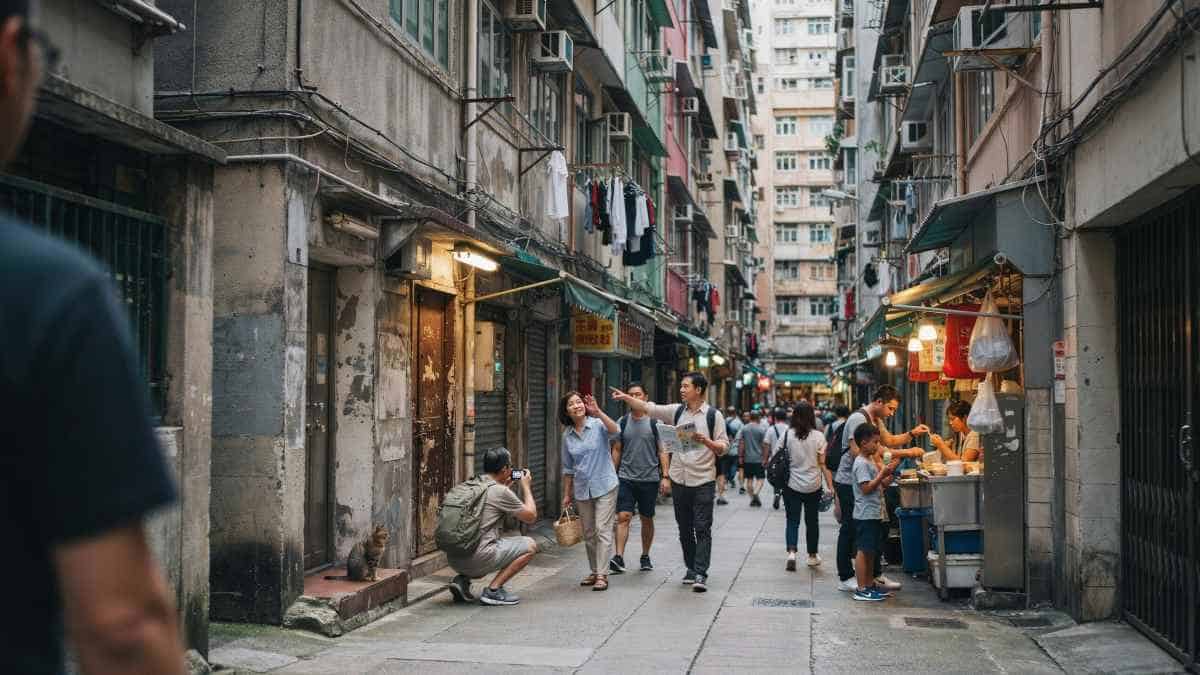
The Hong Kong of 2026 now has on offer to tourists a totally new package of sightseeing options, and the clue lies right before them. Other than the usual tourist spots of Victoria Harbour and The Peak, tourists are now taking up the exploration of neighbourhoods, wall paintings, heritage sites, artist colonies and markets to see the true Hong Kong. The local trend of hyperlocal tourism has thus been contributing to the tourism experiences in Hong Kong.
Sheung Wan Turns Into An Open-Air Cultural Trail
Sheung Wan has become one of the most compelling areas for travellers looking beyond conventional sightseeing. Its streets combine traditional shops, historic architecture, galleries, cafés and public art, creating a walkable route through different chapters of Hong Kong’s urban story.
Advertisement
Advertisement
The neighbourhood sits close to Central, making it easy to combine with the city’s major attractions. Travellers can move between Western Market, Man Mo Temple, Hollywood Road and nearby mural-covered streets while exploring the area’s blend of heritage and contemporary creativity.
The murals add another reason to slow down. Instead of simply ticking off landmarks, visitors can discover artwork tucked between streets and buildings, turning an ordinary walk into an informal cultural trail.
Advertisement
Advertisement
And that is the clever bit: Hong Kong does not need to hide its culture inside museums. Sometimes, it is sitting right there on a street corner.
PMQ Connects Heritage With Creative Tourism
PMQ provides another important stop for culturally focused travellers. Located on the former Police Married Quarters site in Central, the complex has evolved into a destination for design, creative businesses, exhibitions, retail and cultural experiences.
Advertisement
Advertisement
Its heritage architecture gives visitors a glimpse into Hong Kong’s past, while its studios, shops and events provide a contemporary layer.
For travellers, PMQ works particularly well as part of a wider Central and Sheung Wan walking itinerary. A visitor can move from historic streets and temples into a creative complex within a relatively short urban journey.
This combination of heritage and modern design is helping Hong Kong broaden the way visitors experience the city.
Night Markets Bring Travellers Into The Evening
Hong Kong’s night markets are also playing an increasingly visible role in the cultural tourism experience. Temple Street in Jordan remains one of the city’s best-known evening destinations, with food stalls, shops, street performances and market activity creating a distinctly local atmosphere.
The appeal is not simply shopping. Night markets provide opportunities to experience Hong Kong’s food culture and street life after dark.
Revitalisation efforts across different districts are also bringing renewed attention to local markets and community spaces, giving travellers more reasons to explore outside the traditional Central-Tsim Sha Tsui sightseeing circuit.
Advertisement
Advertisement
For visitors staying several nights, these evening experiences can add another dimension to an itinerary that might otherwise finish after sunset.
Victoria Harbour Still Holds The Spotlight
Of course, nobody is cancelling Victoria Harbour. The waterfront remains one of Hong Kong’s defining attractions, particularly around Tsim Sha Tsui, where travellers can view the skyline, explore the Avenue of Stars and connect with harbour cruises and waterfront walks.
The harbour also provides easy access to Kowloon’s shopping and dining districts, allowing visitors to combine classic sightseeing with neighbourhood exploration.
The result is less of an either-or choice. Travellers can photograph the skyline in the morning and disappear into a heritage lane or market later in the day.
The Peak Remains A Hong Kong Essential
The Peak continues to be another cornerstone of Hong Kong tourism. Rising above Hong Kong Island, it provides panoramic views across the city’s skyline, Victoria Harbour and surrounding landscapes.
The Peak Tram connects Central with the summit area, making the attraction relatively straightforward to incorporate into a city itinerary.
Advertisement
Advertisement
But travellers increasingly have more options around that classic experience. A Peak visit can sit alongside walks through Central, Sheung Wan and nearby heritage districts, creating a broader picture of Hong Kong beyond the famous viewpoint.
Walking Is Becoming A Tourism Experience
The growing interest in hyper-local discovery is closely connected with walking tourism. Hong Kong’s dense urban layout allows visitors to move between attractions, neighbourhoods, food districts and heritage sites without relying entirely on organised tours or vehicles.
This makes walking particularly useful for travellers who want to understand how different parts of the city connect.
A route beginning around Central can extend towards PMQ, Hollywood Road and Sheung Wan, while another itinerary can link Tsim Sha Tsui with the harbourfront and Kowloon markets.
For tourism businesses, these neighbourhood experiences also distribute visitor activity across a wider range of districts.
Key Stats
- Victoria Harbour: One of Hong Kong’s defining waterfront attractions.
- Sheung Wan: Major heritage and creative district on Hong Kong Island.
- PMQ: Historic Central complex now associated with design and creative industries.
- Temple Street: Major evening market destination in Jordan, Kowloon.
- The Peak: Hong Kong Island’s signature elevated viewpoint.
- Central–Sheung Wan: A highly walkable cultural corridor combining heritage, art, dining and retail.
Timeline & Events
Heritage era: Western Market, Man Mo Temple and historic streets established the foundation for Hong Kong’s heritage tourism.
Advertisement
Advertisement
2014: PMQ opened as a creative and design destination following redevelopment of the former Police Married Quarters.
2020s: Neighbourhood-focused travel and cultural walking experiences gained greater prominence alongside Hong Kong’s established attractions.
2026: Hyper-local discovery continues to complement major attractions such as Victoria Harbour and The Peak.
FAQ
1. What are the best areas for cultural discovery in Hong Kong?
Sheung Wan, Central, PMQ and Kowloon’s market districts offer strong combinations of heritage, art, food and street culture.
2. Can travellers combine cultural neighbourhoods with major attractions?
Yes. Central, Sheung Wan and Victoria Harbour can be incorporated into the same multi-stop itinerary, while The Peak provides a contrasting high-altitude experience.
3. Why are walking tours important for Hong Kong tourism?
Walking allows visitors to experience local architecture, murals, markets, food and community spaces between major attractions.
Advertisement
Advertisement
Dates
2014: PMQ opened as a creative hub.
2026: Hyper-local and cultural discovery continues expanding alongside Hong Kong’s classic tourism attractions.
Conclusion
Hong Kong tourism tale no longer revolves around images from the top of skyscrapers or panoramic views. While Victoria Harbour and The Peak are still critical elements of the destination, Sheung Wan’s street art, PMQ creative spaces and vibrant markets offer tourists a more personal way of discovering Hong Kong. For tourists who would prefer a walk over a list, Hong Kong has much to offer.
Advertisement
