
India Aligns With Kenya And More Accelerating Tourism Corridors Amid Emerging Global South Trade

Published
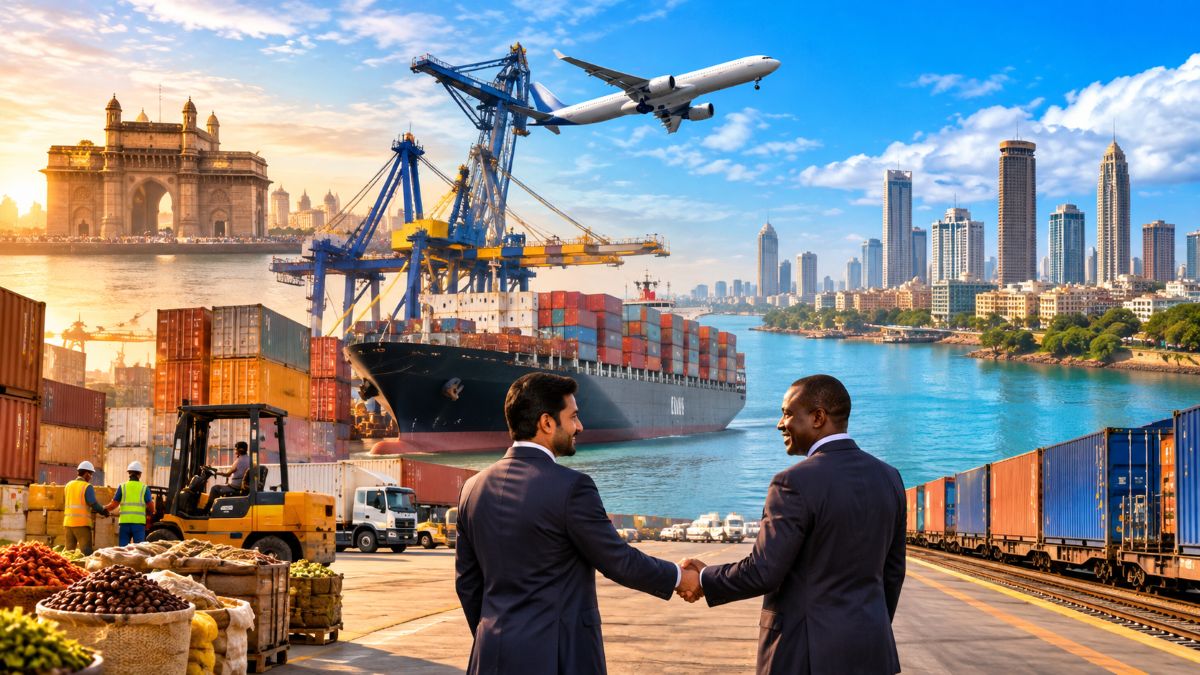
Image generated with Ai
The diplomatic landscape across Asia and Africa has shifted decisively toward strategic self-reliance, with emerging powers demanding institutional equity rather than token participation in global governance. At the eighty-first United Nations General Assembly in New York, leaders from both continents articulated a shared vision to dismantle outdated financial architecture, restructure supply chains, and build sovereign corridors of enterprise. India, Kenya, Nigeria, and Ghana voiced uncompromising perspectives on navigating external volatility, specifically the combined shocks of global conflicts, technology weaponisation, and persistent inflation in food and fuel supplies. This south-south convergence reflects a structural realignment where Asian industrial speed pairs with African demographic and mineral authority to negotiate balanced bilateral settlements.
This strategic cohesion carries profound ramifications for international mobility, corporate transit, and bilateral business travel. For generations, corporate visitors and officials shuttling between major Asian hubs and African capitals faced fractured aviation networks, prohibitive visa regimes, and third-party layovers that compounded costs. As multilateral platforms such as the Platform for Multilateralism and the African Continental Free Trade Area gain traction, cross-continental access is undergoing rapid modernisation. Streamlined bilateral aviation corridors, mutual professional accreditations, and digital identity standardisation are replacing bureaucratic friction, unlocking practical pathways for commercial travellers, researchers, and regional investors intent on witnessing this historic economic rebalancing firsthand.
Advertisement
Advertisement
Institutional Realignment at the United Nations General Assembly
The deliberations at the eighty-first United Nations General Assembly demonstrated that the Global South has progressed beyond seeking a passive consultative voice to demanding direct governance power. Dr Subrahmanyam Jaishankar framed the immediate dilemma confronting developing territories as the acute four-f crises encompassing food, fuel, fertiliser, and finance. This vulnerability has been intensified by the overt weaponisation of international clearance channels and essential commodity flows. African heads of state reinforced this perspective with unprecedented unity, urging decisive United Nations Security Council reform that includes permanent African representation with full executive privileges.
This diplomatic stance marks a departure from historic foreign aid frameworks. Political leadership across both continents affirmed that international engagement must function through equal, reciprocal arrangements rather than unilateral prescriptions. Initiatives such as the newly established Platform for Multilateralism, uniting diverse nations including India and Kenya, illustrate how middle powers are constructing autonomous diplomatic frameworks to offset hegemonic rivalries. By coordinating positions on technological sovereignty, artificial intelligence protocols, and debt restructuring, Asian and African delegations are securing practical negotiating leverage. This cohesive diplomacy challenges conventional multilateral institutions to reform their internal voting mechanisms or risk obsolescence as alternative governance platforms expand.
Advertisement
Advertisement
Commercial Integration and Continental Transport Corridors
The economic interface linking the Asia-Pacific, Eurasia, and Africa is shedding its informal past and transitioning into formalised physical and financial networks. Asia’s burgeoning commercial networks provide a relevant template for African integration, where internal commerce historically lagged due to fragmented customs barriers and reliance on external currencies. The rapid operationalisation of the Pan-African Payment and Settlement System alongside continental free trade mechanisms is reducing foreign exchange expenditures by up to thirty per cent, allowing local businesses to trade directly using national monetary units.
| Corridor Framework | Primary Member States | Core Economic Purpose | Travel and Logistics Impact |
|---|---|---|---|
| Platform for Multilateralism | India, Kenya, Canada, Partner States | Diplomatic rules defence and non-hegemonic dispute settlement | Streamlined diplomatic travel and cross-border research exchanges |
| INSTC and SCO Networks | India, Central Asian States, Eurasian Partners | Multimodal transit bypassing unilateral trade checkpoints | Accelerated overland cargo and commercial expedition routes |
| AfCFTA and PAPSS Pipeline | Fifty-four African Union Member Nations | Unified single-market trade and local currency clearance | Simplified corporate transit, visa easing, and regional air corridors |
| Expanded BRICS Architecture | Eleven Member States and Global Partners | Institutional consensus building and independent development financing | Enhanced intercontinental executive travel and financial conferences |
These logistics and regulatory advancements directly alter regional transit for international business professionals, trade delegations, and technical specialists. Historically, travelling across African commercial centres required tedious currency conversions into Western denominations, alongside prolonged visa procedures and indirect flight paths through European hubs. The establishment of integrated continental networks is driving direct long-haul aviation links between major Asian commercial centres such as Mumbai, Singapore, and New Delhi and African commercial gateways like Nairobi, Addis Ababa, and Kigali. Corporate travellers now experience shorter transit times, harmonised visa applications, and transparent regional border processing that mirrors modern trans-Eurasian transit corridors.
Advertisement
Advertisement
Mineral Value Addition and Resource Sovereignty
Securing real economic autonomy requires resource-rich states to move away from primary raw material exportation toward domestic industrial processing. Africa commands approximately thirty per cent of the world’s critical transition minerals, including over three-quarters of global cobalt and nearly two-thirds of accessible manganese reserves. Historically, these essential resources were exported unprocessed to foreign manufacturing hubs, leaving domestic populations vulnerable to international commodity price swings. Both Asian and African leadership now emphasise local value retention, insisting that critical energy transition elements undergo domestic refinement before entering international export channels.
This transition to domestic mineral processing requires significant capital allocations for clean, resilient industrial power generation and modern transport infrastructure. Sovereign industrial strategies depend on developing regional battery production lines, electric vehicle components, and competitive regulatory environments that welcome foreign capital on balanced terms. This shift is turning regional mining hubs into sophisticated industrial centres that attract an entirely new demographic of specialist travellers, including environmental engineers, processing technicians, and international supply-chain auditors. Travel infrastructure around these industrial zones is expanding accordingly, with regional airports, executive accommodations, and local transport networks upgrading to handle steady inflows of international technical delegations.
Digital Public Infrastructure and Shared Growth
The widespread adoption of interoperable digital public infrastructure is the most reliable accelerator for trade facilitation and sustainable economic sovereignty across the Global South. Low-cost digital identity structures, instant cross-border payment rails, and transparent electronic customs databases eliminate the physical administrative friction that long restricted intra-regional business travel. India’s successful rollout of open-access public digital frameworks provides a practical reference architecture for African markets working to integrate disparate commercial jurisdictions under continental agreements.
Modern trade facilitation regimes, strict anti-monopoly regulations, and digital consumer safety frameworks ensure that sovereign markets remain resilient against both external financial pressure and internal oligopolies. As digital identification and sovereign financial platforms mature across developing markets, they establish a secure, predictable commercial environment for global travellers, digital entrepreneurs, and international institutional partners. The convergence of Asia and Africa is ultimately an operational, institutional reality that is redrawing the map of global travel, trade routes, and international governance.
Frequently Asked Questions
What is driving the growing trade alignment between Asian and African nations? The alignment is driven by the mutual ambition to protect economic sovereignty, diversify critical supply chains away from unilateral pressure, settle cross-border commerce using national currencies, and demand equitable reform within established multilateral organisations.
How does United Nations General Assembly reform impact developing economies? Meaningful United Nations Security Council reform ensures that African and Asian populations have permanent executive representation, enabling developing states to guide global crisis response, debt relief strategies, and international climate finance allocations equitably.
Advertisement
Advertisement
What specific challenges does the four-f crisis describe? Formulated by Indian foreign diplomacy, the phrase captures the compounded international supply shocks affecting food, fuel, fertiliser, and finance, which disproportionately burden developing states when global trade routes face political weaponisation.
How is the African Continental Free Trade Area transforming commercial travel? The continental free trade agreement simplifies business mobility by removing tariff barriers, promoting unified visa structures, and encouraging direct point-to-point regional air connections, which eliminate expensive indirect transit routes through non-continental hubs.
What practical function does the Pan-African Payment and Settlement System serve? The system enables businesses and commercial travellers across member states to settle financial transactions instantly in their domestic national currencies, reducing foreign exchange fees by twenty to thirty per cent and removing reliance on foreign intermediaries.
Why is mineral value addition vital for African economic independence? Processing essential transition minerals such as cobalt and manganese locally creates advanced industrial manufacturing jobs, retains technical expertise within local communities, and prevents external powers from capturing the entire financial margin of renewable energy manufacturing.
What role does India’s digital public infrastructure model play in international relations? India’s open-access identity and real-time electronic payment architecture serves as a scalable, non-proprietary blueprint that partner states adapt to digitise domestic customs, formalise retail commerce, and facilitate cross-border economic settlements.
How does modern south-south cooperation affect long-haul aviation patterns? Increasing commercial engagement between Asian manufacturing powerhouses and African markets generates consistent demand for direct passenger and cargo flights, bypassing historic European stopovers and decreasing travel duration for corporate delegations.
Advertisement
Advertisement
How do sovereign credit rating proposals improve African financial stability? Establishing independent, regionally grounded credit rating entities counters the structural biases of external financial agencies, allowing developing nations to access international capital on fair borrowing terms while protecting vital public budgets.
What differentiates Africa’s current economic reawakening from historical independence movements? While twentieth-century liberation achieved fundamental political autonomy and territorial statehood, the current economic reawakening focuses on institutional capability, sovereign digital infrastructure, domestic resource processing, and equal rule-making authority in global commerce.
Advertisement
