
Las Vegas, San Francisco and Other Western U.S. Markets Drive New Demand and High-Value Visitor Spending in Hawaii’s $6 Million Sports Tourism Push

Published
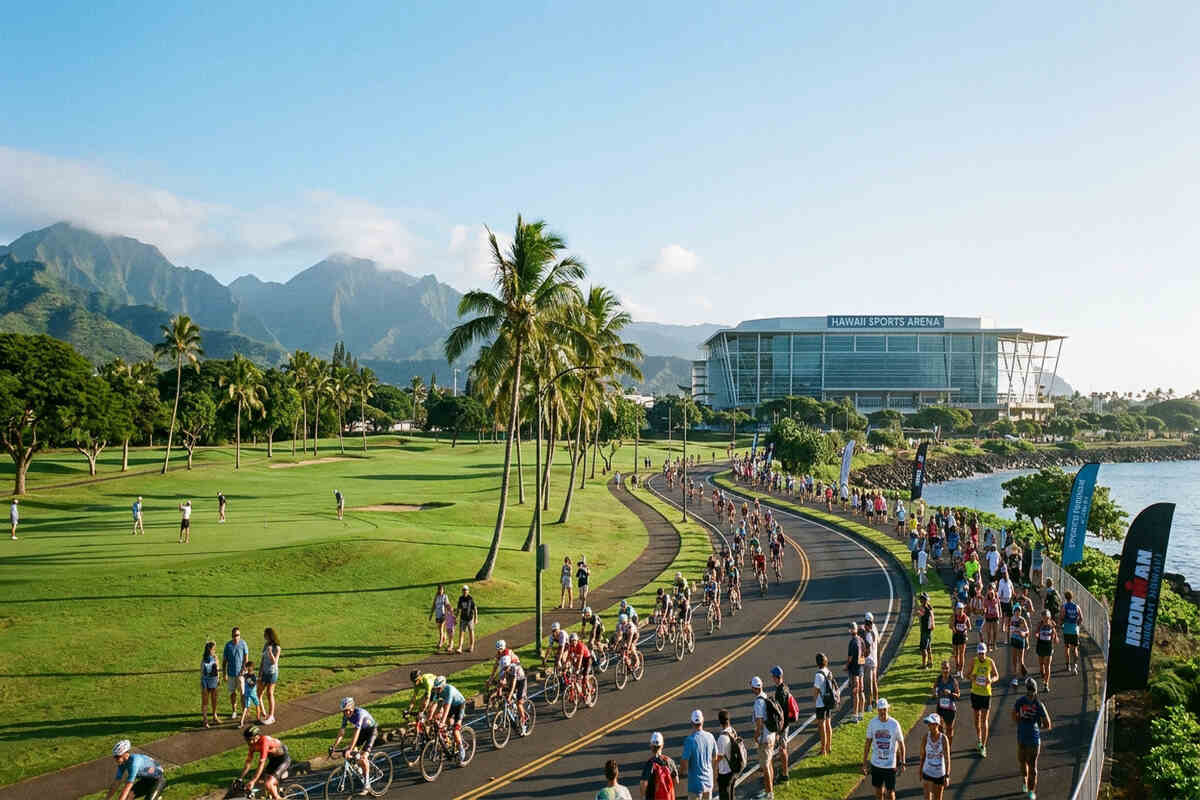
Image generated with Ai
Las Vegas, San Francisco and others help to promote Hawaii sports tourism with events and spending. Hawaii is generating buzz through big sporting events as a way to diversify the state’s tourism economy, attract higher-spending customers and provide incentive to visit the Hawaiian islands. From professional golf and basketball to marathon running, bicycling and emerging youth sports, sports tourism is set to benefit the state.
A busy sporting weekend is bringing additional attention to Hawaii, with the Lotte Championship attracting leading women golfers to Oahu while the Golden State Warriors and Los Angeles Clippers are also scheduled to take the court.
The significance of these events extends well beyond competition. Tourism planners see major sporting fixtures as opportunities to attract visitors who are prepared to spend on accommodation, dining, transport, entertainment and event tickets while often extending their stays beyond the event itself.
Sports Tourism Becomes a High-Value Visitor Market
Sports travellers are increasingly viewed as one of Hawaii’s most valuable visitor segments, ranking alongside convention and business-event travellers in terms of their economic potential.
Advertisement
Advertisement
Unlike some leisure visitors who may focus heavily on controlling daily expenses, sports tourists often travel with a clear purpose. They may arrive specifically for a tournament, professional match, marathon, cycling event or youth sports competition.
This can create spending across several parts of the tourism economy at the same time.
Advertisement
Advertisement
Travellers attending sporting events may book hotels for multiple nights, eat at local restaurants, use ground transport, shop, visit attractions and purchase event-related products. Families and groups travelling together can further increase the economic impact.
Longer stays may also become more common because visitors can combine attendance at a sporting event with a wider Hawaiian holiday.
For the tourism sector, that makes sports events more than entertainment. They become tools for generating visitor demand.
Major Events Give Travellers Another Reason to Visit Hawaii
Hawaii’s tourism industry is also looking at sport as a way to strengthen the destination’s experience-led appeal.
The islands are already internationally recognised for beaches, scenery, culture and outdoor recreation. Large sporting events can add another layer to the destination by providing time-specific reasons to travel.
A visitor who may have previously postponed a Hawaii trip could decide to travel because a favourite team, athlete or competition is taking place on the islands.
Advertisement
Advertisement
This creates an additional booking trigger.
Professional golf tournaments, basketball events and other major competitions can also give Hawaii greater visibility across television broadcasts, digital coverage and sporting communities.
That exposure can help connect the destination with audiences that may not be reached through conventional tourism promotion alone.
Participant Sports Could Become Even More Important
Hawaii is not focusing only on spectators.
Participant-based sports tourism is becoming an important part of the state’s strategy because competitors themselves can generate substantial travel demand.
The Honolulu Marathon is one of the strongest examples.
Advertisement
Advertisement
The event is expected to attract between 10,000 and 12,000 participants from Japan alone, showing the scale of international travel that a single sports event can generate.
Marathon participants are also likely to travel with family members, friends or support groups, creating additional room demand and visitor expenditure.
Running events can therefore support airlines, hotels, restaurants, retail businesses, transport providers and tourism attractions at the same time.
Cycling is emerging as another opportunity.
The Honolulu Century Ride is already attracting international riders who combine participation in the event with a holiday in Hawaii.
More than 250 Japanese cyclists are participating this year, while a similar number are expected from the continental United States.
Advertisement
Advertisement
The event is also connected with a wider international riding programme that highlights cycling experiences in destinations around the world.
For Hawaii, cycling offers a particularly strong tourism connection because visitors can experience landscapes and communities at a slower pace while taking part in an organised event.
Youth Flag Football Could Open a New Sports Tourism Market
Hawaii is also exploring the potential of youth and school-level sports tourism.
Plans are being developed for a girls’ flag football tournament involving teams connected with six major American football franchises.
The proposed participants are linked with teams from Arizona, Las Vegas, Southern California, Los Angeles, San Francisco and Seattle.
Those markets are particularly important because the western United States remains one of Hawaii’s most significant tourism source regions.
Advertisement
Advertisement
Under the concept being explored, visiting girls’ teams would compete against leading Hawaii high school flag football teams.
Such an event could produce a much wider tourism impact than the athletes alone.
Young players may travel with parents, relatives, coaches and supporters. That creates hotel bookings and spending while also giving families an opportunity to extend their stay for leisure travel.
Youth sporting competitions can therefore combine community participation with measurable visitor activity.
More Sporting Events Are Being Explored
The state’s ambitions extend beyond the events already taking place.
Hawaii is exploring additional sporting opportunities that could broaden its calendar and create new reasons for travellers to visit during different periods of the year.
Advertisement
Advertisement
Among the concepts being examined are Banana Ball events and a possible volleyball competition linked to preparations for the 2028 Olympic Games.
If developed, such events could strengthen Hawaii’s position as a destination for both professional and participant sport.
Volleyball could be particularly aligned with Hawaii’s existing recreational identity because the sport already has strong associations with beach destinations and outdoor lifestyles.
A wider sports calendar could also help spread tourism activity across different months rather than concentrating demand around traditional holiday periods.
Around $6 Million Allocated to Sports Tourism
Hawaii is supporting the strategy with dedicated tourism funding.
Approximately $6 million of the Hawaii Tourism Authority budget has been allocated to sports tourism.
Advertisement
Advertisement
The objective is to attract events that generate more than crowds alone.
Authorities are looking for competitions and sporting programmes capable of producing measurable economic returns through visitor spending.
That can include hotel nights, restaurant spending, local transportation, shopping and participation in other visitor activities.
The approach reflects a broader shift in destination management.
Instead of measuring success only through headline arrival numbers, tourism planners are increasingly examining the value generated by different categories of visitors.
Sports tourists can be attractive because they often have a specific reason to travel, fixed event dates and established spending requirements.
Advertisement
Advertisement
Sports Could Strengthen Hawaii’s Wider Tourism Economy
The growing focus on sports tourism gives Hawaii another tool for diversifying its visitor economy.
Professional tournaments can attract spectators. Marathons and cycling events can bring international participants. Youth tournaments can generate family travel. Emerging competitions can create new seasonal demand.
Each category reaches a different visitor audience.
Together, they can support hotels, restaurants, transportation companies, attractions and local businesses while strengthening Hawaii’s international visibility.
The strategy also aligns naturally with the islands’ existing tourism strengths.
Hawaii already offers year-round outdoor conditions, established visitor infrastructure and strong international recognition. Sports events add scheduled experiences that can turn destination interest into actual bookings.
Advertisement
Advertisement
As investment increases and more events are explored, sports tourism could become an increasingly important contributor to Hawaii’s visitor economy.
The scoreboard may determine who wins each competition, but for Hawaii’s tourism industry, the larger opportunity lies in turning sporting events into longer stays, stronger visitor spending and sustained travel demand.
Advertisement
