
United Kingdom Cultural Tourism Gains Fresh Year Round Appeal as The Wilson Reopens Community Shaped Galleries

Published
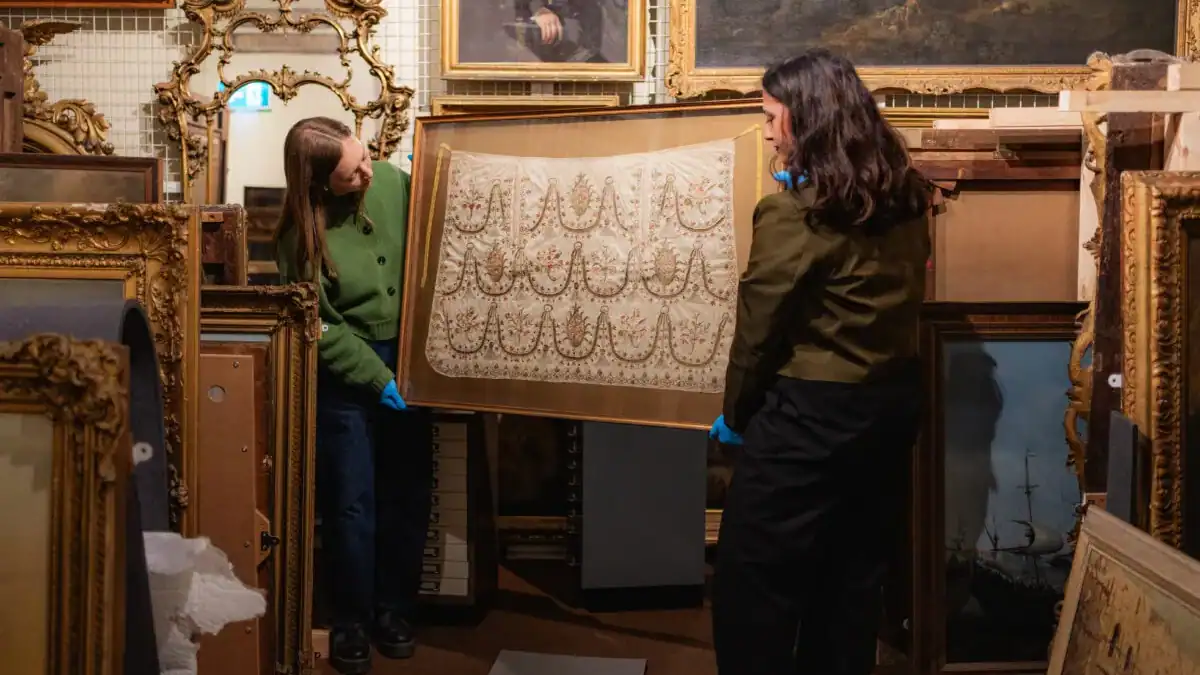
The United Kingdom is preparing to add a strengthened year-round cultural tourism asset to one of England’s best-known festival destinations when The Wilson Art Gallery and Museum reopens its refurbished museum wing to general visitors on 24 October. The significance extends beyond a museum reopening. With four renewed collections galleries, more than 250,000 objects, free general admission and programming shaped by more than 58,000 public responses, The Wilson gives Cheltenham a permanent cultural reason to visit outside its major event peaks.
Why The Wilson reopening matters for United Kingdom tourism
The Wilson’s reopening could address one of Cheltenham’s long-standing destination-management priorities: turning powerful cultural assets into year-round visitor demand rather than relying heavily on festivals and major events. Cheltenham Borough Council’s latest available figures show that the town attracted just over two million visitors in 2024, generating an estimated £191.873 million in visitor spending, with tourism accounting for around 5 per cent of local employment. The council’s cultural strategy explicitly identifies year-round cultural programming as a means of strengthening the visitor economy.
That makes The Wilson more significant to travel planners than a one-week reopening celebration. It becomes a permanent piece of tourism infrastructure.
The key tourism story is seasonality, not simply a museum reopening
Cheltenham already possesses major national awareness through festivals, racing, events, Regency heritage and its wider relationship with the Cotswolds. The destination’s own marketing framework continues to use its Festival Town identity during festival season. According to Cheltenham Borough Council’s March 2026 visitor-economy assessment, however, destination performance is also measured through visitor volume, expenditure and the ability of tourism marketing to support local businesses throughout the year.
Advertisement
Advertisement
The Wilson reopening therefore lands at an important point in Cheltenham’s tourism evolution.
A festival can create an intense concentration of demand. A museum works differently. It can become part of a Tuesday itinerary, an autumn weekend, a family half-term trip, an off-season cultural break or a wider Gloucestershire visit. That distinction matters commercially because destinations with permanent attractions have more opportunities to distribute visitor activity across additional dates.
Advertisement
Advertisement
Cheltenham’s cultural strategy already identifies this objective. According to official council documents, the town wants its cultural sector to become broader, more coherent and capable of animating the destination throughout the year. The strategy specifically links cultural provision with tourism, hospitality, retail, transport and wider economic activity.
The Wilson now supplies a tangible tourism product around which that policy can operate.
Advertisement
Advertisement
A six-year collections-gallery gap is about to close
The most precise description of the project is important.
The Wilson itself states that its museum wing and collections galleries have been closed since 2020 for refurbishment. Other areas of The Wilson have continued operating during the period, meaning it would be inaccurate to describe the whole institution as continuously closed for six years.
The renewed collections area will contain four large modern galleries, alongside visitor spaces designed to make more of Cheltenham’s extensive collection accessible. The museum holds more than 250,000 objects spanning art, craft, history, nature, science, costume and contemporary life.
That creates substantially more itinerary depth than an individual temporary exhibition.
Advertisement
Advertisement
| Verified development | Official position as of 3 October 2026 | Tourism significance |
|---|---|---|
| Collections-wing closure | Closed for refurbishment since 2020 | Restores a substantial permanent heritage component to the destination |
| New collections spaces | Four renewed collection galleries | Gives repeat and first-time visitors more permanent content |
| Collection scale | More than 250,000 objects | Supports multiple heritage, art and educational themes |
| Community input | More than 58,000 responses | Creates locally differentiated interpretation rather than a generic museum product |
| Heritage funding | Big Museum Project received £197,000 in 2024 | Demonstrates institutional investment in public access and redisplay |
| Public reopening | 24 October 2026 | Creates a new autumn tourism anchor |
| General admission | Free, with a suggested £5 donation | Reduces a significant price barrier for leisure and family visitors |
The project’s institutional history also matters. The Wilson records that the Big Museum Project received £197,000 in 2024 to support community participation in reopening the museum wing and collections galleries.
Why 23 October and 24 October must not be confused
There is a small but important discrepancy in official tourism material that travel sellers should understand.
VisitEngland lists The Wilson as a new museum wing opening on 23 October 2026.
The Wilson’s own operational information is more specific. 23 October is the Grand Museum Reopening Community Party, running from 5pm until 7pm, with access dependent on ticketing and building capacity. The regular reopening weekend begins Saturday 24 October, when the new galleries open to general visitors.
For travel-industry publication and itinerary building, 24 October should therefore be treated as the general public reopening date, while 23 October functions as the preview and launch event.
That distinction prevents agents and travellers from incorrectly treating the evening party as unrestricted public opening.
Advertisement
Advertisement
Community curation gives the museum a stronger destination identity
The second important tourism angle is the nature of the interpretation.
More than 58,000 responses were collected through The Wilson’s Big Museum Project. Participation included museum testing, outreach activity, community hubs and feedback exercises. The resulting museum is being organised around the stories that local communities considered significant, rather than merely returning historic objects to traditional display cases.
For cultural tourism, that matters.
Increasingly, destination differentiation depends not simply on owning historic objects but on making them explain a place. Cheltenham already has architectural heritage and internationally recognised events. The renewed museum provides a way for visitors to understand the people, work, creativity, social histories and natural environment behind the physical destination.
One of the new galleries is identified as Together We Are Nature, while reopening-week curator sessions will also examine design and making, people represented in paintings and the life and expeditions associated with Cheltenham-born Edward Wilson.
That creates multiple entry points for cultural travellers instead of a single chronological museum experience.
Advertisement
Advertisement
The Wilson can connect indoor tourism with Cheltenham’s wider heritage landscape
The reopening should also be viewed alongside another 2026 development.
In June, Cheltenham Borough Council and The Wilson introduced Cheltenham Story, a heritage initiative incorporating ten stories through an interactive walking trail and online resource. The project is designed to take cultural interpretation beyond the museum building and into the town itself.
VisitEngland has also linked the museum redevelopment with a new self-guided trail celebrating Cheltenham’s cultural history.
This is particularly relevant to travel businesses.
An indoor museum lasting one or two hours creates one type of visitor product. A museum combined with a heritage trail, central shopping streets, architecture and surrounding cultural experiences creates the possibility of a half-day or full-day itinerary.
The Wilson sits on Clarence Street and is approximately two minutes on foot from both The Promenade and the High Street. The museum therefore has a strong physical position for circulating visitors through the town centre rather than functioning as an isolated attraction.
Advertisement
Advertisement
Latest Cheltenham tourism data shows why extending visitor activity matters
According to the latest visitor-economy measurements published by Cheltenham Borough Council in 2026, the town welcomed just over two million visitors during 2024, generating £191.873 million in estimated expenditure. Tourism supports approximately 5 per cent of local employment.
For comparison, official council material recorded approximately two million visitors and £163.791 million in visitor expenditure in 2022.
That means recorded visitor expenditure increased by roughly 17.1 per cent between the two official reporting points, while total visitor volumes remained around the two-million level.
The inference for destination managers is important: economic growth does not depend only on acquiring ever-larger visitor numbers. Getting existing visitors to spend additional time across attractions, cafés, retail, accommodation and cultural activities can also raise tourism value.
The Wilson fits directly into that model.
| Cheltenham visitor-economy indicator | Latest official figure available | Relevance to The Wilson |
|---|---|---|
| 2024 visitors | Just over 2 million | Large established audience for cross-selling cultural attractions |
| 2024 visitor expenditure | £191.873 million | Longer cultural itineraries can support expenditure dispersion |
| Tourism share of local employment | Around 5% | Cultural demand has wider employment implications |
| Visit Cheltenham website visitors in 2025 | 758,000 | Significant official digital channel for museum discovery |
| Visit Cheltenham page views in 2025 | 2.1 million | Provides destination-marketing reach for itinerary content |
| Official tourism social following | 87,000 | Supports direct awareness of reopening-related experiences |
| Tourism social-content views in 2025 | 12.75 million | Indicates substantial destination-marketing visibility |
These figures come from Cheltenham Borough Council’s latest published visitor-economy assessment.
Advertisement
Advertisement
National attraction trends make free museums especially relevant
The reopening also arrives while England’s visitor-attraction sector continues rebuilding demand.
According to the latest available VisitEngland Annual Survey of Visits to Visitor Attractions, overall visits increased 1.4 per cent in 2024, but remained 27 per cent below 2019 levels. Overseas visits to attractions rose 6 per cent year on year, while domestic visits fell 1 per cent.
VisitEngland did not conduct the annual attractions survey in the following year, so these remain the latest comparable official sector figures.
That national context makes free-entry permanent attractions strategically useful. They reduce the marginal cost of adding another cultural experience to an existing UK trip and can appeal to overseas travellers seeking local history as well as domestic visitors controlling discretionary spending.
The Wilson’s core admission remains free, although a £5 donation is suggested, and individual exhibitions or activities may carry charges.
Autumn reopening gives Cheltenham a shoulder-season opportunity
The timing is another under-reported component.
Advertisement
Advertisement
The public reopening begins on 24 October, with a programme continuing through 1 November, overlapping the school half-term period. The opening weekend includes free gallery access, short tours, performances, workshops, conservation activity and family-oriented interpretation.
The museum also currently lists The Art of Looking: from Dutch Masters to Modern Britain through 3 January 2027, providing a reason to visit beyond the launch week itself.
This matters because the strategic test is not opening-week footfall.
The more meaningful tourism measure will be whether the museum helps Cheltenham maintain cultural visitation through November, winter weekends and the intervals between its larger event periods.
That is where The Wilson could become commercially more significant than the launch headlines suggest.
Access and transport strengthen its potential for independent and group travel
The Wilson’s location also supports practical itinerary inclusion.
Advertisement
Advertisement
Cheltenham Spa railway station is the nearest station. According to The Wilson, onward travel takes approximately 10 minutes by local bus, while walking or cycling to the town centre takes around 25 minutes using the Honeybourne Line route. Royal Well coach station is also within walking distance.
The museum does not operate a dedicated car park.
Accessibility infrastructure includes lifts serving every floor, accessible toilets, admission for assistance dogs and wheelchair loans on request.
For tour operators, those details make the attraction practical for mixed-age groups, cultural tours and accessible itineraries, although group visits and specialist tours should be organised with the museum in advance.
What travel agents and tour operators should prepare for
- Use 24 October as the standard public reopening date. Treat 23 October as the capacity-controlled community preview rather than unrestricted opening.
- Do not describe the entire Wilson as having been closed for six years. The collections wing closed in 2020 while other cultural activity continued.
- Market general museum admission as free, while making clear that a £5 donation is suggested and selected activities or exhibitions may have separate charges.
- Check Monday schedules. Current standard opening information lists the museum as closed on Mondays, with Tuesday to Saturday opening from 10am to 5pm and Sunday from 10am to 4pm.
- Allow for launch-week capacity. Half-term events and specialist sessions may require reservations despite free general gallery admission.
- Check the Arts and Crafts Gallery before promising access. It has been closed from 1 June 2026 for repair and refurbishment, so operators should verify its status close to departure.
- Plan coach and parking logistics in advance. The Wilson has no dedicated visitor car park.
- Build the museum into a wider town-centre itinerary. Its central location and heritage-trail connections create stronger dwell-time potential than treating it as an isolated attraction.
- Contact the museum for organised groups and specialist tours, especially where accessibility requirements, learning programmes or collection-led interpretation are required.
United Kingdom cultural tourism could gain more from The Wilson than opening-week footfall suggests
The strategic significance of The Wilson lies in permanence.
Cheltenham already knows how to generate event demand. The harder tourism challenge is converting that recognition into stable visitation between peaks. Official council policy has explicitly sought a stronger year-round cultural offer, while the latest data show a visitor economy already generating nearly £192 million annually.
Advertisement
Advertisement
A free museum alone will not eliminate tourism seasonality, nor is there yet official evidence showing how much incremental expenditure the reopened galleries will generate. Those outcomes must be measured after reopening.
What changes on 24 October is the destination’s capacity.
Four renewed galleries, a 250,000-object collection, community-led interpretation, a connected heritage trail, accessible central facilities and year-round programming give Cheltenham another permanent reason for travellers to stay, explore and spend outside its best-known festival dates.
For the United Kingdom’s cultural tourism sector, that is the more consequential story behind The Wilson’s reopening.
Advertisement
