
Uganda Aligns With Nigeria and Others in a Strategic Tourism Expansion Phase to Boost Collective African Tourism in 2026

Published
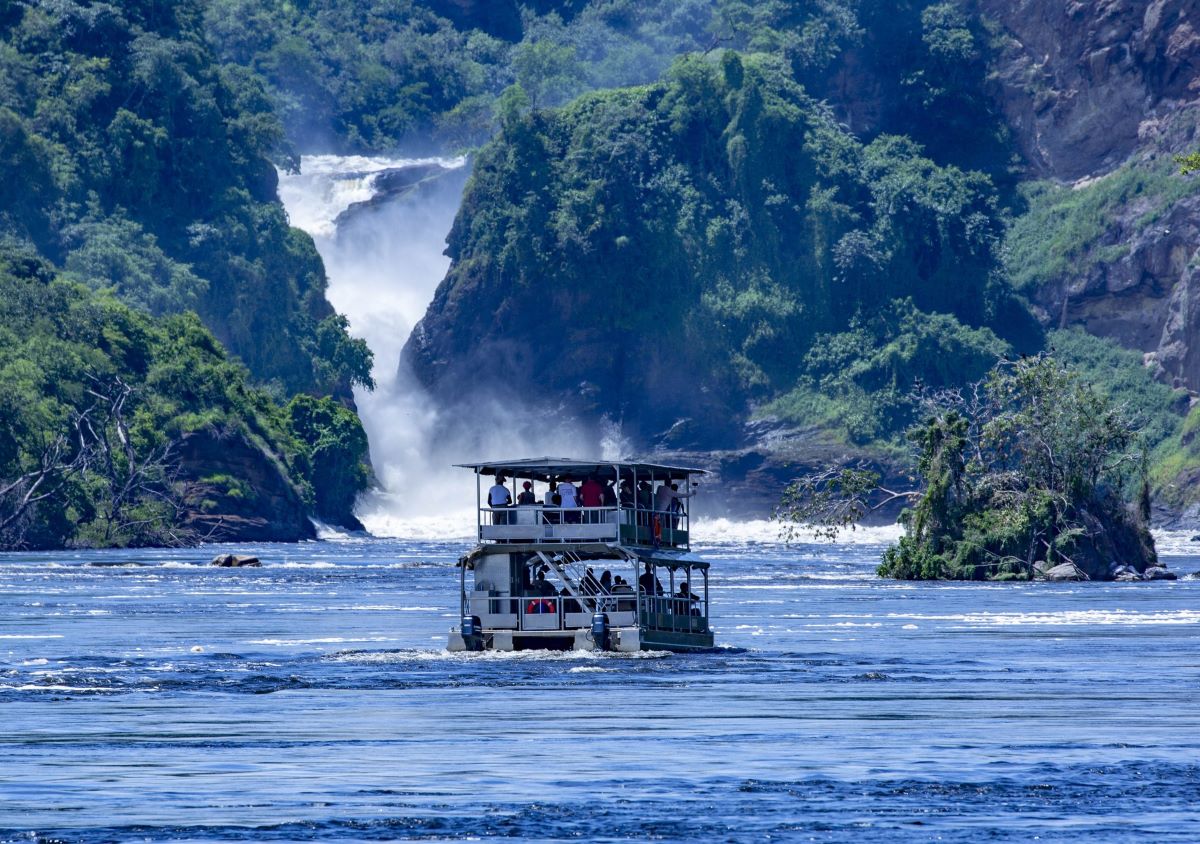
Uganda aligns with Nigeria and others in a strategic tourism expansion phase to boost collective African tourism in 2026, driven by targeted international marketing, high-value visitor campaigns, hotel investment, domestic tourism growth and efforts to strengthen connectivity, skills and tourism revenue across the continent.
The developments point to a wider change in African tourism strategy. Rather than relying only on established wildlife attractions or international arrival numbers, governments and tourism organisations are increasingly focusing on where tourists travel, how long they stay, how much they spend, where accommodation is built and whether tourism revenue reaches communities outside traditional hotspots.
Advertisement
Advertisement
For travellers, this could mean more destinations, new hotels and better-packaged experiences. For the industry, it could create new investment opportunities across accommodation, aviation, tour operations, transport, hospitality training and destination marketing.
Kenya Looks North to Expand Domestic Tourism
Kenya is trying to push tourism beyond its famous safari and coastal destinations by putting Northern Kenya and other underexplored regions at the centre of a new domestic tourism campaign.
Advertisement
Advertisement
The Kenya Tourism Board has launched the Hapa Ni Wapi Sales Conversion Campaign, beginning in Samburu East. Unlike conventional destination-marketing campaigns that focus primarily on awareness, this initiative is intended to convert traveller interest directly into bookings.
Advertisement
Advertisement
KTB is working with tour operators, county governments and other tourism stakeholders to create affordable, structured and ready-to-book packages.
Northern Kenya is the first major focus.
The campaign is showcasing areas including the Chalbi Desert and the wider Northern Kenya circuit, which offer dramatic landscapes, cultural experiences and adventure opportunities far from Kenya’s established mass-tourism routes.
More than 50 operators from the Tour Operators Society of Kenya and Kenya Association of Tour Operators are participating in the initial activation.
This is important because Kenya’s tourism economy has traditionally been strongly associated with the coast and major wildlife circuits.
Advertisement
Advertisement
KTB now wants travellers to explore more of the country.
Kenya Targets 5.6 Million Domestic Bed Nights
Domestic tourism provides Kenya with an important source of demand that is less dependent on overseas economic conditions, international aviation capacity and foreign travel trends.
Kenya recorded approximately 5.15 million domestic bed nights during the 2025/26 financial year. KTB is seeking to lift the figure towards 5.6 million through its wider domestic tourism drive.
That would require around 450,000 additional bed nights, representing growth of approximately 8.7% from the 5.15 million base.
| Kenya Domestic Tourism Strategy | Key Figure |
|---|---|
| Domestic bed nights 2025/26 | 5.15 million |
| Target | 5.6 million |
| Additional bed nights needed | 450,000 |
| Approximate increase required | 8.7% |
| Tour operators in first activation | More than 50 |
| Initial focus | Northern Kenya |
KTB also plans to extend the campaign into Mambrui-Malindi, Western Kenya and other lesser-known tourism circuits.
Advertisement
Advertisement
Improved roads are another important part of the equation. Infrastructure development across Northern Kenya is making destinations that were previously considered difficult to reach increasingly accessible.
That means infrastructure investment could translate directly into tourism opportunities.
Kenya Wants Tourism Spending to Reach New Regions
The strategy has another economic purpose: geographical dispersal.
When visitors concentrate in a small number of tourism centres, accommodation revenue, restaurant spending, guiding income and transport demand can also become concentrated.
Encouraging travellers into new circuits can spread that expenditure.
Advertisement
Advertisement
The campaign is also designed to stimulate travel during low and shoulder seasons, potentially helping accommodation businesses and tourism workers generate income across more months of the year.
For Northern Kenya, this creates opportunities extending beyond hotels. Local guides, cultural tourism enterprises, restaurants, transport operators and community businesses could all potentially benefit if the campaign succeeds in converting interest into overnight stays.
Nigeria Takes a Different Route With a US$300 Million Hotel Expansion
While Kenya is concentrating on destination dispersal and domestic demand, Nigeria is tackling tourism from the accommodation and investment side.
Accor and Shoreline Group have signed a Letter of Intent to establish what they describe as Nigeria’s first national hotel platform.
Shoreline plans to invest US$300 million in the programme. The proposed network would comprise 10 hotels across eight Nigerian cities, providing more than 1,200 rooms by 2030.
Advertisement
Advertisement
The hotels are expected to cover several market segments, ranging from midscale accommodation to luxury properties.
That is significant for Nigeria because tourism expansion requires more than attractions and promotional campaigns. Destinations also need sufficient accommodation, trained employees and internationally marketable products.
Nigeria’s Planned Hotel Expansion
| Indicator | Planned Scale |
|---|---|
| Investment | US$300 million |
| Hotels | 10 |
| Cities | 8 |
| New rooms | More than 1,200 |
| Direct jobs | Around 1,000 |
| Target completion | 2030 |
| Hotel categories | Midscale to luxury |
The development remains at the Letter of Intent stage. Therefore, the full network should be treated as a planned investment programme rather than completed or guaranteed hotel supply.
Hospitality Training Becomes Part of Nigeria’s Strategy
One particularly important part of the Nigerian project is not a hotel.
It is a hospitality training academy.
Advertisement
Advertisement
Accor and Shoreline intend to establish an academy to develop local hospitality skills. The overall initiative is expected to support around 1,000 direct jobs.
This addresses an important challenge facing rapidly expanding tourism markets.
Building hotels is only one part of tourism development. Properties also need trained managers, chefs, front-office employees, housekeeping teams, food-and-beverage professionals and other specialist workers.
By combining hotel development with workforce training, the project could strengthen Nigeria’s domestic hospitality skills base while supporting international-standard accommodation.
Nigeria Turns September to December Into a Tourism Season
Nigeria is simultaneously attempting to stimulate tourism demand through Ember to Remember 2026.
Advertisement
Advertisement
The Federal Ministry of Art, Culture, Tourism and the Creative Economy announced the initiative as a coordinated 100-day national tourism season running from September through December 2026.
The strategy links tourism with culture, entertainment, hospitality, transportation, commerce and Nigeria’s creative economy.
This is important because Nigeria already possesses powerful cultural assets in music, fashion, cuisine, festivals, nightlife and entertainment.
The government’s strategy is designed to package these separate experiences into a more coordinated tourism proposition rather than limiting the country’s year-end appeal to December alone.
In effect, Nigeria is working on both sides of the tourism equation: building accommodation supply while creating additional reasons for people to travel.
Advertisement
Advertisement
Uganda Goes After High-Value European Travellers
Uganda’s strategy is different again.
Rather than concentrating primarily on domestic travel or hotel construction, Uganda is intensifying its push into high-value European source markets, particularly France and Switzerland.
The country took 11 private destination-management companies to IFTM Top Resa 2026 in Paris, up from five in 2025.
The September exhibition attracted more than 34,000 travel professionals, 1,700 brands and 1,200 international buyers.
Each participating Ugandan company averaged between 18 and 22 pre-arranged business meetings.
Advertisement
Advertisement
Those discussions covered commercial matters including rates, accommodation allotments and gorilla-permit allocations, with tourism business being pursued for the 2027–28 period.
Products attracting buyer attention included gorilla trekking in Bwindi and Mgahinga, Rwenzori trekking, Big Five safaris, Nile adventures and birdwatching.
France Is Becoming an Important High-Value Market
Uganda’s focus on France is backed by visitor economics.
France generated approximately 7,439 visitors to Uganda in 2025, more than double the previous year’s number. Average expenditure was reported at more than US$2,025, while typical stays ranged from eight to 15 nights.
That helps explain why Uganda is interested in European markets even when individual source markets may be smaller than major regional African markets.
Advertisement
Advertisement
The objective is not simply more arrivals.
It is also higher visitor value.
Uganda’s broader tourism numbers reinforce this strategy. The country recorded approximately 1.64 million international visitors in 2025, representing growth of about 19.7% from 2024.
Tourism receipts increased by around 21.3% to approximately US$1.62 billion, or UGX5.829 trillion.
Average stays reached around 8.8 nights, while international arrivals moved above their pre-pandemic 2019 level.
Advertisement
Advertisement
The fact that tourism receipts increased faster than arrivals is particularly important because it indicates that revenue growth was not being driven by visitor volume alone.
Direct Air Connectivity Remains Uganda’s Major Challenge
There is, however, an important obstacle.
More than 90% of French and Iberian travel buyers consulted during IFTM reportedly identified the absence of direct Paris-Entebbe connectivity as a problem, largely because indirect journeys can increase travel time and cost.
Ugandan authorities are consequently advancing plans for Uganda Airlines to operate direct Paris flights by June 2027.
This remains a plan rather than a confirmed operating service.
Advertisement
Advertisement
If implemented, however, direct connectivity could support Uganda’s attempt to convert European marketing activity into sustained visitor growth.
Switzerland Becomes Another Premium Target
Uganda is also building visibility in Switzerland.
Ugandan tourism authorities and partners launched a tourism promotion campaign in Zurich in September 2026.
The campaign includes Uganda tourism advertising on trams travelling through Zurich. The city was deliberately selected because of its concentration of higher-income residents and its potential as a source of premium travellers.
Digital tourism promotion has also been deployed around Zurich Main Station, extending Uganda’s visibility beyond travel trade exhibitions.
Advertisement
Advertisement
The strategy follows Uganda’s participation in FESPO Zurich 2026, where the country strengthened its push towards Swiss adventure and nature travellers.
Swiss tourists are particularly relevant for Uganda because the country’s product fits demand for hiking, wildlife, outdoor adventure, nature, cycling and smaller-scale premium experiences.
This shows how Uganda’s European strategy is becoming increasingly targeted rather than relying solely on broad destination advertising.
Three Countries and Three Tourism Growth Models
The developments reveal three distinct approaches emerging across East and West Africa.
Kenya is pursuing dispersal. It wants travellers to move beyond established destinations, generate more domestic bed nights and distribute tourism spending across new regions.
Advertisement
Advertisement
Nigeria is building capacity. Its strategy combines planned hotel investment, workforce training, culture, entertainment and a coordinated national tourism season.
Uganda is pursuing visitor yield and international demand. It is targeting travellers with higher spending potential while using trade fairs, tour operators, urban advertising and proposed air connectivity to improve access to European markets.
| Country | Main Strategy | Major Objective |
|---|---|---|
| Kenya | Domestic tourism and destination dispersal | 5.6 million bed nights |
| Nigeria | Hotel investment and tourism-season development | 1,200+ new rooms |
| Uganda | Premium European source markets | Higher-value international demand |
Together, these strategies illustrate a broader evolution in African tourism.
Success is increasingly being measured not simply by the number of international visitors arriving at airports. Governments and tourism organisations are paying greater attention to bed nights, visitor expenditure, hotel capacity, workforce skills, seasonality, connectivity and geographical distribution.
East and West Africa Build a Broader Tourism Economy
The most important element connecting these developments is diversification.
Advertisement
Advertisement
Kenya wants tourism revenue to reach destinations outside established safari and coastal centres.
Nigeria wants investment to produce new hotels, employment, professional hospitality skills and a stronger year-end visitor economy.
Uganda wants international tourism growth to produce greater value by targeting travellers who stay longer and spend more.
These are different strategies, but they point in the same direction.
African destinations are increasingly looking beyond raw arrival figures and asking how tourism can contribute more broadly to local economies.
Advertisement
Advertisement
For travellers, the result could be a wider choice of destinations and experiences. For tourism businesses, the expansion could create opportunities across accommodation, aviation, transport, food, culture, guiding and travel distribution.
Kenya’s challenge will be converting curiosity about Northern Kenya into actual bookings. Nigeria must turn its US$300 million investment plan into operating hotel supply. Uganda must convert European trade interest into sustained visitor growth while improving international air access.
If those strategies progress as planned, the next phase of tourism growth across East and West Africa could increasingly be shaped by new tourism circuits, additional hotel rooms, stronger domestic demand, skilled hospitality workers and higher-value international source markets.
Uganda aligns with Nigeria and others in a strategic tourism expansion phase to boost collective African tourism in 2026, with countries focusing on international markets, hotel development, domestic travel, connectivity and higher-value visitor experiences to strengthen tourism growth.
In conclusion, Uganda aligns with Nigeria and others in a strategic tourism expansion phase to boost collective African tourism in 2026, as countries focus on stronger international markets, new tourism circuits, hotel investment, domestic demand and improved connectivity. These combined efforts highlight a wider shift towards building a more diverse, higher-value and sustainable tourism economy across Africa.
Advertisement
