
Japan’s Shikoku Pilgrimage Surges Into the Spotlight With 88 Sacred Temples Across a 1,200-Kilometre Spiritual Route

Published
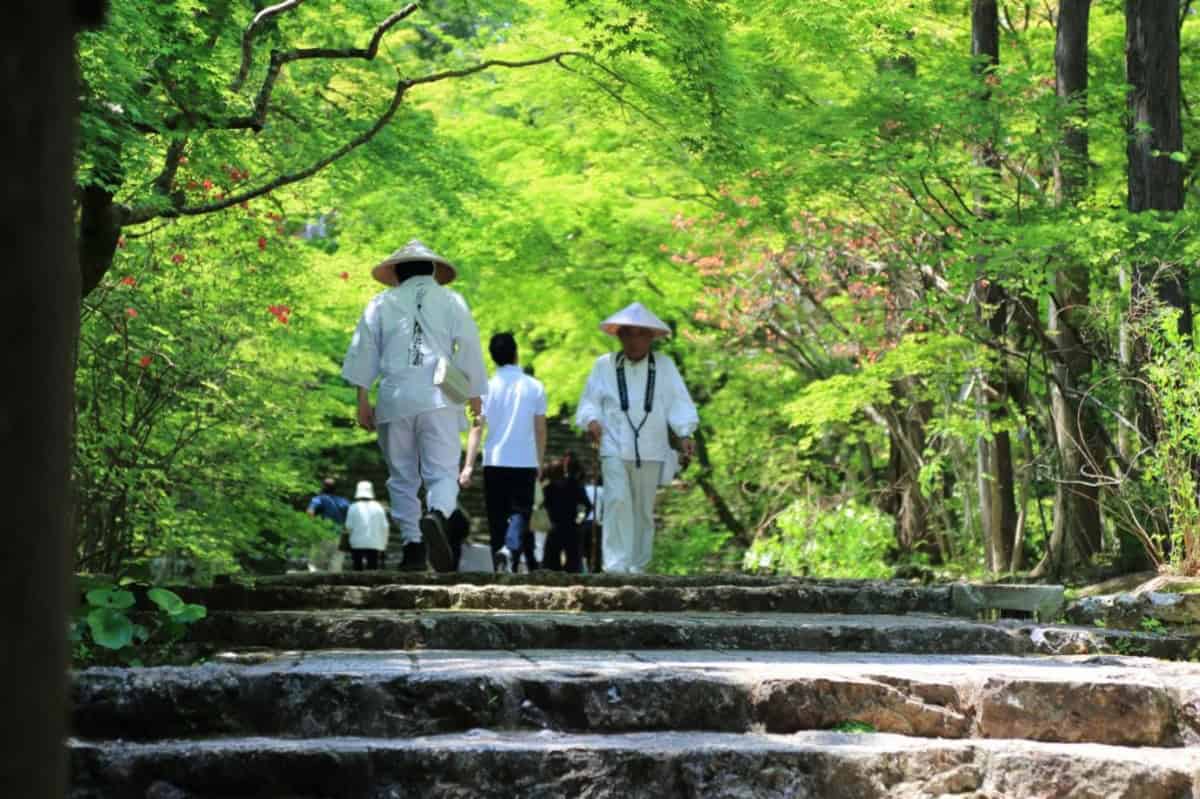
Japan’s Shikoku Pilgrimage is drawing renewed tourism attention in 2026 as travellers explore an ancient circular journey linking 88 Buddhist temples across Tokushima, Kochi, Ehime and Kagawa, a route preserved because of its deep association with Kūkai, centuries-old spiritual traditions and distinctive community hospitality. The pilgrimage, known in Japan as Shikoku Henro, stretches for roughly 1,200 kilometres when walked, although Japan Heritage documentation places the broader historic pilgrimage network at around 1,400 kilometres. It remains one of Japan’s most remarkable slow-travel experiences, combining Buddhist heritage, mountains, coastlines, rural communities, temple rituals and extended walking across the island of Shikoku.
The scale alone makes the journey unusual. Pilgrims visit 88 official temples linked with Kūkai, also known by his posthumous title Kōbō Daishi, while passing through all four prefectures of Shikoku. The complete route can take roughly 45 to 60 days on foot, according to the Japan National Tourism Organization, although shorter sections can be completed over a weekend or several separate trips.
Modern travellers no longer need to complete the entire circuit in one attempt. Some walk. Others cycle, drive, use buses or combine public transport with short walking sections. That flexibility is transforming the pilgrimage from a demanding religious undertaking into a wider cultural tourism experience accessible to visitors with different levels of time, fitness and spiritual motivation.
Shikoku Henro at a Glance
| Pilgrimage feature | Current official information |
|---|---|
| Main route | Shikoku Henro / Shikoku 88 Temple Pilgrimage |
| Official temples | 88 |
| Core walking distance | About 1,200 km |
| Wider historic route network | About 1,400 km |
| Typical full walking duration | Around 45–60 days |
| Main prefectures | Tokushima, Kochi, Ehime and Kagawa |
| Starting point most commonly used | Temple 1, Ryōzenji, Tokushima |
| Final numbered temple | Temple 88, Ōkuboji, Kagawa |
| Central spiritual figure | Kūkai / Kōbō Daishi |
| Main travel styles | Walking, public transport, bus, bicycle and car |
| Heritage status | Japan Heritage |
| UNESCO status | Not currently inscribed as a World Heritage Site |
Official Shikoku tourism information describes the route as one of the relatively rare circular pilgrimages in the world. Unlike a route leading towards a single destination, Shikoku Henro circles the island and returns pilgrims through a continuous landscape of temples and communities.
Advertisement
Advertisement
An Ancient Route Built Around Kūkai and Shikoku’s Sacred Landscape
The Shikoku Pilgrimage is inseparable from the story of Kūkai, who lived from 774 to 835 and became one of the most important religious figures in Japanese Buddhism. He was born in the area of present-day Zentsuji City in Kagawa Prefecture. Zentsūji Temple, now Temple 75 of the pilgrimage, is closely associated with his birthplace. Kūkai later travelled to China during the Tang Dynasty, studied esoteric Buddhism and returned to Japan, where he established the Shingon school.
Tradition associates his spiritual training across Shikoku with the sacred sites that later formed the 88-temple pilgrimage. However, the route did not simply appear as a fixed 88-stop itinerary in the ninth century. Historical pilgrimage culture evolved over many generations. Japan’s Agency for Cultural Affairs describes Shikoku Henro as a pilgrimage with more than 1,200 years of accumulated religious and community tradition, eventually developing into the vast circular network that survives today.
Advertisement
Advertisement
Early religious practitioners travelled through remote coastal and mountain locations in search of discipline and spiritual insight. Over time, the pilgrimage expanded beyond monks and ascetics, gradually becoming accessible to ordinary people. Today, the motives are even broader. Some travellers still undertake the journey for religious devotion, prayer, healing or remembrance. Others are looking for personal reflection, physical challenge, natural scenery, cultural immersion or a break from fast-paced modern life.
Official Tourism Shikoku material explicitly recognises this evolution, noting that contemporary participants may travel for health prayers, memorial purposes, self-discovery or simply to explore sacred places and destinations associated with Kūkai.
Four Prefectures Turn the Journey Into Four Spiritual Stages
One of the pilgrimage’s most compelling features is the way Shikoku’s four prefectures correspond with four symbolic stages of spiritual development.
Tokushima — Awakening
The journey traditionally begins in Tokushima Prefecture, where Temples 1 to 23 form what is known as the stage of Hosshin, generally translated as awakening or establishing the intention to seek enlightenment. Most conventional pilgrimages begin at Temple 1, Ryōzenji, before continuing in numerical order. For first-time pilgrims, this part of the journey introduces the etiquette, rhythm and repeated rituals that gradually define life on the road.
Kochi — Austerity and Discipline
The next section crosses Kochi Prefecture, containing Temples 24 to 39. This phase is called Shugyō, the stage of training or discipline. Distances between temples can become longer, while coastal roads, exposed terrain and less densely populated stretches traditionally make Kochi one of the pilgrimage’s more physically demanding regions. Its geography reinforces the symbolism. The pilgrim has left the relatively concentrated opening stage and entered a landscape where persistence becomes increasingly important.
Ehime — Enlightenment
Ehime Prefecture, covering Temples 40 to 65, represents Bodai, associated with enlightenment. The route moves through a mixture of mountains, valleys, towns and historically important temple precincts. JNTO now also promotes shorter guided experiences in this part of Shikoku, including walking between Temples 44 and 45, demonstrating how small sections of the ancient route are being adapted into accessible experiences for international visitors who cannot spend six weeks completing the entire circuit.
Advertisement
Advertisement
Kagawa — Nirvana and Liberation
The final stage leads through Kagawa Prefecture, associated with Nehan, or nirvana. Temples 66 to 88 complete the numbered pilgrimage, although Temple 66 is geographically located in Tokushima despite appearing numerically at the beginning of the Kagawa stage. Official Shikoku tourism information explicitly notes this geographical exception.
The numbered circuit concludes at Temple 88, Ōkuboji. For pilgrims who have walked hundreds of kilometres across the island, arrival here represents both physical completion and the symbolic culmination of the four-stage spiritual journey.
Most Pilgrims Travel Clockwise, but There Is No Single Correct Way
The traditional method is known as jun-uchi, meaning to visit the temples in numerical order from Temple 1 through Temple 88. However, the pilgrimage can also be travelled in reverse. This method, called gyaku-uchi, starts from Temple 88 and moves backwards towards Temple 1. Official Shikoku tourism material notes that a long-standing tradition gives particular spiritual importance to travelling the route in reverse during leap years.
Travellers can also divide the pilgrimage into sections. This flexibility has become increasingly important for tourism because completing more than 1,000 kilometres in one trip is unrealistic for many visitors. JNTO currently promotes a two-day itinerary in Tokushima covering the first nine temples, allowing visitors to experience pilgrimage culture without committing to the complete island circuit. Other visitors may return several times, slowly accumulating temples until the full pilgrimage has been completed.
Walking the Entire Route Can Require Nearly Two Months
Completing Shikoku Henro on foot is a serious physical undertaking. Official JNTO information places the route at around 1,200 kilometres and estimates a typical walking journey at 45 to 60 days. Other government tourism material describes the broader route network as approximately 1,400 kilometres, with full walkers requiring around 40 days or longer depending on the exact path chosen and daily pace.
This variation explains why different official documents provide different total distances. The exact figure depends on whether measurement is limited to the principal walking itinerary or includes historic pilgrimage paths, alternative approaches and connecting routes. For tourism planning, 1,200 kilometres is the commonly promoted core distance, while approximately 1,400 kilometres describes the wider heritage landscape.
Advertisement
Advertisement
Modern pilgrims therefore have several choices:
- Walk the full route in one journey.
- Complete individual prefectures.
- Walk selected temple-to-temple sections.
- Combine walking with trains and buses.
- Use bicycles or road transport.
- Return over several years to complete the circuit.
This adaptability has helped Shikoku Henro remain viable for contemporary travellers without weakening its spiritual identity.
White Clothing and the Wooden Staff Remain Powerful Symbols
Traditional pilgrimage clothing remains one of the most recognisable features of Shikoku. Pilgrims are often seen wearing a white vest or jacket, although complete traditional clothing is not compulsory. A particularly important item is the kongōzue, or wooden pilgrim staff.
The staff represents more than physical support on mountain paths. It symbolises Kōbō Daishi accompanying the pilgrim, reflecting the traditional concept of dōgyō ninin — two people travelling together. In spiritual terms, the pilgrim is therefore never completely alone. This symbolic relationship between traveller and Kūkai remains central to the emotional identity of the route.
Temple Rituals Turn Sightseeing Into Participation
Visiting the pilgrimage temples is not simply a sequence of sightseeing stops. Official Tourism Shikoku guidance explains that traditional etiquette begins before entering the temple precinct. Pilgrims bow at the temple gate, cleanse themselves at the purification area and prepare for worship.
Typical practices may include:
Advertisement
Advertisement
- bowing when entering temple grounds;
- washing hands and rinsing the mouth;
- offering candles or incense;
- visiting the main temple hall;
- visiting halls associated with Kōbō Daishi;
- reciting Buddhist prayers or sutras;
- presenting pilgrimage name slips;
- collecting calligraphy and seals documenting the visit.
Many pilgrims carry a dedicated pilgrimage book in which temples provide calligraphic inscriptions and stamps. Over 88 temples, that book develops into both a spiritual record and a tangible travel document representing the progress of the journey.
O-settai Keeps Local Communities at the Heart of the Pilgrimage
The pilgrimage could not be understood purely through temples and walking paths. Its equally important human tradition is known as o-settai. Residents along the route may offer pilgrims water, snacks, food, assistance or other forms of hospitality.
The Agency for Cultural Affairs treats this custom as one of the defining characteristics of Shikoku Henro because it connects pilgrimage with the communities that maintain and support it. This makes the route particularly relevant to community-based tourism. Pilgrims do not move through an isolated religious landscape. They interact with towns, villages, family-run accommodation, transport services, restaurants and residents. The economic impact is therefore distributed widely rather than concentrated around one major attraction.
Japan Heritage Recognition Gives Shikoku a Strong Cultural Tourism Asset
The Shikoku Pilgrimage is officially recognised through Japan Heritage, an initiative administered by Japan’s Agency for Cultural Affairs. The agency describes Shikoku Henro as a vast circular pilgrimage spanning the former provinces of Awa, Tosa, Iyo and Sanuki, now corresponding broadly to Tokushima, Kochi, Ehime and Kagawa. Its cultural importance lies not only in the temples themselves but also in the trails, landscapes, stories, customs and communities associated with more than a millennium of pilgrimage.
That distinction matters for tourism. A single temple may attract visitors for an hour. A 1,200-kilometre pilgrimage can generate overnight stays, repeat visits and expenditure across an entire island. It also supports destinations outside Japan’s traditional international tourism corridor dominated by Tokyo, Kyoto and Osaka.
World Heritage Ambition Could Raise Shikoku’s International Profile Further
Shikoku authorities have also been pursuing a longer-term ambition to seek UNESCO World Heritage recognition for the pilgrimage and associated cultural landscape. The route is not currently a UNESCO World Heritage Site, and that distinction is important. The four prefectures have nevertheless continued research, heritage designation and preservation work aimed at strengthening a future candidature.
Advertisement
Advertisement
Protection of historic walking paths, temple precincts and cultural landscapes is central to that process because a World Heritage proposal requires clearly identified assets, strong legal protection and evidence of outstanding cultural significance. For the travel industry, eventual international recognition could materially raise awareness of Shikoku among long-haul cultural travellers. However, even without UNESCO inscription, the pilgrimage already benefits from substantial domestic heritage recognition and increasing international tourism promotion.
Why Shikoku Henro Matters to Japan Tourism in 2026
Shikoku Henro offers something increasingly valuable in contemporary tourism: time, meaning and geographical depth. Visitors move slowly. They stay longer. They travel through secondary cities and rural areas. They engage with cultural practices rather than simply viewing monuments. They can also choose experiences ranging from a two-day temple circuit to a 45–60-day island journey. That range allows the same heritage product to appeal to spiritual pilgrims, hikers, independent travellers, heritage tourists, wellness visitors and culturally curious international arrivals.
Shikoku is Japan’s smallest major island, yet its pilgrimage creates one of the country’s largest continuous cultural journeys. For more than 1,200 years, travellers have crossed mountains, coastlines, valleys and settlements while following places associated with Kūkai. Today, the clothing may be lighter, navigation may be digital and sections may be completed by bus or train, but the essential structure remains remarkably intact.
There are still 88 temples. There are still four spiritual stages. There is still o-settai. And there is still the idea that the road itself matters as much as the destination. For Japan’s tourism industry, that combination gives Shikoku Henro unusual strength. It is simultaneously a pilgrimage, a long-distance walking route, a heritage corridor, a regional tourism network and a living cultural tradition. More than twelve centuries after its spiritual foundations were formed, the Shikoku Pilgrimage continues to connect Tokushima, Kochi, Ehime and Kagawa through one of Japan’s deepest and most immersive travel experiences.
Advertisement
