

Emirates Moves Alongside American Airlines And Lufthansa To Redefine Premium Economy With Business-Class Comfort

Published
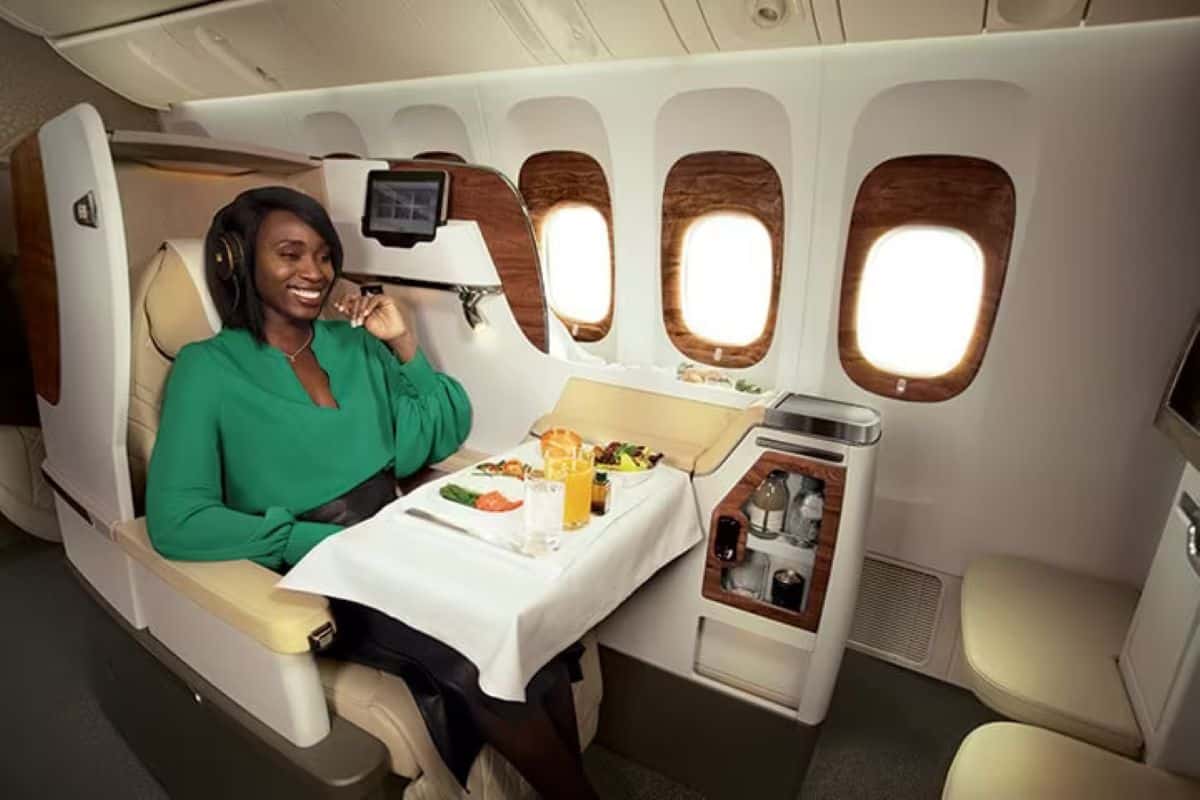
Image: Emirates
Emirates has taken the first step in a global aviation trend towards a new generation of Premium Economy Travel with the world’s first electronically adjustable privacy partition added to Premium Economy Seats on their newly delivered A350 aircraft. The addition of the divider is believed to be a response from airline Premium Cabins to demand from customers for more affordable access to Business Class comfort. The new Premium Economy seating is part of a rapidly evolving industry where airlines are unbundling Premium Economy to offer a ‘business-lite’ option with added privacy, productivity and comfort options.
The standard hierarchy of Economy, Business and First Class has been disrupted by first, Business Class seating moving from a ‘luxury’ to a ‘preferred’ Class product, second, an explosion of competing business travel policies with increasing restrictions on company-funded travel, and third, increased demand for premium leisure travel. This has created a ‘sweet spot’ in the market for Economy and Business Class. To capture this market airlines are offering larger seats with privacy, additional digital content and amenities, better food and improved comfort options at a price between Economy and Business Class. The introduction of Emirates’ latest A350 Premium Economy seating demonstrates the new frontier of long haul travel. The bigger story is not just an airline seat.
Premium Economy Moves Beyond Extra Legroom Into A Business-Lite Experience
Premium Economy was originally introduced as a simple upgrade from Economy Class. Airlines mainly offered wider seats, additional legroom, improved meals and priority services. The product was designed for travellers who wanted more comfort without paying Business Class prices. That model is now changing.
Advertisement
Advertisement
The modern Premium Economy passenger increasingly expects features traditionally associated with higher cabins:
| Traditional Premium Economy | New Business-Lite Premium Economy |
|---|---|
| Extra legroom | Personal privacy space |
| Wider seat | Advanced ergonomic seat design |
| Better meals | Premium dining experience |
| Larger screen | Connected digital ecosystem |
| Basic recline | Advanced comfort positioning |
| Shared cabin environment | Greater personal separation |
| Standard charging | Wireless charging and USB-C |
This evolution is being driven by several major forces. First, Business Class has become significantly more premium. Airlines worldwide have invested in enclosed suites, sliding doors, direct aisle access and fully flat beds. Products such as Qatar Airways’ Qsuite, British Airways Club Suite and Lufthansa’s latest Allegris cabin have raised passenger expectations.
Advertisement
Advertisement
As Business Class becomes increasingly luxurious, the price gap between Economy and Business has expanded. Premium Economy has emerged as the solution for passengers seeking a premium experience without paying for a fully private suite. Second, corporate travel policies have created another opportunity. Many companies restrict Business Class bookings, particularly on medium-distance international flights. Premium Economy allows airlines to attract business travellers who still require comfort, productivity and rest. Third, airlines recognise the financial potential of the cabin. Premium Economy occupies less space than Business Class but generates significantly higher revenue than Economy seats. This makes it one of the most attractive areas for widebody aircraft profitability.
Emirates Dubai Introduces The World’s First Electric Premium Economy Privacy Seat
Emirates’ new Airbus A350 Premium Economy seat represents the latest stage of this premiumisation strategy. The Dubai carrier has introduced the world’s first electrically operated Premium Economy seat featuring a full-height privacy divider between every seat pair. The divider can be raised, lowered or locked into position through the built-in Passenger Control Unit, allowing travellers to create a more private environment for sleeping, working or dining.
The feature addresses one of Premium Economy’s biggest limitations. Passengers traditionally receive more space but remain visually exposed to neighbouring travellers. Unlike Business Class cabins with enclosed suites, Premium Economy has rarely offered meaningful separation. Emirates’ solution brings a Business Class-inspired privacy concept into a more accessible cabin category.
The new seat is installed in the Emirates Airbus A350 Premium Economy cabin featuring:
| Feature | Details |
|---|---|
| Aircraft | Newly delivered Airbus A350 |
| Cabin layout | 2-3-2 configuration |
| Number of seats | 28 Premium Economy seats |
| Seat width | Up to 20 inches |
| Seat pitch | Up to 39 inches |
| Recline system | Cradle motion design |
| Privacy feature | Full-height electric divider |
| Seat controls | Passenger Control Unit |
| Special modes | Meal Mode and Lounge Mode |
The cradle recline design also improves passenger comfort by allowing the seat to move into a relaxing position without significantly reducing the space available to the passenger behind. This addresses another long-standing issue in economy-style seating: the conflict between passenger comfort and personal space.
Emirates Combines Privacy, Technology And Luxury To Redefine The Cabin
Beyond privacy, Emirates has introduced a range of technology and comfort improvements designed to make Premium Economy feel closer to a premium business product. The seat includes the Safran Seats U-Dream headrest, featuring adjustable leather side wings that support the passenger’s head and neck. The design aims to improve sleeping comfort by reducing head movement during long-haul flights. The headrest technology represents a wider industry trend. Airlines are increasingly focusing on small ergonomic improvements that can significantly improve passenger wellbeing during long journeys.
Advertisement
Advertisement
The new Emirates Premium Economy seat also introduces:
- Wireless charging capability
- USB-C charging ports
- Integrated phone holder
- 13.3-inch 4K HDR entertainment screen
- Bluetooth connectivity
- Enhanced Airbus A350 external camera views
The integrated phone holder allows passengers to use personal devices as a secondary screen while accessing entertainment, working or managing digital content. These features reflect how passenger expectations have changed. Modern travellers expect aircraft cabins to function as connected personal spaces rather than simply transportation environments.
The passenger experience is increasingly influenced by the same factors that define premium hotels and workplaces:
- privacy
- connectivity
- comfort
- personal control
- digital convenience
Emirates Builds Premium Economy Around Business Class Inspiration
The Dubai airline has also expanded the service elements surrounding its Premium Economy cabin. The product includes premium dining inspired by higher cabin standards, with regionally influenced menus served using upgraded tableware and premium beverages. Long-haul passengers receive amenity kits created with United for Wildlife using sustainable materials, including cactus-based vegan leather alternatives and Aveda skincare products. This approach demonstrates how airlines are no longer competing only through physical seating. The complete cabin journey has become a competitive advantage.
Modern Premium Economy products combine:
- premium seat design
- improved food and beverage
- sustainability features
- digital entertainment
- personalised comfort
The objective is to create a distinct cabin identity rather than simply offering “Economy Plus”.
Advertisement
Advertisement
Cathay Pacific Hong Kong Strengthens Premium Economy As Airlines Redesign The Middle Cabin
While Emirates has captured global attention with its electrically operated privacy divider, Cathay Pacific from Hong Kong has been developing its own Premium Economy strategy by positioning the cabin as a distinct premium travel experience rather than a simple upgrade from Economy.
The Hong Kong-based carrier has focused on creating a stronger separation between Economy and Premium Economy through increased personal space, enhanced comfort features and a more refined passenger experience. Cathay Pacific’s Premium Economy cabin reflects the airline industry’s broader shift towards segmentation. Instead of offering only larger seats, airlines are creating complete travel products designed around different passenger needs.
The carrier’s Premium Economy offering includes:
| Feature | Premium Economy Approach |
|---|---|
| Seating | Wider seats with additional personal space |
| Comfort | Increased recline and improved leg support |
| Entertainment | Larger personal screens |
| Connectivity | Bluetooth-enabled entertainment features |
| Storage | Additional personal storage solutions |
| Service | Enhanced dining and dedicated cabin experience |
Cathay Pacific’s approach demonstrates an important industry trend: Premium Economy passengers are no longer viewed as Economy travellers paying for extra comfort. They are becoming a separate premium customer group.
The airline is targeting several passenger segments:
- long-haul leisure travellers upgrading for comfort
- professionals travelling on restricted corporate budgets
- families seeking additional space
- frequent flyers wanting better rest without Business Class pricing
For airlines operating long-distance routes, this passenger category has become increasingly valuable. The rise of Premium Economy also supports airlines as international travel patterns change. More travellers are willing to spend extra on comfort, especially for flights lasting eight hours or longer. Cathay Pacific’s strategy aligns with the wider industry movement where airlines are building stronger product differences between every cabin.
Advertisement
Advertisement
American Airlines Expands Premium Cabins As US Carriers Chase High-Value Travellers
American Airlines represents another major example of the global premium cabin transformation. The US carrier has been increasing its focus on premium seating as demand grows among higher-spending leisure travellers and corporate passengers seeking improved comfort. American Airlines has been redesigning its widebody aircraft interiors with greater emphasis on premium capacity, including enhanced Business Class and Premium Economy products.
The airline’s premium strategy includes:
| American Airlines Premium Cabin Development | Passenger Benefit |
|---|---|
| Flagship Suite Business Class | Greater privacy with suite-style seating |
| Expanded Premium Economy | More choice between Economy and Business |
| Enhanced entertainment | Improved long-haul experience |
| Connectivity upgrades | Better productivity during flights |
| Premium service focus | Stronger differentiation |
The move reflects a major change in the North American aviation market. Historically, US airlines focused heavily on Business Class as the primary premium revenue generator. However, rising demand for affordable luxury has encouraged carriers to strengthen the cabin between Economy and Business.
Premium Economy allows American Airlines to capture passengers who want:
- more comfort than Economy
- better working conditions
- additional privacy
- improved rest
- premium services
but who may not justify Business Class fares.
The development also reflects changing corporate travel behaviour. Many companies have reduced Business Class approvals, especially for shorter international routes. Employees still need productive journeys, but companies increasingly prefer lower-cost premium options. Premium Economy provides airlines with a commercially attractive solution.
Advertisement
Advertisement
Lufthansa Germany Accelerates Cabin Transformation Through Personalisation
Europe’s aviation market is also experiencing the Premium Economy transformation, with Lufthansa Group becoming one of the strongest examples of cabin redesign. Through its new Allegris cabin programme, Lufthansa is introducing greater passenger choice and more personalised seating experiences across its long-haul fleet. The airline’s strategy reflects a wider movement away from standardised cabins towards more differentiated products.
Modern passengers increasingly expect airlines to provide options based on their individual priorities:
- privacy
- additional space
- direct access
- comfort
- technology
- sleeping quality
Lufthansa’s cabin evolution demonstrates how airlines are responding to a more demanding passenger market.
The airline industry is moving towards a future where every cabin class becomes more clearly defined:
| Cabin | Future Position |
|---|---|
| Economy | Affordable global mobility |
| Premium Economy | Business-Lite comfort and productivity |
| Business Class | Private premium experience |
| First Class | Ultra-luxury limited market |
The Premium Economy segment sits at the centre of this transformation. It provides airlines with an opportunity to increase revenue while offering passengers a realistic alternative to increasingly expensive Business Class tickets.
Why Airlines Are Investing Heavily In The Business-Lite Passenger
The rise of Premium Economy is not only about passenger comfort. It is also about airline economics. Widebody aircraft represent some of the largest investments in aviation. Airlines must maximise revenue from every square metre of cabin space. Premium Economy offers a powerful financial advantage.
Advertisement
Advertisement
Compared with Economy Class:
- ticket prices are significantly higher
- passengers are more willing to pay for comfort
- corporate travellers provide additional demand
Compared with Business Class:
- seats require less space
- more passengers can be carried
- operating costs are lower
- airlines can increase premium capacity
This makes Premium Economy one of the most strategically important cabin segments.
Airlines are therefore investing in:
- better seats
- privacy features
- charging technology
- premium dining
- improved entertainment
- sustainable materials
The goal is to convince passengers that the additional fare delivers meaningful value.
Corporate Travel Policies Create A New Market For Premium Economy
Corporate travel is one of the biggest drivers behind the Premium Economy expansion.
Advertisement
Advertisement
Many companies maintain strict rules limiting Business Class travel based on:
- flight duration
- employee level
- company budgets
- sustainability targets
However, business travellers still require comfort on long journeys.
Premium Economy fills this gap.
The modern corporate Premium Economy passenger expects:
- enough space to work
- charging capability
- reduced disturbance
- better rest opportunities
- reliable connectivity
Airlines understand that these passengers are not simply looking for a bigger Economy seat. They are looking for a productive travel environment. This is why features such as Emirates’ privacy divider, wireless charging and personal device integration are becoming increasingly important. The cabin is being redesigned around productivity as much as relaxation.
Privacy Becomes The Biggest Battleground In Future Airline Cabins
Privacy has emerged as one of the strongest trends shaping future aircraft interiors. Business Class has already moved heavily towards private suites. Qatar Airways’ Qsuite introduced one of the most recognised private Business Class concepts in aviation, while British Airways’ Club Suite and Lufthansa’s Allegris programme have continued the movement towards personal space.
Advertisement
Advertisement
Premium Economy is now following the same direction. However, airlines must balance privacy with cabin density. A fully enclosed suite like Business Class is expensive in terms of aircraft space. Premium Economy privacy solutions therefore focus on providing separation without reducing seat numbers dramatically.
Examples include:
- adjustable privacy screens
- higher seat wings
- improved headrests
- personal lighting controls
- better seat positioning
Emirates’ electric divider represents one of the most advanced examples of this approach.
Fleet Differences Become Increasingly Important For Premium Travellers
As airlines introduce new cabin products gradually, passengers must pay greater attention to aircraft type. A major challenge for travellers is that the same airline route may operate with different aircraft configurations. For Emirates, the new electric privacy divider is linked specifically to newly delivered Airbus A350 aircraft.
The rollout situation can be summarised as:
| Aircraft | Premium Economy Privacy Divider |
|---|---|
| Newly delivered Emirates Airbus A350 | Available with electric full-height divider |
| Earlier Emirates A350 deliveries | No electric privacy divider |
| Emirates Airbus A380 fleet | No electric privacy divider |
| Emirates Boeing 777 fleet | No electric privacy divider |
This aircraft-specific variation is becoming common throughout the aviation industry.
Advertisement
Advertisement
Passengers choosing premium cabins increasingly need to check:
- aircraft model
- seat map
- cabin configuration
- delivery or refurbishment status
The aircraft itself is becoming part of the travel product.
Sustainability And Technology Shape The Next Generation Of Premium Travel
The future of Premium Economy will not only be defined by comfort. Technology and sustainability are becoming equally important.
Airlines are introducing:
- lighter cabin materials
- sustainable fabrics
- digital passenger services
- improved connectivity
- energy-efficient systems
Emirates’ sustainable amenity kits demonstrate how premium experiences are increasingly incorporating environmental considerations. Passengers are seeking luxury experiences while also expecting responsible practices. This creates a new challenge for airlines: delivering premium comfort without increasing environmental impact.
The Global Aviation Industry Enters A New Premium Economy Era
Emirates’ Airbus A350 Premium Economy seat represents more than a new aircraft feature. It represents a wider transformation across global aviation. Cathay Pacific, American Airlines, Lufthansa and other international carriers are all responding to the same market reality: travellers want more comfort, more privacy and better technology, but many do not want or cannot pay for full Business Class. Premium Economy is becoming the industry’s answer.
Advertisement
Advertisement
The cabin is evolving into a new Business-Lite category that combines:
- improved comfort
- personal space
- digital connectivity
- premium service
- affordable luxury
For airlines, it creates a profitable middle ground between high-density Economy and expensive Business Class. For travellers, it creates a new choice between affordability and premium experience. The future aircraft cabin will no longer be defined only by Economy, Business and First Class. Instead, Premium Economy will become a major battleground where airlines compete for the growing number of passengers seeking smarter, more comfortable and more personalised ways to travel.
Emirates Dubai may have introduced one of the industry’s most advanced Premium Economy seats, but the larger story is global. Airlines around the world are racing to redefine what premium travel means, and the Business-Lite era has officially begun.
Conclusion
International Airlines, such as Emirates, American Airlines, Lufthansa and Cathay Pacific, are changing the idea of what constitutes Premium Economy. Business-lite travelers, with an emphasis on comfort, convenience, greater technology and personalized connectivity features, privacy and seating, are reaching a greater premium category of air travel. The exclusive and expensive nature of top tier travel has created a contrarian gap in the middle, and is already attracting travelers to the Premium Economy Class. New generations of aircraft will incorporate personalized design and technology providing the traveler even more options and comfort with the ability to mold their travel experience to their needs. The future of supremely convenient, exceptionally comfortable air travel with a high level of personalized design choice is here.
Advertisement
