
Australia Drives a New Era of Global Travel as Qantas Project Sunrise Targets Historic 22-Hour Nonstop Flights from Eastern Australia to London and New York Redefining Ultra-Long-Haul Aviation Without Stopovers

Published
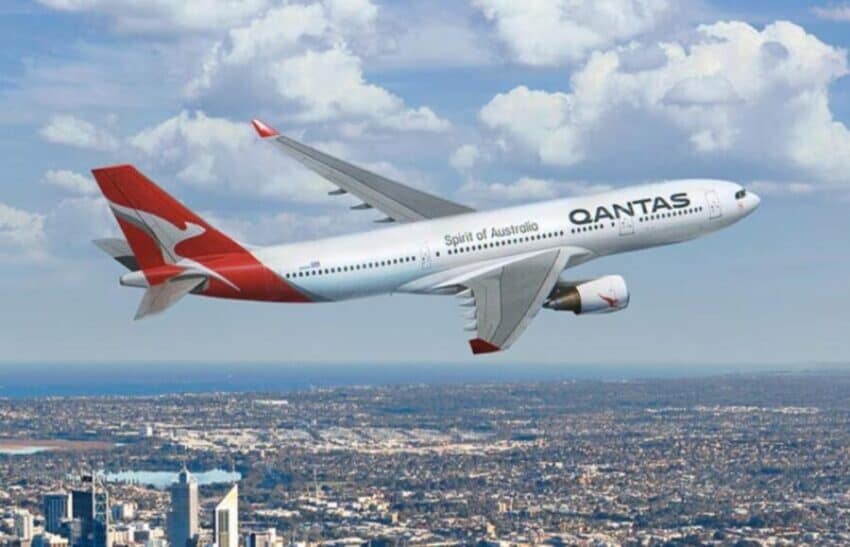
Image generated with Ai
Qantas Project Sunrise to Redefine Global Travel History as Australia Launches Ultra-Long 22-Hour Nonstop Flights to London and New York, Eliminating Stopovers and Transforming Intercontinental Aviation Connectivity Forever Across Major Global Routes. Qantas is set to reshape global aviation because it is preparing to introduce Project Sunrise, a breakthrough initiative designed to connect eastern Australia directly with London and New York without any stopovers, cutting total journey time from the current 24 to 25 hours via hubs like Singapore down to around 22 hours under optimal conditions. This bold move signals a new era in global travel where ultra-long-haul nonstop flights replace traditional multi-stop routes, reduce travel fatigue, and transform the way passengers move between Australia, Europe, and North America.
Qantas is preparing to unveil a breakthrough in global aviation that could permanently reshape the way the world understands long-haul travel. The airline is set to announce the first confirmed destination under its long-awaited Project Sunrise programme, a bold initiative designed to connect eastern Australia directly with global cities such as London and New York without a single stop along the way. This is not just another route expansion. It is a complete rethinking of distance, time, and how passengers move across continents.
At the heart of this announcement lies a simple but powerful ambition: to remove the traditional barriers of geography. Today, passengers travelling from Australia’s east coast to Europe or the United States typically endure journeys of around 24 to 25 hours, often broken up by stopovers in major transit hubs like Singapore, Dubai, or Doha. These layovers, while operationally necessary, add fatigue, delay, and complexity to already demanding intercontinental trips.
Project Sunrise aims to change that equation entirely. The target is to compress what was once a multi-stop, multi-day ordeal into a single continuous flight lasting up to 22 hours under optimal conditions. That means passengers could board in Sydney or another eastern Australian city and disembark in London or New York on the same uninterrupted journey, depending on wind conditions and routing efficiency.
Advertisement
Advertisement
This shift is far more than a scheduling improvement. It represents a structural transformation in global aviation design. For decades, ultra-long-haul travel has been defined by compromise. Aircraft could either carry more passengers and cargo or fly farther distances, but rarely both at maximum efficiency. As a result, long-distance routes were broken into segments, with international hubs acting as essential refuelling and transfer points.
Advertisement
Advertisement
Qantas is now attempting to bypass that entire system.
The airline’s vision under Project Sunrise focuses on direct city-to-city connectivity between Australia’s east coast and some of the world’s most important economic centres. London remains a symbolic and operational priority. For nearly a century, the journey between Australia and the United Kingdom has been one of the most iconic in aviation history, originally known as the “Kangaroo Route.” In its early decades, this journey took several days and multiple aircraft changes, with stops across Asia and the Middle East.
Even in today’s modern aviation era, the journey still requires at least one stop. Despite technological progress and ultra-long-range aircraft, no commercial service has yet fully eliminated the need for a transit point on this route. Project Sunrise aims to achieve exactly that.
New York represents the second major frontier. It is one of the most commercially valuable long-haul destinations in the world, driven by strong demand from business travellers, premium leisure passengers, and cargo operators. A direct link between Australia’s east coast and New York would not only shorten travel time but also significantly reshape passenger flow across the Pacific and Atlantic aviation corridors.
However, the challenge is not simply distance. It is endurance.
Advertisement
Advertisement
Ultra-long-haul flights introduce some of the most complex operational constraints in commercial aviation. Aircraft must be capable of carrying sufficient fuel for extreme ranges while still maintaining enough payload capacity to remain commercially viable. At the same time, strict aviation safety regulations govern crew rest periods, requiring carefully engineered scheduling and cabin configurations that allow pilots and cabin crew to operate safely over nearly a full day in the air.
These constraints have historically made nonstop flights beyond 17,000 kilometres extremely difficult to operate at scale. Even when technically possible, they often came at the cost of passenger comfort or commercial profitability.
Project Sunrise is designed specifically to overcome these limitations.
The next-generation aircraft expected to operate these routes are being engineered with range, efficiency, and human comfort as equal priorities. While exact configurations are still being refined, the focus is on reducing passenger fatigue during extremely long flights. This includes adjustments to cabin pressure, humidity levels, lighting systems, and seating arrangements.
This introduces a new frontier in aviation design: the aircraft as a wellness environment, not just a transport system. Seating density is expected to be lower than typical long-haul configurations, allowing more space per passenger. Dedicated rest zones, improved sleep environments, and carefully managed cabin lighting cycles are likely to play a central role in maintaining passenger health and comfort.
Advertisement
Advertisement
From an airline network perspective, the implications are equally significant.
Modern global aviation relies heavily on hub-and-spoke systems. Major airports such as Singapore Changi, Dubai International, and Doha Hamad serve as transfer points where passengers connect between continents. These hubs have built entire economic ecosystems around transit traffic, benefiting from airlines routing passengers through their facilities.
Project Sunrise introduces a potential shift away from this model. By enabling direct nonstop connections between Australia and major global cities, it reduces dependence on intermediate hubs. While this may streamline travel for passengers, it also alters the competitive balance of global aviation networks, potentially redistributing passenger flows across regions.
However, this does not eliminate the role of hubs entirely. Instead, it creates a parallel layer of ultra-long-haul connectivity that operates alongside existing networks, offering passengers a choice between faster direct travel and traditional routed journeys.
Economically, these routes depend heavily on premium demand. Ultra-long-haul flights are most viable when supported by strong business travel, high-yield leisure markets, and cargo capacity. Aircraft operating these sectors are expected to prioritise premium seating, where revenue per passenger justifies the extended flight time and operational complexity.
Advertisement
Advertisement
Cargo also plays a supporting role in making these routes commercially sustainable. Long intercontinental flights allow airlines to transport high-value freight alongside passengers, improving overall route profitability.
If successfully implemented, Project Sunrise could redefine what is considered a “normal” flight distance in commercial aviation. Journeys exceeding 20 hours may become a standard part of global connectivity rather than an exception reserved for special missions.
More importantly, it signals a broader evolution in how humans perceive distance itself. What once required multiple stops, overnight layovers, and complex routing could soon become a single uninterrupted journey across half the planet.
For Qantas, this is not just a network expansion. It is a statement of intent. It positions the airline at the forefront of ultra-long-haul innovation and places Australia at the centre of a new aviation era where geography matters less than engineering ambition.
Qantas is set to redefine global travel because it is launching Project Sunrise, aiming to enable direct ultra-long-haul flights from eastern Australia to London and New York, cutting current 24–25 hour multi-stop journeys down to around 22 hours without stopovers.
Advertisement
Advertisement
Project Sunrise is not just about flying farther. It is about collapsing time, compressing distance, and redefining what is possible in commercial aviation.
Advertisement
