
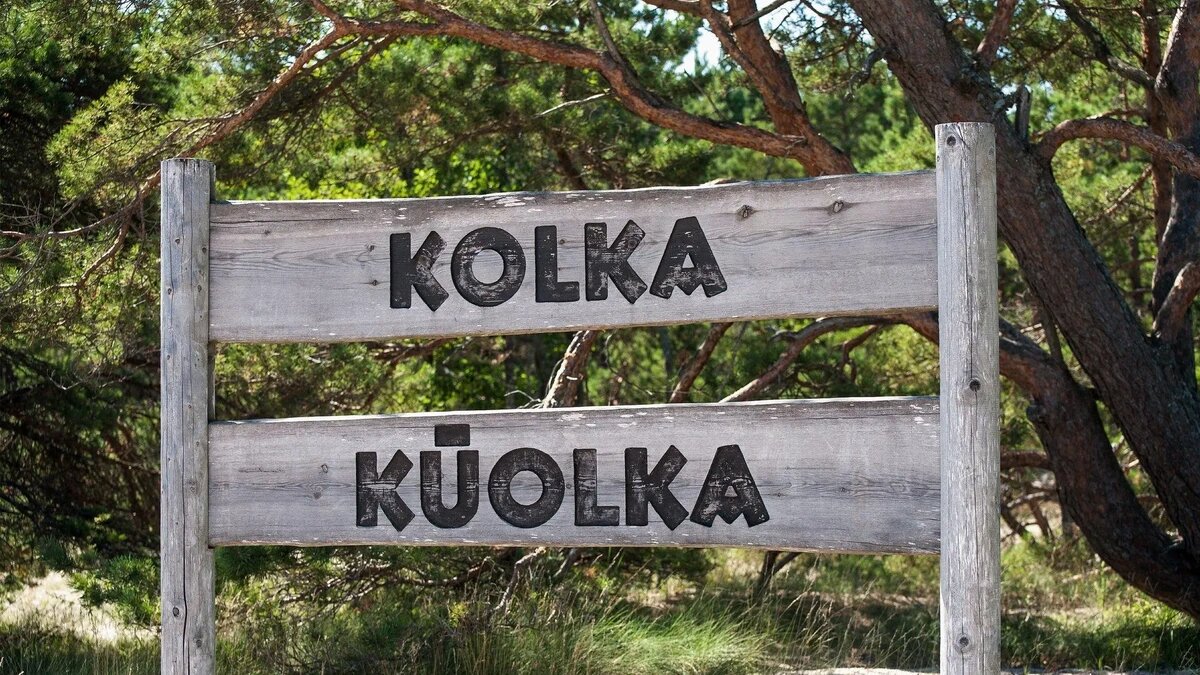
Cape Kolka is entering one of its most commercially relevant autumn nature-travel periods, but 2026 access is more complicated than the usual migration-season proposition. Latvia’s Nature Conservation Agency lists the Šlītere Nature Trail as fully closed in its latest storm-status notice, two cycling sections as unavailable and Pēterezers as open with residual damage. Meanwhile, indoor nature programmes run only until 15 October, although several migratory bird movements continue afterwards. Travel companies therefore need dynamic routing rather than treating mid-October as a simple seasonal deadline.
Cape Kolka remains one of Latvia’s most distinctive nature-tourism assets. Latvia’s official tourism portal places it in Kolka Parish in Talsi district, where the Baltic Sea meets the Gulf of Riga. It states that tens of thousands of birds pass over the cape during migration and specifically positions autumn and winter as seasons for experiencing the area’s natural landscape.
Advertisement
Slītere National Park strengthens that proposition. According to Latvia’s Nature Conservation Agency, the protected area lies on an important bird migration route and holds Natura 2000 status as well as designation as an internationally important bird area. The official national tourism portal also actively recommends visiting Slītere during bird-migration periods.
What makes autumn 2026 different is not a new wildlife phenomenon. It is the condition of the visitor network supporting that wildlife experience.
Advertisement
On 27 August, the Nature Conservation Agency reported storm damage across Slītere involving fallen trees, damaged infrastructure and interrupted routes. Its notice specifically identified closures and restrictions that directly affect walking and cycling products marketed to nature travellers.
| Tourism component | Latest official position identified | B2B implication | Primary source |
|---|---|---|---|
| Šlītere Nature Trail | Fully closed following storm damage | Do not build a guaranteed itinerary around this trail unless live status confirms reopening | Nature Conservation Agency |
| Pēterezers Nature Trail | Fallen trees cleared and trail accessible, but some infrastructure damage remains | Can serve as an alternative only with pre-departure condition checks | Nature Conservation Agency |
| Sīkrags–Mazirbe cycling section | Unavailable because of fallen trees in latest notice | Cycling programmes require rerouting | Nature Conservation Agency |
| Kolka–Vaide cycling section | Unavailable while storm-recovery work continues | Coastal cycle itineraries cannot assume through-access | Nature Conservation Agency |
| Indoor nature education at Šlītere Lighthouse and Ozola House | Operates from 1 May to 15 October | Mid-October matters for interpretation products, not for the biological end of migration | Nature Conservation Agency |
| Outdoor hikes and off-site nature activities | Available year-round on Wednesdays, Thursdays and Fridays from 10.00 to 16.00 | Nature-based products remain possible beyond the indoor seasonal period | Nature Conservation Agency |
The distinction is critical. 15 October is not a closure date for Cape Kolka and it is not the end of autumn birdwatching.
The current Slītere Nature Centre information, updated in February 2026, sets 1 May to 15 October as the period for indoor activities at Šlītere Lighthouse and Ozola House. Group visits require advance registration, preferably at least three days beforehand. Outdoor hikes and field activities operate separately throughout the year on specified weekdays.
That operating timetable should therefore be separated from wildlife seasonality.
Advertisement
Advertisement
Official Nature Conservation Agency bird information shows that different species use the Cape Kolka corridor at different times. There is no single autumn date after which bird migration abruptly disappears.
| Officially documented migration pattern | Autumn timing around Cape Kolka | Tourism significance |
|---|---|---|
| Great crested grebe | Migrating birds may be seen from September to May, with autumn concentrations reaching roughly 500–800 individuals | Supports autumn waterbird observation beyond early September |
| Barnacle goose | First autumn migrants appear around mid-September, with the strongest movement towards the end of the month; last migrants may occur around mid-November | Late September is particularly relevant, but the migration period continues considerably longer |
| Migrating swans | October is identified among the best observation periods at Kolka | October remains a meaningful wildlife-travel month |
| Northern Kurzeme waterbirds | Millions of waterbirds move through the broader coastal and inland corridor annually | Demonstrates the scale of the flyway rather than a single-event bird spectacle |
| Recorded waterfowl diversity at Cape Kolka | 24 of Latvia’s 28 recorded species in the relevant groups have been observed there | Supports specialist birdwatching and small-group nature products |
These timings and historical observation ranges are documented in Nature Conservation Agency interpretative material on migratory birds in and around Slītere National Park.
For tour operators, this creates two separate commercial periods rather than one deadline.
Before 15 October, programmes can potentially combine outdoor birdwatching with indoor interpretation at the Slītere Nature Centre, subject to bookings and storm-related accessibility.
After that date, the autumn nature product can continue, but sellers should not represent it as having exactly the same indoor service structure. Wildlife viewing increasingly becomes an outdoor-led, weather-sensitive experience.
Talsi and Ventspils belong in this tourism story for operational reasons rather than because the migration takes place inside either city.
Cape Kolka itself is officially located in Kolka Parish, Talsi district. Slītere National Park is administered within the Dundaga and Kolka parishes of Talsi Municipality.
Talsi also has a transport role. Official Ventspils tourism information states that travellers using public transport between Ventspils and Kolka require a transfer at Talsi Bus Station. That makes Talsi part of the practical visitor-access chain rather than merely a geographical tag.
Ventspils is relevant from the western side of the Kurzeme coast. Its official tourism information promotes Cape Kolka as a birdwatching and nature destination and identifies the site as being in Talsi Municipality. Latvia’s national tourism material also maps the Ventspils–Kolka coastal corridor as part of broader touring routes through Kurzeme.
This matters because autumn nature itineraries should not be marketed as frictionless city-to-cape excursions. Public-transport connections, transfers, trail status and shortened daylight all become more important as the season advances.
The commercial backdrop is also significant.
According to Latvia’s Central Statistical Bureau, tourist accommodation establishments recorded 750,000 arrivals in the second quarter of 2026, up 1.2 per cent year on year. Visitor nights reached 1.29 million, an increase of 0.1 per cent.
The composition is more revealing. Resident arrivals increased 3.5 per cent to 309,400, while non-resident arrivals slipped 0.4 per cent to 440,600. International guests averaged only 1.8 nights nationally during the quarter.Tourism indicator Latest verified figure Relevance to Cape Kolka and Slītere Latvia accommodation arrivals Q2 2026 750,000 Shows an active national visitor market entering the second half of 2026 Year-on-year change +1.2% Overall accommodation demand remained positive Resident arrivals Q2 2026 309,400 Domestic demand grew faster than international arrivals Resident arrival growth +3.5% Supports regional and short-break nature tourism potential Non-resident arrivals Q2 2026 440,600 International market remains the larger accommodation segment Non-resident change -0.4% Strengthens the case for higher-value regional itinerary development rather than relying solely on volume growth Domestic tourism expenditure in 2025 €528 million Spending increased 7.7% despite a slight fall in total domestic trip numbers Kurzeme share of domestic overnight trips in 2025 26.4% Kurzeme was Latvia’s leading domestic overnight destination region Talsi Municipality share of domestic overnight trips 4.5% Demonstrates established overnight tourism demand in the municipality containing Cape Kolka Ventspils share 4.4% Confirms the neighbouring western gateway already commands meaningful domestic overnight demand
The 2025 figures come from the Central Statistical Bureau’s June 2026 domestic-tourism release. It also shows that 85.4 per cent of domestic overnight trips used a passenger car or motorcycle, compared with 9.1 per cent by bus or coach and 5.1 per cent by rail.
That modal split is particularly relevant for Cape Kolka. A self-drive or organised road-transfer product is structurally better positioned to handle route substitutions than an itinerary dependent on a single public-transport connection.
This is not a destination where maximum visitor throughput should automatically be treated as the primary success metric.
The Nature Conservation Agency classifies Slītere as a national park, a Natura 2000 site and an internationally important bird area. Its landscape includes coastal habitat, dunes, forests, wetlands and the migration corridor that gives Cape Kolka its wildlife-tourism value.
Latvia’s legally binding park regulations reinforce that model. Visitors must observe posted restrictions. Camps and tents outside specifically designated places require agreement with the landowner or legal possessor, while fires are restricted to appropriately arranged locations. Public nature-tourism infrastructure must also be used for its intended purpose.
Slītere is simultaneously undergoing development of a new nature-conservation plan. The Nature Conservation Agency’s project page, updated in March 2026, confirms that the planning process is continuing and that its first consultation stage took place this year.
That gives autumn tourism an additional strategic dimension: visitor growth must remain compatible with habitat protection, infrastructure resilience and controlled access.
The highest-value travel insight is therefore not that tourists must rush to Cape Kolka before 15 October.
That would misrepresent both the official visitor-service information and the migration ecology.
The stronger product strategy is modular autumn touring.
September through mid-October offers the most complete combination of migration viewing, possible indoor nature interpretation and broader outdoor activity. Yet the 2026 storm means walking and cycling components cannot be sold as immutable fixed routes.
After mid-October, the product changes rather than disappears. Species such as migrating swans remain relevant in October, while other bird movements continue later. The service mix becomes more outdoor-dependent and therefore more sensitive to weather, daylight, ground conditions and transport planning.
For the trade, this creates an opportunity to move away from a single Cape Kolka photo stop towards longer northern Kurzeme programmes. Talsi can function as an inland transport and service node, while Ventspils can anchor the western coastal side. Slītere, Kolka and the Livonian Coast then become the specialist nature and cultural components between those gateways.
That architecture could also improve regional dwell time, particularly given the national statistic showing that foreign accommodation guests currently average only 1.8 nights.
The constraint is reliability. A specialist birdwatching departure can tolerate uncertainty in the exact species seen. It cannot tolerate an itinerary that promises a trail officially listed as closed.
Cape Kolka’s 2026 autumn season demonstrates why shoulder-season nature tourism increasingly depends on more than identifying a wildlife calendar.
The biological attraction is strong. Latvia’s official tourism bodies identify the cape as an important migration location, while Nature Conservation Agency material demonstrates that meaningful autumn movements extend well beyond the middle of October.
The limiting factor this year is operational resilience.
Storm damage has shown how quickly protected-area infrastructure can alter a touring programme. At the time Slīteres year-round outdoor activity model means the destination does not simply stop working when its indoor programme ends after 15 October.
For Latvias tourism industry that makes Cape Kolka less of a seasonal attraction and more a test case for smartly managed low-impact travel during the shoulder season: smaller groups, flexible routes longer stays in the region clear service information and products that focus on conservation.
The important message for travellers, in September 2026 is therefore clear. The autumn opportunity is still available. The route, the types of activities and the visitor services need to be checked individually instead of being assumed based on one single seasonal date.
Advertisement
Tags: Cape Kolka, Latvia travel, Slītere, Talsi
Advertisement
Advertisement












Sunday, September 6, 2026
Sunday, September 6, 2026

Sunday, September 6, 2026

Sunday, September 6, 2026

Sunday, September 6, 2026
Saturday, September 5, 2026

Sunday, September 6, 2026
Sunday, September 6, 2026



