
Canberra Aligns Sydney, Melbourne and Others as Cyberstrike Against Rogue Visa Sites and Fake Travel Authorisation Syndicate

Updated
Published
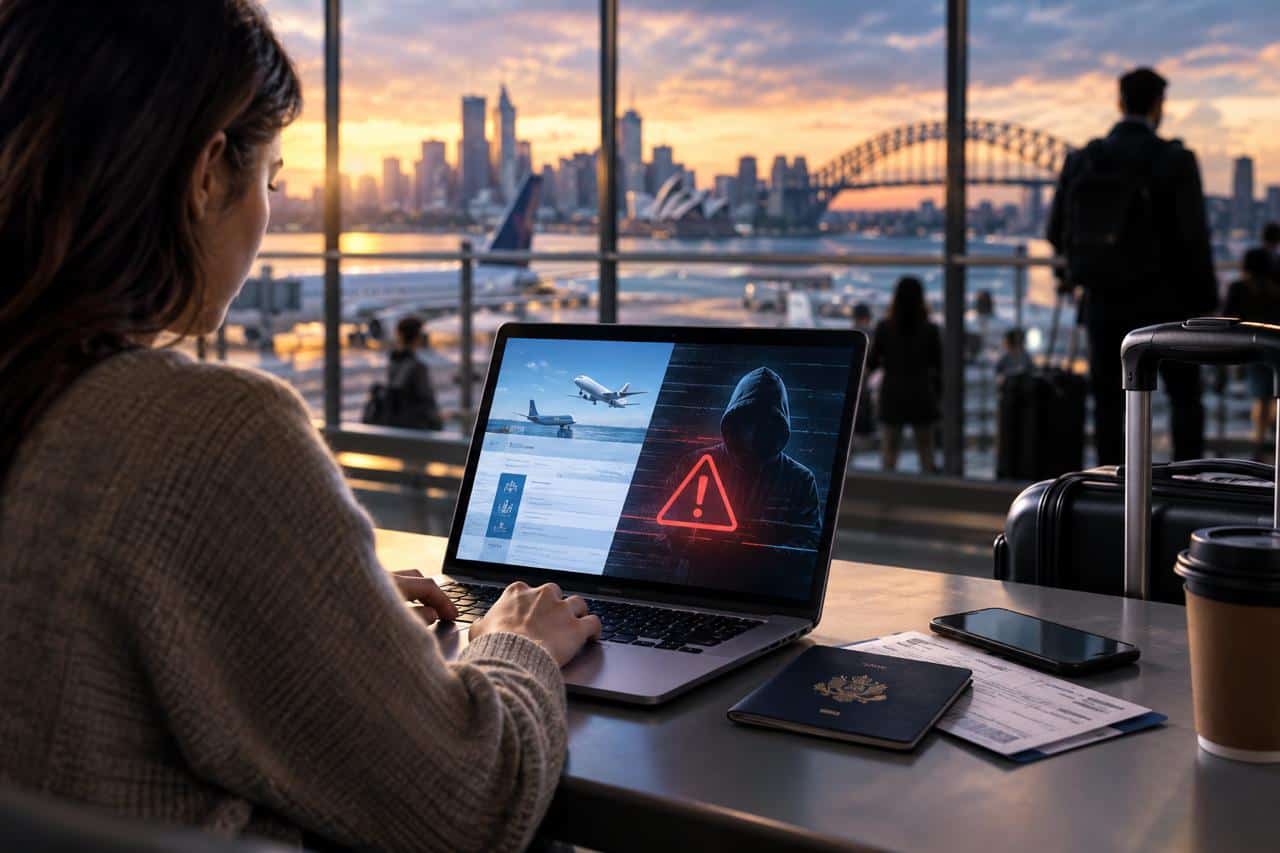
Australia and New Zealand have been placed at the centre of growing concern over fake visa websites, travel authorisation scams aand online immigration fraud. From Canberra and Sydney to Wellington and Auckland, official warnings and cyber security campaigns have been highlighted as travellers are increasingly encouraged to verify digital immigration services before submitting applications or making payments.
Across Oceania, the increasing use of online travel documents has been accompanied by new opportunities for fraudulent operator. Misleading websites, impersonation attempts and unauthorised immigration services have been identified as risks for international visitors. Greater attention has consequently been directed towards digital safety, identity protection and the verification of official government platforms.
As of 15 October 2026, the available evidence confirms government warnings, public awareness initiatives and international cooperation against visa fraud. However, several claims of city-specific website takedowns, newly deployed enforcement systems and local police operations have not been independently established by the cited official sources.
Canberra Remains Central to Australian Visa Fraud Prevention
In Canberra, the Australian Department of Home Affairs and the National Anti-Scam Centre have been identified as important national institutions in the wider response to immigration-related deception.
Advertisement
Advertisement
Visa applicants have been warned about fraudulent intermediaries, misleading online advertisements and individuals falsely claiming to represent government authorities. Particular concern has been raised about criminals who seek personal documents, banking information or additional payments by presenting themselves as legitimate immigration representatives.
The Australian Department of Home Affairs has published detailed guidance explaining how suspicious immigration services can be recognised. Applicants have been advised to verify the credentials of migration agents, inspect email addresses and use authorised application systems.
Advertisement
Advertisement
Official communications from the Department of Home Affairs are expected to use legitimate government domains. Unexpected requests for passwords, credit card details or payments through personal accounts have been identified as warning signs.
The possibility of identity theft has also been highlighted, particularly where passport details and immigration documents are shared with unknown third parties.
Advertisement
Advertisement
Although an increase of 76 per cent in visa and passport fraud was cited in the supplied material, that figure could not be confirmed as a nationally applicable 2026 statistic from the official evidence reviewed. Similarly, the alleged deployment of new automated website-removal systems has not been independently verified.
The established official guidance nevertheless demonstrates the continuing importance of fraud prevention within Australia’s immigration system.
Brisbane and Gold Coast Travellers Face Risks From Misleading Visa Services
In Brisbane and the Gold Coast, attention has been directed towards websites offering assistance with Australian travel authorisations.
The Electronic Travel Authority, commonly known as the ETA, and the eVisitor (subclass 651) visa have been identified as immigration products that may be misrepresented by unauthorised intermediaries.
Advertisement
Advertisement
Under misleading arrangements, travellers may be encouraged to pay excessive fees, submit inaccurate information or believe that eligibility requirements can be bypassed.
The Australian High Commission has specifically warned about eVisitor-related fraud. Applications submitted using false citizenship or passport information may result in invalid or cancelled visas. Affected travellers may subsequently be prevented from boarding flights or entering Australia.
The distinction between legitimate paid assistance and fraudulent representation is important. Not every third-party travel service is necessarily illegal or deceptive. However, any claim of guaranteed approval, special government access or exemption from official eligibility rules should be treated cautiously.
The supplied material attributes active portal takedowns to Queensland Police Service cyber squads. No matching official announcement confirming a dedicated Brisbane or Gold Coast operation was established during this review.
Consequently, the regional threat is best understood through the wider national warnings rather than as a separately verified local enforcement campaign.
Sydney and Melbourne Highlight the Threat of Digital Impersonation
In Sydney and Melbourne, concerns about online identity protection have been linked to the growing sophistication of fraudulent immigration communications.
Advertisement
Advertisement
IDCARE, an Australian and New Zealand identity and cyber support organisation, has been identified in the source material as a resource associated with travel visa scams.
Fraudulent websites can be made to resemble legitimate government services through familiar colours, official-looking layouts and misleading domain names. Users may also be redirected towards suspicious platforms through online advertising or unsolicited messages.
Two domains, thisisaustraliaau.com and australiangovernmentau.com, were named in the supplied material as examples of suspected impersonation. However, their alleged fraudulent status and the reported immediate domain suspensions were not independently confirmed through an official enforcement notice.
A broader impersonation risk has been documented. In December 2025, reports described visa applicants being targeted by individuals pretending to be senior Department of Home Affairs officials.
The attempted deception involved requests for payments associated with supposed immigration processing.
Such activity has demonstrated how apparent institutional authority can be used to influence applicants who are unfamiliar with official procedures.
Advertisement
Advertisement
For travellers preparing to visit Sydney, Melbourne or other Australian destinations, verification through government immigration channels remains an important safeguard.
Wellington Leads New Zealand Cyber Smart Week 2026 Awareness Efforts
In Wellington, the National Cyber Security Centre (NCSC) has been associated with a nationwide campaign designed to improve public awareness of online scams.
Cyber Smart Week 2026 was held from 5 to 11 October, following an official announcement issued on 30 September.
The campaign was organised around the importance of recognising suspicious digital activity before personal or financial information is compromised.
Increasingly aggressive cybercriminal behaviour and the growing use of artificial intelligence were identified by the NCSC as factors contributing to a changing online threat environment.
The campaign was designed to encourage stronger cyber security habits among individuals and organisations. Measures such as multi-factor authentication, secure data backups and incident-response planning were promoted as practical forms of protection.
Advertisement
Advertisement
Although immigration fraud falls within the broader category of online deception, the official NCSC announcement did not establish that Cyber Smart Week was a joint visa-portal enforcement operation with Immigration New Zealand.
The campaign should therefore be distinguished from any specific investigation into fraudulent immigration websites.
Its relevance to international travel remains significant because the same digital impersonation techniques may be used against tourists, students and visa applicants.
Auckland Visitors Are Warned About Unofficial NZeTA Applications
In Auckland, the New Zealand Electronic Travel Authority (NZeTA) has remained an important focus of traveller protection guidance.
The NZeTA is used by eligible travellers, including visitors from visa-waiver countries, who need travel authorisation before arriving in New Zealand.
Immigration New Zealand has warned that third-party websites may charge more than official application channels and that some services may not be legitimate.
Advertisement
Advertisement
According to the published Immigration New Zealand guidance reviewed, the NZeTA application charge was listed as NZ$23 through the official website and NZ$17 through the mobile application. Travellers should confirm current charges and any additional applicable levies before payment.
Unauthorised claims about accelerated processing have also been challenged. Third-party providers have not been granted special powers to prioritise applications.
The source material described charges reaching ten times the official processing fee. However, no verified Auckland-specific enforcement statistics or operational takedown records were established to substantiate that figure as part of a new local crackdown.
The wider warning remains relevant to visitors arriving through Auckland and other New Zealand entry points, particularly where unfamiliar websites are encountered during travel preparation.
Immigration New Zealand Strengthens Guidance Against Fake Government Portals
Across New Zealand, Immigration New Zealand (INZ) has provided guidance to help applicants identify fraudulent immigration services.
Suspicious emails and websites impersonating official online systems have been acknowledged by the agency. Particular emphasis has been placed on checking website addresses and avoiding unfamiliar payment requests.
Advertisement
Advertisement
Official Immigration New Zealand website addresses contain the immigration.govt.nz government domain. Correspondence from the agency is issued through authorised government email domains.
Applicants have also been advised that visa application fees are not collected through deposits into private bank accounts.
Where professional immigration advice is required, assistance should be obtained from a licensed immigration adviser, a qualified New Zealand lawyer or another person legally authorised to provide such services.
These safeguards have been designed to reduce the likelihood of financial loss, incorrect applications and the misuse of personal information.
The official advice applies nationally rather than being restricted to Wellington or Auckland.
International Cooperation Places Wider Visa Fraud Networks Under Scrutiny
Beyond Australia and New Zealand, visa fraud has been recognised as a cross-border concern requiring cooperation between immigration authorities and international partners.
Advertisement
Advertisement
The Five Country Ministerial (FCM) Framework has been referenced in connection with wider efforts to address immigration integrity and fraudulent visa services.
The source material also identifies the Fighting Visa Fraud campaign as an example of international cooperation against deceptive migration practices.
Such cooperation is particularly relevant where suspected operators, financial transactions, victims and online infrastructure are located in different countries.
However, the supplied evidence does not establish that specific website takedowns in Canberra, Brisbane, Sydney, Melbourne, Wellington or Auckland were conducted under a single coordinated FCM enforcement operation during October 2026.
Similarly, the geographical origins of particular criminal networks should not be attributed to South Asia or the Asia-Pacific without supporting investigation findings.
The wider issue nevertheless demonstrates why cooperation between governments, cyber security organisations and immigration authorities has been regarded as important to protecting international travellers.
Advertisement
Advertisement
Digital Travel Security Becomes an Important Part of Visitor Protection
As electronic immigration systems continue to be used, greater responsibility has been placed on travellers to distinguish authorised services from misleading alternatives.
Travel agencies, airlines and tourism businesses may also be affected when customers receive inaccurate visa information or purchase invalid travel documents.
Applications made through fraudulent intermediaries can result in additional costs, compromised identity documents and disrupted travel arrangements.
For affected passengers, the consequences may extend beyond financial losses. Boarding restrictions, cancelled itineraries and difficulties at immigration checkpoints may also arise where incorrect or fraudulent documentation has been supplied.
Official application websites, verified government communications and authorised immigration advisers therefore remain central to safer international travel planning.
Across Oceania, the available government warnings and cyber awareness initiatives indicate that online fraud prevention has become an increasingly important element of the visitor experience.
Advertisement
Advertisement
While the reported city-specific enforcement operations require further confirmation, the documented risks associated with fake immigration services provide a clear reason for continued vigilance among travellers visiting Australia and New Zealand
Official Sources
- Australian Department of Home Affairs – Visa Scam Guidance
- Australian High Commission – Visa and Migration Scams
- National Cyber Security Centre – Cyber Smart Week 2026
- Immigration New Zealand – Protection Against Immigration Scams
- Immigration New Zealand – Official NZeTA Guidance
Advertisement
