
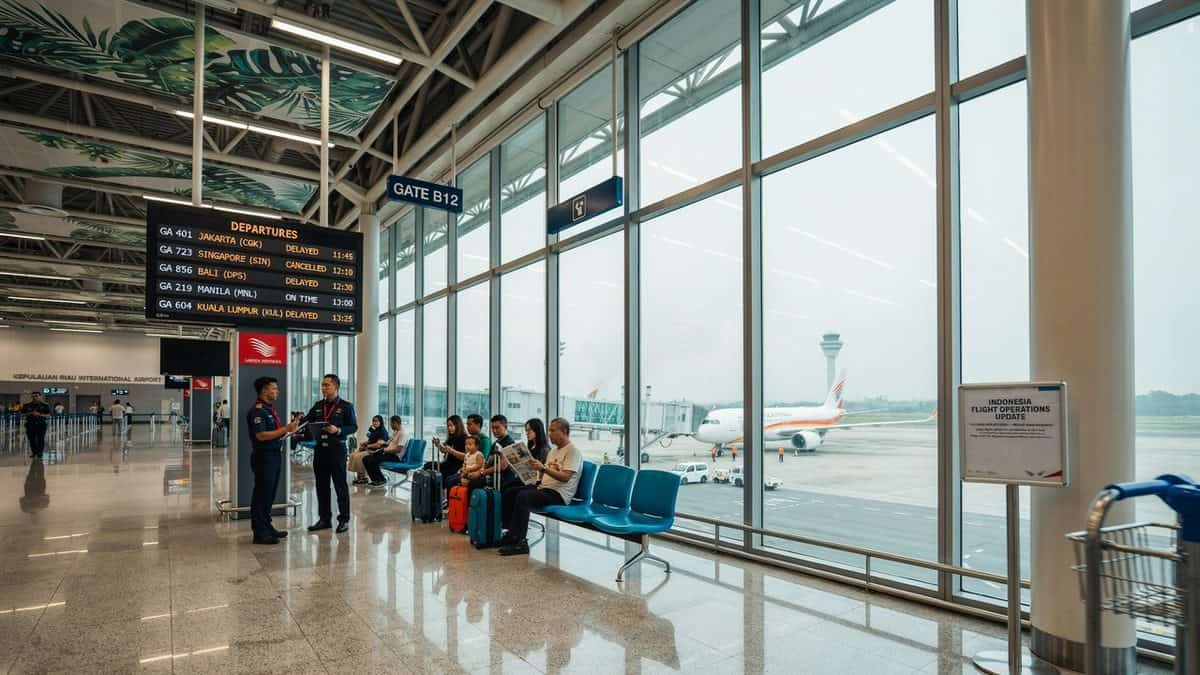
Image generated with Ai
Airports closure in Indonesia has affected one of the busiest aviation systems in South-East Asia due to ash from Mount Anak Krakatau’s eruptions which has forced the closure of eight airports, impacting about 170,000 people and 1,558 flights. In response to this problem, Indonesia’s Ministry of Transport has provided alternative airports and transportation support services for stranded travelers.
The affected airports include the Soekarno-Hatta International Airport in Jakarta due to the ash from volcanoes making operations at the airport unsafe. The authorities have closed the airports and monitored the movements of ash, weather, and aviation conditions.
Advertisement
Mount Anak Krakatau, located between Java and Sumatra in the Sunda Strait, released volcanic ash that affected flight operations across western Indonesia. The ash cloud created unsafe conditions for aircraft movements, leading authorities to temporarily suspend operations at several airports.
Volcanic ash is considered a serious aviation hazard because it can damage aircraft engines, affect visibility and create risks during take-off and landing.
Advertisement
| Category | Details |
|---|---|
| Country affected | Indonesia |
| Main cause | Mount Anak Krakatau volcanic ash |
| Disruption type | Airport closures and flight diversions |
| Airports closed | 8 |
| Passengers affected | Around 170,000 |
| Flights delayed/cancelled | 1,558 |
| Main affected airport | Soekarno-Hatta International Airport |
| Response authority | Indonesia Ministry of Transportation |
The government coordinated with airlines, airport operators and aviation authorities to manage the disruption while avoiding unnecessary risks to passengers and aircraft.
Eight airports were temporarily closed as volcanic ash affected safe aviation operations.
| Airport | Location |
|---|---|
| Soekarno-Hatta International Airport | Tangerang, Jakarta region |
| Halim Perdanakusuma Airport | Jakarta |
| Radin Inten II Airport | Lampung |
| Husein Sastranegara Airport | Bandung |
| Budiarto Airport | Curug, Tangerang |
| Pondok Cabe Airport | South Tangerang |
| Taufik Kiemas Airport | West Coast, Lampung |
| Atung Bungsu Airport | Pagar Alam, South Sumatra |
The closures were extended as authorities continued assessing volcanic ash conditions and changing wind patterns.
To protect passenger movement and reduce pressure on affected airports, Indonesia activated alternative airports with extended operating hours.
Advertisement
Advertisement
The Ministry of Transportation prepared several airports where airlines could redirect flights based on operational requirements.
| Alternative Airport | Location | Role |
|---|---|---|
| Kertajati International Airport | Majalengka | Alternative domestic and international operations |
| Ahmad Yani Airport | Semarang | Flight diversion support |
| Juanda International Airport | Surabaya | Passenger connectivity support |
| Yogyakarta International Airport | Yogyakarta | Alternative departure and arrival point |
| Adi Soemarmo Airport | Solo | Additional operational capacity |
These airports were opened for:
The government allowed airlines to decide whether to use alternative airports depending on aircraft availability, schedules and operational needs.
The Indonesian government introduced passenger assistance measures to reduce the impact of diverted flights.
Authorities coordinated with airlines and airport operators to provide free ground transportation for passengers whose flights were moved to alternative airports.
| Support Provided | Details |
|---|---|
| Transport type | Bus and train services |
| Cost | Free for affected passengers |
| Main transfer location | Soekarno-Hatta Airport |
| Alternative destinations | Kertajati, Juanda, Solo, Semarang and Yogyakarta |
| Coordination | Government, airlines and airport operators |
Passengers were informed that airlines would communicate revised departure locations, updated schedules and available options directly.
The volcanic ash disruption created widespread travel uncertainty across Indonesia.
The impact extended beyond cancelled flights because passengers also faced changes in departure airports and longer ground journeys.
| Traveller Issue | Impact |
|---|---|
| Flight cancellations | Passengers required rebooking or alternative arrangements |
| Airport changes | Some travellers needed transfers to different airports |
| Travel time | Longer journeys due to ground transportation |
| Connections | Risk of missed onward flights |
| International travel | Possible changes to regional routes |
Airlines continued providing updates as conditions changed.
Volcanic eruptions can create complex challenges for airlines because ash behaves differently from normal weather disruptions.
Unlike rain or storms, volcanic ash can cause physical damage to aircraft systems.
| Risk | Possible Impact |
|---|---|
| Engine exposure | Potential engine damage |
| Reduced visibility | Difficult airport operations |
| Ash deposits | Aircraft inspection requirements |
| Flight safety concerns | Temporary suspension of operations |
Because of these risks, aviation authorities often choose prevention over operational continuity until conditions improve.
The Indonesia airport closures show how natural events can quickly affect international travel networks.
Indonesia is one of the world’s largest archipelagic countries, with air travel playing a vital role in connecting:
| Sector | Impact |
|---|---|
| Tourism | Visitors face possible delays and itinerary changes |
| Airlines | Flight schedules require adjustment |
| Airports | Need rapid recovery planning |
| Local economies | Travel-dependent businesses may experience disruption |
For international travellers, the event demonstrates why flexibility and real-time travel updates are becoming increasingly important.
Travellers planning flights through Indonesia should remain prepared for possible changes during volcanic events.
| Action | Benefit |
|---|---|
| Monitor airline notifications | Receive immediate schedule changes |
| Confirm airport location | Avoid travelling to closed facilities |
| Keep additional travel time | Manage alternative transport |
| Follow official advice | Receive accurate safety information |
Passengers should rely on airline communication rather than unofficial travel updates during disruptions.
Indonesia’s Ministry of Transportation coordinated closely with:
Officials monitored ash movement and conducted checks before allowing operations to resume. At Soekarno-Hatta, aviation authorities used monitoring procedures, including ash testing, to assess conditions.
| Measure | Purpose |
|---|---|
| Airport monitoring | Assess ash conditions |
| Alternative airports | Maintain connectivity |
| Passenger transport | Reduce disruption |
| Airline coordination | Manage flight changes |
| Aircraft inspections | Ensure safety before operations |
Mount Anak Krakatau is one of Indonesia’s most closely monitored volcanoes.
Located in the Sunda Strait, the volcano emerged from the remains of the historic Krakatoa eruption and has remained active.
Indonesia sits along the Pacific Ring of Fire, making volcanic monitoring a critical part of national disaster management.
Eight Indonesian airports were closed because volcanic ash from Mount Anak Krakatau affected aviation safety conditions.
Around 170,000 passengers were affected, with 1,558 flights delayed or cancelled.
Soekarno-Hatta International Airport near Jakarta was among the main airports affected.
Indonesia activated Kertajati, Ahmad Yani, Juanda, Yogyakarta International Airport and Adi Soemarmo as alternative airports.
No. Airlines and authorities must complete safety checks before normal operations resume.
The reaction of Indonesia to the eruption of Mount Anak Krakatau emphasizes the significance of aviation resilience amid natural catastrophes through the availability of alternative airports and extended working hours with complimentary flight connections provided to passengers.
At the same time, the described situation underlines the broader picture of how international aviation is affected by natural phenomena such as volcanoes, weather changes, and so on. In this regard, Indonesia will keep monitoring the state of Mount Anak Krakatau and tourists will have to be ready for unexpected changes in flight conditions.
Advertisement
Tags: aviation safety, flight disruptions, Indonesia Airport Closures, INDONESIA TRAVEL NEWS, Mount Anak Krakatau
Advertisement
Advertisement













Monday, September 7, 2026
Monday, September 7, 2026

Monday, September 7, 2026

Monday, September 7, 2026

Monday, September 7, 2026

Monday, September 7, 2026

Monday, September 7, 2026