
Dubai is preparing to host one of the travel industry’s most consequential gatherings of the year, with Arabian Travel Market 2026 opening at Dubai World Trade Centre from 14–17 September. More than 210 speakers and contributors will examine the forces reshaping tourism, from artificial intelligence and aviation to traveller confidence, investment and resilience. The programme will span more than 80 sessions across the Global Stage, Future Stage and Experience Hub. UN Tourism Secretary-General H.E. Shaikha Al Nuwais and UAE Minister of Economy and Tourism H.E. Abdulla bin Touq Al Marri will headline the opening programme. The event arrives after a turbulent year for regional travel, giving the discussions added commercial significance.
The 33rd edition of Arabian Travel Market will bring governments, destinations, airlines, hotels, technology companies and investors together in Dubai. The gathering will focus firmly on the industry’s next phase rather than simply reviewing its recent challenges.
That distinction matters for travel businesses and destinations. Tourism now faces a more complex operating environment shaped by geopolitical uncertainty, changing consumer priorities and rapid technological development.
ATM 2026 will therefore place resilience and adaptation alongside growth. Its agenda will examine how destinations can maintain traveller confidence while strengthening connectivity and commercial performance.
Advertisement
The event’s revised September dates also carry significance. Organisers moved the show following consultation with exhibitors and industry stakeholders, aiming to maximise participation and business opportunities.
The timing gives the industry an important meeting point as businesses assess demand, aviation connectivity and investment priorities for the remainder of 2026 and beyond.
The official event programme confirms that ATM will take place at Dubai World Trade Centre from 14–17 September. The venue lists the exhibition as a trade-only event.
The opening day will carry an unusually strong governmental focus. H.E. Shaikha Al Nuwais will deliver the UN Tourism welcome address before H.E. Abdulla bin Touq Al Marri addresses delegates.
The UAE government lists Abdulla bin Touq Al Marri as its Minister of Economy and Tourism.
The programme will then move into the Ministerial Debate, titled Building A Resilient Industry Through Collaboration. The discussion will examine how governments and the private sector can reinforce tourism confidence.
Participants will consider coordinated destination messaging, crisis communication and policy alignment. They will also examine cooperation between source markets, airlines and tourism businesses.
The debate brings together representatives from the UAE, UN Tourism, Bahrain and the European Commission. That composition reflects the increasingly international nature of tourism resilience.
For travellers, these discussions may appear distant from the holiday experience. However, policy decisions can directly influence connectivity, destination marketing, crisis response and the speed at which travel markets recover.
The UAE’s wider tourism strategy already targets substantial long-term growth. Its Tourism Strategy 2031 aims to raise tourism’s GDP contribution to AED 450 billion and attract AED 100 billion in additional tourism investment.
ATM therefore provides a useful window into how the country intends to strengthen its role within global tourism.
Artificial intelligence will be one of the strongest themes running through the conference. Yet ATM 2026 will treat AI as more than a technology demonstration.
The Future Stage will examine how AI, fintech, digital distribution and connected platforms are moving towards commercial deployment. That shift could significantly alter how travellers search, book and manage journeys.
Dr Marwan Alzarouni, CEO, AI at Dubai’s Department of Economy and Tourism, will open the Future Stage. His session will explore AI’s role in rewriting the travel landscape.
The programme will also feature executives from Trip.com, Wego, MakeMyTrip, Sabre, Tripadvisor, Visa and other technology businesses.
Their discussions will address agentic AI, online travel platforms, digital discovery and the changing travel supply chain. These developments matter because AI increasingly affects the entire customer journey.
A traveller may eventually expect technology to compare options, identify suitable experiences and manage changes with minimal intervention. For travel companies, that creates opportunities but also raises questions around trust, data and accountability.
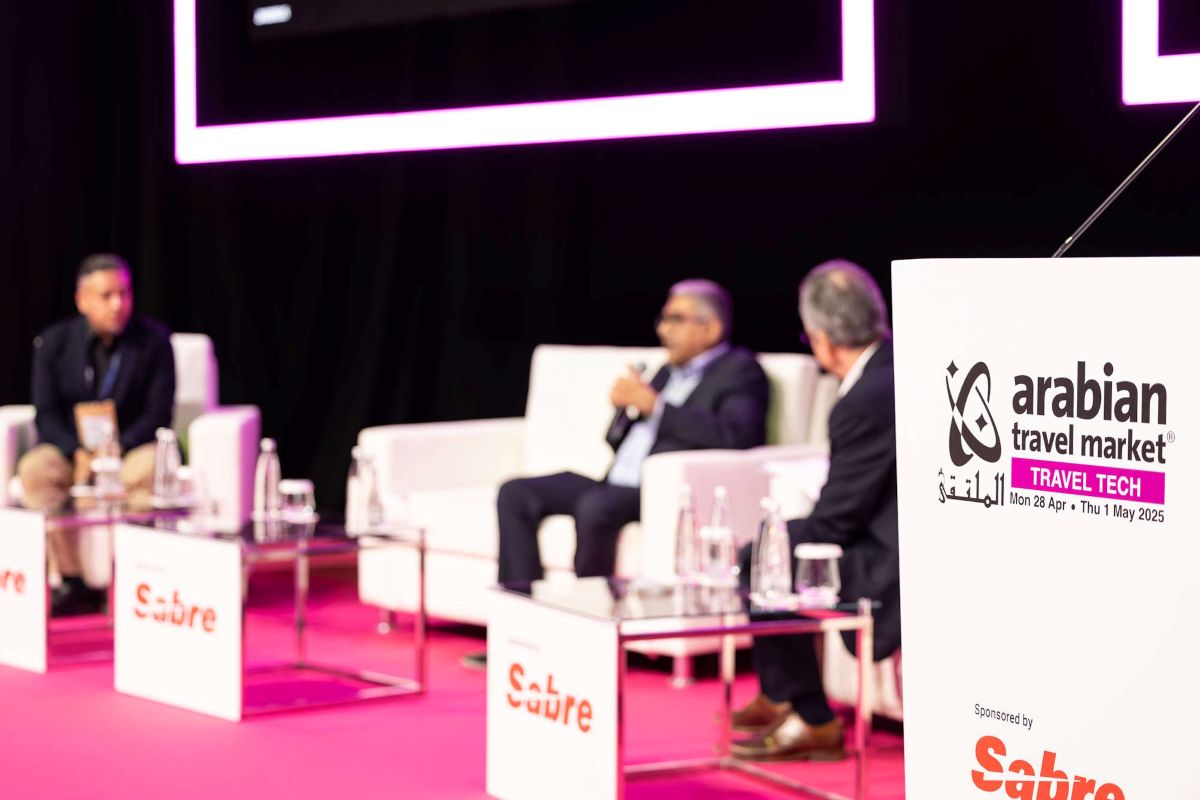
ATM Travel Tech will make those questions more tangible. Its Tech & Innovation Hub will feature more than 15 interactive demonstrations from travel technology companies.
The dedicated technology event is making its full debut alongside ATM 2026. It signals how rapidly technology has moved from a specialist travel-industry conversation into mainstream commercial strategy.
Technology, however, cannot explain the industry’s evolution alone. Changing traveller behaviour will receive equal attention throughout the conference.
Research presented at the event will examine how inflation, geopolitical uncertainty and changing consumer priorities are influencing travel decisions.
Euromonitor International’s Stephen Dutton, Global Insight Manager – Travel, will lead a session titled The State of Travel: Inflation, Polycrisis & the New Travel Reality.
The central question is increasingly straightforward. How do travellers continue spending when economic and geopolitical conditions remain uncertain?
Recent ATM research suggests the answer involves adaptation rather than retreat. Euromonitor forecasts Middle East and Africa travel spending to rise by 47.7% between 2025 and 2030, adding more than US$50 billion to the regional tourism economy.
That outlook provides important context for destinations competing for international visitors.
Travellers may change where they go, how long they stay or what they prioritise. Yet demand for meaningful experiences remains resilient.
For hotels, airlines and destinations, this creates a sharper requirement to understand the complete traveller journey. Price remains important, but flexibility, experience, convenience and digital engagement increasingly influence decisions.
No tourism strategy can operate independently from aviation. Connectivity determines whether demand can translate into actual arrivals.
ATM’s programme will therefore examine aviation and connectivity alongside tourism resilience. The discussions come after a year in which regional air travel faced considerable disruption.
The original 2026 ATM dates were changed before the event was eventually confirmed for September. The revised dates followed consultation with exhibitors, buyers and partners across the travel ecosystem.
The decision highlights a wider industry reality. Large-scale tourism events themselves depend on stable aviation networks and international participation.
The UAE’s connectivity advantage remains central to its tourism proposition. The official UAE government platform highlights the country’s strategic location between East and West and its strong international airline connectivity.
For international travellers, this makes Dubai an important transit and destination hub.
For travel companies, however, connectivity is increasingly about reliability as well as capacity. Disruption management, alternative routing and traveller communication can influence destination confidence during periods of uncertainty.
Hospitality will form another major strand of the programme. IHG Hotels & Resorts Managing Director MEA & South West Asia Haitham Mattar is among the senior hospitality leaders appearing at ATM.
The discussion will move beyond conventional hotel supply. Changing guest expectations, technology and experience-led travel are increasingly reshaping hospitality investment.
Travellers now expect accommodation to connect naturally with the wider destination experience. Gastronomy, wellness, culture and adventure can become as important as the room itself.
That evolution is particularly relevant for Middle Eastern destinations seeking to diversify their tourism propositions.
The UAE government identifies accommodation diversity, infrastructure and a broad range of tourism experiences as important elements of its destination proposition.
As a result, hotel development increasingly intersects with destination planning, transport, entertainment and cultural tourism.
The commercial implications are substantial. Properties that understand changing visitor expectations can compete through experiences rather than relying solely on room inventory.
ATM will also give business events a prominent platform through the Experience Hub. ICCA, IAPCO, GBTA and SITE will contribute sessions covering meetings, incentives and corporate travel.
ICCA’s Beyond Borders: The Middle East’s Collaborative Vision for a Global Business Events Future will explore regional cooperation.
Representatives from Oman, Bahrain, Qatar and Ras Al Khaimah will participate in the discussion. Their involvement highlights the growing emphasis on cross-border collaboration.
Business events can generate value well beyond delegate spending. They support hotel demand, aviation, restaurants, attractions and destination visibility.
They can also create longer-term investment and knowledge networks.
For Middle Eastern destinations, this makes the meetings and events sector an increasingly important component of tourism diversification.
Although ATM remains primarily a trade event, its discussions can influence the future travel experience.
Industry Theme Potential Traveller Impact Artificial intelligence Faster planning, personalised recommendations and automated support Aviation connectivity More routes, stronger access and improved disruption management Traveller behaviour More experience-led products and flexible packages Hospitality technology Smarter services and greater personalisation Tourism resilience Stronger crisis communication and destination preparedness Business events More international events and associated travel opportunities Sustainability Greater pressure for responsible tourism development
The most immediate effects will probably emerge through technology and service design.
Travellers may increasingly interact with AI before speaking to a traditional travel adviser. Hotels could use predictive systems to anticipate guest needs. Online platforms could become more responsive to real-time changes.
However, these developments will also increase expectations.
A seamless digital journey will quickly become an industry standard rather than a premium feature. Businesses unable to deliver that experience may find themselves losing ground.
The significance of ATM extends beyond four days at DWTC. Dubai has spent years building a tourism ecosystem based on international connectivity, infrastructure and diversified experiences.
The UAE Tourism Strategy 2031 provides a national framework for that ambition. It includes 25 initiatives and policies designed to strengthen tourism competitiveness, investment and product diversification.
ATM provides a commercial forum where those ambitions meet global demand.
The event’s own scale reinforces that role. The official ATM website says the show connects travel leaders from 156 countries and reports more than 55,000 attendees and over 2,800 exhibitors.
Those numbers demonstrate why the event matters to destinations seeking international partnerships.
They also explain why the conference agenda extends well beyond conventional tourism promotion.
The strongest message emerging from ATM 2026 is not simply that tourism remains resilient. It is that resilience itself is changing.
Destinations must now prepare for faster shifts in demand. Airlines must manage disruption with greater agility. Hotels must respond to increasingly personalised expectations.
Meanwhile, technology companies are becoming part of the core travel infrastructure.
That convergence gives ATM 2026 a broader significance than a traditional tourism trade show. It brings policy, technology, investment and consumer behaviour into the same conversation.
The event will also test how confidently the global industry can move beyond short-term disruption. Its discussions on collaboration will matter particularly for regions where tourism depends on international connectivity.
For travellers, the eventual result should be more choice, smarter services and greater flexibility.
For businesses, however, the message is more demanding. Future growth will depend on the ability to adapt quickly while maintaining traveller trust.
ATM 2026 arrives at a decisive moment for international tourism. More than 210 speakers will address the pressures and opportunities influencing the industry’s next chapter. The agenda combines government policy, market intelligence, technology, hospitality, aviation and business events.
Its September timing also gives the gathering added relevance after a year of disruption across regional travel markets. Dubai will consequently become a meeting point for businesses assessing where demand is moving next.
The most important conversations may centre on resilience, AI and connectivity. Yet the deeper issue is how tourism can remain competitive while traveller expectations accelerate.
For destinations and travel companies, ATM offers a strategic test. Those that combine technology with trust, connectivity and meaningful experiences are likely to shape tourism’s next era.
| Detail | Information |
|---|---|
| Event | Arabian Travel Market 2026 |
| Dates | 14–17 September 2026 |
| Venue | Dubai World Trade Centre, Dubai |
| Audience | Trade professionals |
| Programme | Global Stage, Future Stage and Experience Hub |
| Speakers | More than 210 |
| Sessions | More than 80 |
| Technology showcase | ATM Travel Tech |
| Monday opening hours | 11:00–18:00 |
| Tuesday–Wednesday | 10:00–18:00 |
| Thursday | 10:00–17:00 |
Advertisement
Advertisement
Advertisement













Monday, September 7, 2026

Monday, September 7, 2026

Monday, September 7, 2026

Monday, September 7, 2026
Monday, September 7, 2026

Monday, September 7, 2026