
Washington, DC Follows London and Many Others in Turning Major Sporting Events into Lucrative City Breaks

Published
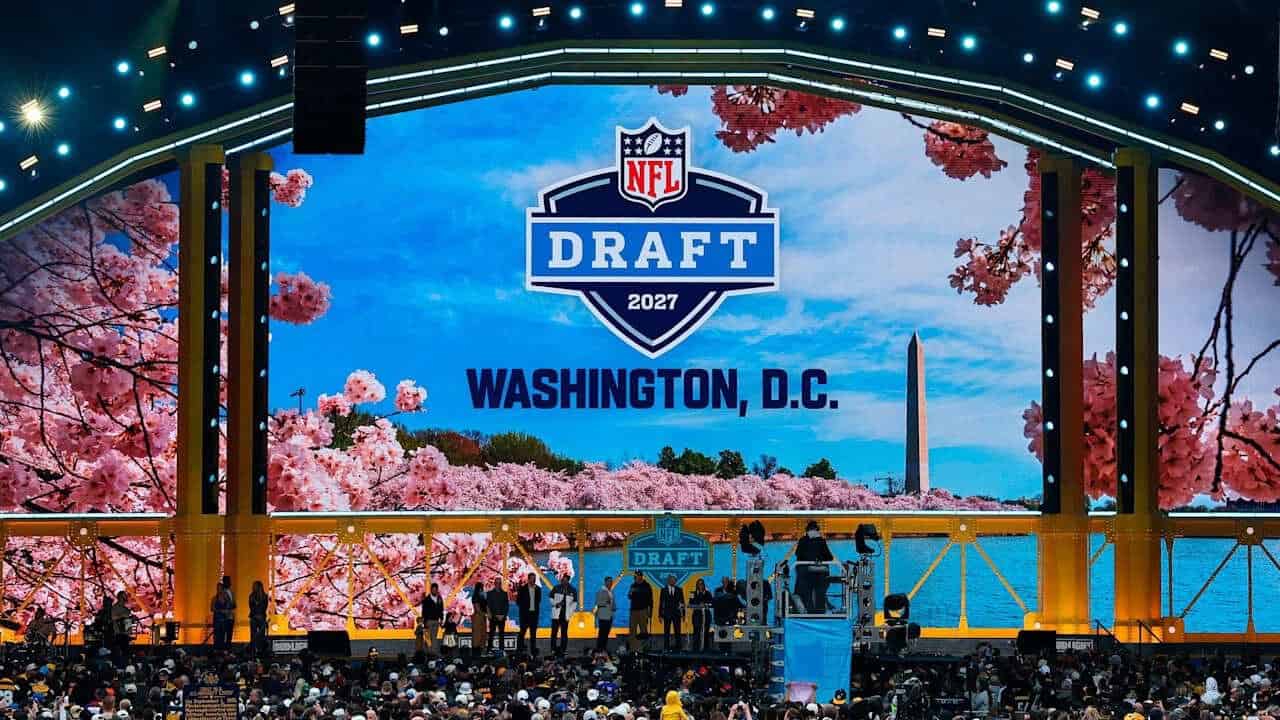
Washington, DC will host the 2027 NFL Draft from 29 April to 1 May, creating a major opportunity to attract travelling fans and extend their stays. The free event will centre on the National Mall and Pennsylvania Avenue, combining the draft with interactive attractions and entertainment. Yet the capital faces a more demanding test than attracting large crowds. Washington welcomed 27.2 million visitors in 2025, generating a record US$11.9 billion in visitor spending, but annual visitor growth slowed considerably. London, Melbourne and Toronto offer contrasting examples of how sporting spectacles can stimulate accommodation demand and broader urban exploration. Their latest figures reveal why hotel nights, visitor expenditure and repeat-trip intentions matter more than stadium attendance alone.
Washington’s NFL Draft Creates a New Tourism Opportunity
The NFL has scheduled its 2027 Draft across prominent locations in Washington, DC, with the National Mall anchoring the Draft Theatre near the US Capitol. The NFL Draft Experience will extend along Pennsylvania Avenue NW between Third and Seventh Streets. Visitors can expect free interactive activities, entertainment, player appearances and opportunities to engage with American football beyond the selection process.
The event will take place in the capital for the first time since 1941. Its positioning among national monuments and cultural institutions gives Washington an advantage over destinations whose sporting attractions remain concentrated around stadiums. Travellers can combine draft activities with Smithsonian museums, historic landmarks, neighbourhood restaurants and waterfront excursions.
Washington’s tourism figures explain why the opportunity matters. Destination DC reported 27.2 million visitors in 2025, comprising 25.1 million domestic visitors and 2.1 million international visitors. The city generated US$11.9 billion in visitor spending, US$2.4 billion in tax revenue and supported 114,013 jobs.
Advertisement
Advertisement
However, total visitation increased by only 20,000 compared with 2024. International visitation declined by 4 per cent, despite the overall record. The Draft could help attract additional visitors, although its eventual contribution will depend on how many people travel specifically for the event.
The NFL’s 2026 Draft in Pittsburgh attracted more than 805,000 attendees over three days, establishing a record for the event. That figure offers a useful indication of the Draft’s drawing power, but it should not be treated as a forecast for Washington. Different host cities have different capacities, travel markets and event footprints.
Advertisement
Advertisement
Washington’s real opportunity lies in converting event attendance into overnight demand. Tourism officials will need to track booking patterns, hotel performance and visitor origins to determine whether the Draft generates additional trips. The city’s spring attractions and established hospitality infrastructure could help persuade visitors to arrive earlier or remain after the final selection.
London’s Sporting Calendar Encourages Repeat Travel
London demonstrates how a recurring programme of international events can maintain destination visibility throughout the year. American football, baseball, athletics, electric motorsport and elite European football attract different audiences, allowing the capital to market multiple reasons for visiting.
Greater London Authority figures show that six featured sporting events generated £230 million in direct economic impact during 2024. Approximately 480,000 spectators attended those events, while global television audiences reached 202 million viewers. The programme included the UEFA Champions League Final, MLB London Series, London E-Prix, London Athletics Meet and NFL regular-season games.
The MLB London Series alone generated an estimated £56.5 million in direct economic impact. Meanwhile, 58,000 spectators attended the London Athletics Meet, spending approximately £5.5 million. These figures illustrate how different sporting formats can contribute to the same destination economy.
London’s competitive advantage extends beyond the event calendar. Visitors can combine matches with theatre, museums, shopping, historic attractions and dining. Its international air connections and extensive public transport network also allow visitors to build itineraries around different neighbourhoods.
The city’s recurring events create opportunities for repeat visitation rather than one-off attendance. An international visitor who travels for an NFL game might return for Wimbledon, athletics or another football fixture. Nevertheless, this potential must be tested through booking histories and visitor surveys.
Advertisement
Advertisement
London’s published economic-impact figures measure defined events and spending categories. They should not be directly compared with Melbourne’s tournament-wide economic stimulus or Washington’s annual visitor expenditure. A meaningful comparison requires consistent definitions of visitor spending, accommodation demand and additional economic activity.
Melbourne Proves the Value of Measuring Bed Nights
Melbourne offers a particularly useful benchmark because the Australian Open publishes detailed accommodation and spending indicators. The 2026 tournament recorded 1,368,043 attendances across its three-week programme, including Opening Week activities.
Visitors booked 705,239 hotel bed nights in Victoria, a reported increase of 59.2 per cent from the previous year. Organisers also reported average daily visitor spending of A$247.80 and total economic stimulus of A$722.32 million.
The attendance breakdown reveals why crowd totals require careful interpretation. Melbourne residents accounted for 62.6 per cent of attendees, while interstate visitors represented 18.6 per cent. Visitors from elsewhere in Victoria accounted for 10.9 per cent, and international visitors made up 7.9 per cent.
Local residents can contribute to restaurant, retail and entertainment spending without requiring accommodation. Conversely, interstate and overseas visitors may generate multiple hotel nights, restaurant visits and additional excursions. Visitor origin and length of stay therefore provide essential context for evaluating tourism performance.
The Australian Open’s extended schedule also creates more opportunities for trip planning. Visitors can arrive for qualifying matches, attend several rounds or remain for the finals. They can also combine the tournament with Melbourne’s food, arts and cultural attractions.
Advertisement
Advertisement
However, the reported bed nights do not automatically represent entirely new demand. Some visitors might have stayed in Melbourne regardless of the tournament, while others may have changed their travel dates. Researchers should compare event-period accommodation performance with suitable historical baselines to estimate the genuinely additional contribution.
Melbourne’s wider sporting calendar strengthens its destination proposition. Tennis, motorsport and other major events can give travellers multiple reasons to return, while the city’s hospitality sector can benefit from demand distributed across different periods.
Toronto Extends Football Beyond the Stadium
Toronto’s FIFA World Cup 2026 programme demonstrates how a host city can build a broader visitor experience around elite competition. The city hosted six matches alongside a 23-day FIFA Fan Festival, bringing football screenings, performances and public entertainment into the urban environment.
The City of Toronto reported approximately 250,000 fans across six matches and more than 350,000 attendees at the fan festival. Nathan Phillips Square also attracted approximately 60,600 spectators for live match broadcasts, excluding the final.
The fan festival featured 86 performers, including 80 Canadian performers and 75 local performers. This programming helped connect the international tournament with Toronto’s cultural sector, public spaces and local communities.
The model creates opportunities for visitors to explore restaurants, neighbourhood attractions and entertainment outside match venues. It also gives residents access to tournament-related activities without requiring stadium tickets. However, festival attendance includes local participation and cannot be treated as a direct measure of overnight tourism.
Advertisement
Advertisement
Early research offers another useful indicator. Preliminary findings from Destination Toronto and Destination Ontario suggested that nine in ten surveyed visitors were likely to return to Toronto for leisure travel within two years. This signals strong stated interest, but intention is not the same as a completed booking.
Follow-up research should establish how many respondents actually return, how much they spend and whether the original event influenced their decision. Toronto’s experience could help other host cities understand whether public festivals create lasting destination appeal beyond the tournament itself.
Four Cities Reveal Different Tourism Strategies
The four destinations approach event-led travel from different starting points. Washington is preparing a concentrated three-day event, London benefits from a recurring international calendar, Melbourne offers a multi-week tournament and detailed accommodation data, while Toronto has demonstrated the reach of public fan programming.
| City | Event benchmark | Reported attendance | Tourism indicator | Principal research question |
|---|---|---|---|---|
| Washington, DC | NFL Draft, 2027 | Not yet available | 27.2 million annual visitors in 2025 | Will the Draft generate additional overnight stays? |
| London | Six major events, 2024 | 480,000 | £230 million direct economic impact | Do recurring events encourage return trips? |
| Melbourne | Australian Open, 2026 | 1,368,043 attendances | 705,239 hotel bed nights | How much accommodation demand is additional? |
| Toronto | FIFA World Cup, 2026 | 250,000 match attendees | 350,000-plus fan-festival attendees | Will visitor intentions translate into repeat bookings? |
The comparison suggests that no single event format guarantees superior results. A three-day event can attract overnight visitors if its audience travels long distances, while a lengthy festival can draw predominantly local residents. Similarly, a high hotel occupancy rate may reflect existing demand rather than additional travel generated by the event.
The strongest approach combines event programming with accessible transport, attractive accommodation options and reasons to explore beyond the main venue. Destination marketers should also coordinate with restaurants, museums and local businesses to distribute visitor spending across the city.
Accommodation Prices Can Change the Visitor Equation
For travellers, major events can create both opportunities and financial pressures. Hotel rates may rise when demand increases, while popular restaurants, transport services and attractions can become busier. Visitors planning a trip around the Washington Draft should therefore assess accommodation availability and total trip costs before finalising their itinerary.
Advertisement
Advertisement
Washington’s spring calendar is already commercially important. Destination DC’s research identifies March to June and September to October as periods when hotel occupancy and average daily rates reach seasonal peaks. The Draft falls within this established demand window, making it particularly important to separate event-generated bookings from ordinary spring travel.
Travellers can improve value by comparing accommodation across Metro-connected neighbourhoods rather than focusing exclusively on central locations. They should also check official event guidance, public transport arrangements and attraction opening hours as the dates approach. A longer stay may offer better overall value when visitors spread transport costs across several sightseeing days.
For hotels and destination managers, pricing must balance short-term revenue with the longer-term appeal of the destination. Excessive prices could discourage leisure travellers who are not attending the event. Consequently, performance monitoring should include visitor satisfaction, booking cancellations and demand from non-event guests.
Better Data Will Determine the Winning Model
The next stage of research should focus on a consistent set of indicators across all four cities. Hotel occupancy, average daily rates, revenue per available room, room nights and average length of stay should be compared against equivalent non-event periods. Researchers should also separate domestic and international visitors, first-time visitors and repeat travellers.
Public transport data and pedestrian counts can reveal whether activity extends beyond stadium precincts. Visitor expenditure in restaurants, retail districts and cultural attractions can indicate whether event programming supports the wider urban economy. However, researchers must account for seasonal changes, public holidays and other major events that might influence results.
Post-event surveys should ask visitors why they travelled, whether they added extra nights and which attractions influenced their decisions. A follow-up after 12 to 24 months would provide stronger evidence of repeat visitation than an immediate survey of future intentions.
Advertisement
Advertisement
The analysis should also consider displaced demand. An event may increase room rates while discouraging ordinary leisure visitors from travelling during the same period. The most valuable outcome is additional visitation and spending, not simply a transfer of existing bookings.
Turning Sporting Excitement Into Lasting Travel
Washington’s 2027 NFL Draft will provide a fresh test of how a major sporting announcement can influence city-break decisions. The capital’s monuments, museums, restaurants and established hospitality sector offer substantial opportunities to extend a short event into a wider travel experience. Nevertheless, its success will depend on measured visitor behaviour rather than crowd estimates alone.
London demonstrates the value of a repeatable events calendar, while Melbourne provides a detailed benchmark for accommodation demand. Toronto highlights the potential of public entertainment to connect a global sporting competition with local culture. Together, these cases show why sports tourism should be assessed through overnight stays, additional expenditure and subsequent travel decisions.
For the travel industry, the strategic objective is clear. Cities must give visitors reasons to arrive earlier, stay longer and return after the final event. The ultimate measure of success is not merely how many fans attend, but how many become longer-staying guests and future leisure travellers.
Advertisement
