
Hangzhou Xiaoshan International Airport Hit by Fresh Flight Disruption as Air China, China Eastern, Hainan Airlines, XiamenAir and Shenzhen Airlines Suspend 13 Flights and Delay 230 Services, Stranding Travellers on Routes to Beijing, Shanghai, Guangzhou, Hong Kong, Macau, South Korea and Beyond—What Passengers Need to Know Before They Fly

Published
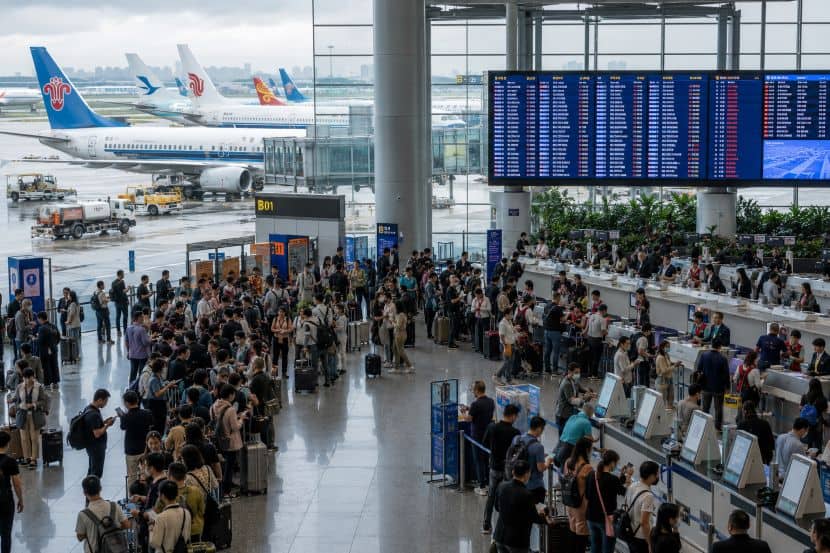
Today, June 23, 2026, Hangzhou Xiaoshan International Airport (HGH) experienced one of its most significant operational disruptions in recent weeks, with 13 flight cancellations and 230 delays affecting services operating within, into, and out of one of eastern China’s busiest aviation hubs. The disruption impacted thousands of passengers travelling for business, leisure, education and international connections, while forcing airlines to rapidly adjust schedules throughout the day.
Although airport operations continued, the scale of delays indicates that the disruption was not confined to a single airline or destination. Instead, it spread across a broad spectrum of domestic and international carriers, highlighting how congestion at a major hub like Hangzhou can ripple through China’s wider aviation system. The latest operational data shows that Air China recorded the highest number of cancellations, while several other major Chinese carriers—including China Eastern, China Southern Airlines, Hainan Airlines, XiamenAir, Shenzhen Airlines, Zhejiang Loong Airlines, Sichuan Airlines, and Beijing Capital Airlines—also reported notable delays.
Advertisement
Advertisement
For travellers, today’s disruption serves as another reminder that flight schedules remain vulnerable to operational constraints, weather-related challenges, aircraft rotations, crew scheduling issues, and air traffic management measures. Even passengers whose flights were not cancelled could experience lengthy delays, missed onward connections, baggage disruptions, and itinerary changes.
Operational Snapshot: Hangzhou Xiaoshan International Airport
According to today’s operational data:
Advertisement
Advertisement
| Airport | Cancelled Flights | Delayed Flights |
|---|---|---|
| Hangzhou Xiaoshan Int’l | 13 | 230 |
While 13 cancellations represent a relatively small proportion of the airport’s total daily movements, the 230 delayed flights reveal that today’s disruption was overwhelmingly characterised by schedule instability rather than widespread grounding of services. This distinction is important because delays often create cascading operational challenges that extend throughout the day, affecting aircraft availability, crew duty hours, passenger connections and airport gate management.
For a major airport such as Hangzhou Xiaoshan International Airport, which serves as a vital gateway for Zhejiang Province and an important hub connecting eastern China with domestic and international destinations, delays of this magnitude can have consequences well beyond the airport itself.
Advertisement
Advertisement
Airline Performance Table
The following operational figures are presented exactly as reported.
| Airline | Cancelled | % | Delayed | % |
| Air China | 7 | 5% | 41 | 29% |
| XiamenAir | 2 | 1% | 14 | 13% |
| Hainan Airlines | 2 | 3% | 17 | 28% |
| China Eastern | 1 | 0% | 40 | 37% |
| Shenzhen Airlines | 1 | 5% | 1 | 5% |
| Zhejiang Loong | 0 | 0% | 17 | 14% |
| Shandong Airlines | 0 | 0% | 7 | 23% |
| West Air | 0 | 0% | 2 | 66% |
| Cathay Pacific | 0 | 0% | 1 | 14% |
| Sichuan Airlines | 0 | 0% | 17 | 50% |
| China Southern Airlines | 0 | 0% | 30 | 26% |
| Urumqi Air | 0 | 0% | 1 | 50% |
| Juneyao Airlines | 0 | 0% | 5 | 41% |
| Tianjin Airlines | 0 | 0% | 6 | 46% |
| Hebei Airlines | 0 | 0% | 5 | 50% |
| 9 Air | 0 | 0% | 2 | 200% |
| Lucky Air | 0 | 0% | 2 | 33% |
| Okay Airways | 0 | 0% | 1 | 12% |
| Tibet Airlines | 0 | 0% | 2 | 33% |
| Asiana | 0 | 0% | 2 | 100% |
| Suparna | 0 | 0% | 1 | 25% |
| Air Macau | 0 | 0% | 3 | 75% |
| Beijing Capital Airlines | 0 | 0% | 11 | 23% |
Reading the Numbers: What the Airline Statistics Reveal
Today’s figures demonstrate that Air China absorbed the largest operational impact at Hangzhou Xiaoshan International Airport. The airline accounted for 7 cancelled flights, representing more than half of all cancellations recorded at the airport. In addition, 41 delayed flights underline the extent to which Air China’s schedule came under pressure throughout the day.
Advertisement
Advertisement
This combination of high cancellations and substantial delays suggests that the carrier likely faced a broader network disruption rather than isolated route-specific issues. Since Air China operates extensive domestic connections alongside international services, disruptions affecting one aircraft rotation frequently cascade across multiple destinations.
The second-highest cancellation totals were recorded by XiamenAir and Hainan Airlines, each reporting 2 cancellations. Although considerably fewer than Air China’s total, these cancellations nevertheless indicate operational stress affecting multiple airlines rather than a single operator.
China Eastern reported only one cancellation, yet its 40 delayed flights make it one of the most heavily affected airlines in terms of schedule reliability. Rather than cancelling flights outright, the airline appears to have prioritised maintaining operations despite longer turnaround times and network delays.
This operational approach is common during periods of airport congestion or temporary air traffic restrictions. Airlines often choose to operate flights later instead of cancelling them entirely in order to minimise passenger displacement and reduce downstream scheduling complications.
Advertisement
Advertisement
China Southern Airlines, despite recording no cancellations, experienced 30 delayed flights, highlighting another example of airlines maintaining service continuity while accepting reduced punctuality.
Meanwhile, Hainan Airlines, Zhejiang Loong Airlines, and Sichuan Airlines each reported 17 delayed flights, placing them among the airport’s most affected operators by volume.
Several regional carriers—including Shandong Airlines, Juneyao Airlines, Tianjin Airlines, Hebei Airlines, Lucky Air, Okay Airways, West Air, Urumqi Air, Suparna, Air Macau, and Tibet Airlines—also experienced delays, although at lower numerical levels.
Interestingly, a number of smaller airlines displayed high delay percentages despite relatively few delayed services. These percentages often reflect the smaller size of an airline’s daily schedule rather than widespread operational collapse. For example:
- 9 Air shows a delay percentage of 200%, despite only 2 delayed flights.
- Asiana recorded 2 delayed flights with a 100% delay rate.
- Air Macau reported 3 delayed flights corresponding to 75%.
- West Air registered 2 delayed flights with 66%.
Such percentages should therefore be interpreted carefully, as they reflect an airline’s operational schedule rather than total airport disruption.
Overall, today’s airline data points toward a network experiencing broad operational strain rather than isolated airline-specific failures. Multiple major Chinese carriers encountered delays simultaneously, suggesting that airport-wide operational conditions influenced performance across the board.
Advertisement
Advertisement
Why Did So Many Flights Experience Disruptions?
While airlines and airport authorities may investigate individual flight events separately, disruptions of today’s scale are typically caused by several operational factors acting simultaneously rather than a single isolated incident.
The most common contributing factors include:
- Adverse weather conditions, including heavy rainfall, thunderstorms, reduced visibility, strong crosswinds and rapidly changing atmospheric conditions. Weather remains one of the largest contributors to flight delays because safety regulations require airlines and air traffic controllers to maintain larger aircraft separation during poor conditions.
- Air traffic flow management measures, introduced when aircraft demand exceeds available runway or airspace capacity. During busy travel periods, controllers may intentionally space departures further apart to ensure safe operations, resulting in cumulative delays throughout the day.
- Aircraft rotation delays, where a late-arriving aircraft is scheduled to operate another flight shortly afterwards. If an inbound flight arrives behind schedule, subsequent departures frequently inherit the delay.
Although today’s operational data alone cannot identify the precise trigger behind every delayed or cancelled flight, the distribution of disruptions across numerous airlines strongly suggests that broader airport or network-wide operational pressures were at play rather than a problem affecting a single carrier.
What Guests Get: Immediate Passenger Ramifications
While today’s 13 cancellations understandably drew attention, the far larger concern for travellers was the 230 delayed flights, which had the potential to affect thousands of passengers throughout the day. Delays on this scale often extend beyond the airport, disrupting business trips, family holidays, academic travel, cruise departures and international itineraries.
Passengers travelling through Hangzhou Xiaoshan International Airport may experience several immediate consequences:
- Longer waiting times at the airportTravellers whose flights remain scheduled but delayed may spend several additional hours in departure terminals. During prolonged disruptions, airline service counters often experience long queues as passengers seek updates, rebooking options or accommodation assistance.
- Missed connecting flightsMany domestic services from Hangzhou connect with international departures from major Chinese hubs such as Beijing, Shanghai and Guangzhou. Even relatively short delays can cause passengers to miss onward flights, creating further itinerary complications.
- Changing departure gates and schedulesAirlines frequently adjust gate assignments, aircraft rotations and boarding times during operational disruptions. Travellers should closely monitor airport information displays and airline notifications throughout the day.
- Accommodation and ground transport challengesPassengers whose journeys extend overnight may need hotel accommodation, revised train tickets or alternative transport arrangements, especially if onward services become fully booked.
- Business and leisure disruptionDelayed arrivals can affect conferences, business meetings, family events, package holidays and organised tours, particularly during peak travel periods.
Although many flights eventually operate, extended delays can significantly reduce the overall travel experience and increase costs for passengers.
Advertisement
Advertisement
Understanding Refunds, Rebooking and Passenger Rights
Passengers affected by today’s disruption should familiarise themselves with their airline’s conditions of carriage and customer service policies before making alternative travel arrangements.
In general, travellers should consider the following steps:
- Check whether the flight has been cancelled or merely delayed, as different policies may apply.
- Contact the airline directly before purchasing replacement tickets independently.
- Request written confirmation of cancellations or major delays if required for travel insurance claims.
- Retain receipts for meals, accommodation and transport if additional expenses are incurred.
- Review any applicable travel insurance policy to determine whether delay-related expenses are covered.
- Monitor airline communications through official websites and mobile applications for schedule updates.
Passengers travelling on connecting itineraries booked under a single reservation should also verify whether onward flights have been automatically rebooked. Airlines often prioritise protecting passengers with through-ticketed connections.
International travellers should additionally check visa validity and immigration requirements if overnight stays become necessary because of significant delays.
Beyond the Terminal – Why Aviation Disruptions Matter for China’s Tourism Industry
Hangzhou has become one of China’s most important tourism and business destinations, welcoming visitors drawn by its cultural heritage, technology sector, natural scenery and proximity to the Yangtze River Delta.
When an airport handling hundreds of flights experiences widespread disruption, the consequences extend well beyond aviation.
Advertisement
Advertisement
Hotels may experience unexpected fluctuations in occupancy as delayed passengers require overnight accommodation, while tour operators face revised arrival schedules for organised groups. Attractions, conference organisers and transport providers must also adapt to shifting visitor flows throughout the day.
For international visitors, flight uncertainty can affect overall perceptions of destination reliability. Although isolated disruptions rarely influence long-term tourism demand, repeated operational instability can encourage travellers to build additional flexibility into future itineraries or choose alternative routing options.
Hangzhou’s reputation as a convenient gateway depends heavily on maintaining reliable air connectivity, making efficient recovery from disruptions particularly important.
Economic Ripple Effects Stretch Across Multiple Industries
The financial consequences of large-scale flight disruptions are rarely confined to airlines alone.
Every delayed aircraft generates additional operational costs, including increased fuel consumption during taxiing, crew scheduling adjustments, passenger servicing, aircraft repositioning and airport resource allocation.
Airlines may also incur expenses related to:
Advertisement
Advertisement
- passenger rebooking,
- meal vouchers,
- accommodation assistance,
- baggage handling,
- aircraft rescheduling,
- maintenance planning,
- compensation under applicable policies.
The wider regional economy may also experience indirect impacts.
Business travellers arriving late can postpone commercial meetings and investment discussions. Time-sensitive freight shipments may arrive behind schedule, affecting supply chains and manufacturing operations. Retail outlets within airport terminals may experience unpredictable customer demand depending on passenger dwell times.
Although today’s 13 cancellations remain relatively modest compared with some major international disruption events, the 230 delayed flights illustrate how schedule instability can still generate significant operational and economic costs across the aviation ecosystem.
Recovery Will Depend on Operational Stability
The speed at which Hangzhou Xiaoshan International Airport returns to normal operations will largely depend on whether the underlying causes of today’s disruption continue.
If weather conditions improve and aircraft rotations stabilise, airlines may gradually recover their schedules over subsequent operating periods.
However, aviation recovery rarely occurs immediately.
Advertisement
Advertisement
Aircraft delayed during one operational window frequently affect departures later in the day. Flight crews must also comply with duty-time regulations, while airports continue balancing runway capacity with incoming and outgoing traffic.
Consequently, some passengers scheduled to travel during subsequent departure waves could still experience residual delays even after primary operational issues have eased.
FAQ – Hangzhou Xiaoshan International Airport Flight Cancellations 2026
Why were flights cancelled at Hangzhou Xiaoshan International Airport today?
Today’s operational data recorded 13 cancellations and 230 delays. Large-scale disruptions of this nature are commonly associated with weather conditions, air traffic management restrictions, aircraft rotation issues, crew scheduling limitations or a combination of operational factors.
How many flights were delayed?
A total of 230 flights were delayed within, into or out of Hangzhou Xiaoshan International Airport.
Which airline recorded the highest number of cancellations?
According to today’s operational data, Air China recorded 7 cancelled flights, the highest among all airlines operating at the airport.
Which airlines experienced the largest number of delays?
Air China recorded 41 delays, followed closely by China Eastern (40) and China Southern Airlines (30). Hainan Airlines, Zhejiang Loong Airlines and Sichuan Airlines each reported 17 delayed flights.
Advertisement
Advertisement
Should passengers still travel to the airport?
Passengers should verify the latest status of their flights directly with their airline before leaving for the airport. Even flights operating as scheduled may experience revised boarding times or gate changes.
Can delayed passengers request refunds?
Refund eligibility depends on the airline’s fare conditions, the nature of the disruption and applicable consumer protection rules. Travellers should contact their airline directly and retain all travel documentation.
Practical Advice for Travellers Flying Through Hangzhou Xiaoshan International Airport in the Coming Days
Travellers scheduled to use Hangzhou Xiaoshan International Airport over the next several days should continue monitoring flight information well before departure.
Arriving at the airport earlier than usual may help accommodate security queues, revised boarding procedures and possible gate changes. Passengers with connecting itineraries should maintain additional transfer time wherever possible and keep airlines informed if significant delays affect onward travel.
Downloading airline mobile applications, enabling real-time notifications and checking official departure boards regularly remain among the most effective ways to stay informed during periods of operational uncertainty.
Flexibility is becoming an increasingly valuable part of modern air travel. While disruptions cannot always be prevented, informed passengers are generally better positioned to minimise inconvenience and adapt to changing schedules.
Advertisement
Advertisement
Author’s Thoughts
As someone who closely follows global aviation and travel developments, I believe today’s disruption at Hangzhou Xiaoshan International Airport highlights an important reality of modern air travel. While 13 cancellations understandably attract headlines, the 230 delayed flights tell the bigger story. Delays affect far more people than cancellations because travellers remain in uncertainty, often spending hours waiting for updates without knowing exactly when their journey will resume.
Advertisement
