

JFK Joins Los Angeles International, Newark Liberty, Chicago O’Hare and Washington Dulles in Facing New International Travel Questions as Proposed DHS Customs Changes Spark Airport Debate Across the United States—What Global Passengers Should Understand

Published
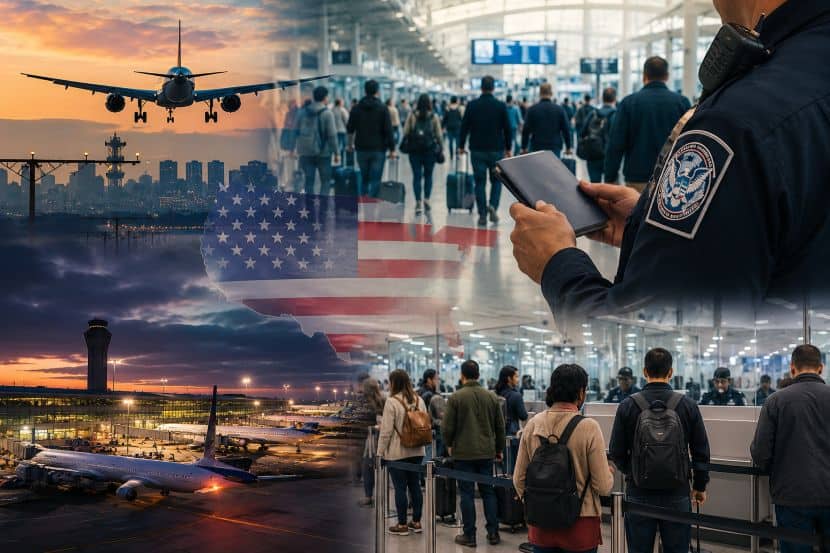
International travel in the United States has entered a new phase of questions and attention after a proposed discussion around customs operations placed some of the country’s busiest airports under a national spotlight. JFK joins Los Angeles International, Newark Liberty, Chicago O’Hare and Washington Dulles at the center of a growing airport debate that reaches far beyond terminals and flight schedules.
The discussion began after reports emerged that proposed DHS customs changes could become part of a broader policy conversation about how international arrival processing is managed at certain U.S. airports. Although no decision has been announced and international flights continue normally, the possibility alone has raised fresh questions across the aviation and travel industry.
Advertisement
Advertisement
For global passengers, the issue is not simply about airplanes taking off and landing. International travel depends on a large network working together behind the scenes. Customs officers, inspection systems, airport staffing, airline schedules, baggage handling and border clearance all play a role in moving travelers smoothly across countries.
As a result, airports across the United States are watching developments closely. Travelers are also paying attention because any future change to customs operations could influence connections, arrival experiences, and route planning. Here is what global passengers should understand as this airport debate continues to unfold.
Advertisement
Advertisement
Airports Most Frequently Discussed in the Debate
| Airport | Why It Draws Attention |
|---|---|
| JFK | One of the largest international entry points in America |
| LAX | Major Pacific gateway |
| Newark | Northeast international connector |
| O’Hare | Central U.S. transfer hub |
| Portland | Smaller international gateway with limited redundancy |
| Washington Dulles | Diplomatic and long-haul access point |
| DFW | Potential redistribution airport |
New York’s JFK Could Become the Most Closely Watched Airport in Any Future Change

Among all airports mentioned in discussions surrounding the proposal, JFK stands apart because of the scale of its international role.
JFK does not operate as a local airport serving only New York. It functions as one of the country’s main international arrival doors. International passengers who land there often continue onward across the United States. That means customs processing at JFK affects far more than New York alone.
Advertisement
Advertisement
Reuters reported that more than 50 million international travelers arrived through the three major New York airports during the previous year, showing how concentrated international demand has become in the region.
If customs processing capacity were ever reduced, the challenge would not simply be fewer flights. Airlines could attempt to redesign arrival patterns and send travelers through different gateways before connecting onward.
That sounds simple in theory. In practice, it changes airline economics, connection windows, crew schedules, baggage handling, and passenger experience.
A traveler flying directly into New York today could instead face an extra domestic connection and longer total travel time.
Airport operators have spent years rebuilding international growth after earlier periods of travel disruption. That is why even discussion around customs capacity attracts industry attention.
For passengers, the most realistic response would not be panic. Travelers would likely benefit from flexible fares, extra connection time, and closer attention to airline notifications if policy discussions become operational changes.
Advertisement
Advertisement
Los Angeles Could Face One of the Most Complex Airline Network Challenges
Los Angeles International Airport occupies a different position from JFK.
Where New York dominates Atlantic and global business traffic, Los Angeles serves as one of America’s most important Pacific gateways. Long-haul services linking North America with Asia and Oceania depend heavily on predictable arrivals and border processing.
International aviation planners often describe Pacific networks as less flexible than short-haul domestic flying. Aircraft rotations are longer. Crew requirements are stricter. Recovery options are narrower.
That is why LAX draws attention in this discussion.
If customs processing changed in any meaningful way, airlines would not necessarily abandon routes. More likely, carriers would examine alternate arrival patterns, reduce schedule concentration, or spread passengers across multiple entry points.
The consequence for travelers may not appear as dramatic cancellations. Instead, people could see more connections, altered arrival cities, and more time spent moving through the system.
Advertisement
Advertisement
Industry representatives warned that customs reductions at large airports could create operational disruption for airlines and travelers while slowing cargo movement that supports local economies.
LAX’s advantage is scale. It has broad airline participation and international diversity, which gives carriers more flexibility than smaller airports.
Newark Shows How One Airport Decision Can Spread Across an Entire Region

Newark Liberty International Airport highlights another issue: airports rarely operate alone.
Newark serves international travelers, corporate traffic, and the wider New York region. Many passengers see Newark, JFK, and nearby airports as interchangeable. Operationally, they are not.
When one airport experiences pressure, the effects often spill outward.
That is why aviation planners pay attention to regional balance.
Advertisement
Advertisement
If airlines began moving international arrivals between airports, travelers might experience less obvious disruptions: tighter connection windows, changing terminals, schedule compression, and heavier arrival peaks.
For business travelers especially, predictability matters as much as flight availability.
Newark’s challenge would not necessarily be volume alone. It would be managing volume at the right times of day while maintaining international arrival flows.
Passengers using Newark would likely benefit most from choosing schedules with more connection flexibility and avoiding tightly timed onward flights.
Chicago O’Hare’s Real Vulnerability Is Its Role as America’s Connector
Chicago O’Hare appears on many international maps not because most passengers end their trip there—but because many continue through it.
That distinction matters.
Advertisement
Advertisement
Large hub airports work like transfer engines. International arrivals connect into domestic departures. Aircraft depart again. Crews rotate. Gates turn over quickly.
When that rhythm changes, delays can multiply.
If customs processing ever slowed at major gateways, O’Hare could feel pressure through changing connection flows rather than direct international reductions alone.
Travelers moving from international to domestic service are especially sensitive to timing changes.
A missed arrival can trigger missed onward flights, rebooking chains, and aircraft repositioning.
That is why aviation experts often pay close attention to central connecting hubs when evaluating policy proposals.
Advertisement
Advertisement
O’Hare’s scale gives it resilience, but its importance as a transfer point also makes it sensitive to system-wide shifts.
Portland Reveals Why Mid-Sized International Airports Matter More Than Many Think

Portland’s appearance in discussions surprised many observers because it does not process traffic on the scale of New York or Los Angeles.
But that is exactly why airports like Portland matter.
Large airports can absorb disruption more easily because they usually have more airline partners, route options, and operational redundancy.
Mid-sized international gateways often operate differently.
International service at these airports can depend more heavily on stable processing capacity and consistent scheduling.
Advertisement
Advertisement
That does not mean Portland is vulnerable today. Flights continue normally.
But analysts often note that smaller international networks have fewer immediate replacement options if operational conditions change.
For travelers, the lesson is simple: route flexibility becomes more valuable when flying through smaller gateways.
Washington Dulles Could Feel Effects Beyond Passenger Numbers
Washington Dulles carries a different kind of importance.
Its passenger volume matters, but its strategic role matters more.
The airport supports government travel, diplomatic movement, international organizations, and long-haul global access.
Advertisement
Advertisement
That means reliability becomes part of its value.
If international arrival systems changed, airlines serving Dulles would likely focus on preserving schedule integrity rather than simply maintaining passenger counts.
Long-haul routes depend on consistency.
Travelers using Dulles often plan farther in advance and travel longer distances, making schedule certainty especially important.
That is why discussions about border processing attract attention well beyond aviation circles.
Dallas Fort Worth May Not Be at the Center of the Debate—but It Could Become One of the Busiest Outcomes

Dallas Fort Worth enters the conversation differently.
Advertisement
Advertisement
Unlike airports discussed as possible direct exposure points, DFW is often viewed as an airport that could absorb changes elsewhere.
That opportunity also creates pressure.
Airports that receive redistributed traffic can experience new challenges of their own—gate competition, connection timing, staffing allocation, and passenger flow management.
DFW already functions as one of America’s major connecting systems.
If airlines ever shift arrivals across the network, airports like DFW may become increasingly important transition points.
Its strength lies in flexibility. Its challenge would be scale.
Advertisement
Advertisement
The Invisible System Behind Every International Arrival
Most travelers think an international airport becomes “international” because it has long runways, giant terminals, and aircraft flying across oceans. But that is only part of the story.
What truly turns an airport into an international gateway is something passengers often notice only after landing: federal inspection and border processing systems.
When an international flight lands in the United States, the journey is not over.
The process usually follows a strict order:
Arrival → aircraft parking → passport inspection → customs review → baggage collection → entry clearance → onward travel
Each step depends on trained personnel, secure facilities, technology systems, and federal authorization.
Advertisement
Advertisement
That is why airports cannot simply receive international passengers whenever they want.
At the center of this system is U.S. Customs and Border Protection (CBP).
CBP is a federal agency under the Department of Homeland Security. Its officers inspect travelers arriving from abroad, verify travel documents, enforce customs laws, screen goods entering the country, and determine who is allowed to enter the United States. According to CBP, officers process millions of international travelers every month across airports, land crossings, and ports.
Many travelers confuse CBP with TSA, but they serve different purposes.
The Transportation Security Administration (TSA) mainly focuses on security before departure. TSA checks passengers and baggage before they board flights. CBP works after arrival and manages entry into the country. One agency protects the journey before takeoff. The other controls the border after landing.
That difference explains why the recent proposal drew attention.
Advertisement
Advertisement
If an airport has runways but lacks federal customs processing, airlines cannot simply unload arriving international passengers and let them continue their trip. International arrivals must legally pass through inspection procedures before entering the country.
Airports invest years building terminals, international gates, baggage systems, and arrival halls designed around this process. Airlines then design schedules around those arrival windows.
That is why discussions about customs staffing are not viewed as a small operational issue. For aviation experts, customs processing is not the final step of international travel—it is one of the systems that makes international travel possible in the first place.
What Happens Next
At this stage, no formal policy has been announced.
Reuters reported that DHS discussions remain exploratory, and transportation officials publicly indicated they were not supporting broad travel shutdowns tied to political disagreements. Travel organizations have continued to advocate for keeping international passenger movement efficient and predictable.
Conclusion: The Debate Shows That Airports Depend on More Than Runways
Modern airports are often judged by terminals, airlines, and aircraft.
Advertisement
Advertisement
But international travel depends just as heavily on systems travelers rarely see—customs officers, immigration processing, scheduling networks, and federal coordination.
That is why this discussion reached beyond politics.
For now, travelers are not being asked to change plans. Flights continue. Airports remain open.
Yet the conversation itself has shown something important: in global aviation, sometimes the biggest disruptions begin long before an airplane leaves the gate.
Advertisement
