
Thailand Is Urged to Improve City Links in 2026 as Regional Tourism Could See New Opportunities

Updated
Published
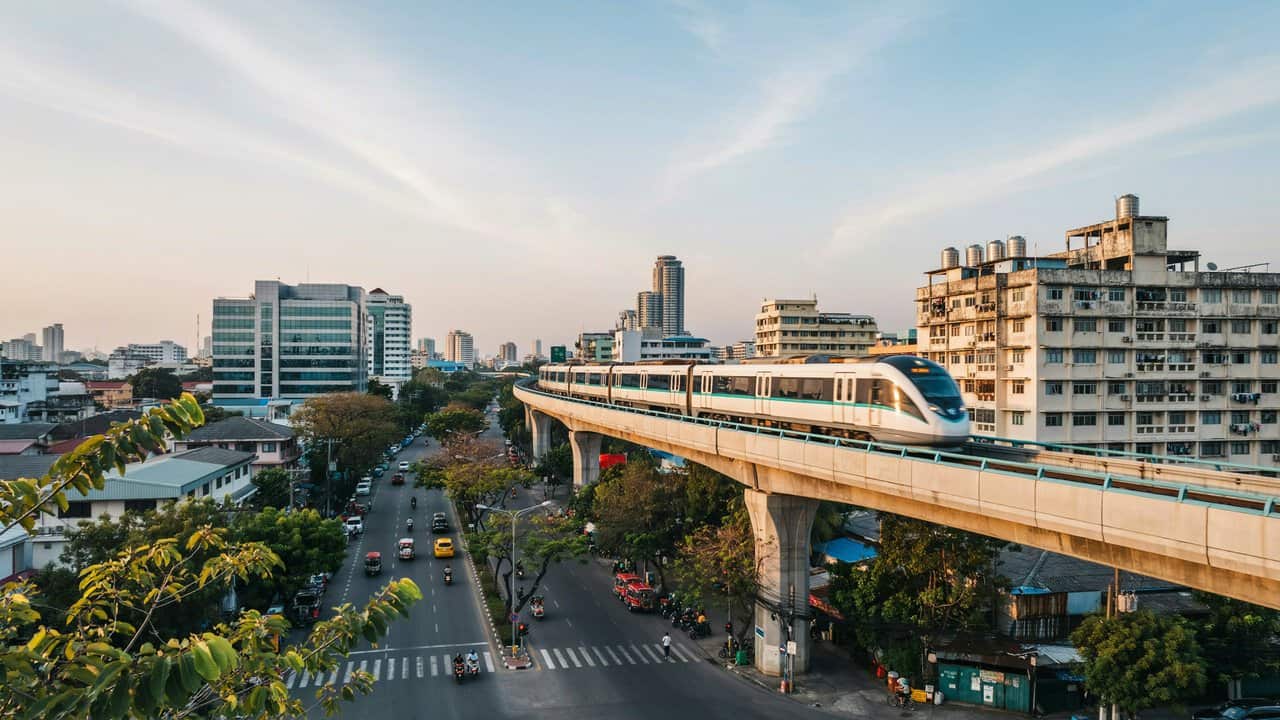
Image generated with Ai
A World Bank report highlighted on 22 September 2026 recommends improving connections, infrastructure and planning across Thailand’s cities. It calls for selected secondary cities to develop stronger economic roles alongside Bangkok. Better links could eventually make regional trips easier and support tourism businesses, but the report announces no new passenger route, visitor incentive or construction timetable. Its investment comparisons are modelled scenarios, not approved spending. For travellers, Regional Tourism arrangements and entry requirements remain unchanged by the announcement. The findings explain a possible long-term direction for Thailand’s cities, rather than a travel service available to book today.
Regional Tourism: What the Evidence Establishes
The news is principally about economic development. The report recommends keeping Bangkok productive while improving the foundations of other Thai cities and preparing selected secondary cities for larger roles. Those foundations include transport connections, infrastructure that can withstand climate pressures, coordinated planning and institutions able to deliver projects. Improved journeys for visitors could follow if relevant investments are approved and completed. Tourism Beyond Bangkok Cities is therefore a potential effect of the recommendations, not a programme launched on 22 September.
The table assigns an editorial assessment of each subject’s share of the verified story. Its percentages total 100% and are not official economic or tourism statistics.
| News component | Share of story | Officially verified finding | Relevance to travellers | Official source |
|---|---|---|---|---|
| Urban development | 40% | Bangkok would remain the national centre while selected secondary cities develop complementary roles. | Establishes the report’s main recommendation, with no immediate itinerary change. | World Bank cities report and 22 September announcement |
| Connectivity and infrastructure | 25% | The report prioritises stronger links and resilient infrastructure. | Later projects could make regional travel easier if approved and delivered. | World Bank cities report |
| Economic evidence | 20% | Urban districts generated around 89% of Thailand’s GDP growth from 2010 to 2020. | Explains the economic focus; the figure does not measure tourism. | World Bank cities report |
| Tourism industry | 10% | An earlier growth report identifies sustainable and wellness tourism as a priority industry. | Shows a possible business connection, without confirming new visitor facilities. | World Bank growth report and cities overview |
| Entry requirements | 5% | The cities announcement makes no visa or passport change. | Travellers should use existing official requirements. | Cities announcement and official Thai arrival guidance |
| Total | 100% |
The evidence establishes a recommendation to strengthen Thailand’s urban network. It does not establish higher regional visitor numbers, shorter journey times or an approved transport budget. Travellers should read the tourism angle as a possible longer-term consequence of city development.
Advertisement
Advertisement
How the Development Took Shape
The report’s figures draw on years of economic activity rather than a sudden change in travel demand. It finds that urban districts produced around 89% of Thailand’s GDP growth between 2010 and 2020. A broader growth report published earlier in September 2026 identified sustainable and wellness tourism among five industries with potential for Thailand’s next phase of growth. That earlier publication supplied industry context. It did not announce a regional tourism campaign or assign visitor targets to secondary cities. Tourism Beyond Bangkok Cities was not presented as a completed policy in either report.
Advertisement
Advertisement
A partnership framework discussed on 17 September 2026 included more balanced growth, secondary cities and regional economic corridors among its priorities for fiscal years 2027–2032. The cities findings were then highlighted on 22 September. This chronology places the new report within a wider economic agenda, but a partnership priority is not the same as approval for a named road, railway or airport project. As of 24 September 2026, the announcement provides no opening date for a passenger service and no new instruction for people already planning a trip.
Why Bangkok and Other Cities Matter
Bangkok generates close to half of Thailand’s national output and is nearly 27 times larger than Chiang Mai, the country’s second-largest city, according to the report. Congestion is estimated to cost Bangkok 7–10% of its gross regional product each year. Gross regional product means the value of economic activity produced within a region. These figures describe the scale of the capital and one of its economic pressures. They do not show how many visitors cause congestion, nor do they prove that developing other cities would redirect tourists away from Bangkok.
The report recommends a network in which cities have complementary strengths and effective connections. It also calls for productive urban areas, resilient infrastructure and capable institutions. These elements help explain the possible relevance to Regional Tourism: a destination can have reasons to visit yet remain inconvenient if onward connections or local services are unreliable. That is an evidence-based interpretation of the recommendations, not a measured travel outcome. Tourism Beyond Bangkok Cities would depend on which improvements are selected, funded and made usable. The report does not identify a first tourist route or say which city will receive a visitor-focused project.
What the Investment Figures Mean
The cities study compares investment approaches using a model covering 75 urban centres. Its results depend on both how much is invested and where the resources go. Under some modelled conditions, concentrating investment in Bangkok performs better; above a modelled threshold, an approach involving several centres becomes more advantageous. That threshold is part of an analytical comparison. It is not an approved spending commitment or a construction trigger. Readers should not turn the model into a claim that rail links, roads or tourism facilities have been funded.
The report also records real GDP per person growth of about 2.2% a year during 2021–2024. It compares this with roughly 5.4% annual growth needed over the coming decade for Thailand’s high-income ambition by 2037. These are national economic measures covering different periods from the 2010–2020 urban-growth figure. None is a forecast of tourist arrivals or hotel occupancy. The findings explain why stronger cities feature in the development discussion, while leaving the scale of any eventual travel benefit unresolved. Tourism Beyond Bangkok Cities cannot be assigned a reliable growth rate from these data.
Advertisement
Advertisement
Potential Effects on Regional Tourism and Travellers
Better transport connections could eventually let visitors combine Bangkok with another city more easily. Stronger local infrastructure could also help residents, workers and tourism businesses provide dependable services. An earlier growth report identifies sustainable and wellness tourism as a priority industry, which gives the urban recommendations a relevant tourism context. Yet the cities report supplies no evidence that bookings, visitor spending or regional passenger numbers have changed because of its publication. It announces no new attraction, hotel incentive, flight frequency or fare. The potential benefit is important to examine, but it remains conditional on future decisions and delivery.
The report also identifies limits that matter beyond tourism. Congestion, flooding, heat and infrastructure pressures can raise costs and disrupt urban activity. It recommends coordinating land use, connectivity, resilience and financing so investments reinforce one another. Spreading resources too thinly could weaken the modelled benefits. These concerns primarily affect communities and the wider economy; visitors may share in later improvements if they occur. For now, Tourism Beyond Bangkok Cities is a possible result of addressing those needs, not an immediate change in destination accessibility or travel safety guidance.
What Travellers Should Do and Watch Next
Anyone planning a multi-city journey should use current schedules and entry guidance. The report does not require a booking change. Official Thai tourism guidance says non-Thai nationals entering by air, land or sea must complete the Thailand Digital Arrival Card within three days before arrival. That requirement began before the September cities report and is unrelated to its proposals. Visa conditions can depend on nationality and the purpose of travel, so visitors should confirm the rules that apply to them through the appropriate Thai authorities.
Practical checks remain limited to existing arrangements:
- Confirm that planned regional transport services operate on your travel dates.
- Check the current passport and visa requirements for your nationality and itinerary.
- Complete the existing digital arrival card within its stated pre-arrival period, if required.
- Treat claims of a new route or faster connection as unconfirmed until an official operator or authority announces one.
- Watch for specific project approvals, funding decisions and opening dates before relying on a proposed improvement.
Travellers need no immediate action because of the report itself. The next meaningful developments would be official decisions identifying projects, locations, funding and delivery schedules. The broader partnership framework sets development priorities for fiscal years 2027–2032, but the cities announcement fixes no tourist-route launch or construction deadline. Regional Tourism could benefit if stronger links and services are eventually delivered; whether, where and when that happens remains unresolved.
Conclusion
Thailand’s cities report makes a documented case for stronger connections, resilient infrastructure and carefully targeted investment. It recommends developing secondary cities alongside Bangkok, while offering no new route, visitor incentive or construction date. Travellers can continue using current transport services and entry procedures. The possible gain for Regional Tourism depends on future projects receiving approval and reaching operation. The report’s economic figures explain its recommendations; they do not measure a change in visitor behaviour. Tourism Beyond Bangkok Cities remains a longer-term possibility. Until specific projects are confirmed, travellers and businesses should follow official updates rather than plan around modelled outcomes.
Advertisement
