

AirAsia Expands Japan Taiwan Malaysia Connectivity With Nine Weekly Osaka Taipei Kuala Lumpur Flights for Winter 2026–27

Published
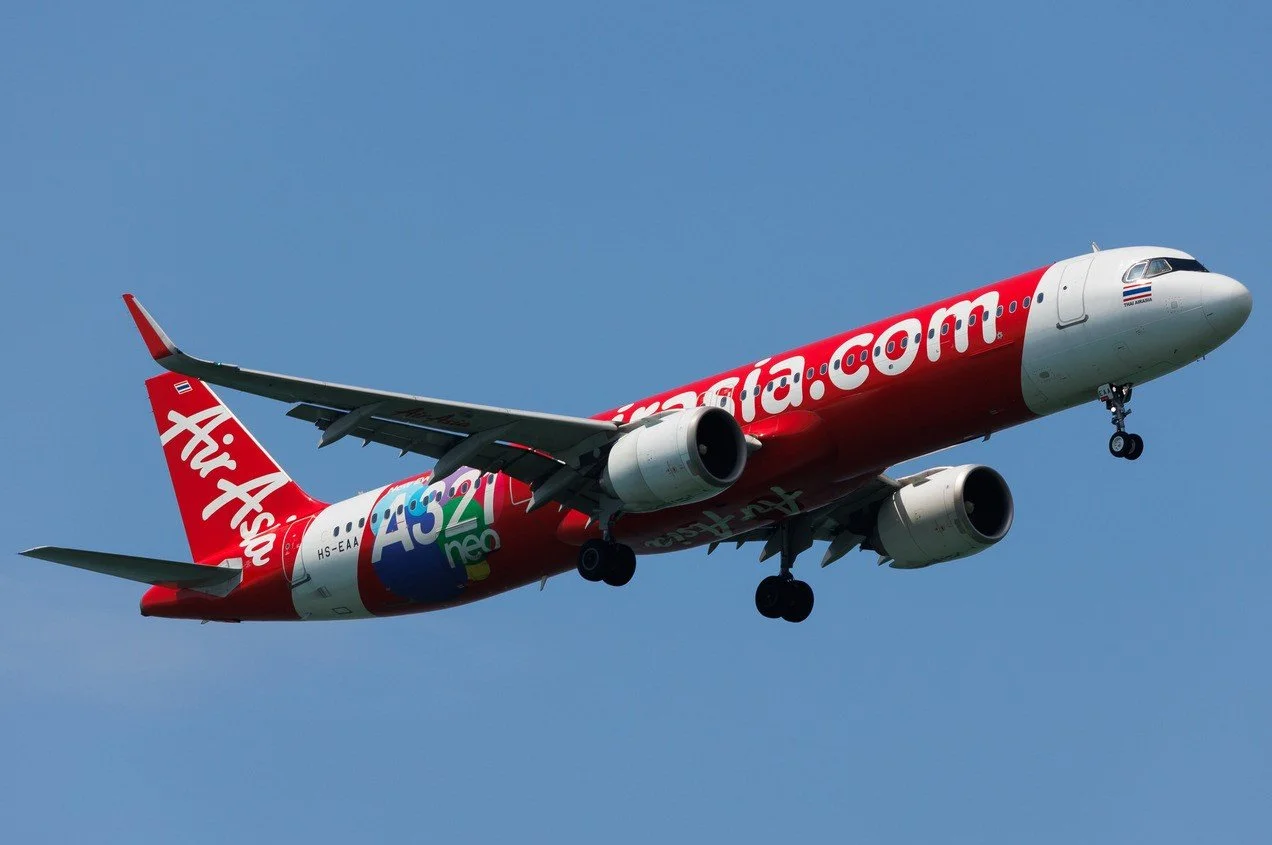
AirAsia is strengthening air connectivity between Japan, Taiwan and Malaysia by adding two weekly return services on its Osaka/Kansai–Taipei/Taoyuan–Kuala Lumpur route from 22 November 2026 to 24 February 2027. The seasonal expansion will increase the route’s frequency to nine weekly round trips, providing additional travel options during the winter period. Announced in October 2026, the changes also include the transfer of route operations from AirAsia X to AirAsia on 25 October and the introduction of Airbus A321neo aircraft. Meanwhile, separate aircraft changes will increase seat capacity on services connecting Fukuoka, Taipei, Kota Kinabalu, Osaka and Kaohsiung.
AirAsia Osaka Taipei Kuala Lumpur Flights Increase to Nine Weekly Round Trips
AirAsia’s latest winter schedule adjustment will introduce additional services linking three important Asian aviation markets.
The airline plans to increase its Osaka/Kansai–Taipei/Taoyuan–Kuala Lumpur operation by two weekly round trips, bringing the total from seven to nine.
The temporary expansion begins on 22 November 2026 and continues until 24 February 2027.
Advertisement
Advertisement
The additional services will depart Osaka/Kansai on Mondays and Wednesdays, while the corresponding Kuala Lumpur departures are scheduled for Sundays and Wednesdays.
The arrangement provides passengers with more opportunities to travel between Japan, Taiwan and Malaysia during the winter scheduling period.
Advertisement
Advertisement
Unlike a nonstop Osaka–Kuala Lumpur flight, the expanded service operates through Taipei Taoyuan International Airport.
This distinction matters because passengers should account for the intermediate stop when comparing journey times and booking options.
The route also serves multiple travel markets, including passengers flying between Osaka and Taipei, Taipei and Kuala Lumpur, and those travelling across the complete three-city itinerary, subject to the airline’s ticketing arrangements.
The announcement does not specify promotional fares or the number of additional passengers expected to use the services.
However, the increase from seven to nine weekly round trips represents approximately 28.6% more weekly flight frequencies on the route during the announced period.
When Will AirAsia’s Additional Winter Flights Operate?
The additional services will operate for a limited period rather than becoming a confirmed permanent year-round increase.
Advertisement
Advertisement
The schedule covers the final weeks of 2026 and extends into February 2027.
Key Details of the AirAsia Winter Route Expansion
| Category | Announced information |
|---|---|
| Airline | AirAsia |
| Route | Osaka/Kansai–Taipei/Taoyuan–Kuala Lumpur |
| Additional services begin | 22 November 2026 |
| Additional services end | 24 February 2027 |
| Existing weekly round trips | 7 |
| Additional weekly round trips | 2 |
| Total weekly round trips | 9 |
| Additional Osaka departure days | Monday and Wednesday |
| Additional Kuala Lumpur departure days | Sunday and Wednesday |
| Aircraft | Airbus A321neo |
| Operating airline changes | 25 October 2026 |
| Previous operator | AirAsia X |
| New operator | AirAsia |
| Previous aircraft | Airbus A330-300 |
| Nonstop Osaka–Kuala Lumpur flights | Continue under AirAsia X |
The expansion is relevant to travellers planning journeys across Japan, Taiwan and Malaysia, particularly those seeking alternatives to existing flight schedules.
However, the increase applies specifically to the route identified in the announcement.
It does not establish that every AirAsia service between these countries will operate more frequently.
Passengers should check individual flight dates, availability and operating conditions before making reservations.
What Are the New AirAsia Flight Timings Between Osaka, Taipei and Kuala Lumpur?
AirAsia has published schedules for the additional flights under flight numbers AK179 and AK178.
Advertisement
Advertisement
The services operate through Taipei Taoyuan, with different departure times depending on the day of the week.
All times are local to the respective airports.
Additional AirAsia Flight Schedule for Winter 2026–27
| Flight | Operating day | Departure | Taipei stop | Final arrival |
|---|---|---|---|---|
| AK179 | Monday | Osaka/Kansai 13:25 | Arrives 15:45, departs 17:00 | Kuala Lumpur 21:50 |
| AK179 | Wednesday | Osaka/Kansai 14:55 | Arrives 17:15, departs 18:30 | Kuala Lumpur 23:20 |
| AK178 | Sunday | Kuala Lumpur 23:40 | Arrives 04:40 next day, departs 05:55 next day | Osaka/Kansai 09:35 next day |
| AK178 | Wednesday | Kuala Lumpur 03:05 | Arrives 08:05, departs 09:20 | Osaka/Kansai 13:00 |
Source: AirAsia schedule information published by Traicy on 12 October 2026. Times are local and remain subject to airline schedule changes.
The Monday Osaka departure reaches Kuala Lumpur at 21:50 after an intermediate stop in Taipei.
The Wednesday Osaka departure operates later, arriving in Kuala Lumpur at 23:20.
In the opposite direction, the Sunday departure from Kuala Lumpur operates overnight and reaches Osaka on Monday morning.
Advertisement
Advertisement
The Wednesday Kuala Lumpur departure arrives in Osaka at 13:00 on the same calendar day.
For passengers, these variations are important when arranging accommodation, airport transfers and onward transport.
The Sunday overnight service, in particular, requires careful attention to the arrival date.
Travellers should also distinguish the published intermediate stop from a separately booked connecting itinerary.
The precise transit arrangements will depend on the ticket and the airline’s operating procedures.
AirAsia Takes Over Route Operations From AirAsia X on 25 October
An important operational change will take place before the additional winter flights begin.
Advertisement
Advertisement
From 25 October 2026, the Osaka/Kansai–Taipei/Taoyuan–Kuala Lumpur service will transfer from AirAsia X to AirAsia.
The change also involves replacing the Airbus A330-300 previously used on the route with the smaller Airbus A321neo.
AirAsia X is the group’s medium- and long-haul airline, while AirAsia operates a network of short- and medium-haul services.
The transition therefore represents a change in both the operating carrier and the aircraft type assigned to the route.
For passengers, the most important consideration is whether the change affects their existing booking, baggage entitlement, seat selection or other purchased services.
The announcement does not specify any changes to those conditions. Travellers with confirmed reservations should review the latest itinerary issued by the airline.
Advertisement
Advertisement
Importantly, AirAsia X will continue operating nonstop flights between Osaka and Kuala Lumpur.
The operational transfer concerns the service travelling through Taipei, not the separate nonstop connection.
Passengers comparing the two options should therefore pay attention to the flight number, operating airline and whether their journey includes a stop in Taiwan.
Why Is AirAsia Replacing the Airbus A330-300 With the A321neo?
The transition from the Airbus A330-300 to the Airbus A321neo represents a change from a wide-body aircraft to a narrow-body aircraft.
The A330-300 is generally used for medium- and long-haul operations and has a twin-aisle cabin.
The A321neo, by contrast, is a single-aisle aircraft designed for efficient operations across a range of short- and medium-haul routes.
Advertisement
Advertisement
This difference can affect cabin configuration, seating arrangements and the number of passengers carried on an individual flight.
However, the exact capacity depends on the airline’s selected aircraft configuration.
The supplied announcement does not specify the number of seats on the A321neo aircraft assigned to the Osaka–Taipei–Kuala Lumpur service.
It would therefore be inaccurate to calculate the route’s total seat-capacity change solely from the aircraft model.
The additional weekly frequencies may provide greater scheduling flexibility, but they do not automatically establish that total weekly seat capacity will increase compared with the previous A330-300 operation.
The operational change could also influence passengers’ cabin experience.
Advertisement
Advertisement
Those booking flights should check the aircraft configuration and seat-selection information displayed during reservation.
Fukuoka Taipei Kota Kinabalu Route Also Receives Airbus A321neo Aircraft
AirAsia’s winter schedule adjustments extend beyond the Osaka–Taipei–Kuala Lumpur route.
The airline has also announced that Airbus A321neo aircraft will operate its Fukuoka–Taipei/Taoyuan–Kota Kinabalu service during the winter schedule.
This change is intended to increase the number of available seats on the route.
Fukuoka, located on Japan’s Kyushu island, is an important regional gateway with connections to destinations across East and Southeast Asia.
Taipei Taoyuan serves as Taiwan’s principal international aviation gateway.
Advertisement
Advertisement
Kota Kinabalu, the capital of Sabah in Malaysian Borneo, is known for its coastal setting and access to natural attractions.
The route therefore connects three destinations with distinct tourism markets.
For travellers departing from Fukuoka, the service provides a travel option linking southern Japan with Taiwan and Sabah.
For visitors travelling from Malaysia, it also offers access to Japan through Taipei.
The airline has not specified the exact number of additional seats resulting from the aircraft change.
It has also not provided revised flight frequencies or detailed schedules for this service in the supplied announcement.
Advertisement
Advertisement
Passengers should consult the airline’s reservation system for current departure times and availability.
Osaka Kansai to Kaohsiung Flights Gain Additional Seat Capacity
The Osaka/Kansai–Kaohsiung route is another service included in AirAsia’s winter aircraft adjustments.
The airline plans to operate Airbus A321neo aircraft on the route, increasing available seating capacity.
Kaohsiung, located in southern Taiwan, is a major port city with waterfront attractions, cultural districts and urban tourism experiences.
The route provides a connection between Japan’s Kansai region and southern Taiwan.
For travellers based in Osaka and neighbouring cities, Kaohsiung offers an alternative Taiwanese destination to Taipei.
Advertisement
Advertisement
Visitors may be interested in the city’s harbourfront, local food markets, cultural venues and nearby attractions.
The aircraft change could make additional seats available for passengers travelling between the two cities.
However, the announcement does not confirm an increase in weekly flight frequencies on the Osaka–Kaohsiung route.
The distinction matters because operating a larger aircraft is different from adding more departures.
Travellers should therefore avoid interpreting the capacity adjustment as a newly announced frequency expansion.
How Will the Changes Affect Tourism Between Japan Taiwan and Malaysia?
The route adjustments involve three established international tourism markets.
Advertisement
Advertisement
Japan attracts visitors interested in major cities, cultural heritage, regional food and seasonal experiences.
Taiwan offers a combination of metropolitan attractions, traditional markets, coastal destinations and cultural tourism.
Malaysia provides urban tourism opportunities in Kuala Lumpur and nature-focused experiences in destinations such as Sabah.
The Osaka–Taipei–Kuala Lumpur service connects these markets through a single published route.
Additional frequencies may give passengers more choices when planning departure and return dates.
This flexibility can be particularly relevant to travellers organising short holidays, family visits or journeys involving several destinations.
Advertisement
Advertisement
The aircraft changes on the Fukuoka–Taipei–Kota Kinabalu and Osaka–Kaohsiung routes may also increase the number of seats available during the winter schedule.
Nevertheless, the airline has not published a forecast of additional tourist arrivals or spending resulting from these changes.
The potential tourism benefits should therefore be understood as opportunities rather than confirmed economic outcomes.
Why This Matters
AirAsia’s winter adjustments matter because they change the frequency, aircraft allocation and operating arrangements on routes connecting Japan, Taiwan and Malaysia.
For passengers travelling between Osaka, Taipei and Kuala Lumpur, the most immediate benefit is the increase from seven to nine weekly round trips during the announced seasonal period.
Additional departures provide more scheduling options, although ticket availability and fares will depend on individual flights.
Advertisement
Advertisement
The transfer of operations from AirAsia X to AirAsia is also important because passengers should verify which carrier operates their journey and what aircraft will be used.
Meanwhile, the introduction of Airbus A321neo aircraft on the Fukuoka–Taipei–Kota Kinabalu and Osaka–Kaohsiung routes is intended to increase available seats.
From an aviation perspective, the changes demonstrate how airlines can adjust their networks through a combination of additional frequencies and aircraft substitutions.
The effect on total passenger numbers, tourism spending and route profitability will require subsequent operational data.
What Travellers Should Know
Passengers planning to use the affected AirAsia routes during winter 2026–27 should review the updated schedules before confirming travel arrangements.
The changes involve different operating dates, aircraft types and route structures.
Advertisement
Advertisement
The Osaka–Taipei–Kuala Lumpur frequency increase begins on 22 November, while the transfer of operations from AirAsia X to AirAsia takes effect earlier, on 25 October.
Before Booking
- Check the operating airline: Confirm whether the selected service is operated by AirAsia or AirAsia X.
- Verify travel dates: The additional Osaka–Taipei–Kuala Lumpur services are scheduled from 22 November 2026 to 24 February 2027.
- Review flight numbers: The published additional services operate as AK179 and AK178.
- Confirm intermediate stops: The expanded Osaka–Kuala Lumpur service travels through Taipei Taoyuan.
- Compare nonstop options: AirAsia X continues to operate separate nonstop Osaka–Kuala Lumpur flights.
- Check baggage and seat selection: Review the conditions attached to the actual fare and operating carrier.
- Confirm entry requirements: Check applicable Japanese, Taiwanese and Malaysian immigration rules for the itinerary.
- Review flight timings: Pay particular attention to overnight departures and next-day arrivals.
Passengers travelling through Taipei should confirm whether their booking requires them to remain in transit or complete any additional procedures.
The announcement does not establish universal immigration arrangements for every nationality or ticket type.
Travellers should also review cancellation and modification conditions before purchasing tickets, especially when combining international flights with separate accommodation or transport bookings.
How Can Passengers Book the Additional AirAsia Flights?
Travellers can check the affected routes through AirAsia’s official booking channels.
The first step is to select the relevant departure airport and destination.
Advertisement
Advertisement
For the expanded service, passengers should search for journeys between Osaka/Kansai and Kuala Lumpur via Taipei Taoyuan, or the relevant individual route segments where offered.
They should then compare available departure dates with the additional Monday and Wednesday services from Osaka and Sunday and Wednesday departures from Kuala Lumpur.
The airline’s booking system will determine whether seats are available for the selected date and itinerary.
Passengers should confirm the total ticket price, baggage allowance and other optional services before payment.
The supplied announcement does not include promotional fares or special introductory prices.
Therefore, the additional flights should not be described as discounted services unless the airline separately announces a fare promotion.
Advertisement
Advertisement
Frequently Asked Questions About AirAsia’s Winter 2026–27 Flight Expansion
When will AirAsia increase Osaka–Taipei–Kuala Lumpur flights?
The additional services are scheduled to operate from 22 November 2026 until 24 February 2027, increasing the route to nine weekly round trips.
How many additional flights will AirAsia operate?
AirAsia will add two weekly round trips, increasing the route’s frequency from seven to nine round trips per week.
Which aircraft will operate the additional services?
The Airbus A321neo will operate the expanded Osaka/Kansai–Taipei/Taoyuan–Kuala Lumpur service.
Will AirAsia X continue flying nonstop between Osaka and Kuala Lumpur?
Yes. The announcement confirms that AirAsia X will continue operating separate nonstop flights, while the service through Taipei transfers to AirAsia from 25 October 2026.
Which other AirAsia routes will receive Airbus A321neo aircraft?
The Fukuoka–Taipei/Taoyuan–Kota Kinabalu and Osaka/Kansai–Kaohsiung routes will also use Airbus A321neo aircraft during the winter schedule, increasing available seats.
Closing Update: AirAsia Strengthens Winter Connectivity Across Three Asian Travel Markets
AirAsia’s winter 2026–27 schedule changes will provide additional flight options between Japan, Taiwan and Malaysia, led by an increase to nine weekly round trips on the Osaka/Kansai–Taipei/Taoyuan–Kuala Lumpur route. The extra services will operate from 22 November 2026 to 24 February 2027, following the route’s transfer from AirAsia X to AirAsia on 25 October. Airbus A321neo aircraft will also be introduced on services connecting Fukuoka, Taipei and Kota Kinabalu, as well as Osaka and Kaohsiung. The changes offer greater scheduling flexibility and additional capacity on selected routes. Passengers should confirm flight availability, operating airlines and travel requirements before booking.
Advertisement
