

Gulf Countries Revolutionise Luxury Golf Holidays With Sustainable Courses and Unified GCC Travel Plans Across Saudi Arabia and More

Published
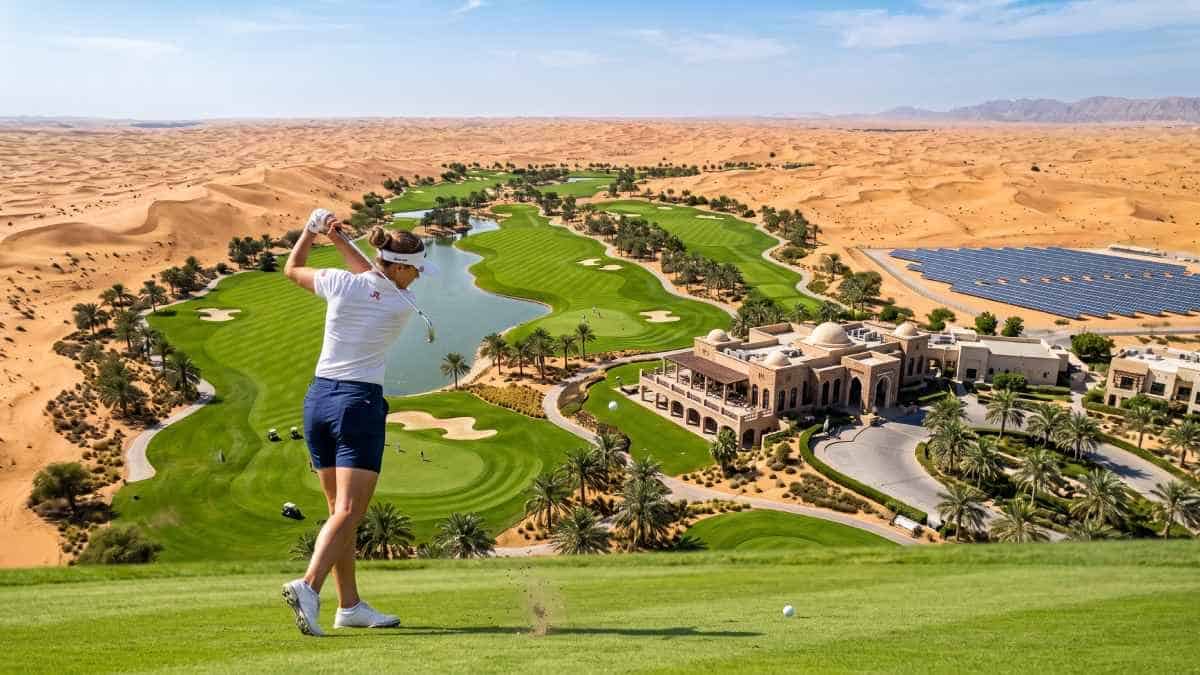
Within the dry terrain of the Arabian Peninsula, an innovative combination of ecological and sporting revolution is being forged by sovereign wealth funds and tourism bodies of individual nations. A significant paradigm shift in relation to economic diversification strategies has been made with the advent of sustainable golf tourism, challenging years of criticism by the international community on the issue of water in the desert. By combining solar desalination technology for commercial use, halophytic agriculture, and seamless travel systems, a sports-based economy is being developed within Gulf Cooperation Council member nations. The desert landscape is transformed into sports zones through this process, indicating that huge foreign income can be earned from golf facilities without compromising ecosystems.
Arid-Zone Agronomy: Solar Desalination and Closed-Loop Water Systems
Severe ecological constraints were historically encountered during the expansion of golf across arid geographies, predominantly rooted in the heavy freshwater demands of traditional turf cultivation. In hyper-arid desert environments where summer ambient temperatures consistently exceed forty-five degrees Celsius and annual precipitation rarely surpasses one hundred millimetres, between one million two hundred thousand and one million eight hundred thousand cubic metres of potable water per annum were traditionally required to maintain a standard championship eighteen-hole golf facility. Across the Gulf Cooperation Council, intense pressure was placed on fossil aquifers and fossil-fuel-powered thermal desalination plants by this dependency. In response, closed-loop agronomic ecosystems have been engineered by regional sovereign development entities and agronomic researchers, allowing championship turf presentation to be decoupled from finite potable water reserves.
Advertisement
Advertisement
Off-Grid Solar Desalination and Zero-Brine Marine Protection
This technological shift is led by the flagship Red Sea destination on the western coast of Saudi Arabia, developed by Red Sea Global. The centrepiece of its sports infrastructure, Shura Links—an eighteen-hole championship layout designed by golf architect Brian Curley on the natural dolphin-shaped Shura Island—is operated entirely independently of the national electrical and water grids. The utilities network supporting Shura Links and its surrounding luxury resorts is anchored by a utility-scale joint venture between Red Sea Global and ACWA Power, which was brought into commercial operation with a three-hundred-and-forty-megawatt solar photovoltaic plant coupled to a one-thousand-two-hundred-and-twenty-seven-megawatt-hour battery energy storage system. The world’s largest integrated off-grid renewable utility infrastructure operating continuously day and night is represented by this installation.
A primary operational barrier to traditional sea-water reverse osmosis in sensitive marine sanctuaries was historically presented by the toxic environmental footprint of hyper-saline brine discharge. High-density brine reject plumes, typically concentrated with chemical antiscalants, heavy metals, and residual coagulants, sink rapidly to the sea floor, depleting dissolved oxygen levels and devastating delicate coral reef systems and seagrass beds. To eliminate this ecological damage, zero-brine-discharge principles are incorporated into the closed-loop sea-water reverse osmosis infrastructure servicing Shura Links. Concentrated brine streams are isolated, mechanically pre-treated, and channelled into industrial evaporation salt-recovery facilities and mineral-extraction processes rather than being returned to the Red Sea marine environment. Furthermore, biological tertiary filtration is provided by engineered reed-bed wetlands through which secondary effluent is channelled, allowing productive new habitats for migratory waterfowl to be established while treated irrigation water is supplied for landscape nurseries and course buffer perimeters.
Advertisement
Advertisement
Halophytic Turf Cultivars and Treated Sewage Effluent Integration
Parallel to zero-emission desalination, extreme halophytic turfgrass cultivars—specifically seashore paspalum (Paspalum vaginatum)—are systematically deployed. Where conventional Bermuda grass (Cynodon dactylon) deteriorates when exposed to saline water, extraordinary physiological resilience to elevated electrical conductivity and high concentrations of total dissolved solids is demonstrated by specialized cultivars such as Platinum TE Paspalum and Pure Dynasty.
Treated sewage effluent and brackish agricultural run-off are permitted to serve as exclusive irrigation sources due to this halophytic capability. At Saadiyat Beach Golf Club in Abu Dhabi, designed by Gary Player, a comprehensive agronomic conversion to Pure Dynasty Paspalum was executed through specialized interseeding techniques. The facility was consequently transitioned to one hundred percent recycled municipal treated sewage effluent for its irrigation needs, with environmental standards mandated by the Abu Dhabi Regulation and Supervision Bureau being strictly satisfied. Similarly, certification from the GEO Foundation for Sustainable Golf was achieved by Jumeirah Golf Estates in Dubai and Education City Golf Club in Doha, Qatar—designed by two-time Masters champion José María Olazábal—through exclusive reliance on recycled treated sewage effluent and engineered on-site surface capture networks across Platinum TE playing surfaces.
Advertisement
Advertisement
Capillary Irrigation Networks and AI-Driven Evapotranspiration Management
To maximize water application efficiency, manicured turf acreage is being drastically reduced across the Gulf while advanced sub-surface capillary irrigation systems are deployed. At Shura Links, maintained fairway, green, and tee turf covers only twenty percent of the comprehensive one-hundred-and-forty-hectare site footprint, while the remaining eighty percent is preserved as wild sand dunes, indigenous coastal scrub, and mangrove habitats.
Beneath active playing surfaces, traditional overhead sprinkler arcs are supplemented or replaced by low-pressure subterranean capillary grids. Regulated water volumes are delivered directly into the rootzone through these closed networks, bypassing the atmospheric boundary layer where surface evaporation losses of up to forty percent are typically driven by blistering desert heat and dry winds. Subterranean soil sensor matrices, including POGO digital telemetry probes, are connected to these delivery networks, allowing rootzone volumetric moisture content, salinity conductivity, and soil temperature to be monitored continuously. These metrics are processed by artificial intelligence engines against real-time weather forecasts to determine dynamic evapotranspiration requirements, ensuring that micro-burst irrigation is initiated solely when rootzone depletion thresholds are crossed.
Advertisement
Advertisement
Subterranean water management is complemented by the standardisation of precision foliar feeding protocols. Rather than granular nitrogenous fertilizers being scattered—which leach rapidly through coarse desert sand profiles into underlying coastal waters—liquid nutrients are applied directly to turf leaf blades via GPS-guided target sprayers. Chemical nutrient consumption is reduced by more than half through this methodology, ground leaching is eliminated, and surrounding coral reefs are preserved from eutrophication.
Core Facility Agronomic and Infrastructure Profiles
| Golf Facility | Target Country | Turfgrass Variety | Primary Irrigation Source | Energy Infrastructure Profile | Environmental Certification Status |
| Shura Links | Saudi Arabia | Platinum TE Paspalum | Polished TSE & Solar SWRO Permeate | 340 MW Solar PV + 1,227 MWh Battery Energy Storage (Off-Grid) | Targeting LEED Platinum Clubhouse & GEO Certification |
| Saadiyat Beach Golf Club | United Arab Emirates | Pure Dynasty Paspalum | 100% Recycled Municipal TSE (RSB Compliant) | Grid-Connected with Smart Variable Frequency Drives | Audubon Certified Cooperative Sanctuary |
| Education City Golf Club | Qatar | Platinum TE Paspalum | Non-Potable Municipal TSE & Rainwater Capture | Solar-Augmented Local Grid with Central Automated Control | GEO Certified Development |
| Al Mouj Golf | Oman | Paspalum Vaginatum | Treated Reclaimed Water & Engineered Runoff | Integrated Grid-Tied Pumping with Marine-Grade Inverters | Dual GEO Certified & Audubon International Certified |
The GCC Grand Tours Visa: Unlocking Multi-Destination Luxury Corridors
While ground-level resource constraints are resolved through closed-loop engineering and biological innovations, administrative barriers across Gulf borders are being dismantled by coordinated public policy initiatives. Historically, fragmented visa regulations, disparate customs protocols for athletic gear, and disjointed transport networks were encountered by international golfers navigating the Middle East, encouraging brief, single-city stopovers. That landscape is altered by the formal introduction of the GCC Grand Tours Visa, through which a frictionless cross-border sports ecosystem is established.
Multilateral Travel Policy and Cross-Border Regulatory Modernisation
An institutional milestone approved by the GCC Supreme Council and regional interior ministers was represented by the unified regional visa, which was announced by the UAE Minister of Economy, Abdulla bin Touq Al Marri, at the Arabian Travel Market and formally endorsed by the Saudi Minister of Tourism, Ahmed Al-Khateeb. Operating in a manner that mirrors the European Schengen framework, the GCC Grand Tours Visa functions as a single digital entry permit through which unrestricted access across all six member states—Saudi Arabia, the United Arab Emirates, Qatar, Oman, Bahrain, and Kuwait—is granted to international travelers.
Following collaborative architecture development between national interior ministries, biometric smart gates and shared immigration verification platforms were deployed across primary entry hubs. Electronic authorization granting multiple-entry travel rights for stays between thirty and ninety days is received by international tourists when applications are submitted through a centralized digital visa portal. Repetitive individual entry visas are eliminated by this arrangement, substantially reducing travel friction for sports travelers embarking on multi-destination itineraries.
Advertisement
Advertisement
Regional Aviation Alignment and Luxury Equipment Logistics
To leverage this unified regulatory framework, regional timetables have been synchronized and baggage logistical systems modernized by major Gulf air carriers, including Saudia, Emirates, Qatar Airways, and Oman Air. Oversized luggage and high-value golf gear are permitted to be checked seamlessly across multi-leg flights without repeated customs clearing, physical re-tagging, or separate excess-baggage fees at intermediary points through coordinated sports transit initiatives, including digital “Golf Passports.”
Remote ecological golf destinations are linked directly with established urban capitals via coordinated flight corridors. Direct commercial connections link Dubai International Airport with Red Sea International Airport, located twenty-five minutes from Shura Links. Concurrently, rapid transfers to Sindalah Island—the ultra-luxury island destination featuring a nine-hole championship course designed by Robert Trent Jones Jr. and managed by IMG Prestige—are facilitated through dedicated point-to-point connections linking Riyadh and Jeddah to NEOM Bay Airport. Direct transfers can be made by visiting golfers from Sindalah’s eighty-six-berth superyacht marina and coastal links to Doha for rounds at Education City, or to Muscat to experience Al Mouj Golf.
High-Yield Visitor Spending Dynamics and Extended Length of Stay
The strategic deployment of linked golf corridors is fundamentally driven by visitor yield economics. It has been reported through analytical assessments from international travel research firms and data monitored by the World Travel & Tourism Council that daily discretionary expenditure rates three to five times higher than those of conventional leisure vacationers are generated by long-haul luxury golf travelers. Elevated tournament green fees, private coaching at high-performance academies, fine dining, chartered transport, and high-end resort accommodations are encompassed by this expenditure.
It has been indicated by regional tourism ministry data that the average length of stay is extended significantly when shifts are made from single-city stops to cross-border golf itineraries. While stays averaging between 3.2 and 3.8 days are recorded for traditional urban tourists in the Gulf, an average length of stay ranging between nine and twelve days across the GCC is generated by golf travelers undertaking multi-course tours. Substantial economic support is provided to integrated resorts by this extended duration, resulting in elevated Average Daily Rates and higher Revenue Per Available Room.
National economic transformation agendas are directly supported by this spending expansion. A target of one hundred and fifty million annual domestic and international visits by 2030 is set under Saudi Arabia’s updated National Tourism Strategy within Saudi Vision 2030, aiming for more than ten percent of national gross domestic product to be contributed by tourism. In parallel, travel and tourism generation of over three hundred and sixty-seven billion dollars annually across the Middle East is documented by the World Travel & Tourism Council, supporting roughly 7.7 million regional jobs and projected to reach five hundred and twenty-two billion dollars by 2035. Connected, highly sustainable sports corridors serve as primary vehicles through which these macroeconomic targets are translated into realized hospitality revenue.
The Nocturnal Game: How Night-Golfing Infrastructure Battles Summer Heat
Severe seasonality was historically presented as a major operational hurdle for golf tourism throughout the Arabian Gulf. From late May through mid-September, midday temperatures reaching between forty-two and forty-eight degrees Celsius are recorded across central deserts and coastal strips, with coastal humidity frequently exceeding eighty percent. Fairway traffic was previously suppressed during summer by these conditions, compelling resort operators to enter extended shoulder seasons characterized by reduced green fees and discounted clubhouse revenues. To establish year-round operational viability, the development of a nocturnal golf economy has been spearheaded by GCC operators.
Advertisement
Advertisement
Precision Dark-Sky LED Engineering and Ball Flight Photometrics
The regional benchmark for nocturnal golf was established by the Faldo Course at Emirates Golf Club in Dubai, recognized as the Middle East’s first fully floodlit eighteen-hole championship venue. However, modern installations have advanced well beyond early high-intensity metal-halide discharge bulbs, by which glare was created, high volumes of energy were consumed, and light pollution disruptive to desert fauna was generated.
Contemporary nocturnal infrastructure at venues such as Trump International Golf Club in Dubai, Al Hamra Golf Club in Ras Al Khaimah, and the learning loops at Education City Golf Club is powered by advanced dark-sky LED technology. Custom-machined luminaire visors and total internal reflection optical lenses are employed by these systems, projecting lumen output strictly onto intended playing surfaces—fairways, hazard perimeters, and greens. Through the maintenance of precise optical cut-offs, upward light scatter is eliminated and lateral spillover into adjacent residential developments or delicate marine ecosystems is prevented.
Crucially, the complex photometrics of tracking a golf ball moving at high velocity against a dark background have been resolved by sports lighting engineers. Dual-tier horizontal and vertical illuminance grids are utilized in modern LED installations. While ground turf surfaces are illuminated to uniform levels between one hundred and one hundred and fifty lux to permit lie identification and putting green slope assessment, focused light beams reaching up to three hundred lux are projected through the thirty-to-forty-metre aerial corridor by secondary vertical luminaires. Ball flight can thus be tracked throughout its trajectory by players without blinding glare being cast toward golfers on adjacent holes.
Tee-Time Inventory Expansion and Evening Commercial Hospitality Yield
From a commercial viewpoint, golf asset productivity is significantly boosted by nocturnal infrastructure. On an unlit eighteen-hole course in the Gulf, operating capacity is capped by daylight limitations during winter at roughly eight to nine hours of tee times per day, accommodating a maximum of two hundred to two hundred and twenty golfers. During summer, playable daylight hours are compressed into a brief three-hour post-dawn window by extreme daytime heat, severely curtailing daily capacity.
A second daily operating window running from 17:00 to 23:30—and extending to midnight on weekends—is unlocked through the installation of precision LED floodlighting. Available tee-time inventory is increased by up to thirty-five percent daily through this capital upgrade, opening valuable booking windows during cooler evening hours. Furthermore, high-margin secondary commercial revenue streams are unlocked by nocturnal golf. Clubhouse dining rooms, outdoor lounges, and private corporate entertainment suites are patronized by evening players, generating food and beverage spending that frequently surpasses baseline green fees.
Extreme Heat Mitigation and Seasonality Flattening for Luxury Resorts
Harsh daytime heat is effectively mitigated by resort operators through the transition of active recreation into evening hours. Following sunset, ambient temperatures across desert and coastal environments drop by eight to twelve degrees Celsius compared to midday highs, accompanied by cooling desert and coastal breezes.
Advertisement
Advertisement
Attractive summer sports packages can thus be maintained by integrated luxury hospitality properties, such as the Waldorf Astoria at Al Hamra, the Park Hyatt at Dubai Creek, and the island resorts across Shura Island. Rather than facilities being closed or heavy discounting being applied during summer and shoulder periods, evening and twilight golf packages are marketed by integrated resorts, stabilizing room occupancy, spa usage, and conference attendance year-round.
Heritage on the Fairway: Blending Regional History with Championship Layouts
In parallel with technological advances in agronomy and illumination, an architectural and cultural transformation is being experienced in Middle Eastern golf course design. Historically, golf clubhouses across the developing world were built as replicas of Western country clubs—monolithic neoclassical mansions or generic Mediterranean villas divorced from local architectural traditions. Imported styles have been replaced in modern golf masterplans across the GCC by Najdi vernacular architecture, traditional Omani masonry, and authentic regional urban planning principles.
Najdi Vernacular Architecture and Regional Design Typologies
This regional design approach is exemplified at Diriyah, situated northwest of Riyadh along the historic Wadi Hanifah. Within the Diriyah Company masterplan, the exclusive twenty-seven-hole championship layout at Wadi Safar was designed by Greg Norman. Rather than foreign design motifs being incorporated, the course and its Royal Golf Club clubhouse are styled to harmonize with the UNESCO World Heritage site of At-Turaif, the historic birthplace of the Saudi state.
Authentic Najdi construction principles are reflected in the architectural language at Wadi Safar. Thick load-bearing adobe walls, high triangular ventilation recesses (furjat), crenellated rooflines, and shaded interior courtyards (majlis) are incorporated into clubhouse structures and private residential villas, passively regulating indoor temperatures and significantly lowering cooling energy requirements. The complex is firmly rooted in the surrounding desert topography through the use of locally quarried Riyadh limestone, untreated timber beams, and clay-plaster finishes, establishing an unmistakable sense of place.
A complementary design philosophy is observed at Al Mouj Golf along the coast of Muscat, Oman. Designed by Greg Norman, traditional Omani coastal design elements are incorporated into the course clubhouse, featuring whitewashed stone arches, carved wooden mashrabiya screens, and architectural references to historic coastal watchtowers and traditional dhow shipyards. The layout is integrated with its coastal surroundings, framing panoramic sightlines toward the Sea of Oman and the rugged Hajar mountain range.
Desert Xeriscaping, Ephemeral Wadi Preservation, and Native Flora
Alongside authentic clubhouse architecture, water-intensive ornamental landscaping has been abandoned by regional developers. Artificial lakes lined with polyethylene membranes, imported annual flowers, and non-native palm species requiring substantial volumes of freshwater were often incorporated into past desert developments.
Advertisement
Advertisement
Native xeriscaping and natural ecological restoration techniques are utilized across modern championship courses in the GCC. At Wadi Safar, natural drainage washes—the ancient wadis that carry seasonal rains—are incorporated directly into the tactical layout of the course as natural sand hazards and strategic waste areas. Rather than artificial fountains being installed, native limestone ridges and natural washes were preserved by course architects, accompanied by the planting of thousands of drought-tolerant indigenous trees, including the umbrella thorn acacia (Acacia tortilis), the desert ghaf tree (Prosopis cineraria), and mature date palms (Phoenix dactylifera).
In Muscat, this approach was advanced by Al Mouj Golf through the establishment of a certified coastal biodiversity sanctuary. As the first golf course in the Middle East to achieve dual certification from Audubon International and the GEO Foundation, a vital ecological haven is provided by the property for more than one hundred and seventy species of resident and migratory birds traveling the African-Eurasian flyway. Synthetic chemical pesticides were eliminated within fifty metres of the marine coastline by agronomy managers, allowing natural salt-marsh environments, tidal estuaries, and native frankincense trees (Boswellia sacra) to be restored.
Long-Term Alignment with GCC National Transformation Agendas
Overarching economic transformation frameworks across the Gulf are directly supported by the combination of closed-loop water infrastructure, multilateral visa mobility, nocturnal lighting, and heritage-focused design. Under Saudi Vision 2030, substantial capital is being directed by the Kingdom through the Public Investment Fund into destination gigaprojects such as Diriyah, NEOM, and The Red Sea to develop a resilient post-hydrocarbon economy. Concurrently, strict sustainability, circular water reuse, and biodiversity protection across all major urban and tourism infrastructure are mandated by the UAE Net Zero 2050 Strategic Initiative and Oman Vision 2040.
By demonstrating that championship golf venues can be operated with one hundred percent renewable power, sustained exclusively on recycled wastewater, leveraged to generate premium per-capita foreign visitor revenues, and designed to preserve local cultural identity, the sport is being transformed from an environmental challenge into a valuable testing ground for arid-zone ecological management. Modern benchmarks for the global sports and leisure sector are being established as water and power challenges in extreme desert environments are systematically overcome across the GCC.
Conclusion
A precedent for contemporary arid environment management has been set by the continued development of sustainable golf tourism in the Gulf Cooperation Council region, going far beyond merely setting a sports record. The guidebook for the international development of sports has been completely rewritten by the governments in the region with the use of zero brine solar desalination, adaptive halophytic agriculture, visa-free borders, night-time dark sky lighting, and heritage architectural vernacular. Global standards are being set in the Gulf states through the full implementation of the GCC Grand Tours Visa and the circular utilities program. Arid golfing has ceased to be considered an environmental burden and is now recognized as an economic motivator for sustainable luxury tourism.
Advertisement
