
Costa Rica Strengthens Sustainable Tourism Around Corcovado and the Osa Peninsula

Published
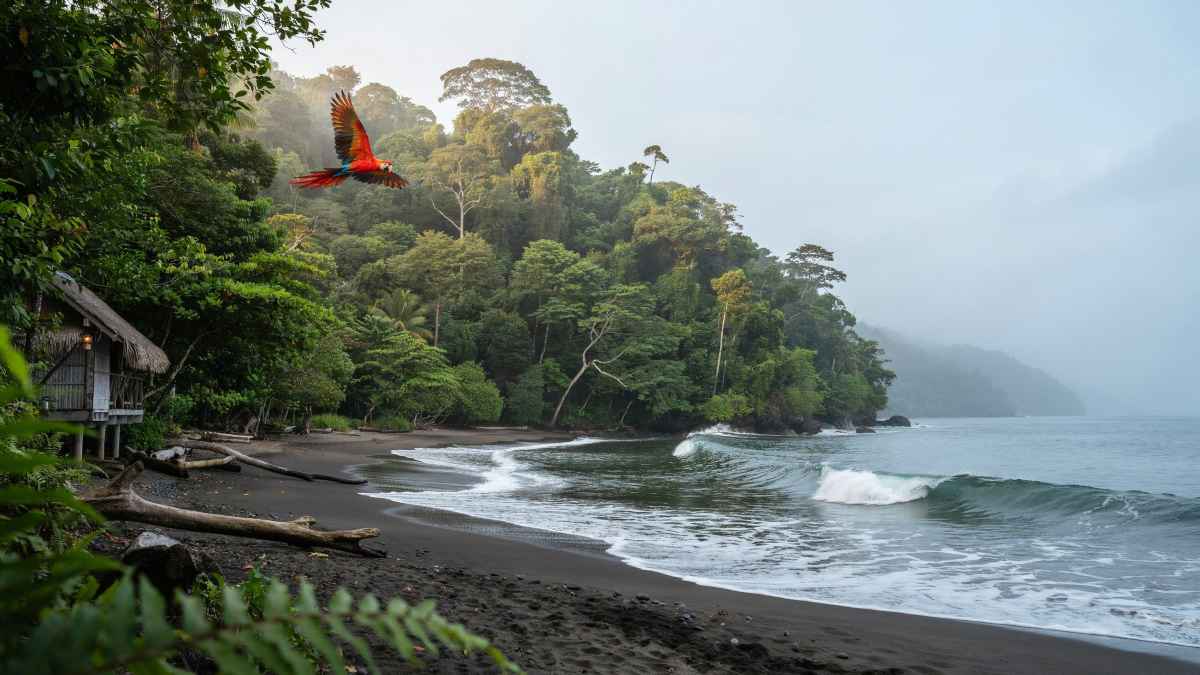
Image generated with Ai
The development of a tourism model that includes nature conservation, nature reserve management, and participation of the local population is constantly taking place in Costa Rica. In the case of the Osa Peninsula and the Corcovado National Park, it includes the adoption of policies and programs by the government concerning sustainable tourism and nature reserves. However, there is no evidence that a policy of mandatory “Regenerative Tourism Surcharge,” which has been adopted by the Costa Rican Tourism Board and obligates international rainforest lodges to pay some per cent of the income into the local land trusts, exists. On the contrary, the materials provided by the official ICT and SINAC websites discuss the certification program and biological corridor program implemented in the country.
Corcovado Remains at the Centre of Osa Tourism
The Osa Peninsula in southern Costa Rica is one of the country’s most important nature-tourism destinations.
Advertisement
Advertisement
Corcovado National Park forms a major part of this landscape, with the surrounding Osa Conservation Area managed by SINAC, Costa Rica’s National System of Conservation Areas. The region combines rainforest, rivers, beaches and exceptionally diverse wildlife habitats.
The Costa Rican Tourism Board identifies Osa as a destination with major natural and cultural attractions, including Corcovado National Park, Marino Ballena National Park, the Térraba-Sierpe Wetland and archaeological sites such as Finca 6.
Advertisement
Advertisement
For travellers, the region offers a very different experience from Costa Rica’s more developed coastal resort areas.
Advertisement
Advertisement
Corcovado Already Uses Controlled Visitor Access
Visitors cannot simply arrive at Corcovado and enter the forest independently.
SINAC requires reservations for entry to the park, with access through designated sectors including San Pedrillo, Sirena, La Leona, Los Patos, Los Planes and El Tigre. Visitors are also encouraged to enter with a properly registered tourism guide.
The El Tigre sector has a particularly strong community connection. Reservations there are handled through Asociación Conservacionista Dos Brazos de Río Tigre, demonstrating how local organisations already participate directly in the tourism system surrounding the protected area.
These arrangements are part of existing protected-area management rather than a newly introduced nationwide regenerative tourism tax.
Costa Rica’s Biological Corridors Connect Protected Landscapes
The country’s conservation strategy extends beyond individual national parks.
Advertisement
Advertisement
SINAC describes biological corridors as territories designed to maintain connectivity between protected areas, landscapes, ecosystems and habitats. The programme also creates spaces for local stakeholders to participate in conservation and sustainable use of biodiversity.
Costa Rica currently recognises 54 biological corridors, including eight interurban corridors. Together, they cover slightly more than 38% of the country’s continental territory, according to SINAC.
These corridors are managed through local committees that bring together different actors in the territory. Their work includes biodiversity monitoring, restoration of landscapes and promotion of sustainable production practices.
The model is therefore broader than tourism alone.
Osa Is Part of a Larger Ecological Network
The ecological importance of the Osa region extends beyond Corcovado’s official boundaries.
Advertisement
Advertisement
Costa Rica’s tourism authority describes Piedras Blancas National Park, Corcovado National Park and the Golfo Dulce Forest Reserve as part of an important biological corridor protecting the diversity of the Golfo Dulce area.
This landscape approach is important because wildlife does not recognise the boundaries drawn around individual protected areas.
Maintaining forest connectivity can allow species to move between habitats while supporting ecological processes across a much larger area.
For tourism, it also means that the Osa Peninsula should be understood as a connected destination rather than simply a place to visit one national park.
Tourism Sustainability Already Has a Formal Certification System
Costa Rica’s ICT has operated its Certification for Sustainable Tourism, or CST, for years.
Advertisement
Advertisement
The programme assesses tourism organisations according to criteria covering business management, social, economic and cultural impacts, environmental impacts and specific sustainability indicators for different tourism sectors.
The certification includes mandatory requirements as well as criteria relating to continuous improvement and external impacts.
In February 2026, the ICT launched an updated online platform for the CST programme, describing it as a tool to strengthen sustainable tourism and help tourism businesses participate in a more sustainability-focused market.
This system applies to tourism businesses rather than functioning as a compulsory biodiversity tax.
Lodges Are Part of the Sustainability Conversation
Accommodation providers operating around rainforest destinations are already subject to tourism regulations and can participate in Costa Rica’s sustainability certification framework.
Advertisement
Advertisement
The ICT’s tourism declaration system covers accommodation businesses including hotels, cabins, lodges and rural tourism properties. The CST programme additionally evaluates the environmental and community impacts of participating tourism organisations.
This gives Costa Rica a mechanism for recognising businesses that meet defined sustainability standards.
It does not, however, establish a legal requirement for every private eco-lodge in the Osa Peninsula to finance a specified amount of habitat restoration.
Community Benefits Remain Important
Costa Rica’s tourism authorities have repeatedly linked protected-area tourism with local economic development.
The ICT and SINAC encourage visitors to use official access points, authorised guides and services provided by nearby communities. The national responsible-tourism guidance specifically recommends learning about facilities and services offered by communities close to protected wildlife areas.
Advertisement
Advertisement
The approach recognises that conservation and tourism are closely connected.
Visitors generate demand for accommodation, guiding, transport, food and other services, creating economic activity around protected landscapes while the government maintains rules governing access and environmental protection.
A Regenerative Model Is Emerging, But Not Through a New Surcharge
The distinction between sustainability and regeneration is increasingly important in global tourism.
Sustainable tourism generally seeks to reduce environmental pressure and ensure that tourism can continue without degrading the resources on which destinations depend. Regenerative tourism goes further conceptually, aiming to leave ecosystems and communities in a stronger condition.
Costa Rica already has elements that fit within this broader regenerative approach, particularly through biological corridors, landscape restoration, community participation and sustainability certification.
Advertisement
Advertisement
But the available official evidence does not show that ICT has enacted a mandatory percentage-based “Regenerative Tourism Surcharge” for international eco-lodges around Corcovado.
What Travellers Can Expect in Osa
Anyone who travels to the Osa Peninsula must be prepared for environmental laws to form part of their journey. For example, a visit to Corcovado involves planning ahead of time as well as respecting park policies. The tourists should be in designated areas, obey rangers’ directions and refrain from disturbing any animals. Puerto Jiménez and Golfito act as major points of entry into the area, while guides and tourism firms play a critical role in helping tourists gain access to protected areas as well as other attractions within the vicinity. Consequently, this becomes an example of a destination that thrives due to the sustainable use of its natural environment. Thus, Costa Rica’s proven model of sustainable tourism does not involve a newly proposed tax on tourism, but relies heavily on its well-established system of protected areas, biodiversity corridors, sustainability certifications and community involvement.
Advertisement
