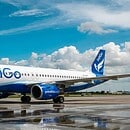
Image generated with Ai
For travellers in Japan, India and Europe, the cost of getting on a plane is increasingly being influenced by a factor most passengers rarely think about until it appears on their ticket: jet fuel. Global jet fuel prices were 121.1% higher in April 2026 than in April 2025, according to the International Air Transport Association (IATA), but the impact has varied significantly between countries.
The surge has put airlines under pressure just as geopolitical disruption in the Middle East has complicated fuel supplies and flight operations. For passengers, the consequences are appearing in different ways, including fuel surcharges, higher fares, altered schedules and changes to airline networks.
Advertisement
The jump in jet fuel prices should not be confused with an equivalent increase in airfares. Fuel is only one part of an airline’s total operating cost, and carriers respond to higher fuel bills in different ways.
Airlines can absorb some of the increase, pass it on through fares or fuel surcharges, use fuel-hedging arrangements, or reduce capacity on routes that become less profitable.
Advertisement
Advertisement
Exchange rates also play a major role. Because jet fuel is generally priced in US dollars, a country’s currency can make the same global fuel increase considerably more or less expensive for its airlines.
Japan has been among the markets most exposed to the fuel shock. IATA estimates that the local-currency price of jet fuel in Japan increased by approximately 173% between April 2025 and April 2026.
The country’s weaker yen amplified the increase. While regional jet fuel prices rose sharply, the yen’s depreciation against the US dollar increased the amount Japanese airlines had to pay in local currency.
For international passengers, the effect can be particularly noticeable because Japanese carriers use fuel-surcharge systems linked to jet-fuel prices.
Advertisement
Advertisement
Japan Airlines, for example, calculates international fuel surcharges using reference jet-fuel prices and exchange rates. As fuel costs climbed, the pressure on international ticket prices increased.
India presents a very different picture. IATA estimates that India’s local-currency jet-fuel price increased by about 170% during the period.
However, the full increase was not immediately passed through to domestic scheduled airlines.
The Indian government introduced measures to limit the impact of soaring aviation turbine fuel costs on domestic operations. The Ministry of Civil Aviation said the increase applicable to domestic airlines was capped at 25%, with the measure intended to provide relief to the aviation sector during the disruption.
That distinction matters to Indian travellers.
Someone flying domestically within India may therefore experience a smaller immediate fuel-related increase than a passenger travelling internationally, where airlines remain much more exposed to global fuel prices.
Government support has not eliminated the pressure on airlines.
Air India introduced revised fuel surcharges in April 2026, with domestic charges varying according to flight distance. International passengers faced significantly higher additional charges depending on their destination.
IndiGo also introduced additional international fuel charges as global aviation fuel costs surged.
For Indian travellers, this creates a clear divide: domestic aviation has received some protection from the fuel shock, while international travel is more directly exposed to the increase in global operating costs.
The euro area experienced an estimated 118% increase in local-currency jet-fuel prices, slightly below the global benchmark.
A stronger euro provided some protection against the dollar-denominated fuel increase. But European airlines have faced another challenge: the availability and movement of aviation fuel.
The European Commission has warned that the Middle East crisis could affect transport and tourism through higher energy costs, disrupted supply chains and potential aviation-fuel shortages if disruption persists.
For travellers, the concern therefore extends beyond ticket prices. Prolonged disruption could affect flight schedules, route availability and the amount of fuel airlines need to carry when operating around affected airspace.
Higher fuel costs can make some routes considerably less attractive to airlines.
If an aircraft burns significantly more fuel because of longer routing, while that fuel is simultaneously becoming more expensive, the economics of a flight can deteriorate rapidly.
Airlines can respond by reducing frequencies, switching aircraft, suspending routes or moving aircraft to destinations where demand is stronger.
Lufthansa, for example, announced capacity and fleet measures as fuel prices surged, including changes to its short- and medium-haul network.
Not every country experienced the same level of pain.
IATA estimates that local-currency jet-fuel prices in Brazil and Mexico increased by about 86%, considerably below the increases recorded in Japan and India.
The difference was partly explained by currency movements. Stronger local currencies against the US dollar helped cushion the impact of the international fuel-price increase.
This illustrates why a global jet-fuel figure can be misleading when assessing the effect on travellers in individual countries.
China recorded an estimated 132% increase in local-currency jet-fuel prices.
Although the Chinese yuan provided some currency support, the increase in regional fuel prices was still large enough to create significant pressure on airlines.
For Chinese travellers, the consequences can therefore emerge through a combination of ticket pricing, airline capacity decisions and changes to international networks.
US airline data also demonstrates how rapidly fuel expenses can rise.
According to the US Department of Transportation’s Bureau of Transportation Statistics, scheduled US airlines spent approximately $6.47 billion on aviation fuel in April 2026. The average fuel price reached $4.11 per gallon, while fuel consumption was broadly unchanged from the same month a year earlier.
That is significant because airlines did not need to dramatically increase fuel consumption for their fuel bills to climb. The price of the fuel itself was enough to create a substantial financial burden.
The biggest consequence of a fuel shock may not always be an obvious surcharge on a ticket.
Airlines can also respond by reducing capacity.
When a route becomes expensive to operate and demand is insufficient to justify the cost, reducing the number of flights can make more economic sense than continuing to operate at a loss.
For travellers, that can mean fewer departure times, less convenient connections and potentially higher prices when remaining flights fill up.
The fuel-price surge has occurred alongside major disruption affecting Middle Eastern aviation routes.
The region is a crucial connecting point between Europe and Asia, meaning disruption can force airlines to reroute aircraft or alter schedules.
Longer journeys can consume additional fuel, creating an especially difficult situation for airlines: the price of fuel is rising at the same time as some flights require more of it.
IATA reported significant disruption to passenger and cargo operations in the region during April 2026, with airlines adjusting networks in response.
The global fuel increase does not mean every traveller will face the same price increase.
A passenger travelling domestically in India could be relatively insulated by government measures, while someone flying internationally from Japan may face a much larger fuel-related burden.
Similarly, stronger currencies have helped cushion airlines in countries such as Brazil and Mexico.
The final ticket price will therefore depend on several factors, including the route, airline, currency, fuel contracts, demand and whether the carrier has introduced a fuel surcharge.
For passengers planning international trips, flexibility could become increasingly important.
Comparing different departure airports, checking the total fare rather than only the advertised base price, considering alternative routes and travelling during less expensive periods may help reduce the effect of higher aviation costs.
Travellers should also pay attention to airline schedule changes. A route that appears available months ahead can become subject to frequency reductions if operating economics change.
The 121% increase in global jet fuel prices is therefore more than an aviation-industry statistic. It is beginning to influence how airlines price flights, where they deploy aircraft and which routes remain commercially attractive.
Yet demand for air travel has not disappeared. IATA’s April 2026 data showed that passenger demand remained resilient in several regions despite the disruption.
That leaves airlines balancing two competing forces: passengers who still want to travel and operating costs that have risen dramatically.
For travellers, the biggest lesson from the current jet-fuel crisis is that the impact will not be distributed evenly. Japan, India, Europe, China, Brazil, Mexico and the United States are all facing the same global energy shock, but their airlines are experiencing very different financial consequences.
And that difference could ultimately shape the journey itself. A higher fare is only one possible outcome. Travellers could also encounter different aircraft, fewer flight choices, changed connections or routes that disappear from airline schedules altogether.
For anyone planning a trip in the months ahead, watching the airfare alone may no longer be enough. Fuel prices, currency movements and airline capacity decisions are increasingly becoming part of the travel equation — and they could determine not just how much your next flight costs, but how you get there.
Advertisement
Tags: airfares 2026, Airline Capacity, airline fuel surcharge, ATF prices India, aviation fuel crisis
Advertisement
Advertisement













Friday, September 4, 2026

Friday, September 4, 2026

Friday, September 4, 2026

Thursday, September 3, 2026

Wednesday, September 2, 2026

Friday, September 4, 2026
Friday, September 4, 2026