
Why Are Modern Tourists Flocking To Sunny Towns Across Croatia For Unplanned Short Trips Driven By Live Weather Updates?

Published
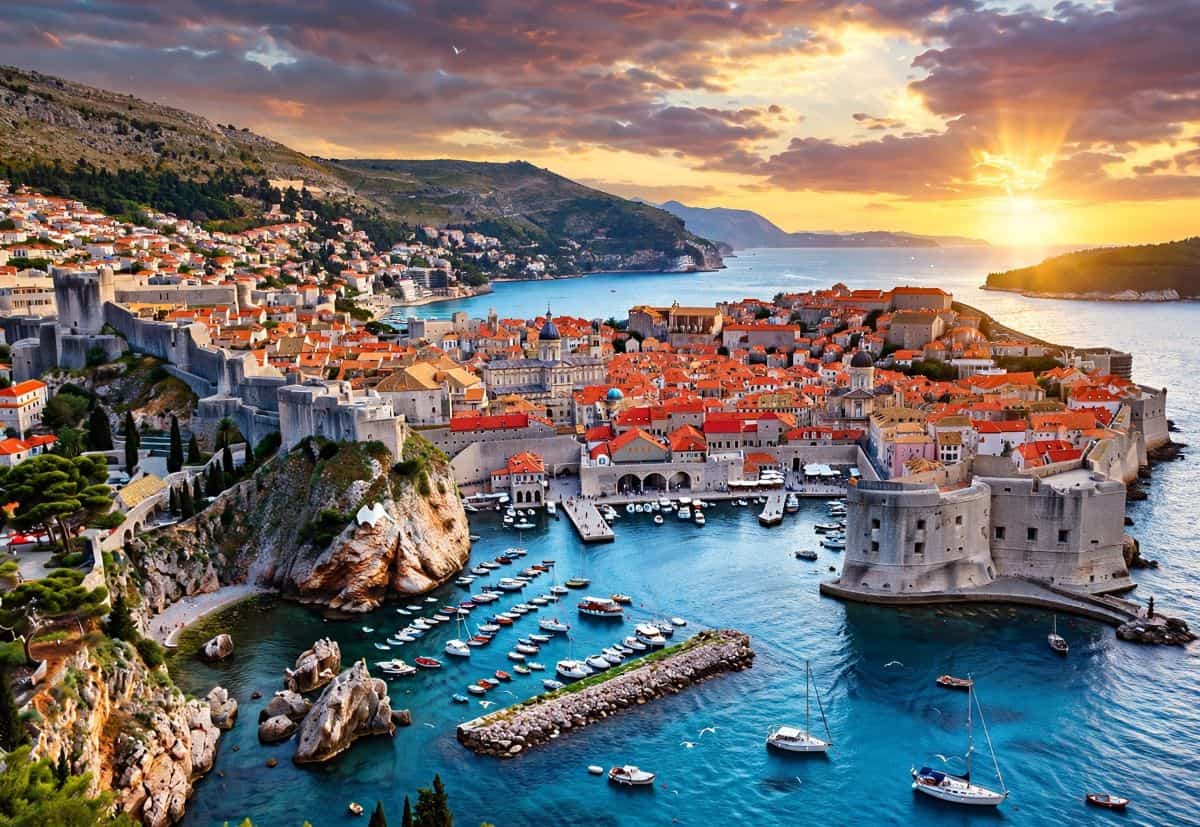
Image generated with Ai
For most of us, this summer should feel like magic. Vacations should feel like a long overdue reunion with the luggage. Families vacation in a row along the shore while the rest of the world finds time stands still. The air along the Croatian coastline feels different when you go for a stroll. It has always been the case, but with the advent of new technology and the build-up of digital communication and the “spontaneous road trips,” micro trips have hastened the departure of the classic, two-week vacations. Flexibility of micro trips, as the opposite of being “stuck” on a vacation for a month, is the biggest reason behind the micro trips phenomenon. The new theory behind the idea is to go on lots of micro trips, hence the name. It’s redefined what we mean by flexibility on vacation and has most hostels in the Mediterranean keeping rooms open.
The Fundamental Structural Metamorphosis of Adriatic Hospitality and Northern Mediterranean Tourism Models
An analysis of regional travel reports indicated that Croatia’s tourism model is changing as shorter stays and last-minute bookings rise across the coastal areas. Historically, vacationers committed to multi-week itineraries at fixed resort properties along the coast. However, observations confirmed that modern travelers actively prefer condensed, highly flexible trips that accommodate visiting multiple locations within a single vacation period. Consequently, property managers and local business operators are experiencing significantly higher guest turnover. This ongoing evolution forces hospitality entities to abandon static seasonal calendars in favor of rapid, real-time inventory adjustments and daily operational restructuring.
On a global scale, these localized changes reflect a broader transformation within international leisure travel. As short-duration visits become the primary preference among international consumers, transport operators, global airlines, and accommodation chains must adjust their operational logistics. Hospitality brands are forced to implement automated check-in systems and dynamic pricing strategies to capture revenue from shorter booking windows. Furthermore, international tourists now demand immediate customer service responsiveness and flexible arrangements, permanently reshaping how global travel markets structure their service delivery.
Advertisement
Advertisement
Technological Drivers, Infrastructure Upgrades, and Climate Sensitivity in Modern Booking Habits
Advertisement
Advertisement
The increasing prevalence of digital reservation channels, versatile cancellation frameworks, and modernized transit routes allows contemporary travelers to finalize complex journeys on extremely short notice. Market observations highlighted that tourists frequently monitor local atmospheric conditions before finalizing their reservations, directly aligning their financial expenditures with favorable local weather. Moreover, extensive improvements to regional road systems enable nearby European travelers to execute spontaneous weekend getaways without the long advance planning that was previously standard across the region.
The global travel sector faces notable operational side effects from this rapid transition toward immediate decision-making. Hospitality enterprises can no longer rely on traditional long-term booking curves, forcing them to adopt dynamic, algorithmically driven yield management tools. While consumers enjoy unprecedented freedom to modify their itineraries, they face dynamic surge-pricing models during peak demand windows. Furthermore, because trip decisions depend heavily on short-term weather conditions, unexpected meteorological shifts can instantly cause sudden drops or rapid spikes in local accommodation demand.
Divergent Regional Operational Strategies Across Eastern Adriatic Coastal Destinations
Data gathered from distinct coastal localities revealed a striking divergence in how neighboring destinations manage evolving guest expectations. In Mali Lošinj, the average duration of guest stays fell sharply to approximately four days, reflecting a broader consumer preference for brief, high-intensity visits. Conversely, accommodation providers in Rab maintained traditional minimum-stay policies, frequently requiring seven-night reservations to protect business predictability. This strategic contrast illustrates a divide between destinations that adapt to rapid guest turnover and those that prioritize consistent, extended bookings.
This regional divergence provides critical insights for international destination management organizations attempting to balance total revenue generation with local resource management. Global travelers must now navigate a fragmented marketplace, encountering total flexibility in some destinations and rigid booking requirements in others. Consequently, tourism boards and private operators worldwide must carefully consider whether to alter their operations to capture short-term booking demand or implement strict reservation policies to protect local hospitality infrastructures.
Advertisement
Advertisement
Demographic Realignments and Shifting International Origin Markets Across Southern Europe
Recent tourist origin data indicated that the demographic makeup of visitors traveling through the Adriatic region is undergoing a significant shift. Observers noted a strong recovery in arrivals from Italy, accompanied by consistent growth in visitor numbers originating from Hungary and Poland. Conversely, several long-standing Central European source markets showed reduced overall participation. As a result, regional service providers are actively modifying their communication strategies, dining options, and service offerings to cater to these expanding visitor groups.
These demographic shifts align with broader realignments occurring across global tourism corridors. As consumer preferences and economic factors alter traditional travel routes, transport providers and international carriers must swiftly reallocate their capacity toward expanding markets. Ultimately, these movements demonstrate that international leisure travelers are becoming more mobile, price-aware, and open to exploring alternative European destinations, establishing new benchmarks for global travel trends in 2026 and beyond.
Explaining the Transformation: The Adriatic Shift Toward Unpredictable and Flexible Travel
Croatia’s tourism model is changing as shorter stays and last-minute bookings rise across the Adriatic coastline. Transitions like this demonstrate how modern technology empowers tourists to plan trips spontaneously. Consequently, travelers rely heavily on real-time updates and flexible cancellation terms. The market responds dynamically, while property managers refine their daily operational strategies. Active booking windows are shrinking rapidly, so service providers must adapt instantly.
Advertisement
Advertisement
Modern travelers prioritize freedom, mobility, and weather-dependent scheduling over fixed seasonal routines. Therefore, hospitality businesses are investing heavily in automated software to manage swift guest turnover. High-speed highways enable quick trips, so regional visitors travel more frequently. Meanwhile, international flight routes adjust constantly to accommodate changing demographic demands from growing European markets. As a result, the entire regional tourism ecosystem now operates with unprecedented speed, setting a clear blueprint for future global travel behavior.
Macroeconomic Structural Impact: Over Fourteen Billion Euros Generated in Gross Domestic Product
Analyzing overarching financial performance confirms that leisure travel serves as a foundational pillar for the entire national economy, trailing only manufacturing and commercial trade in broad financial significance. Recent fiscal evaluations for the 2025–2026 cycle show total visitor revenue reaching 14.2 billion euros, directly accounting for 10.7% of Croatia’s gross domestic product. This massive inflow of capital highlights how critical vacation spending is for sustaining regional employment, local infrastructure development, and overall national fiscal health.
Volume metrics from the first seven months of 2026 reinforce this strong financial standing, recording between 12.38 million and 12.4 million tourist arrivals nationwide. These visitors generated an extraordinary 59.1 million overnight stays, demonstrating that despite shifting booking windows and shortened itineraries, total visitor volume remains remarkably high. Consequently, overall economic stability along the Adriatic remains deeply tied to maintaining consistent international arrivals throughout both peak and shoulder seasons.
Dominance of Independent Household Rentals: Private Accommodations Securing Sixty-Five Percent of Stays
Advertisement
Advertisement
The operational dynamic of the regional hospitality sector continues to shift rapidly away from traditional hotel properties toward independent holiday apartments, private residential units, and self-catering homes. Industry records show that private household rentals currently capture 65% of all overnight stays across Croatia, marking a notable increase from 59% in 2019. Furthermore, the total number of registered private rental hosts reached 230,000, easily surpassing the nationwide hotel inventory of 160,000 rooms.
While family-operated accommodations account for 52% of total commercial capacity, traditional hotel establishments represent only 14% of available bed capacity. However, hotels successfully capture 47% of total commercial arrivals due to significantly faster guest turnover and shorter average stays. This contrast highlights a divided lodging market where private rentals cater to longer-term or self-sufficient travelers, while hotel operators maximize revenue through rapid, short-duration room turnarounds.
Geographic Concentration Patterns: Istria, Kvarner, and Split-Dalmatia Leading Coastal Volume
Geographic distribution metrics reveal significant variations in visitor density across different coastal counties, with northern and central coastal regions absorbing the vast majority of visitor stays. Istria maintains its position as the top tourism county, logging 8.7 million overnight stays during the first six months of 2026, which includes 4.14 million stays registered during the pre-season period through May. Similarly, Split-Dalmatia County recorded 5.3 million overnight stays, while the Kvarner gulf region captured 4.7 million stays, including 645,000 visitors during peak August alone.
Key urban hubs and historic coastal centers continue to draw concentrated crowds, with Dubrovnik, Rovinj, Poreč, Split, and Zadar standing out as primary destinations. Notably, Dubrovnik surpassed 1 million overnight stays early in the year, proving that top-tier heritage sites maintain strong appeal regardless of broader macroeconomic shifts. These figures demonstrate that while travel habits evolve, core coastal destinations remain central to the nation’s total tourism throughput.
Advertisement
Advertisement
Extreme Reliance on International Markets: Foreign Tourists Generating Ninety-Five Percent of Stays
The national tourism market exhibits an extraordinarily high foreign-to-domestic visitor ratio, creating unique commercial opportunities alongside significant vulnerability to external economic factors. International travelers generate 95% of all overnight stays, leaving domestic travelers to account for just 5% of overall stay volume. Measured against the resident population of 3.9 million people, the country hosts 24 tourist overnight stays per resident annually, far exceeding ratios observed in competing Mediterranean nations like Spain (14 stays per resident) or Italy (11 stays per resident).
Demographic breakdowns confirm that Germany remains the most critical international source market, contributing over 5.6 million overnight stays in the first half of 2026. This single market accounts for nearly 18% to 20% of total national stay volume, meaning that economic fluctuations or shifts in consumer confidence within Central Europe directly impact coastal financial performance. As a result, maintaining strong brand presence and travel connections within key European feeder countries remains an essential priority.
Expanded Transport Connectivity: Three Hundred Thirty Direct Air Routes and Modernized Road Networks
Strategic investments in international transport links and modernized road networks have transformed how visitors access the country, accelerating the trend toward independent, self-directed travel. In 2026, national tourism organizations and private industry partners invested over 6 million euros to establish strategic partnerships with international airlines and transit operators. Consequently, direct international flight connections expanded to 330 active routes in 2026, representing an addition of 74 new direct routes compared to the previous year.
Advertisement
Advertisement
These infrastructure enhancements have empowered travelers to bypass traditional group tour packages in favor of customized, flexible itineraries. Latest booking statistics indicate that 66% of all commercial overnight stays are now booked independently by travelers operating outside organized travel agency channels. Improved highway networks also allow nearby European visitors to drive directly to coastal resorts, further driving the rise in short-notice, weather-dependent weekend travel.
Emergence of Secondary Destinations: Rising Demand in Inland Regions and Less-Crowded Islands
Rather than congregating exclusively within crowded coastal hotspots, modern travelers are increasingly exploring secondary island destinations, rural hinterlands, and cultural inland cities. Early 2026 data recorded a 10% increase in arrivals across inland regions and lesser-known island locations, signaling a gradual geographic diversification of visitor traffic. Furthermore, continental regions and the capital city of Zagreb generated 2.4 million overnight stays during the first six months of the year.
Alternative island destinations such as Šolta, along with interior agricultural hubs like Motovun in internal Istria, registered double-digit percentage growth in tourist arrivals. Vacationers are actively seeking eco-friendly, authentic, and less congested alternatives to traditional coastal bottlenecks. This shifting distribution helps relieve physical pressure on historic coastal infrastructure while spreading economic benefits more evenly across inland communities.
Distinct Accommodation Preferences: Campsite Overnights Growing Beyond Twenty Percent
Advertisement
Advertisement
Different lodging segments show contrasting growth trajectories, with outdoor camping facilities and motorhome parks outperforming conventional indoor accommodations during shoulder-season periods. Outdoor campsites currently represent a 20% share of total commercial bed capacity across the country. During the early-season months of 2026, campsite overnight stays grew by more than 20% year-over-year, propelled largely by drive-in tourists originating from Slovenia, Austria, and Germany.
Concurrently, marine leisure activities continue to contribute a reliable revenue stream to the overall coastal economy. Data from digital charter registration systems (eCrew) reveals that nautical tourism accounts for approximately 4% to 5% of total annual overnight stays along the coast. The combination of strong campsite demand and steady nautical charter activity demonstrates that outdoor and mobility-focused travel styles are becoming major drivers of regional tourism expansion.
The Post-Euro Price Realignment: Shift From Peak-Season Rate Hikes to High-Value Packages
Following the complete transition to the Euro currency, sharp cost-of-living adjustments across coastal regions prompted international tourists to demand significantly higher value for their money. In response to growing consumer price-sensitivity and softening global spending power, national authorities actively intervened. The Ministry of Tourism and Sport urged local accommodation and dining sectors to introduce price corrections between 10% and 20%, cutting profit margins and bundling premium experiences to keep coastal destinations competitive against other Mediterranean rivals.
Despite overall rising property costs where local residential rentals in major coastal hubs like Split surged past €4,000 per square meter consumer booking behavior demonstrated a clear preference for reliability over unvetted budget options. While traditional hotel establishments account for only 14% to 15% of national bed capacity, they successfully captured between 43% and 47% of total commercial overnight stays. This stark dynamic proves that modern travelers are prioritizing guaranteed hospitality standards, curated services, and structured resort amenities over independent rentals when managing elevated vacation budgets.
Advertisement
Advertisement
The Shoulder-Season and Autumn Expansion: Over Fifty Percent of Travelers Shifting Outside Peak Months
To escape intense mid-summer heatwaves, heavy coastal traffic bottlenecks, and inflated peak-season room rates, both international visitors and domestic vacationers are intentionally shifting away from July and August. Travelers are increasingly embracing “shoulder season” windows, specifically targeting the milder months of May, June, September, and October. Industry surveys in 2026 revealed that 58% of travelers now explicitly schedule post-season and autumn journeys to avoid overcrowded hotspots and enjoy more reasonable pricing structures.
Early performance metrics highlighted the immediate financial impact of this temporal shift. May and June recorded explosive growth, with May alone registering 2.09 million visitor arrivals and 7.47 million overnight stays, marking a 5% to 7% year-over-year surge in pre-season demand. Simultaneously, continental inland regions logged a 3% to 10% increase in shoulder-season overnight stays. Cultural city breaks in Zagreb, eco-tourism, and inland gastronomic routes are successfully evolving into thriving, year-round travel hubs.
The Rise of Remote Workers and Digital Nomads: Stays Driven by Updated Monthly Income Requirements
Beyond traditional short-term holidaymakers, major urban and coastal hubs are experiencing a steady inflow of remote professionals and digital nomads who extend local economic benefits far outside the summer season. Under updated 2026 regulations, the legal minimum monthly net income threshold for non-EU digital nomad residence permits in Croatia was updated to €3,622.50 per month. This figure, calculated automatically at 2.5 times the national average net salary, ensures that incoming remote workers possess substantial spending power.
Advertisement
Advertisement
Key metropolitan and historic coastal centers like Split and Dubrovnik regularly host thousands of location-independent professionals operating on extended 90-day Schengen stays or 18-month digital nomad permits. These long-term residents inject significant capital into local economies during off-peak months, spending an average of €1,500 to €2,200 per month on co-working spaces, mid-term housing, dining, and regional transport, effectively transforming seasonal tourist towns into vibrant year-round digital communities.
The Vibe of the Adriatic Coast
The magic of Croatia feels especially enchanting as the sun’s last amber glows rest against its coastal towns. Last minute stays can be difficult, yet the hosts make an effort to accommodate guests, showing them Croatian hospitality as if they were a part of the family. From one travel tempo to the next, the rush of modern travel will come and go, but vacationing by the sea is irreplaceable and so is the feeling of freedom it brings. Longer or shorter stays make no difference. The seaside sunsets and views will remain memorable. In this fast changing travel world, the most important thing remains the hospitability on this celebrated coastline to give guests the relief they deserve.
Advertisement
