
Panama Signs Up With Brazil and More as American Nations Intensify Competition for International Tourists and Global MICE Events

Published
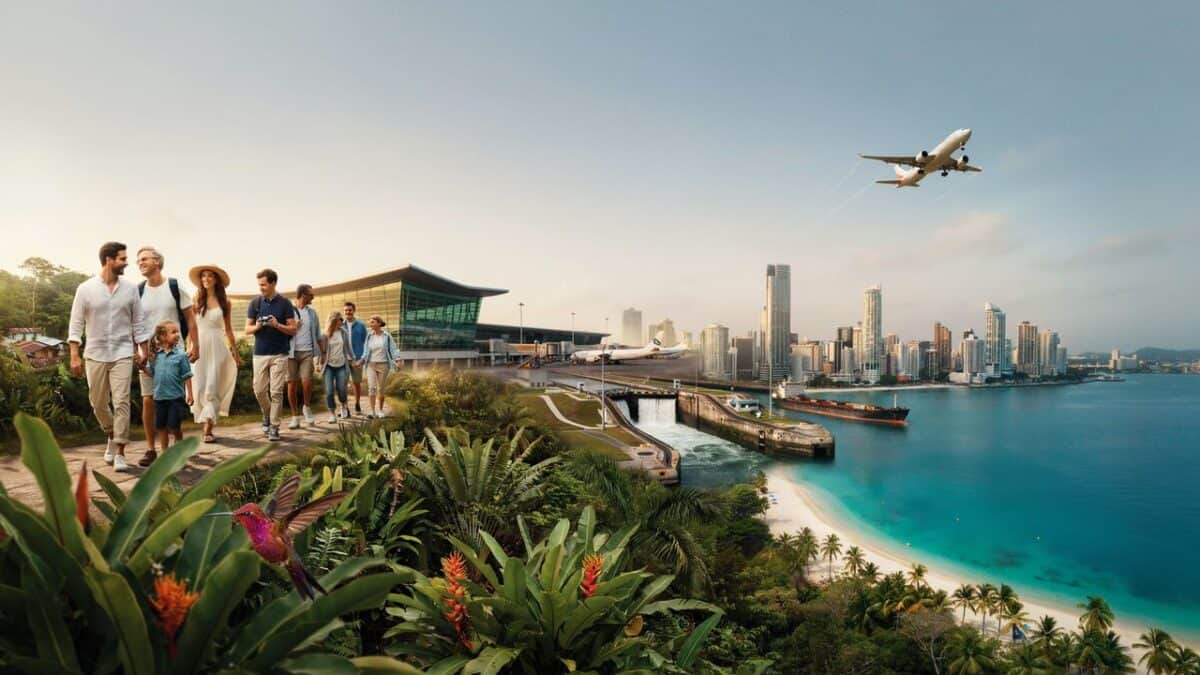
Panama is among the most aggressive emerging competitors. Its government has introduced a convention-center incentive program that offers qualifying event organizers free venue days in exchange for generating hotel stays. Brazil is strengthening international congress acquisition through targeted marketing and industry partnerships. Colombia is expanding business-event promotion, while Costa Rica is marketing its combination of sustainable tourism, nature and corporate experiences.
These strategies reflect an important change in international tourism. Countries are no longer competing solely for leisure holidaymakers. They are increasingly pursuing international associations, corporate meetings, exhibitions, incentive groups and high-value business travelers who can support hotels, airlines, restaurants and local businesses throughout the year.
Advertisement
Advertisement
Comparison of American Countries Competing for International MICE Tourism
| Country | Principal MICE destinations | Strategy and competitive positioning | Tourism and economic opportunity |
|---|---|---|---|
| Panama | Panama City | Free convention-centre days for qualifying events, international event bidding, air connectivity and hotel-night incentives | Attract large congresses, generate hotel demand and strengthen its role as a regional meetings hub |
| Brazil | São Paulo, Rio de Janeiro, Brasília, Salvador | Embratur’s MICE market intelligence, international trade-show participation, strategic industry partnerships and sector-specific event acquisition | Increase international delegate arrivals, extend stays and reduce tourism seasonality |
| Colombia | Bogotá, Medellín, Cartagena | International roadshows, buyer engagement, convention-bureau partnerships and organised business matchmaking | Expand business tourism, attract international associations and distribute visitor expenditure |
| Costa Rica | San José, Guanacaste | Pura Vida Meetings promotion, sustainability, nature-based incentive experiences and international sales missions | Differentiate corporate retreats and meetings through environmental and wellness experiences |
| Mexico | Mexico City, Cancún, Guadalajara, Monterrey, Mérida | Established convention infrastructure, business-event promotion, resort-based incentives and extensive international connectivity | Combine major trade exhibitions, corporate travel and incentive tourism |
| Argentina | Buenos Aires, Córdoba, Mendoza | Convention-bureau networks, international congress bidding and cultural and gastronomic experiences | Strengthen association congresses and encourage delegates to extend their visits |
| Chile | Santiago, Viña del Mar, Valparaíso | Business-event promotion, specialist convention services and opportunities linked to scientific and professional meetings | Attract knowledge-intensive events and higher-value international visitors |
| Peru | Lima, Cusco, Arequipa | Convention facilities, cultural heritage and business-event itineraries incorporating major tourism attractions | Convert conference attendance into longer cultural and leisure visits |
| Dominican Republic | Punta Cana, Santo Domingo | Resort-based meeting facilities, corporate incentive packages and international air access | Diversify its established leisure-tourism market with conferences and corporate groups |
| Canada | Toronto, Montréal, Vancouver, Calgary | Knowledge-sector event acquisition, modern convention facilities and partnerships between destination organisations and research industries | Secure international association meetings and generate wider innovation and investment benefits |
| United States | Las Vegas, Orlando, Chicago, New York, Miami | Large exhibition facilities, convention-bureau sales programmes, destination marketing and extensive business infrastructure | Defend its established leadership in international conventions and exhibitions |
| Uruguay | Montevideo, Punta del Este | Conference facilities, regional business connectivity and boutique corporate-event experiences | Attract regional conventions and premium smaller-scale meetings |
Why Are Panama and Other American Countries Increasing Their Focus on MICE Tourism?
Business tourism is becoming an increasingly important component of economic development across the Americas. Governments recognize that international conferences and corporate events can generate significant economic activity beyond traditional leisure tourism.
Unlike conventional vacationers, conference delegates often travel according to professional schedules rather than seasonal holiday patterns. Their visits can support hotel occupancy, restaurants, airlines, transportation providers, and local businesses during periods when leisure demand is weaker.
Advertisement
Advertisement
Countries such as Panama, Brazil, Colombia, and Costa Rica are responding by developing specialized strategies to attract international event organizers.
Their initiatives include convention-center incentives, international promotional campaigns, industry partnerships, and improvements in business-event services.
Advertisement
Advertisement
These measures also reflect growing competition for high-value international visitors.
Hosting major conventions can strengthen a country’s global reputation while creating opportunities for trade, investment, and professional collaboration.
Advertisement
Advertisement
Consequently, MICE tourism is increasingly viewed as an economic development strategy rather than simply another segment of the travel industry.
How Is Panama Using Convention Center Incentives to Attract International Events?
Panama is pursuing one of the region’s most distinctive strategies by offering financial incentives to international convention organizers.
Through a program introduced in 2025, qualifying events can receive free venue days at the Panama Convention Center and ATLAPA Convention Center.
At the Panama Convention Center, events generating between 7,500 and 9,999 hotel nights can qualify for two complimentary venue days. Larger events generating between 10,000 and 12,499 hotel nights can receive three days, while those producing between 12,500 and 14,999 hotel nights can qualify for four.
Advertisement
Advertisement
Additional customized incentives are available for events generating at least 15,000 hotel nights.
ATLAPA offers similar benefits, beginning with events generating 2,000 hotel nights.
The initiative directly connects convention incentives with measurable accommodation demand.
Panama is also preparing to host the 65th International Congress and Convention Association Congress in November 2026.
Together, these developments could strengthen Panama City’s position as an international convention destination.
Why Is Brazil Expanding Its International Meetings and Convention Strategy?
Brazil is strengthening its position in the international MICE industry through coordinated destination marketing, strategic partnerships, and specialized business-event promotion.
Advertisement
Advertisement
The Brazilian Agency for International Tourism Promotion, Embratur, has been developing initiatives that connect convention tourism with broader economic priorities.
Its approach includes identifying opportunities across 12 strategic economic sectors and promoting Brazilian destinations to international event organizers.
Major cities such as São Paulo, Rio de Janeiro, Brasília, and Salvador provide different advantages for international meetings.
São Paulo benefits from its substantial corporate economy and exhibition infrastructure, while Rio de Janeiro combines convention facilities with internationally recognized tourism attractions.
Brazil is also participating in international tourism exhibitions and professional meetings-industry events to strengthen relationships with buyers.
These activities aim to attract association congresses, corporate conferences, and specialized industry gatherings.
Advertisement
Advertisement
By linking international events with economic sectors, Brazil hopes to generate tourism revenue while supporting investment, business partnerships, and professional exchange.
How Is Colombia Turning International Business Events Into Tourism Opportunities?
Colombia is developing its MICE industry through international buyer engagement, business matchmaking, and stronger cooperation between tourism organizations.
Bogotá, Medellín, and Cartagena are central to this strategy because they combine convention infrastructure with distinct cultural and commercial attractions.
One significant development was the first Colombia Meetings Travel Mart, organized in April 2026.
The event generated approximately $20.6 million in projected business opportunities, demonstrating the commercial potential of connecting Colombian suppliers with international event buyers.
Bogotá has also promoted its business-events industry through RVMBO 2026, which projected more than 1,100 business appointments and commercial expectations exceeding 10 billion Colombian pesos.
Advertisement
Advertisement
These initiatives help local convention venues, hotels, destination management companies, and event organizers establish international relationships.
Colombia’s strategy also encourages business visitors to explore the country’s cultural and leisure attractions.
This combination could increase visitor spending while strengthening Colombia’s reputation as a destination for international conferences and professional events.
What Makes Costa Rica’s Sustainable MICE Tourism Strategy Different?
Costa Rica is distinguishing itself from larger convention markets by combining business tourism with sustainability, biodiversity, wellness, and nature-based experiences.
The country promotes its meetings industry through the Pura Vida Meetings concept, emphasizing professional facilities alongside opportunities for outdoor activities and environmental experiences.
San José serves as a major business-events center, while Guanacaste provides additional opportunities for corporate retreats and incentive programs.
Advertisement
Advertisement
Costa Rica has also strengthened international sales activities targeting corporate buyers and event organizers.
A promotional mission focused on Mexico scheduled more than 100 business meetings, while additional initiatives targeted Colombia and other regional markets.
These campaigns aim to establish direct relationships with companies and associations considering international events.
Costa Rica’s natural attractions offer opportunities for incentive groups seeking experiences beyond conventional meeting rooms.
However, its long-term competitiveness will also depend on maintaining reliable infrastructure, accessibility, and professional event services.
Its distinctive positioning gives organizers an alternative to traditional metropolitan convention destinations.
Advertisement
Advertisement
Why Is Mexico Strengthening Its International Tourism Promotion and Convention Industry?
Mexico remains an established competitor in the Americas’ business tourism market, supported by extensive convention infrastructure, international air connectivity, and diverse destinations.
Mexico City, Cancún, Guadalajara, Monterrey, and Mérida offer different environments for corporate meetings, exhibitions, and incentive travel.
In June 2026, Mexico introduced an international tourism promotion strategy titled México en el Mundo: Turismo que Transforma.
The initiative included an initial allocation of 100 million Mexican pesos for international tourism promotion between June and December 2026.
Although this funding was not exclusively designated for MICE tourism, broader destination marketing can help increase international awareness.
Mexico’s competitive advantage comes from combining major commercial centers with resort destinations.
Advertisement
Advertisement
Monterrey and Mexico City support corporate and industry events, while Cancún offers established facilities for incentive groups and conferences.
This diversity allows organizers to choose destinations according to event size, accessibility, accommodation requirements, and delegate preferences.
Mexico’s challenge is maintaining competitiveness as neighboring countries introduce more targeted incentives.
How Is Canada Using Government Funding to Secure Major International Conventions?
Canada is pursuing a government-supported approach to attracting international conventions, emphasizing economic impact and connections with strategic industries.
In April 2026, additional funding of 15 million Canadian dollars over three years was announced for the International Convention Attraction Fund.
The program supports efforts to secure major international business events across Canadian destinations.
Advertisement
Advertisement
As of March 2026, the initiative had helped secure 116 events expected to attract approximately 324,200 attendees.
Those events were associated with projected direct economic benefits of approximately 803.3 million Canadian dollars.
Toronto, Montréal, Vancouver, and Calgary are among Canada’s important convention destinations.
Canada’s strategy extends beyond attracting delegates and filling hotel rooms.
It also seeks events associated with sectors such as technology, life sciences, advanced manufacturing, and agriculture.
These conferences can create opportunities for international collaboration and investment.
Advertisement
Advertisement
The country’s approach demonstrates how convention tourism can contribute to economic development, professional networking, and innovation.
What Is Chile Doing to Become a Stronger International Meetings Destination?
Chile is increasing its international business-events promotion through convention-industry partnerships, trade exhibitions, and specialized destination marketing.
Santiago remains a principal meetings destination, supported by business infrastructure and international connections.
Other locations, including Viña del Mar and Valparaíso, provide additional options for conferences and professional gatherings.
During FIEXPO Latin America 2026, Chile promoted its convention capabilities through a delegation that included 20 exhibitors.
By June 2026, the country had also announced 12 successful bids for new international congresses.
Advertisement
Advertisement
These developments reflect Chile’s efforts to build relationships with international meeting planners and associations.
The Meet in Chile initiative supports destination promotion and cooperation among tourism stakeholders.
Chile is also emphasizing its scientific, academic, and professional expertise when pursuing international conferences.
This strategy allows the country to compete for specialized events that align with its research institutions and industries.
Such events can strengthen tourism while encouraging international knowledge exchange.
How Are Peru, Argentina, and Uruguay Competing for International Conferences?
Peru, Argentina, and Uruguay are adopting different strategies to attract international meetings while using their cultural and tourism assets to strengthen their appeal.
Advertisement
Advertisement
Peru hosted World Meetings Forum Connections Lima in February 2026, bringing together 32 international buyers and 30 Peruvian MICE businesses and convention bureaus.
The initiative aimed to generate commercial relationships and promote destinations including Lima and Cusco.
Argentina is strengthening cooperation between tourism authorities and convention-industry organizations.
Its Meet Up 2026 activities and government cooperation with the Argentine Association of Organizers and Suppliers of Exhibitions, Congresses, Events and Convention Bureaus support industry development.
Uruguay has introduced financial assistance through its Uruguay Capta program.
Eligible projects can receive support of up to 150,000 Uruguayan pesos, subject to program conditions.
Advertisement
Advertisement
These approaches demonstrate that smaller convention markets can compete through targeted promotion, financial support, and specialized experiences rather than relying exclusively on large-scale infrastructure.
Why Is the Dominican Republic Expanding Beyond Traditional Leisure Tourism?
The Dominican Republic is seeking to diversify its tourism industry by attracting more international conferences, corporate meetings, and incentive groups.
The country is already widely recognized for its beach resorts and established international leisure market.
However, destinations such as Santo Domingo and Punta Cana also provide facilities for business events.
In September 2026, SDQ MICE 2026 was designed to connect Dominican tourism suppliers with international buyers.
The event targeted 50 international buyers from 11 markets and anticipated more than 1,000 business-to-business meetings.
Advertisement
Advertisement
Such initiatives are intended to increase awareness of the country’s convention capabilities.
Punta Cana offers resort-based corporate events, while Santo Domingo provides an urban setting for professional conferences and exhibitions.
The combination allows organizers to select different event formats within the same country.
Expanding MICE tourism could also help the Dominican Republic diversify visitor expenditure and reduce its dependence on traditional vacation travel.
What Will Determine Which American Countries Become Leading MICE Tourism Hubs?
Competition for international conventions is likely to intensify as countries across the Americas introduce incentives, expand promotion, and strengthen event infrastructure.
However, attracting international conferences requires more than offering financial assistance.
Advertisement
Advertisement
Successful destinations need reliable air connections, appropriate accommodation capacity, efficient transportation, modern venues, experienced event professionals, and consistent service standards.
Panama’s convention incentives could improve its appeal to cost-conscious organizers.
Canada’s funding programs demonstrate the importance of structured bidding support, while Brazil and Colombia are using industry partnerships to expand international business opportunities.
Costa Rica and the Dominican Republic are emphasizing distinctive experiences that combine meetings with leisure tourism.
Ultimately, destinations will need to demonstrate measurable returns from their initiatives.
Visitor arrivals, hotel nights, delegate expenditure, repeat events, and investment opportunities will help determine which strategies are most effective.
Advertisement
Advertisement
Countries that successfully combine competitive event services with broader tourism and economic benefits are likely to strengthen their international positions.
How Will the Americas’ Growing MICE Tourism Competition Shape International Travel?
The competition to become a leading MICE tourism hub is reshaping destination strategies across the Americas. Panama is using convention-center incentives to attract international events, while Brazil, Colombia, Costa Rica, Mexico, Canada, Chile, Peru, Argentina, Uruguay, and the Dominican Republic are pursuing approaches suited to their economic strengths and tourism infrastructure.
These developments highlight the growing importance of business tourism as a source of international visitors, hotel demand, commercial partnerships, and investment opportunities.
Although established convention destinations retain significant advantages, emerging markets are becoming more competitive through targeted programs and distinctive experiences.
The countries that convert promotional initiatives into confirmed international events, sustained visitor spending, and long-term economic benefits will be best positioned to strengthen their influence in the Americas’ evolving meetings and convention industry.
Panama is intensifying efforts to attract international tourists from Türkiye, Russia and other emerging markets while strengthening its ambition to become a leading meetings, incentives, conferences and exhibitions (MICE) hub in the Americas. In an interview with Travel and Tour World, Panama Tourism Authority marketing director Ana Victoria Pinzón, highlighted international connectivity, convention incentives, tourism promotion and airline partnerships as important elements of the country’s strategy to expand its global tourism presence.
Advertisement
Advertisement
Why Is Panama Targeting Türkiye and Other International Tourism Markets?
Panama sees considerable potential in attracting more Turkish travelers as it works to diversify its international visitor markets.
During the interview, Ana Victoria Pinzón described engagement with the Turkish tourism industry as an opportunity to introduce Panama to new audiences and encourage travel between the two countries.
Spain and the United States remain priority markets, while Türkiye and Russia represent additional opportunities for international tourism growth.
The strategy reflects Panama’s intention to strengthen its visibility among international travel buyers and expand beyond its established visitor markets.
How Is Panama Positioning Itself as a Leading MICE Tourism Hub?
Panama is placing international conventions at the center of its tourism development strategy.
Pinzón, highlighted the upcoming International Congress and Convention Association (ICCA) Congress, scheduled for November 2026, as an important opportunity to showcase the country’s meetings infrastructure.
Advertisement
Advertisement
The event is expected to bring international meetings-industry professionals to Panama, providing opportunities to promote convention facilities and establish relationships with event organizers.
Panama is also offering incentives designed to encourage organizations to select the country for conferences and business gatherings.
These measures support its wider ambition to become a major convention destination serving the Americas.
How Will Turkish Airlines and Tourism Incentives Support Panama’s Expansion?
International air connectivity is another important component of Panama’s strategy.
Pinzón, highlighted the existing relationship with Turkish Airlines and its Istanbul–Panama connection as a valuable channel for attracting Turkish travelers.
She also expressed interest in increasing flight connectivity to support future visitor growth.
Advertisement
Advertisement
Another initiative mentioned during the interview was a complimentary 15-day tourist insurance benefit, which she presented as an additional attraction for international visitors. The interview did not establish the policy’s current eligibility conditions or coverage limits.
Together, these initiatives demonstrate Panama’s efforts to improve accessibility and competitiveness.
What Does Panama’s Tourism Strategy Mean for Its International Position?
Panama’s approach combines emerging-market promotion, international aviation partnerships and convention incentives to attract more visitors and business events.
The upcoming ICCA Congress provides an opportunity to demonstrate its capabilities to global meeting planners, while stronger engagement with Türkiye could help diversify international arrivals.
Ultimately, Panama’s success will depend on converting promotional efforts into confirmed events, increased flight demand, higher hotel occupancy and sustained international visitor growth.
The Americas’ convention tourism landscape is entering a decisive period as countries compete for valuable international business events. Rising demand for corporate gatherings and economic diversification is driving governments to introduce stronger incentives and targeted promotional campaigns. Panama’s venue benefits, Canada’s financial support and Colombia’s business matchmaking initiatives demonstrate how destinations are responding. Brazil, Mexico and Costa Rica are also strengthening their competitive positions through infrastructure, connectivity and distinctive experiences. Ultimately, success will depend on attracting confirmed events, increasing visitor spending and delivering measurable economic benefits. Destinations combining competitive pricing, reliable facilities and strategic partnerships could emerge as regional leaders.
Advertisement
