Home»India Travel News» Ladakh Administration Issues Urgent Travel Alert Amid Landslides: What You Need To Know Before Visiting
Ladakh Administration Issues Urgent Travel Alert Amid Landslides: What You Need To Know Before Visiting
Written By: Arpita Bhowmick
Arpita Bhowmick
I'm from Jamshedpur, Jharkhand. Raised in Tatanagar, I carry the balanced spirit of the Steel City and greenery of the city with me- resilient, gritty,grounded, and committed to excellence yet calm and composed in times of tenacity. I value integrity, teamwork, and delivering results with honesty.
Sacred Heart Convent School was the place where I built my foundation of discipline and curiosity and completed schooling. Then moved to Bhawanipur Education Society College, Kolkata, there I broadened my perspective and developed strong academic roots and also got first big exposure to a metro city & diverse cultural heritage. Currently I'm a student of ICFAI Business School, Mumbai , where I'm evolving my business acumen and leadership skills and working for your company Travel and tour world as a freelancer. I love to watch movies and travel, through them I collect stories, not just memories. They shape my personality by making me curious, creative, adaptive and more understanding of people.
I'm always eager to learn, explore and contribute to organizations that prioritize people, purpose, and performance and keep learning and growing.
July 21, 2026 7:01 PM
Image generated with Ai
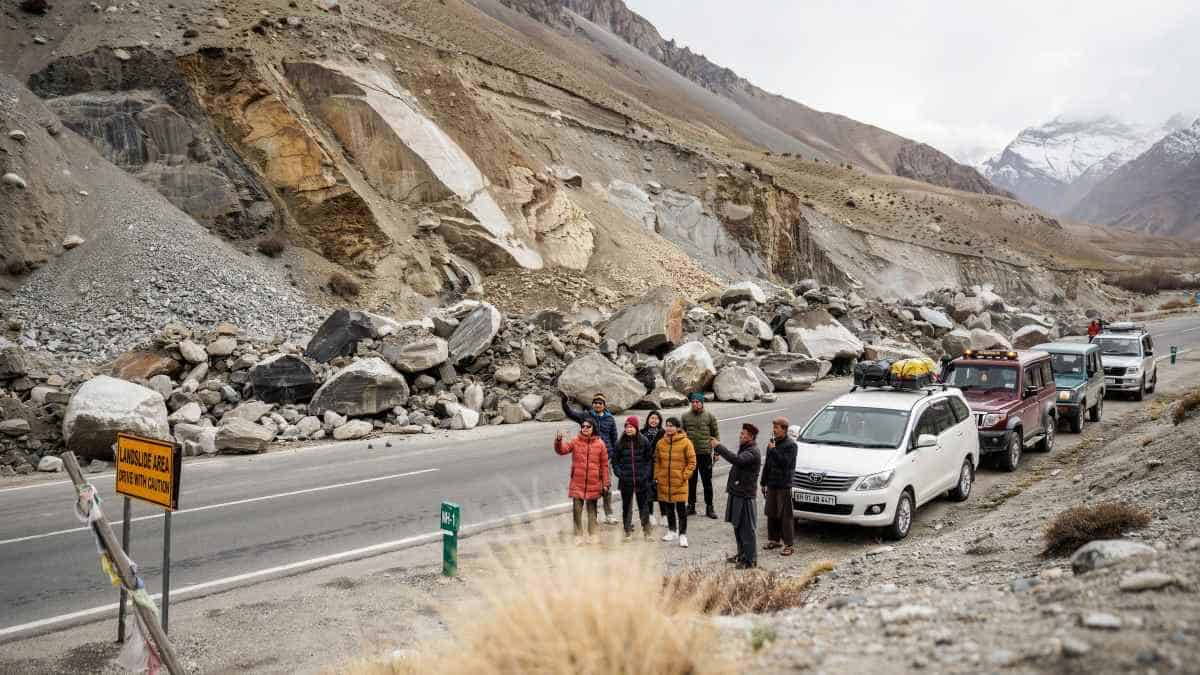
The terrain of Ladakh Administration faces urgent warnings. Weather Advisory alerts are active. Travel Alert notices are spreading fast. India Meteorological Department tracks heavy rain. Flash Floods threats are rising. Landslide risks are high. Travel plans face disruption.
Rain clouds gather over the region. Showers are predicted to continue. Officials watch the skies closely. The local government acts quickly. Safety bulletins are published daily. Residents read the new rules. Commuters check the latest updates.
Advertisement
High-altitude zones face risks. Soil stability is weakening fast. Heavy rain causes loose ground. Landslides can occur without warning. Authorities want to save lives. Property damage must be avoided. Proactive steps are taken now.
Practical Information For Travelling To Ladakh
Staying safe requires strict adherence to official safety guidelines and proactive preparation. The following dos and don’ts outline essential measures for all tourists and travelers currently in the region:
Advertisement
Advertisement
Do keep non-perishable food supplies, clean drinking water, and fully stocked first-aid kits readily accessible in your accommodation.
Do keep all communication devices charged and monitor official government broadcasts or local disaster management cells for real-time updates.
Do comply immediately with any evacuation directives or safety warnings issued by local governance bodies.
Don’t attempt to drive or travel through mountainous stretches, hilly corridors, or unverified routes during nighttime hours.
Don’t approach fast-flowing rivers, local nallahs, low-lying flood-prone areas, or steep slopes that carry a high risk of sudden landslips.
Don’t undertake unnecessary sightseeing journeys or attempt to cross swollen streams, damaged roadways, and unstable bridges.
Impact on Travellers in Ladakh
Visitors face serious operational challenges as erratic weather patterns disrupt transportation networks and recreational schedules. The unfolding environmental situation demands extreme caution and absolute adherence to safety protocols across the entire region.
Deferral of Travel Plans: Tourists intending to visit the area are strongly urged to postpone their itineraries until meteorological conditions stabilize completely.
Avoidance of Hazardous Water Bodies: Visitors and locals must steer entirely clear of fast-flowing rivers, local nallahs, and low-lying flood-prone zones where water levels can rise without warning.
High-Risk Landslide Zones: Steep mountain slopes and hilly corridors possess severe landslip risks, making transit through these areas extremely dangerous.
Suspension of Nighttime Driving: Motorists are strongly discouraged from navigating mountainous stretches after dark due to poor visibility and the heightened danger of falling debris.
Unpredictable Road Closures: Sudden route blockages, damaged roadways, and swollen streams can disrupt travel plans with little to no advance notice, necessitating constant flexibility.
Industry Insights
The regional tourism and hospitality sectors face immediate operational adjustments as severe weather alerts take effect. Stakeholders are actively managing unprecedented disruptions while prioritizing human safety above all financial considerations.
Surge in Cancellations and Deferrals: Tour operators and travel agencies are managing a sudden wave of trip cancellations, requiring flexible rebooking policies and close coordination with clients.
Hospitality Sector Adjustments: Hoteliers are experiencing temporary contractions in occupancy rates, utilizing the lull to review facility safety standards and assist stranded guests.
Transportation Network Stoppages: Transport syndicates are pausing operations on high-risk routes, minimizing transit risks while dealing with temporary schedule suspensions.
Prioritization of Long-Term Stability: Local business owners and financial analysts view short-term revenue losses as an essential trade-off to prevent severe safety crises in Ladakh .
Full Mobilization of Disaster Response Teams: Institutional emergency frameworks have activated rapid-response protocols across all districts.
High Alert Among Police Forces: Law enforcement personnel are deployed strategically to manage traffic diversions, secure vulnerable zones, and assist stranded commuters.
Health Department Preparedness: Medical authorities are auditing emergency supplies, stocking essential medicines, and ensuring hospitals are fully prepared for trauma cases.
Strategic Positioning by Public Works: Heavy machinery, earthmovers, and clearance crews are pre-positioned near accident-prone corridors to ensure swift road clearing.
Rapid Deployment of Specialized Rescue Units: Specialized disaster response units stand ready to execute immediate rescue operations in the event of localized emergencies or communication failures.
Comparison with Previous Policies
A comprehensive review of disaster management protocols reveals a profound paradigm shift in how regional authorities respond to seasonal climate threats and extreme weather events.
The Reactive Nature of Legacy Frameworks: In previous years, administrative procedures relied heavily on a reactive posture. Authorities typically waited for physical blockages, structural damages, or stranded commuter emergencies to materialize before issuing advisories or mobilizing response teams.
The Consequences of Delayed Interventions: Under older systems, reactive measures meant that damage usually happened first, leaving emergency responders scrambling to manage crises in the aftermath rather than preventing them altogether.
Modern Proactive and Preventative Protocols: Contemporary policies have revolutionized disaster preparedness by shifting the focus entirely to early intervention and preventative communication. Advanced meteorological forecasting now guides every single step of administrative planning.
Early Restriction of Tourist Inflow: By identifying environmental threats days in advance, modern protocols enable authorities to issue timely warnings that successfully stop tourists from entering vulnerable zones before hazardous conditions peak.
Enhanced Inter-Departmental Coordination: Today’s administrative landscape features tightly integrated communication networks where multiple government agencies—ranging from meteorological units and public works to law enforcement and health departments—work together seamlessly.
Pre-Emptive Planning as a Crisis Deterrent: This modern synergy ensures that resources, rescue personnel, and heavy machinery are deployed strategically beforehand, effectively minimizing disaster vulnerabilities and preventing major human or economic crises in Ladakh .
We use cookies on our website to give you the most relevant experience by remembering your preferences and repeat visits. By clicking “Accept”, you consent to the use of ALL the cookies.
This website uses cookies to improve your experience while you navigate through the website. Out of these, the cookies that are categorized as necessary are stored on your browser as they are essential for the working of basic functionalities of the website. We also use third-party cookies that help us analyze and understand how you use this website. These cookies will be stored in your browser only with your consent. You also have the option to opt-out of these cookies. But opting out of some of these cookies may affect your browsing experience.
Necessary cookies are absolutely essential for the website to function properly. These cookies ensure basic functionalities and security features of the website, anonymously.
Cookie
Duration
Description
cookielawinfo-checkbox-analytics
11 months
This cookie is set by GDPR Cookie Consent plugin. The cookie is used to store the user consent for the cookies in the category "Analytics".
cookielawinfo-checkbox-functional
11 months
The cookie is set by GDPR cookie consent to record the user consent for the cookies in the category "Functional".
cookielawinfo-checkbox-necessary
11 months
This cookie is set by GDPR Cookie Consent plugin. The cookies is used to store the user consent for the cookies in the category "Necessary".
cookielawinfo-checkbox-others
11 months
This cookie is set by GDPR Cookie Consent plugin. The cookie is used to store the user consent for the cookies in the category "Other.
cookielawinfo-checkbox-performance
11 months
This cookie is set by GDPR Cookie Consent plugin. The cookie is used to store the user consent for the cookies in the category "Performance".
viewed_cookie_policy
11 months
The cookie is set by the GDPR Cookie Consent plugin and is used to store whether or not user has consented to the use of cookies. It does not store any personal data.
Functional cookies help to perform certain functionalities like sharing the content of the website on social media platforms, collect feedbacks, and other third-party features.
Performance cookies are used to understand and analyze the key performance indexes of the website which helps in delivering a better user experience for the visitors.
Analytical cookies are used to understand how visitors interact with the website. These cookies help provide information on metrics the number of visitors, bounce rate, traffic source, etc.
Advertisement cookies are used to provide visitors with relevant ads and marketing campaigns. These cookies track visitors across websites and collect information to provide customized ads.