
Malta Falls in Line With Estonia, Belgium, Sweden and More in the Explosive ‘Ultra-Strict’ AI Screening Algorithmic Visa Crackdown Zones as Schengen Travel Chaos Intensifies, Rejection Rates Surge, Millions Lose Fees, and Italy, Romania, Austria, Slovakia Emerge as the Most Powerful Friendly Entry Points Amid Digital Border Control Revolution

Published
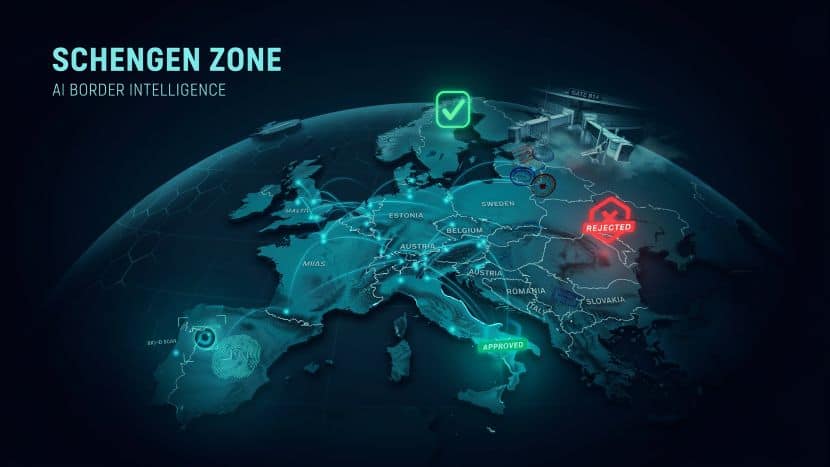
Image generated with Ai
Malta falls in line with Estonia, Belgium, Sweden and more as ultra-strict AI visa screening reshapes Schengen travel rules, triggering widespread disruption. The shift is tightening entry pathways, intensifying digital border control systems, and increasing rejection rates across multiple European gateways. At the same time, Italy, Romania, Austria and Slovakia are emerging as relatively more accessible entry points, as the broader Schengen travel chaos intensifies. Malta, Estonia, Belgium and Sweden are now central to this algorithm-driven visa transformation, which is redefining how travellers apply, get assessed, and face rejection under evolving European mobility frameworks.
Malta Falls in Line With Estonia, Belgium, Sweden and More in Ultra-Strict AI Visa Crackdown Zones Across Schengen Europe

Image generated with Ai
Are AI-driven visa systems reshaping Schengen entry rules?
The Schengen zone is undergoing a structural transformation where AI-based visa screening tools are increasingly influencing approval outcomes, processing logic and risk scoring models across member states including Malta, Estonia, Belgium and Sweden. These systems are being integrated into digital border frameworks such as the European Commission’s migration and home affairs infrastructure, where automated assessments are used to flag inconsistencies, financial risks and travel intent anomalies.
Malta, Estonia, Belgium and Sweden are now aligned with this stricter digital ecosystem, where applications are no longer judged solely by human officers but through layered algorithmic filtering. This has resulted in longer processing times and higher rejection probabilities, particularly for applicants from high-volume regions. The shift is also tied to broader Schengen digitalisation policies under the European Union’s evolving border management strategy.
Why are rejection rates increasing across Malta, Estonia, Belgium and Sweden?
Rejection rates across Malta, Estonia, Belgium and Sweden are rising due to enhanced algorithmic scrutiny, where AI systems evaluate applicant history, biometric consistency, financial credibility and travel intent patterns. These systems are designed to detect perceived anomalies, but they also increase false flags, leading to more refusals even for legitimate travellers.
Advertisement
Advertisement
Official migration frameworks across Schengen indicate that automated pre-screening is now a standard layer before human review, meaning even minor documentation inconsistencies can trigger rejection. Estonia and Sweden, in particular, have strengthened digital vetting mechanisms under their border security upgrades, while Belgium and Malta are integrating EU-wide visa databases more aggressively.
This has created a ripple effect where applicants perceive the system as unpredictable, contributing to what analysts describe as “procedural uncertainty” in Schengen visa approvals.
Advertisement
Advertisement
How is Malta positioned within the tightening Schengen visa landscape?
Malta has emerged as a key node within the tightening Schengen visa framework, primarily due to its reliance on digital visa processing systems aligned with EU migration infrastructure. As a small but strategically important member state, Malta has adopted advanced pre-screening technologies that integrate biometric verification and risk-scoring algorithms.
While Malta remains a tourism-dependent economy, its visa system now reflects broader European Union security priorities. This means applicants face stricter documentation checks and enhanced data cross-verification with Schengen-wide databases. The result is a more controlled but less flexible entry pathway, especially for non-EU travellers.
Malta’s alignment with Estonia, Belgium and Sweden shows a unified shift toward algorithmic governance in mobility control, marking a significant departure from traditional discretionary visa approvals.
Why are Estonia, Belgium and Sweden central to digital border enforcement?

Image generated with Ai
Estonia, Belgium and Sweden are at the forefront of Europe’s digital border enforcement model due to their advanced e-governance systems and early adoption of AI-assisted public administration. Estonia, widely recognised for its digital identity infrastructure, integrates visa processing with national e-services, allowing real-time data validation during application review.
Belgium, as a central EU administrative hub, plays a critical role in harmonising visa standards across Schengen member states. Sweden, meanwhile, has implemented strict immigration monitoring frameworks that combine security intelligence with automated screening tools.
Together, these countries represent a coordinated push toward AI-supported border governance, where visa approvals are increasingly data-driven rather than purely procedural. This shift is reshaping mobility patterns across Europe and influencing global travel demand strategies.
Advertisement
Advertisement
Why are Italy, Romania, Austria and Slovakia seen as more flexible entry points?
Italy, Romania, Austria and Slovakia are emerging as comparatively more accessible entry points within the Schengen system due to relatively balanced visa approval frameworks and less rigid algorithmic enforcement compared to stricter northern and western counterparts.
Italy continues to maintain high tourism inflows, and its visa processing system is structured to support seasonal travel demand, especially from Asia and the Middle East. Romania, while not fully integrated into all Schengen processes historically, has been moving toward streamlined visa facilitation under EU accession alignment policies.
Austria and Slovakia maintain structured but comparatively predictable visa evaluation systems, where human review still plays a significant role alongside digital screening. This balance has positioned them as alternative entry routes for travellers navigating stricter approval environments elsewhere in Europe.
Is Schengen travel becoming more fragmented due to AI systems?

Image generated with Ai
Schengen travel is increasingly fragmented as AI-driven visa systems create uneven approval landscapes across member states. While the Schengen Agreement allows free movement, visa issuance remains nationally administered, leading to divergent enforcement patterns shaped by domestic policy and digital infrastructure maturity.
Countries like Malta, Estonia, Belgium and Sweden are adopting highly automated screening models, while Italy, Romania, Austria and Slovakia maintain more hybrid systems. This has created a dual-speed visa ecosystem within Schengen, where applicant experience varies significantly depending on the issuing country.
The fragmentation is further amplified by rising application volumes, geopolitical pressures, and enhanced security requirements following EU-wide migration policy reforms.
Advertisement
Advertisement
What does this mean for global travellers and future mobility?
For global travellers, the evolving Schengen visa landscape means increased complexity, higher rejection risks, and greater emphasis on documentation accuracy and digital compliance. Applicants must now prepare for algorithm-driven assessments that evaluate travel behaviour patterns, financial consistency and historical mobility records.
At the same time, travel agencies and mobility consultants are adjusting strategies to route applications through comparatively flexible entry points such as Italy, Romania, Austria and Slovakia. This has led to a shift in visa application planning, where country selection is becoming a strategic decision rather than a simple preference.
Long-term, the system signals a broader transformation toward fully digitised border governance across Europe.
Conclusion
Malta, Estonia, Belgium and Sweden are now firmly embedded in an ultra-strict AI visa screening environment that is reshaping Schengen travel dynamics. The rise in algorithmic assessments has increased rejection rates, tightened documentation scrutiny and introduced greater unpredictability into visa outcomes. At the same time, Italy, Romania, Austria and Slovakia are emerging as relatively more accessible entry points within the same system. This dual structure reflects a broader European shift toward digital border governance, where mobility is increasingly managed by data-driven systems. The result is a more secure but significantly more complex travel landscape across the Schengen zone.
Frequently Asked Questions (FAQs)
Q1. Why are Schengen visa rejections increasing?
Due to AI-based screening systems that flag inconsistencies in documents, financial records and travel patterns more aggressively than traditional manual checks.
Q2. Which countries are affected the most?
Malta, Estonia, Belgium and Sweden are among the countries most aligned with stricter digital visa enforcement frameworks.
Advertisement
Advertisement
Q3. Which Schengen countries are easier for visa approval?
Italy, Romania, Austria and Slovakia are currently viewed as relatively more flexible entry points.
Q4. Is AI fully controlling visa approvals?
No, but AI systems are increasingly used for pre-screening before final human decisions are made.
Q5. Will Schengen travel become harder in the future?
Yes, trends suggest further digitalisation and stricter verification systems across Europe.
Advertisement
