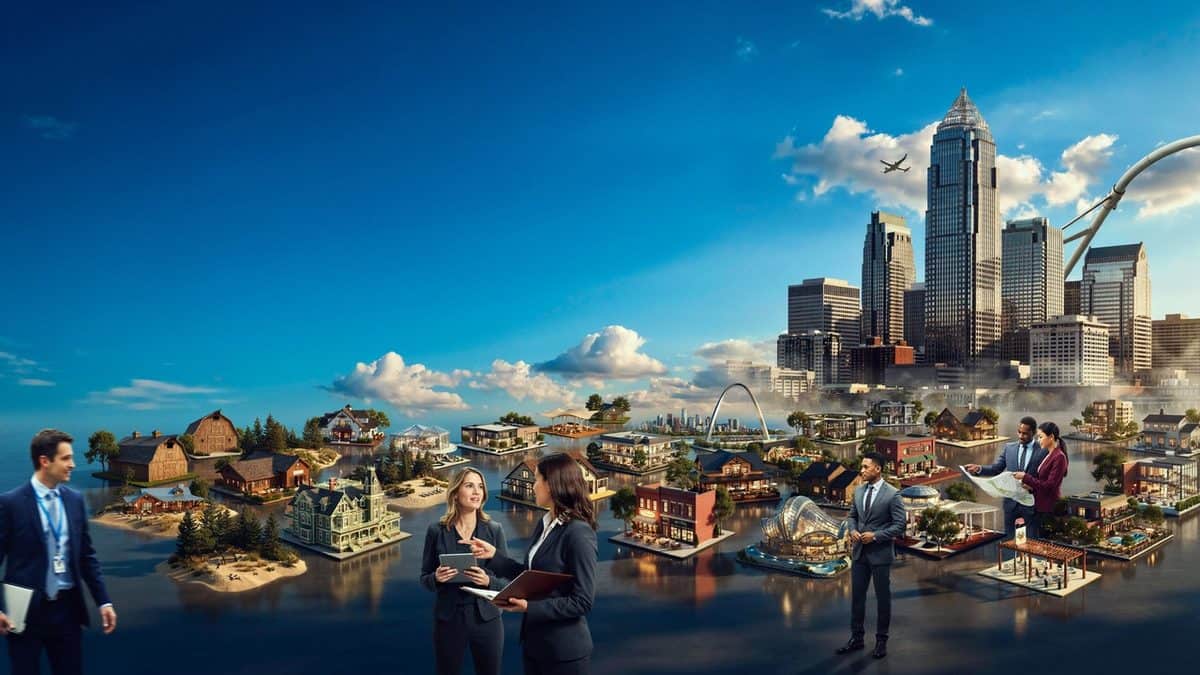
Image generated with Ai
Illinois and more US states are preparing to meet at Destination Midwest 2026, where travel and tourism leaders will gather in Grand Rapids to pursue new business, partnerships and growth.
Illinois and more US states are preparing to meet at Destination Midwest 2026, putting the Midwest travel and tourism market firmly in the spotlight. From 22–24 September, destinations, hotels, resorts, tourism organisations and meeting professionals will gather at the JW Marriott Grand Rapids in Grand Rapids, Michigan.
Meanwhile, Destination Midwest 2026 is expected to create valuable opportunities for networking, one-to-one meetings and future group business. With exhibitors representing the United States and a strong focus on Midwest destinations, the event offers a direct platform for travel and tourism stakeholders to showcase their products. Therefore, Illinois and other participating US states will have an important opportunity to compete for new meetings and incentive business.
Destination Midwest 2026 will take place from 22–24 September at the JW Marriott Grand Rapids in Grand Rapids, Michigan, bringing together meeting professionals and Midwest travel and tourism suppliers in a concentrated business-to-business marketplace. The event currently features 49 exhibitors on Northstar Meetings Group’s official roster, although the organiser has not published an official visitor forecast for the 2026 edition.
Advertisement
The event is positioned as a hosted-buyer programme rather than a conventional public tourism exhibition, which means its commercial focus is firmly placed on connecting qualified buyers with suppliers capable of delivering meetings, incentive programmes, group travel and related experiences across the Midwest. That structure makes Destination Midwest particularly relevant to hotels, convention bureaux, destination marketing organisations, resorts, attractions, tourism offices and other travel businesses seeking new corporate and group opportunities.
The event’s geographical scope is particularly broad within the United States. Northstar identifies 12 Midwest states whose meeting business is being targeted:
Wisconsin
Illinois
Indiana
Iowa
Kansas
Michigan
Minnesota
Missouri
Nebraska
North Dakota
Ohio
South Dakota
Northstar Meetings Group describes the event as a platform where highly qualified meeting and incentive buyers can meet leading Midwest destinations, hotels and resorts, attractions, DMCs, DMOs, technology providers, merchandise suppliers and tourism offices. The programme also uses pre-scheduled one-to-one appointments, giving suppliers a more direct route to decision-makers than they might find at a large consumer-facing travel show.
Grand Rapids will provide the setting for this concentrated travel and tourism marketplace, with the JW Marriott Grand Rapids serving as the host property for the three-day programme. The choice of venue also gives the destination itself an opportunity to demonstrate its ability to accommodate professional gatherings while placing local hospitality infrastructure directly in front of meeting and incentive planners.
The event begins on Tuesday, 22 September, with planner and supplier hotel check-in, registration, supplier tabletop set-up, a host-hotel site inspection and an evening welcome reception. Business activity intensifies on Wednesday and Thursday, when buyers and suppliers move into scheduled meetings, educational sessions, networking activities, meals and other programmed engagements.
For the travel and tourism sector, the format is significant because it concentrates several commercial functions into a short period rather than relying primarily on open-floor exhibition traffic. A supplier can introduce a destination, discuss its meeting infrastructure, understand a buyer’s requirements and potentially establish a future sales relationship within the same event framework.
Northstar’s official Destination Midwest page currently names 49 exhibitors, covering a wide range of travel, tourism, hospitality and destination organisations. The list includes convention and visitors bureaux, destination marketing organisations, hotels, resorts, attractions, tourism offices, an airline and other specialist suppliers, reflecting the broad range of products required by professional meeting planners.
The published roster includes 21C Museum Hotel St Louis, Aurora Area CVB, Bismarck Mandan CVB, Cedar Rapids Tourism, Chicago’s North Shore CVB, Choose Lansing, Colortone, Crowne Plaza Lansing by IHG, Delta Air Lines, Destination Ann Arbor, Destination Michigan, Destination Toledo, Discover Kalamazoo, Discover Stillwater and Experience Champaign-Urbana.
The list continues with Experience Grand Rapids, Experience Sioux Falls, Explore Branson CVB, Janesville Area CVB, JW Marriott Grand Rapids, Kalahari Resorts & Conventions, Louisville Tourism, Margaritaville Hotel Kansas City, Marriott South Sioux City Riverfront, Meet Mt. Pleasant, MGM Grand Detroit, MotorCity Casino Hotel, Petoskey Area Visitors Bureau and Potawatomi Inn.
Other exhibitors include Shores & Islands Ohio, South Sioux City Area Chamber of Commerce & Tourism, Stevens Point Area CVB, Travel Butler County, Ohio, Traverse City, Visit Beloit, Visit Bentonville, Visit Bloomington Indiana, Visit Columbia, Missouri, Visit Eau Claire, Visit Fargo-Moorhead and Visit Greater St. Cloud.
The current roster also features Visit Hamilton County, Indiana, Visit Lake County, VISIT Lake Geneva, Visit Omaha, Visit Saint Paul, Visit South Bend Mishawaka, Visit Southeast Indiana/Dearborn County Convention & Visitors Bureau and Visit Springfield. Because exhibitor lists can change before an event opens, the 49 figure should be described as the number currently listed by the organiser, rather than an immutable final count.
Destination Midwest has a clear geographic identity, with the currently published exhibitor list representing the United States rather than a multi-country international exhibitor base. The event is specifically designed around suppliers serving the Midwest US meetings market, making its geographic concentration one of its defining characteristics.
Northstar identifies Illinois, Indiana, Iowa, Kansas, Michigan, Minnesota, Missouri, Nebraska, North Dakota, Ohio, South Dakota and Wisconsin as key markets for the event. This gives the travel and tourism programme a substantial regional footprint while keeping its commercial purpose focused on destinations and suppliers capable of serving Midwest business.
That regional emphasis does not make the event commercially narrow; instead, it reflects how meetings and incentive business is often won through strong destination knowledge, accessibility, accommodation capacity, venues, attractions and personalised relationships. For participating tourism organisations, the objective is therefore not simply to promote leisure travel but to convert professional conversations into future group bookings and destination business.
One of the most important points for anyone covering Destination Midwest 2026 is the distinction between buyers, visitors and general attendees. Northstar has not published a specific official attendance projection on the event page, so a precise visitor figure should not be presented as an organiser-confirmed number.
The organiser instead emphasises the quality and professional relevance of its hosted buyers, describing the event as a gathering of highly qualified meeting and incentive buyers and highlighting the hosted nature of the programme. That makes buyer quality more important to the event’s commercial proposition than the headline number of people walking through the venue.
This distinction matters for travel and tourism businesses evaluating the event because a smaller, highly targeted audience can deliver stronger commercial value than a much larger public crowd. Destination Midwest is structured around appointments and relationship-building, so suppliers are expected to focus on qualified business opportunities rather than general consumer awareness alone.
The centrepiece of Destination Midwest is its scheduled one-to-one appointment system, with meetings taking place on both 23 and 24 September. The official agenda shows a morning meeting block on Wednesday, followed by lunch, activities and a dinner reception, while Thursday combines an educational session, another round of one-to-one meetings, a closing lunch and departures.
This format creates a more deliberate sales environment for travel and tourism organisations because meetings can be aligned with specific buyer interests. Instead of depending entirely on spontaneous conversations, exhibitors have a structured opportunity to communicate their destination strengths, accommodation options, venues, attractions and other products directly to professionals responsible for planning meetings and incentive programmes.
The wider tourism significance of Destination Midwest lies in the value of meetings and incentive travel to destination economies. Business events can generate demand for hotels, restaurants, attractions, transport providers, entertainment venues and local suppliers, while also bringing visitors into a destination outside the traditional leisure travel cycle.
For destinations across the Midwest, the event provides an opportunity to position their tourism infrastructure against competing locations. A strong pitch may involve convention facilities, hotel inventory, air access, unique experiences, cultural attractions, dining, entertainment and the ability to create memorable programmes for corporate groups.
The presence of Delta Air Lines on the exhibitor list also highlights the importance of connectivity in the meetings ecosystem, while the participation of major hotel and resort brands reinforces the role of accommodation and venue capacity in destination selection.
Hosting Destination Midwest gives Grand Rapids an opportunity to showcase itself to professionals who are already interested in meetings and incentive business. The official programme includes a site inspection of the host hotel, meaning participating planners can directly experience part of the destination’s hospitality proposition during the event.
For Grand Rapids and Michigan tourism stakeholders, this creates a valuable commercial window because destination promotion is stronger when buyers can experience facilities and service environments rather than relying exclusively on presentations. The event therefore functions as both a regional sales marketplace and a practical demonstration of what Grand Rapids can offer the meetings and tourism sector.
Destination Midwest should not be confused with a large consumer travel fair where thousands of leisure travellers arrive to collect brochures, compare holidays or purchase travel products. Its purpose is considerably more specialised, with Northstar positioning it as a hosted-buyer event for top-level, pre-qualified meetings and incentive professionals looking to book business in the Midwest.
That positioning makes the event particularly relevant to the business side of travel and tourism, where destination relationships, group contracts and future programme planning can have a much larger economic impact than individual leisure bookings. The event’s value is therefore best measured through qualified appointments, commercial leads and future business potential rather than simple footfall.
The exhibitors arriving in Grand Rapids represent destinations and hospitality businesses with different commercial priorities, but their shared objective is to secure greater visibility among professional buyers. Convention bureaux can promote their cities, hotels can showcase accommodation and meeting capacity, resorts can sell integrated experiences, and attractions can demonstrate how they can strengthen an incentive itinerary.
Tourism organisations can also use the event to identify changing buyer expectations, particularly around experiences, accessibility, group logistics and destination differentiation. For the wider travel and tourism industry, these conversations can provide insight into where meeting demand is developing and what planners increasingly expect from destinations.
Destination Midwest arrives at a time when destinations are competing aggressively for business events, corporate meetings and incentive programmes. By bringing a concentrated collection of Midwest suppliers together with qualified buyers, the event creates a practical environment for destinations to compete on experience, infrastructure, service and commercial value.
The current 49-exhibitor roster demonstrates the breadth of the regional offer, while the exclusively US-based exhibitor landscape confirms that Destination Midwest is primarily a Midwest-focused business platform rather than an international tourism marketplace. The combination of hosted buyers, pre-scheduled meetings, networking and destination experiences gives the event a clear commercial purpose within the wider travel and tourism calendar.
Destination Midwest 2026 is set to give Grand Rapids and the wider Midwest a concentrated platform for travel and tourism business when the event runs from 22–24 September at the JW Marriott Grand Rapids. The organiser currently lists 49 exhibitors, all representing the United States, while no official visitor forecast has been released, making buyer quality and scheduled business appointments more meaningful indicators than raw attendance. The cause is clear: destinations, hotels, resorts, attractions and tourism organisations need direct access to professionals who can generate meetings and incentive business. The answer is a hosted-buyer model built around one-to-one appointments, education, networking and destination experiences. The reason it matters is equally straightforward: successful meetings can generate hotel stays, restaurant spending, attraction visits, transport demand and wider economic activity. As travel and tourism competition intensifies, Destination Midwest offers Midwest suppliers a focused opportunity to present their products, strengthen commercial relationships and pursue future business from qualified meeting professionals.
“Destination Midwest 2026 demonstrates how focused business events can strengthen the travel and tourism economy by putting qualified buyers and destination suppliers in the same room with a clear commercial purpose. The presence of 49 currently listed exhibitors shows the depth of the Midwest offer, while Grand Rapids provides an effective stage for showcasing hospitality, meetings infrastructure and destination experiences. Most importantly, the event moves beyond simple promotion by creating structured opportunities for one-to-one conversations and future business. For the travel industry, this is a positive model of targeted tourism marketing, where relationships, destination knowledge and meaningful commercial connections can ultimately translate into stronger visitor demand and valuable meetings business.”
Illinois and more US states are preparing to meet at Destination Midwest 2026 as the travel and tourism industry looks for stronger business connections across the Midwest. The cause is straightforward: destinations, hotels, resorts and tourism organisations need direct access to qualified meeting and incentive buyers who can generate future group travel and events. The answer is Destination Midwest 2026, a focused business-to-business gathering taking place from 22–24 September at the JW Marriott Grand Rapids in Grand Rapids, Michigan. The reason the event matters is its targeted format, combining scheduled one-to-one appointments, networking, education and destination experiences. Consequently, Illinois and other US states can use the platform to promote their tourism infrastructure, hospitality products and meeting capabilities while competing for valuable future business. As the event approaches, Destination Midwest 2026 is positioned to strengthen regional travel relationships, encourage tourism spending and create fresh commercial opportunities across the US Midwest.
The opening day on 22 September focuses on registration, supplier preparation, a host-hotel inspection and the welcome reception, establishing the networking foundation before the main business programme begins. On 23 and 24 September, attendees move through meetings, education, meals, activities and networking, with the official schedule placing one-to-one appointments at the heart of both principal business days.
Northstar Meetings Group currently lists 49 exhibitors on the official Destination Midwest 2026 event page. This number should be treated as a current organiser-listed count because exhibitor participation can change before the September event.
The published exhibitor roster currently represents one country, the United States. The event is specifically designed to connect meeting professionals with destinations, hotels, tourism organisations and other suppliers from the Midwest US market.
Northstar Meetings Group has not published an official visitor forecast for Destination Midwest 2026. Coverage should therefore avoid presenting an estimated attendance figure as an organiser-confirmed number, particularly because the event is designed around qualified hosted buyers rather than mass public attendance.
Destination Midwest 2026 will be held at the JW Marriott Grand Rapids in Grand Rapids, Michigan, from 22–24 September 2026. The venue is also integrated into the programme through a host-hotel site inspection for participating planners.
The event creates a targeted commercial environment where destinations, hotels, resorts, attractions and tourism organisations can meet professionals responsible for meetings and incentive programmes. By focusing on qualified appointments and business relationships, Destination Midwest can help generate future group travel, accommodation demand and wider tourism spending across participating destinations.
Advertisement
Advertisement
Advertisement











Wednesday, September 2, 2026
Tuesday, September 1, 2026

Wednesday, September 2, 2026
Wednesday, September 2, 2026

Tuesday, September 1, 2026
Tuesday, September 1, 2026

Tuesday, September 1, 2026

Tuesday, September 1, 2026