
Indonesia’s Bali Faces New Travel Turmoil as Petrol Shortages Disrupt Taxis, Scooter Rentals and Road Trips

Updated
Published
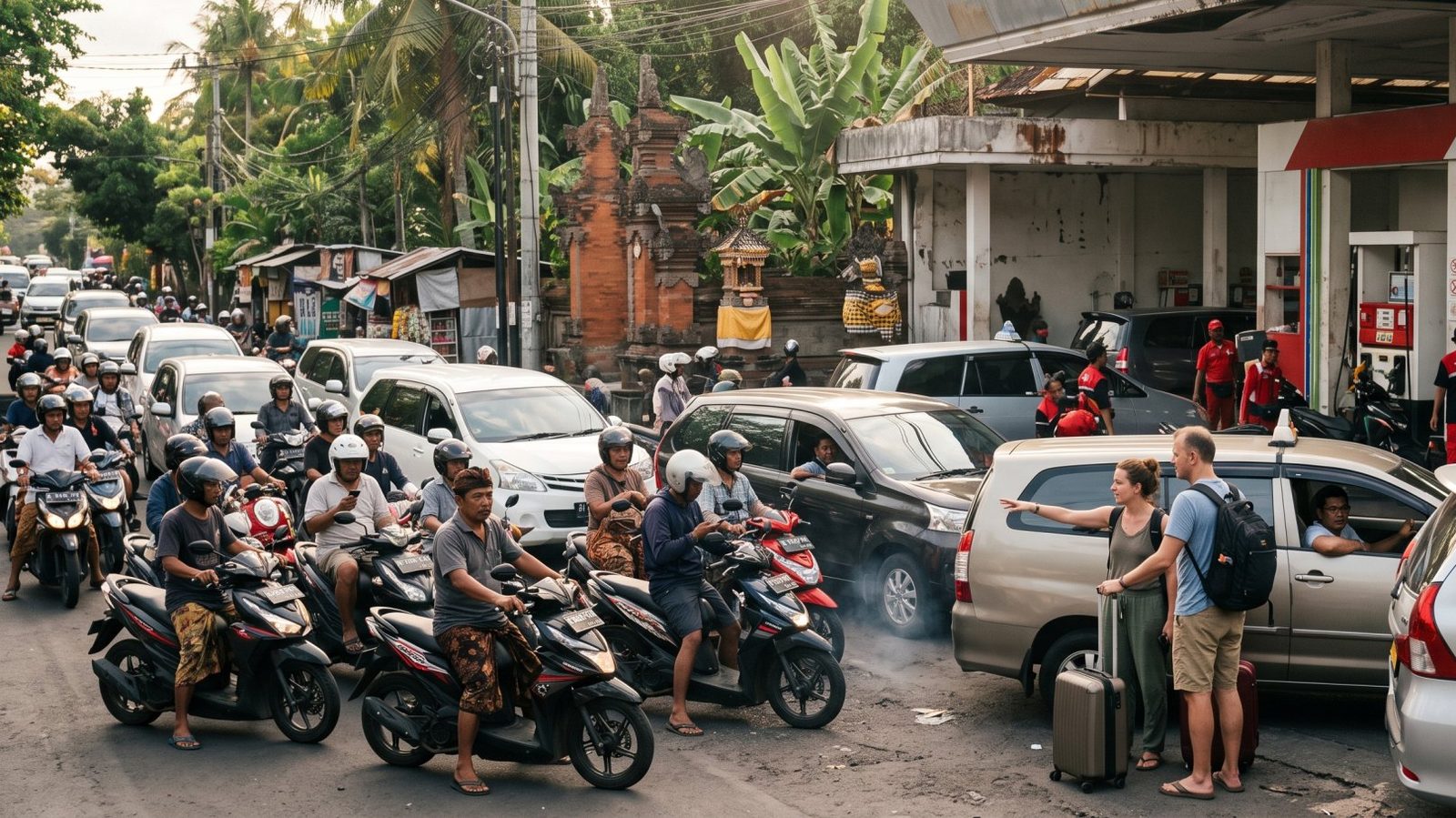
Indonesia’s celebrated holiday island is confronting an unwelcome transport headache. The Bali petrol shortage has brought long queues, temporarily empty pumps and uncertainty to journeys that tourists often take for granted. Police have documented reduced deliveries in South Kuta, while local authorities have managed traffic around crowded filling stations.
Yet this is not evidence that Indonesia has run out of fuel. National energy officials identify a distribution problem, with additional supplies moving towards Bali. Hotels and attractions have not been ordered to shut. The urgent concern for travellers is more practical: how reliably can they reach an airport, beach or booked excursion?
A Shipping Bottleneck Behind Bali’s Petrol Crisis
The trouble begins with ships, not sightseeing. Indonesia’s Ombudsman reported on 14 October that monitoring had linked queues in Bali to delayed tanker shipments and unloading difficulties at the Manggis fuel terminal. Other official findings pointed to disrupted deliveries involving Sanggaran. Petrol must pass through terminals and road tankers before reaching consumers. A delay at one stage can leave otherwise busy stations short of particular products.
The Ombudsman described these as preliminary findings requiring closer checks of operating records, rather than a final explanation for every queue. That distinction matters when assessing the scale of the crisis.
Advertisement
Advertisement
Why Available Fuel Does Not Mean Full Pumps
A country’s fuel reserves and a driver’s ability to buy petrol are different things. Storage tanks may contain adequate supplies while a nearby filling station has none of the grade its customers need. Delayed unloading, scarce delivery vehicles and crowded roads can widen that gap. The result is patchy availability, rather than identical conditions throughout Bali.
Motorists may find one station operating and another facing long queues. The Ombudsman has urged officials to assess actual deliveries, local demand, station capacity and opening hours. For tourists, the practical measure of recovery will be consistently available petrol, not simply reassuring stock figures.
Advertisement
Advertisement
South Kuta’s Empty Pumps Revealed the Early Warning Signs
An inspection on 7 October exposed the pressure in South Kuta, home to major visitor areas around Jimbaran and Nusa Dua. According to the Bali Police report, some filling stations had exhausted particular grades, while one Jimbaran outlet was not operating. Managers at inspected stations said their allocations had fallen by around 30–40 per cent. That was a local account, not an island-wide estimate. Police also noted possible delays involving supply vessels, road congestion and infrastructure works. These details explain why shortages can differ sharply between neighbouring stations, even when they depend on the same distribution network.
Busy Badung Roads Put Holiday Journeys Under Pressure
The problem moved beyond the petrol pumps when queues began affecting passing traffic. On 14 October, Badung Regency’s transport officers managed vehicles around stations at Lukluk, Kapal, Abianbase, Umahanyar, Sibang and Kuta. They sought to keep roads usable while motorists waited to refuel.
This creates travel disruptions in Bali even for visitors travelling in vehicles with full tanks. Congestion beside a station can delay a hotel transfer or sightseeing trip without affecting the vehicle’s fuel supply. Authorities have not published a reliable island-wide waiting-time figure, so precise forecasts would mislead. Conditions can change from one road to another.
Petrol Queues Near Ngurah Rai Raise Airport Transfer Concerns
Airport journeys deserve particular attention. Bali Airport Police reported busy queues at the Angkasa filling station near I Gusti Ngurah Rai International Airport on 13 October. Officers directed cars and motorcycles to protect surrounding traffic. That is evidence of congestion near the airport, not evidence of an airport closure.
Travellers using a taxi or pre-booked transfer could encounter delays on nearby roads or discover that their driver needs extra time to refuel. Anyone with an international departure should reconfirm their pickup and allow a sensible buffer. The actual delay will depend on the route and conditions on the day.
Are Flights Affected by Bali’s Petrol Supply Problems?
The distinction between road petrol and aircraft fuel is essential. Cars and scooters commonly use petrol grades such as Pertalite and Pertamax; aircraft operate with a different fuel system. The official reports reviewed establish shortages at some roadside filling stations, but do not show widespread flight cancellations caused by a lack of aviation fuel.
Advertisement
Advertisement
Nor do they establish that Ngurah Rai Airport has stopped operating because of this incident. Travellers should therefore check their airline’s flight status rather than assume a cancellation. The stronger documented risk concerns reaching the terminal smoothly, especially when petrol queues spill onto access roads.
Taxi Services in Bali Face a Difficult Scheduling Test
Taxi services in Bali depend on vehicles remaining available throughout the day. A driver who spends extra time looking for petrol cannot use that time to collect passengers. Ride-hailing drivers, private chauffeurs and smaller transfer firms may need to adjust their refuelling routines or journey schedules. These are credible operational pressures arising from the documented shortages, not proof of widespread tourist booking cancellations.
Visitors should ask transport operators to confirm fuel availability and pickup arrangements, particularly for early flights. Fixed appointments, such as airport check-ins, leave little room for uncertainty. Clear communication can prevent an inconvenience becoming a missed connection.
Scooter Rentals Could Turn Freedom Into Frustration
For independent travellers, scooters offer an easy way to explore Bali’s neighbourhoods and beaches. The Bali petrol shortage complicates that convenience because rental availability does not guarantee ready access to petrol. A tourist may collect a motorcycle and then face queues before starting a trip. Different stations may also lack different petrol grades.
Visitors should establish the vehicle’s fuel level, confirm the recommended grade and ask rental operators about nearby reliable stations. Refuelling before the tank runs low is a sensible precaution. There is no verified official count of scooter hires cancelled because of the shortage, and one should not be invented.
Road Trips Across Bali Need More Flexible Plans
Road trips across Bali are particularly exposed when several hours of driving separate destinations. A route linking Kuta, Ubud and northern or western districts may cross areas with very different station conditions. Unplanned refuelling stops could eat into time reserved for temples, beaches or hotel check-ins.
Advertisement
Advertisement
Travellers should avoid assuming that the next station will have the required fuel. Longer drives are easier to manage with a well-fuelled vehicle and a flexible timetable. Reports of queues do not mean every tourist road is blocked. They do mean journey planning should take account of uncertainty beyond ordinary traffic delays.
Denpasar’s School Decision Shows How Serious Mobility Has Become
The authorities in Denpasar have taken an unusual step to reduce pressure on daily travel. On 14 October, the city’s education department ordered online learning from 15 to 17 October for public and private early-years, primary and junior secondary institutions. Officials said the measure would anticipate fuel shortages affecting pupils, teachers and staff.
The decision demonstrates that the disruption reaches beyond holidaymakers. Reducing school journeys may also lessen traffic demand, although no official assessment has quantified that benefit. For tourists, it underlines the wider importance of a reliable transport network in a city that supports much of Bali’s visitor economy.
The Shortage Has Spread Beyond Bali’s Southern Resorts
The evidence extends well beyond Kuta and Denpasar. Authorities in Buleleng reported petrol queues in Singaraja, including lines estimated at around 150–200 metres at affected locations. Police in Klungkung managed traffic around stations during evening demand, while officers in Jembrana also monitored queues.
These reports show that the issue cannot be described as a problem confined to one resort district. Conditions remain uneven, however. A queue in a regency does not establish that every station there lacks fuel. Visitors touring northern, eastern or western Bali should check locally rather than rely on island-wide claims of either normality or total shortage.
Police Escorts Aim to Get Tankers Moving Again
Emergency traffic management now forms part of the supply response. On 14 October, Bali Police escorted fuel tankers from the Manggis depot towards filling stations across the island. Officers said the operation aimed to help deliveries reach their destinations safely and promptly. Other police teams have controlled queues at busy pumps, directed traffic and encouraged motorists to remain orderly.
Advertisement
Advertisement
This matters because a delayed delivery vehicle can prolong shortages at several stations. Escorts cannot manufacture petrol or guarantee every pump will reopen immediately. They can, however, remove avoidable obstacles from the final stage of distribution while additional supplies arrive.
Pertamina’s 57.9 Million-Litre Plan Offers a Route to Relief
Pertamina Patra Niaga announced a substantial reinforcement programme on 14 October. It scheduled an additional 57.9 million litres to arrive through Manggis and Sanggaran between 14 and 17 October. The planned quantity includes 44.9 million litres of Pertalite and 13 million litres of Pertamax. The company also outlined more delivery tankers, personnel and operating support.
This is the most important immediate recovery measure, but the figures describe scheduled shipments. They do not confirm that every litre has arrived, been unloaded or reached a filling station. A successful programme must improve actual availability for drivers, not merely increase announced volumes.
Longer Opening Hours Could Help, but Only With Deliveries
Pertamina has also prepared longer opening hours and round-the-clock service at more stations. Regional planning has included identifying outlets suitable for 24-hour operations, alongside staffing and tanker support. Extended access could spread demand across more hours and reduce pressure during the busiest periods.
Yet an empty station cannot solve a queue simply by keeping its gates open. More pumps, drivers and workers will matter only when sufficient petrol reaches them consistently. Travellers should treat announced extended hours as a potential convenience, not a guarantee of fuel availability. Local station status remains more useful than a blanket claim that service has returned to normal.
Indonesia’s Energy Ministry Rejects a National Fuel Exhaustion Narrative
Indonesia’s Ministry of Energy and Mineral Resources has characterised Bali’s queues as a distribution setback, rather than evidence of depleted national reserves. On 14 October, its oil and gas director-general said national stock coverage stood at around 18–20 days. He pointed to delayed tanker arrivals and maritime conditions that can complicate docking and unloading.
Advertisement
Advertisement
That national figure should not be mistaken for a verified amount of petrol available at every Balinese station. Officials expressed hope that accelerated deliveries would resolve the disruption quickly. Hope is not the same as confirmed recovery; drivers still need functioning pumps where and when they travel.
Hotels and Local Businesses Could Feel a Wider Shock
Bali’s tourism economy depends on a daily flow of staff, guests, food and other supplies. A hotel can remain open while its transfer drivers struggle to refuel. Restaurants may face less predictable deliveries. Tour operators can lose valuable working time when vehicles wait at stations. Indonesian parliamentary representatives have warned that extended shortages could affect tourism, trade, logistics, public transport and smaller enterprises.
Those warnings identify genuine exposure, not measured losses. There is no verified official total for cancelled excursions, closed hotels or revenue lost because of this incident. Responsible reporting must distinguish possible commercial consequences from damage already demonstrated by published data.
Bali’s Visitor Numbers Explain the Economic Stakes
The latest available Statistics Indonesia figures show why dependable mobility matters. Bali recorded 685,994 direct international visitor arrivals in August 2026, while star-rated hotels reported room occupancy of 68.19 per cent. Australian passport holders represented 23.51 per cent of those arrivals. The same statistical authority recorded 750,262 international departing passengers at Ngurah Rai Airport during August.
These figures predate October’s queues. They demonstrate the scale of travel relying on Bali’s transport system, not a downturn caused by the shortage. Any claim that arrivals or bookings have fallen because of the petrol problem requires newer evidence and careful comparison.
What Should Tourists Do Before Leaving Their Hotel?
Visitors need practical precautions rather than alarm. Confirm taxi pickups with hotels or operators, especially when travelling to the airport. Ask rental providers about fuel levels and the correct petrol grade. For longer excursions, build flexibility into the timetable and avoid running the tank close to empty.
Advertisement
Advertisement
Check with drivers before setting off, because station availability can change quickly. Follow official police and Pertamina announcements instead of unverified claims online. Indonesia’s Ombudsman has urged motorists not to buy more fuel than they need. Calm, informed decisions can reduce inconvenience without adding unnecessary pressure to already busy filling stations.
The Real Test Is Whether Queues Disappear, Not Whether Tankers Arrive
The Bali petrol shortage will ease convincingly only when deliveries translate into reliable service on the ground. Authorities need to verify completed shipments, station-level stocks, shorter queues and fewer traffic obstructions. Until those improvements are established, visitors should regard transport delays as a possibility, not an inevitable outcome.
Bali remains a functioning tourism destination, and the official evidence does not support claims of an island-wide travel shutdown. Nevertheless, disrupted petrol distribution has exposed how quickly a logistical problem can affect everyday journeys and holiday plans. For Indonesia, restoring confidence now means putting fuel within reach of the people who need it.
Advertisement
