

United States Tourism Enters a New Era as Energy Costs Rise and Digital Travel Tools Expand

Published
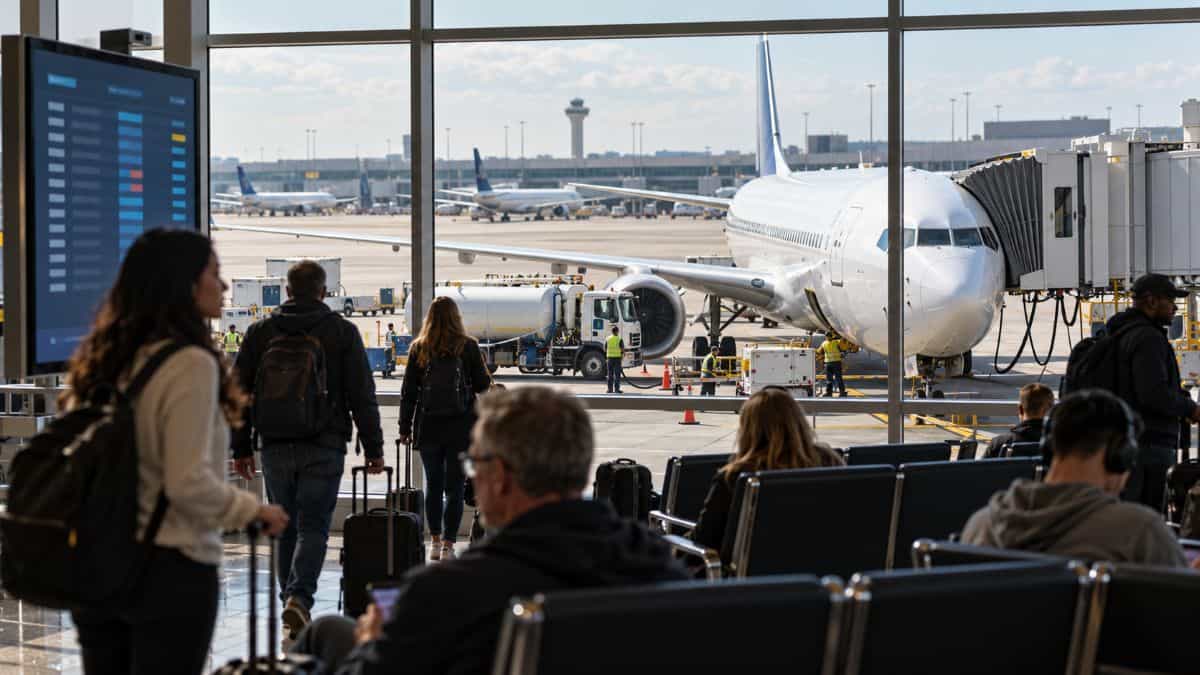
Tourism in United States Enters into a New Era with Rising Energy Prices and Growing Digital Tourism Tools. It is important for a number of reasons. In the Americas, increased costs of fuel to airlines add strain to the travel sector while changed arrival patterns highlight new possibilities. Furthermore, in Barbados, reforms of electricity are being funded, and in Mexico, a travel assistant based on artificial intelligence has been launched. Tourist companies in Brazil are also developing digital expertise. All these developments may allow destinations to support travelers and distribute tourism revenue among the host communities. But success will be contingent on routes, cheap energy and effective technology.
US Airlines Face a Steep Fuel Bill
The clearest signal came from US airline fuel figures for August 2026. Scheduled airlines spent US$6.17 billion on fuel, 60.2% more than in August 2025.
Advertisement
Advertisement
Airlines used about 1.656 billion gallons of fuel in August. That was 1.2% less than a year earlier and 4.4% less than in July. Yet the average fuel cost reached US$3.72 per gallon, up 62.2% year on year.
The figures expose a difficult gap for the travel industry: lower fuel use did not prevent a much larger fuel bill. That matters because air services connect many destinations to visitors from the United States and overseas. If airlines face higher costs, the pressure may affect how they manage routes, schedules and fares.
Advertisement
Advertisement
The data do not prove that airlines have already cut services or raised ticket prices because of fuel. They do, however, give tourism businesses a clear reason to watch air capacity and fare trends closely.
Airline Profits Show Little Room for Complacency
Fuel costs rose as airline earnings weakened. In the second quarter of 2026, 22 scheduled US passenger airlines reported a combined after-tax gain of just US$16 million. One year earlier, they had reported a gain of US$4 billion.
Advertisement
Advertisement
The airlines still recorded a US$3 billion pre-tax operating profit. But the results differed between domestic and international operations. Domestic services reported a US$484 million after-tax loss, while international operations recorded a US$500 million gain.
These figures help explain why the effect of higher fuel costs deserves attention. Airlines do not make decisions based on fuel alone. They also weigh passenger demand, wages, aircraft costs and competition. Still, a thinner profit position can make it harder for a carrier to absorb a new expense without changing something elsewhere.
For destinations, airline health is part of tourism planning. A place may attract strong interest, but visitors still need flights that are available, convenient and affordable. That makes air access a practical measure of whether tourism growth can continue.
US Visitor Numbers Hide a Sharp Regional Split
The total number of international visitors to the United States appeared almost unchanged in July. Arrivals reached 6,248,242, a 0.1% fall compared with July 2025.
That small overall change hides a bigger split. Overseas visitation fell 7%. Canadian visitation rose 7.6%, and Mexican visitation increased 8%. Mexico supplied the largest number of arrivals, followed by Canada. Together, the two neighbouring countries accounted for nearly half of US international arrivals during the month. US citizen departures abroad also rose by 2.3% year on year.
This makes the US tourism story more complex than a single arrival total suggests. Stronger travel from Canada and Mexico helped offset weaker overseas visitation. For tourism authorities and businesses, that raises a useful question: are they building offers that suit nearby visitors as well as long-haul travellers?
Advertisement
Advertisement
The statistics do not explain why each market changed. They cannot show whether fuel prices, exchange rates, travel policy or other factors caused the different results. They do show why tourism planners should examine visitor markets separately.
Spending Matters as Much as Arrivals
Visitor numbers can tell only part of the tourism story. Spending figures offer a second measure of how much visitors contribute to the travel economy.
International visitors spent nearly US$20.4 billion on travel and tourism-related activities in the United States in July 2026. That was almost 1% less than in July 2025. Across January to July, estimated spending totalled US$145.4 billion, down 0.1% from the same period a year earlier. Meanwhile, Americans spent nearly US$20 billion travelling abroad in July, an increase of almost 3%.
The contrast suggests that destinations need to monitor both inbound and outbound travel. A country can welcome millions of visitors yet see little growth in tourism revenue if total visitor spending remains flat.
The United States’ 2026 arrival estimate is still a forecast. The current projection expects 70.5 million international visitors this year, a 3.2% increase. That forecast should not be presented as a confirmed annual result.
For destinations across the Americas, the wider lesson is to track overnight stays, trip length, visitor spending and local business income alongside arrivals.
Advertisement
Advertisement
Road Trips Also Feel the Energy Pressure
Energy costs affect more than airlines. They can also shape the price of a driving holiday, coach tour or airport transfer.
Regular petrol averaged US$4.36 per gallon in the United States in September 2026. That was 37.6% higher than in September 2025. Prices differed by region, ranging from US$3.86 per gallon on the Gulf Coast to US$5.54 on the West Coast. Diesel reached US$6.29 per gallon, a new record in the series.
This regional gap could matter to travellers planning long road routes. For example, a 1,000-mile journey in a vehicle that averages 25 miles per US gallon would use about 40 gallons. At September’s average prices, that fuel would cost roughly US$154 on the Gulf Coast or US$222 on the West Coast. These are illustrative calculations, not quotes for a specific route.
Tourism businesses could examine how higher transport costs affect excursions, transfers and multi-stop itineraries. Visitors may still travel, but they may shorten routes, choose fewer activities or favour destinations closer to their starting point.
Canada’s Travel Pattern Is Changing, Not Moving in One Direction
Canadian travel figures show why tourism trends need careful timing. In the first quarter of 2026, Canadian residents made 10.6% fewer trips to the United States than in the same quarter of 2025. Their spending during those US trips fell 13.6%. Visits to overseas countries increased 6.2%, with Mexico, the Dominican Republic and Costa Rica among their leading destinations.
By August, however, Canadian return trips from the United States had increased 8.8% year on year. That was the fifth consecutive month of annual growth. But these trips remained below August 2024 levels: automobile returns were down 27.4%, while air returns were 22.7% lower. Changes to the inclusion of NEXUS travellers also affect comparisons from August 2026 onwards.
Advertisement
Advertisement
The evidence points to a mixed picture. Canadian travel to the United States had improved from earlier in the year, but it had not returned to its 2024 level in these measures. Tourism organisations should avoid describing the market as either fully recovered or in uninterrupted decline.
The Bahamas Shows That Tourism Demand Can Still Grow
Not every destination in the Americas is reporting weaker demand. The Bahamas welcomed a record 1,314,639 stopover visitors from January to July 2026. That was 4.3% more than during the same period in 2025.
The country reported growth from Canada, Latin America and Europe. Stopover arrivals from Canada rose 15.4%, those from Latin America increased 16.4%, and European arrivals grew 4%. The United States, the country’s largest source market, remained broadly stable.
This provides a useful counterpoint to the US arrival and spending figures. Tourism demand is not moving in one direction across the region. The Bahamas’ results also show the value of examining the source markets behind a national total.
The figures relate to stopover arrivals. They should not be combined with cruise visitor counts as though both groups behave alike. Stopover guests stay on the islands, while cruise visitors may spend only part of a day ashore. The distinction matters when assessing how tourism benefits hotels, restaurants, guides and other local businesses.
Caribbean Debt and Energy Exposure Create a Difficult Balance
Tourism-dependent Caribbean economies are particularly exposed to energy shocks. An International Monetary Fund assessment described high public debt and large net energy imports, averaging around 6% of GDP, as major vulnerabilities for the group.
Advertisement
Advertisement
The same assessment noted that countries producing oil could benefit from higher energy prices through stronger export earnings. Yet households in those countries could still face higher energy and food costs. The effects therefore differ across the Americas, even when countries face the same global shock.
Debt figures also need careful treatment. A July 2026 review found that half of the six Caribbean economies examined had reduced debt-to-GDP ratios below pre-pandemic levels. The group included The Bahamas, Barbados, Guyana, Jamaica, Suriname and Trinidad and Tobago. High global interest rates and volatile energy markets continued to challenge fiscal conditions.
This creates a more precise tourism angle: how can governments keep investing in reliable power, transport and resilience while managing public debt? The available evidence does not establish that every Caribbean country faces the same problem or that tourism taxes will rise.
Barbados Invests in Energy Security
Barbados offers a concrete example of an energy response. A US$150 million programme will support changes to the country’s electricity sector. Its goals include integrating more renewable energy, encouraging private investment in energy generation and storage, and reducing dependence on imported energy.
The programme was approved in June 2026 and is now in implementation. It is expected to benefit more than 135,000 electricity customers by reducing their exposure to international price changes. The loan has a 20-year repayment term and a 5.5-year grace period, with an interest rate based on SOFR.
Reliable electricity matters to tourism because hotels, restaurants, attractions and transport services all depend on power. That is an analytical connection, not a claim that the programme has already lowered tourism businesses’ bills.
Advertisement
Advertisement
The project also brings a financial trade-off. It aims to strengthen energy security, while its loan must be repaid. That makes implementation, energy savings and future costs important measures to follow.
Mexico Puts AI in Front of Travellers
Technology is also changing how destinations share information. On 4 October 2026, Mexico announced Balam: Chiapas te GuiA, an AI travel assistant available through WhatsApp in several languages.
The service offers information and recommendations about natural destinations, archaeological sites, Pueblos Mágicos, food, tourism experiences, prices, itineraries and local advice. It is designed to help visitors plan their stay in Chiapas.
This gives the article a specific example of AI in tourism, rather than a general claim that the technology is transforming travel. A digital assistant could make destination information easier to find, particularly for visitors who use WhatsApp. Its value will depend on whether the information stays accurate and directs visitors towards useful local services.
The announcement confirms the assistant’s stated features. It does not yet demonstrate that Balam has increased bookings, visitor spending or tourism income. Those outcomes require later data.
Brazil Focuses on Digital Skills for Small Tourism Businesses
Brazil offers a complementary example. A municipal tourism report from Nobres, published on 24 September, describes local businesses taking part in DIGITRADE training in Cuiabá. The initiative covered artificial intelligence, tourism marketing, digital sales channels and customer relations.
Advertisement
Advertisement
The focus on training matters because tourism businesses have different levels of access to digital tools. US research found that AI use varied by business size. In its survey period, 37% of firms with at least 250 employees reported using AI. Fewer than 20% of firms with four or fewer employees reported doing so. These figures cover businesses across the economy, not tourism alone.
For tourism, the question is whether smaller operators can use digital tools to reach customers, share accurate information and manage bookings. Training is a first step. It is not proof of higher sales or productivity.
AI Also Adds to the Energy Question
AI may help destinations respond to traveller needs, but it depends on digital infrastructure and electricity. In September, the IMF said AI investment, including investment in power projects, was supporting economic growth, particularly in the United States. It also warned that energy demand linked to AI was one factor governments needed to consider.
The US Energy Information Administration’s October outlook forecast wholesale electricity prices averaging US$52 per megawatt-hour in 2026, 11% above 2025. It attributed much of the increase to weather events, including winter storms and high summer temperatures.
That distinction is important. The figures do not show that AI caused the overall increase in electricity prices, nor do wholesale prices translate directly into identical increases in hotel bills.
A strong tourism analysis can instead ask how destinations balance digital services with reliable, affordable power. It can also examine whether AI tools help visitors discover more local experiences, rather than simply adding another platform to maintain.
A Tourism Strategy Must Prove Its Value
Tourism in United States Enters into a New Era with Rising Energy Prices and Growing Digital Tourism Tools. It is important for a number of reasons. In the Americas, increased costs of fuel to airlines add strain to the travel sector while changed arrival patterns highlight new possibilities. Furthermore, in Barbados, reforms of electricity are being funded, and in Mexico, a travel assistant based on artificial intelligence has been launched. Tourist companies in Brazil are also developing digital expertise. All these developments may allow destinations to support travelers and distribute tourism revenue among the host communities. But success will be contingent on routes, cheap energy and effective technology.
Advertisement
