
China Tightens Beijing Airspace With Massive 280000 Sq Km Restricted Zone Covering Dozens of Airfields

Published
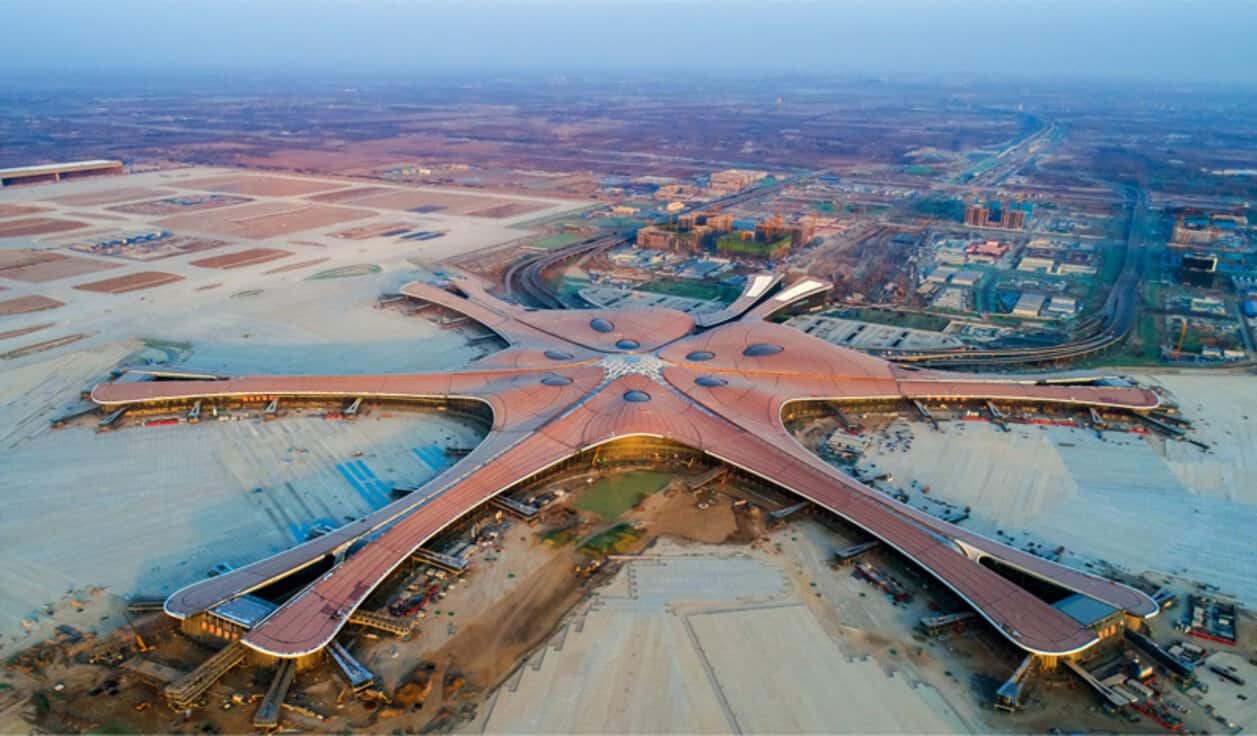
Restricted airspace around Beijing, China will take effect on September 20, 2026. Approximately 280,000 square kilometers of airspace will be restricted, and the current notice of airspace restrictions will be extended from Beijing to neighboring provinces. Exemptions are made for commercial flights in the restricted airspace. Non-commercial flights are affected by the restricted airspace, including private flights and general aviation. High volume air routes through the region will be closed. Passenger airline routes through Beijing will not be impacted in the near term. Passengers should be aware that the Chinese government may restrict airline routes through Beijing in the future. (Reuters)
What changes over Beijing from 20 September
The new Special Restricted Area is described in an aviation notice attributed to Beijing airspace-control authorities. According to the notice reviewed through the FAA’s public NOTAM system, the restriction forms a roughly 600-kilometre-wide circle centred on Beijing and extends from the surface upwards. (Reuters)
Advertisement
Advertisement
Its geographic footprint exceeds 280,000 sq km. It encompasses Beijing and Tianjin, much of Hebei and parts of Inner Mongolia, Shanxi, Shandong and Liaoning, while also reaching over the Bohai Sea. (Reuters)
That is important because the measure should not be interpreted as a shutdown of Beijing’s commercial aviation system. The aviation notice exempts commercial airline services, approved business flights and specified military, customs, police and fire-rescue operations. (Reuters)
Advertisement
Advertisement
The distinction is particularly important for international travellers. Beijing is served by two enormous passenger gateways, and the published restriction does not amount to the closure of either airport.
Advertisement
Advertisement
Beijing already had some of China’s tightest low-altitude controls
The latest development sits on top of an increasingly strict regulatory framework for low-altitude operations around the Chinese capital.
The Beijing Municipal Government declared the entire administrative territory of Beijing controlled airspace for unmanned aircraft in August 2025. Drone flights within that territory require approval from the relevant air traffic management authority. (Beijing Government)
Beijing strengthened the framework again in 2026. Official guidance issued before the May Day holiday warned visitors that there is no unrestricted outdoor area in Beijing where a drone can simply be launched because the location appears open or remote. (Beijing Government)
That has direct relevance for tourists. Travellers carrying drones for photography should not assume that parks, mountains, scenic areas or less populated districts around Beijing are automatically legal flying locations.
China’s revised Civil Aviation Law, effective from 1 July 2026, also establishes the broader legal framework. Article 82 states that civil aircraft cannot enter prohibited airspace without special approval and must comply with the applicable conditions when entering restricted airspace. (Civil Aviation Administration of China)
Advertisement
Advertisement
Beijing is protecting airspace above one of the world’s biggest travel markets
The significance of the restriction becomes clearer when Beijing’s aviation volumes are considered.
Official Beijing data show that Beijing Capital International Airport and Beijing Daxing International Airport handled a combined 124 million passenger movements in 2025, an increase of 6.5% year on year. (Beijing Government)
| Beijing aviation indicator | 2025 result | Annual change |
|---|---|---|
| Two Beijing airports combined | 124 million passengers | +6.5% |
| Beijing Capital Airport | 70.76 million | +5.0% |
| Beijing Daxing Airport | 53.61 million | +8.4% |
Source: Beijing Municipal Government/Capital Airports Holdings data. (Beijing Government)
The figures illustrate why the exemption for scheduled airline operations is central to understanding the new measure.
The Beijing airspace restriction affects the wider aviation environment surrounding a passenger market handling more than 100 million journeys annually. It does not, on the published information available, mean 124 million annual passenger movements are suddenly exposed to an airport shutdown.
Advertisement
Advertisement
Beijing Daxing’s international traffic has been expanding
Daxing’s growth adds another layer to the story.
The airport handled 53.62 million passengers in 2025, according to Beijing government data, while international and regional passenger traffic reached about 5.89 million, up 24.56%. The airport handled around 345,800 arriving and departing flights during the year. (Beijing Government)
That expansion continued into the 2026 Spring Festival travel period. Daxing handled approximately 6.52 million passengers during the 40-day period, including around 656,700 international passengers. (Beijing Government)
The numbers reinforce a crucial point for airlines and passengers: Beijing remains a major international aviation gateway, and scheduled commercial aviation is specifically exempted under the reported Special Restricted Area.
Tourism is also growing rapidly in Beijing
The aviation change arrives while Beijing’s tourism economy is expanding.
Advertisement
Advertisement
The Beijing Municipal Government’s 2025 statistical communiqué recorded 390 million tourist visits, up 4.8%. Total tourism spending reached CNY715.93 billion, an increase of 6.5%. (Beijing Government)
International tourism showed substantially faster growth.
Beijing received 5.48 million inbound visitors in 2025, up 39%. Inbound tourism spending reached US$7.08 billion, increasing 44.3%. (Beijing Government)
| Beijing tourism indicator | 2025 | Growth |
|---|---|---|
| Total tourist visits | 390 million | +4.8% |
| Tourism expenditure | CNY715.93 billion | +6.5% |
| Domestic tourist visits | 380 million | +4.4% |
| Inbound visitors | 5.48 million | +39.0% |
| Inbound tourism spending | US$7.08 billion | +44.3% |
The recovery has continued in 2026. Beijing Statistics Bureau data released on 16 September show that the city received 3.86 million inbound visitors between January and July 2026, up 32.4% year on year. (Beijing Statistics Bureau)
That makes clear communication about the airspace rules particularly important. Millions of international travellers are returning to Beijing, but the new aviation restriction does not carry the same implications for an airline passenger as it does for someone planning a private, recreational or other non-exempt flight.
Advertisement
Advertisement
What the restriction means for airlines and airports
For commercial airlines, the most important published detail is the exemption.
There is no basis in the available notice to describe Beijing Capital or Beijing Daxing as closed because of the new zone. Nor should travellers interpret “restricted airspace” as meaning scheduled passenger flights are prohibited.
Airspace controls can nevertheless matter operationally because airlines work within highly regulated flight corridors and air traffic management procedures. Any airline-specific operational change would need confirmation from the carrier, airport or aviation authority rather than being inferred from the size of the zone.
For general aviation, the implications are more substantial. Flights that do not fall within the exemptions need to be assessed against the new restrictions and applicable approval requirements.
What it means for hotels and tour operators
Beijing’s tourism industry has a strong interest in avoiding confusion between restrictions on aviation activity and restrictions on tourists themselves.
Advertisement
Advertisement
Nothing in the available aviation notice represents a new immigration restriction, visitor cap or closure of Beijing tourism attractions. International visitors can therefore continue to plan their trips according to normal immigration, airline and destination requirements unless authorities issue separate measures.
Tour operators should, however, pay particular attention to products involving aerial activity.
Tours offering drone photography, aerial filming or other aviation-related experiences need to operate within the relevant regulations. Beijing’s government already states clearly that outdoor drone flights throughout the municipality require approval. (Beijing Government)
Travellers carrying drones face much clearer restrictions
This is where the development becomes particularly relevant to individual tourists.
Beijing’s existing rules designate the entire municipality as controlled airspace for unmanned aircraft. Unauthorised outdoor drone flights are not permitted. (Beijing Government)
Advertisement
Advertisement
Visitors should therefore avoid assuming that a drone can be used simply because an attraction is outside central Beijing.
The city’s official guidance specifically tells travellers to check local unmanned-aircraft regulations before travelling with a drone. The advice applies to recreational users as well as people seeking aerial holiday photographs. (Beijing Government)
Beijing also approved a further revision of its unmanned-aircraft rules in September. The revised regulation is scheduled to take effect on 15 November 2026, reflecting the city’s continuing move towards tighter low-altitude security controls. (Beijing Government)
Economic stakes extend well beyond aviation
Beijing’s tourism economy provides the clearest measure of what is at stake.
Tourism spending of more than CNY715 billion in 2025 supports a wide network of accommodation, attractions, restaurants, retail businesses, transport operators and cultural venues. (Beijing Government)
Advertisement
Advertisement
China’s wider domestic tourism market is larger still. The Ministry of Culture and Tourism recorded 6.522 billion domestic trips in 2025, up 16.2%, with domestic tourism expenditure reaching CNY6.30 trillion, up 9.5%. (Zwgk MCT)
Beijing therefore sits at the intersection of two enormous systems: China’s expanding tourism economy and one of its busiest aviation markets.
What international visitors need to know today
For most passengers, the practical message is straightforward:
- Scheduled commercial airline flights are exempt under the reported Special Restricted Area.
- There is currently no official announcement saying Beijing Capital or Beijing Daxing has closed because of the measure.
- Travellers should check their airline and airport for flight-specific operational information.
- Visitors should not fly drones outdoors in Beijing without the required approval.
- Private and general-aviation users need to verify applicable airspace permissions before operating in the affected region.
The biggest mistake would be to interpret the new zone as a blanket ban on passenger aviation.
Future outlook rests on published aviation and drone rules
China’s current Civil Aviation Law provides the legal basis for prohibited and restricted airspace, while Beijing’s municipal regulations establish unusually extensive controls over unmanned aircraft. (Civil Aviation Administration of China)
Advertisement
Advertisement
The next confirmed regulatory change comes on 15 November 2026, when Beijing’s revised unmanned-aircraft management rules are scheduled to enter force. (Beijing Government)
For passenger aviation, travellers should rely on operational notices from airports, airlines and aviation authorities rather than assuming future disruption from the geographic size of the restricted zone.
FAQs for Travellers
Are flights to Beijing cancelled because of the new airspace restriction?
No blanket cancellation has been announced. Scheduled commercial airline flights are exempt under the aviation notice describing the Special Restricted Area. Travellers should still check their individual flight status with their airline before departure. (Reuters)
Can tourists fly a drone in Beijing?
Not without the necessary approval. The Beijing Municipal Government designates the entire administrative area of Beijing as controlled airspace for unmanned aircraft, and outdoor drone flights require approval from the relevant air traffic management authority. (Beijing Government)
Are Beijing Capital and Beijing Daxing airports closed?
No closure of either major passenger airport has been announced in connection with the restriction. The reported rules specifically exempt commercial airline traffic, so travellers should distinguish the wider airspace control from an airport closure. (Reuters)
Conclusion
New aviation restrictions took effect on 20 September 2020, more strictly controlling airspace around Beijing, China. The changes have more stringent effects on some forms of aviation, while exempting commercial aviation. Thus, international flights to and from Beijing Capital and Daxing airports are unchanged. For travelers, China’s capital region airspace controls should not have a substantial effect on flying to and from Beijing. People wishing to operate drones in China should be aware of the Beijing government controls. General aviation travelers should be aware of the expanded controls on Beijing area airspace. (Beijing Government)
Advertisement
