
Thailand Travel Disruption Deepens in Bangkok as Flooded Roads Challenge Suvarnabhumi and Don Mueang Access

Published
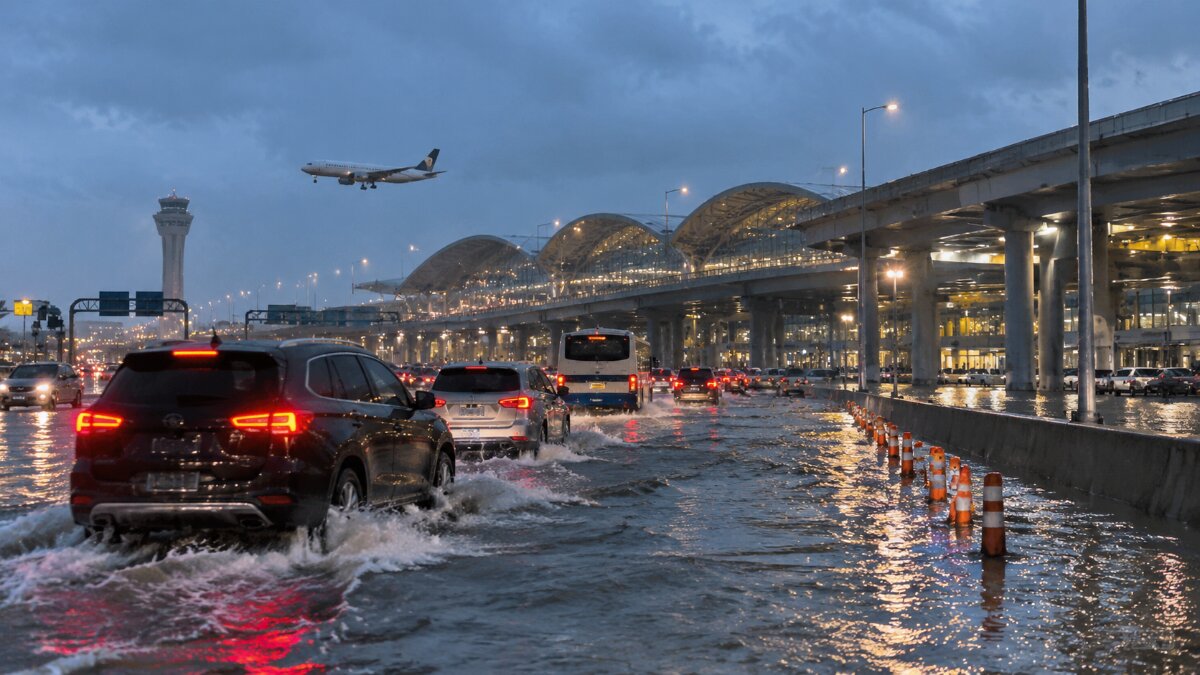
Image generated with Ai
Thailand’s Bangkok flooding crisis has created a major travel access challenge as roads connecting visitors with key transport hubs have been affected, while Suvarnabhumi Airport and Don Mueang International Airport remain operational. The disruption has exposed a critical weakness in urban tourism mobility: flights can continue operating, but travellers may struggle with the final journey between airports, hotels and city attractions. The Tourism Authority of Thailand has advised visitors to allow extra travel time, monitor road conditions and check transport updates before travelling.
Bangkok Flooding Creates New Travel Challenge Between Airports and City Access Routes
Thailand’s latest flooding emergency has shifted the travel risk conversation away from airport operations and towards last-mile connectivity, a crucial part of the visitor journey. While international aviation infrastructure continues functioning, flooded roads and congestion have created uncertainty for travellers moving between Bangkok’s airports, hotels, business districts and tourist areas.
The Bangkok Metropolitan Administration declared the capital a disaster-affected area after intense rainfall caused widespread flooding across the city. The heavy rainfall overwhelmed drainage systems, affecting multiple districts and creating difficult travel conditions on several roads.
For international visitors, the key issue is not whether flights can depart or arrive, but whether passengers can reliably reach terminals on time.
Advertisement
Advertisement
This creates a growing travel management challenge for airlines, tour operators, hotels and destination managers because modern tourism depends on the entire transport chain functioning together.
| Travel element | Current impact |
|---|---|
| Suvarnabhumi Airport (BKK) | Open and operating |
| Don Mueang International Airport (DMK) | Open and operating |
| Airport road transfers | Possible delays due to flooding and congestion |
| Airport Rail Link | Operating |
| SRT Red Line | Operating |
| Road journeys across Bangkok | Additional travel time required |
Source: Tourism Authority of Thailand travel information.
Advertisement
Advertisement
Suvarnabhumi and Don Mueang Remain Open But Transfer Times Become Critical
The biggest concern for travellers is the connection between Bangkok’s airports and surrounding urban areas.
According to the Tourism Authority of Thailand, both Suvarnabhumi Airport and Don Mueang International Airport remain open and operational, but passengers may experience delays because of localised flooding and traffic congestion.
Advertisement
Advertisement
For travellers using Suvarnabhumi Airport, authorities advised avoiding heavily affected routes such as parts of Lat Krabang and recommended alternative access routes including Motorway No. 7 and the Burapha Withi Expressway where appropriate. Passengers were advised to allow additional time before flights.
Don Mueang travellers have also been advised to plan additional journey time because flooding and congestion can affect road movement around northern Bangkok.
This creates a significant operational lesson for international travellers: airport status alone does not represent the full travel situation.
A passenger may have a confirmed flight but still face disruption if road access, taxi availability or transfer schedules are affected.
Advertisement
Advertisement
Thailand’s Airport Connectivity Shows The Importance of Alternative Transport Networks
Bangkok’s elevated and rail-based transport systems have become an important alternative during the flooding situation.
The Tourism Authority of Thailand reported that key services including the Airport Rail Link, SRT Red Line, BTS and MRT systems remained operational during the disruption period.
This creates a different travel pattern compared with traditional flood disruptions where both roads and public transport become unavailable.
| Transport network | Status |
|---|---|
| Airport Rail Link | Operating |
| SRT Red Line | Operating |
| BTS Skytrain | Operating |
| MRT | Operating |
| Road transfers | Delays possible |
Source: Thailand tourism travel updates.
For visitors, this means travel planning may require more flexibility. Travellers staying in central Bangkok may need to consider rail connections rather than relying only on road transfers.
For travel advisers and tour operators, the situation highlights the importance of building alternative transfer options into Bangkok packages during periods of extreme weather.
Advertisement
Advertisement
Chinese Golden Week Arrivals Face Confidence Pressure During Bangkok Flood Recovery
The timing of the flooding has created additional concern because it coincides with a period of high regional travel activity, including China’s Golden Week holiday period.
China remains one of Thailand’s most important international tourism markets. Any disruption affecting Bangkok, one of the country’s main gateways, can influence traveller confidence, booking decisions and short-term itinerary planning.
The immediate impact is not necessarily a complete cancellation of travel plans, as airports remain open and tourism services continue operating. However, images of flooded streets and transport delays can influence passenger decisions, particularly among visitors who are unfamiliar with Bangkok’s urban geography.
For destination managers, the priority becomes maintaining clear communication. Accurate information about airport operations, transport alternatives and affected areas is essential to prevent unnecessary disruption.
The Tourism Authority of Thailand has activated visitor assistance channels and advised travellers to monitor conditions before travelling.
Hotels and Tourism Operators Prepare for Operational Pressure During Flood Conditions
The flooding situation also places pressure on Bangkok’s hospitality sector.
Advertisement
Advertisement
Luxury hotels, business hotels and tourism operators depend on reliable staff mobility, supply deliveries and guest transportation. When roads become difficult to access, hotels may need to adjust operational procedures, including transport coordination and employee scheduling.
While no broad official announcement has confirmed industry-wide hotel staffing measures, flood events typically create operational challenges for properties located in affected districts.
For international visitors, the main hospitality concern is maintaining access:
- reaching hotels from airports;
- arranging sightseeing transfers;
- managing delayed arrivals;
- supporting guests with revised travel schedules.
Bangkok’s position as a major regional tourism hub means even short-term mobility disruptions can have wider implications for meetings, incentives, conferences and leisure travel.
Thailand Travel Alert: What Travellers Need To Know Now
Travellers visiting Bangkok should focus on preparation rather than cancellation.
The current situation shows that Thailand’s aviation infrastructure remains active, but urban mobility conditions require additional planning.
Advertisement
Advertisement
Key operational guidance for travellers and travel companies
- Allow extra time when travelling to Suvarnabhumi Airport and Don Mueang International Airport.
- Check airline updates before leaving hotels.
- Monitor road conditions before arranging taxis or private transfers.
- Consider rail-based alternatives where available.
- Build flexibility into Bangkok itineraries during heavy rainfall periods.
- Inform customers that airports remain open despite road disruption.
- Maintain alternative transport arrangements for group tours and MICE movements.
Long-Term Impact on Bangkok Tourism Resilience
Bangkok’s flooding situation demonstrates a wider challenge facing major tourism cities worldwide: maintaining seamless visitor movement during extreme weather events.
The future competitiveness of urban destinations will increasingly depend on transport resilience, real-time travel communication and integrated emergency planning.
For Thailand, the incident reinforces the importance of connecting airport infrastructure with reliable city mobility systems. International visitors judge destinations not only by attractions and hotels, but also by how efficiently they can move during unexpected disruptions.
The immediate travel message remains clear: Bangkok continues welcoming visitors, but travellers must plan carefully because airport operations and city accessibility are currently experiencing different conditions.
Advertisement
