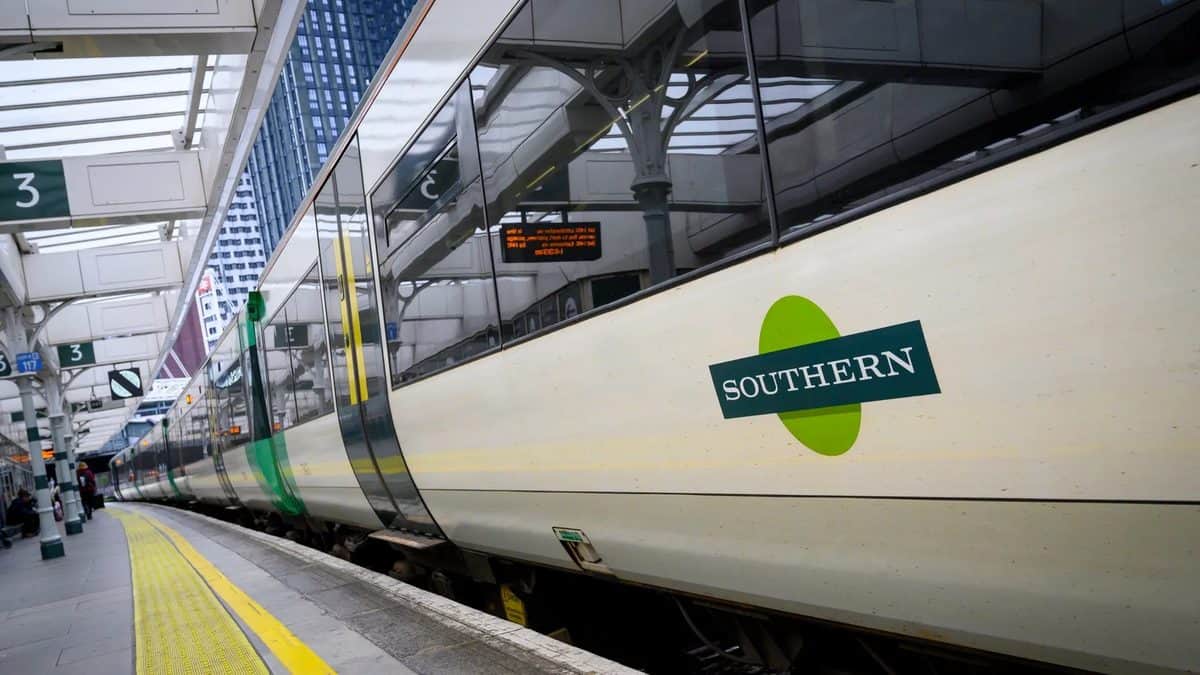
Image generated with Ai
Haywards Heath to Lewes travel is back as Southern Railway reopens the line after major repairs, recovery and safety checks, ending weeks of disruption and restoring an important tourism and travel link.
The Haywards Heath to Lewes railway has reopened, bringing major relief for travel, tourism, passengers and communities across Sussex after weeks of disruption. Southern Railway has restored services following an intensive recovery and repair programme triggered by the derailment near Lewes on 13 August. Engineers recovered all eight carriages, rebuilt damaged railway infrastructure and completed extensive safety checks before reopening the route. The return of the Haywards Heath to Lewes connection is significant for daily travel and tourism, particularly as schools return and passenger demand increases. With replacement buses ending, travellers can once again plan journeys by rail with greater confidence.
Advertisement
The railway between Haywards Heath and Lewes has reopened to passenger services on Tuesday 1 September after Network Rail and Southern Railway completed a complex recovery, reconstruction, testing and safety assurance programme following the 13 August derailment.
The reopening marks a major milestone for local travel after an extended closure disrupted passengers, communities and transport connections across the region, while the restoration also removes the need for the rail replacement buses that have supported journeys during the recovery period. For tourism, the return of the railway provides a more direct and dependable transport option for visitors travelling through Sussex, particularly as regular passenger movements increase with the beginning of the new school term.
Advertisement
Advertisement
The railway was closed after a train derailed near Lewes on Thursday 13 August, creating a demanding recovery operation that required specialist engineering teams to work in challenging conditions and restore infrastructure before passenger services could safely return. Network Rail and Southern Railway coordinated the work with other railway specialists, focusing not simply on removing the damaged train but also on rebuilding the railway and completing the inspections required before reopening.
One of the most significant stages of the operation involved recovering all eight carriages from the derailment location, a task requiring specialist lifting equipment and carefully planned engineering activity because of the difficult terrain and proximity of the River Ouse. Specialist Kirow cranes were deployed to recover the derailed vehicles, while temporary foundations and working platforms were constructed to provide suitable support for the heavy lifting equipment.
Once the train had been removed, engineers could begin addressing the wider infrastructure damage that had affected the railway, including damaged track, ballast and the embankment supporting the route. The recovery therefore developed into a substantial reconstruction programme involving earthworks, new track installation, signalling restoration and the reinstatement of associated railway systems before the line could return to normal operation.
The derailment site presented particular difficulties because it was close to the River Ouse and situated within a sensitive environmental area, meaning the recovery could not be approached as a straightforward railway engineering project. Engineering, environmental and operational teams had to coordinate closely so that heavy recovery equipment, construction activity and infrastructure repairs could be undertaken while carefully managing the surrounding environment.
Advertisement
Advertisement
The location also required detailed planning around access, lifting operations and the rebuilding of the embankment, adding complexity to a project already involving damaged railway infrastructure and a derailed passenger train. For the wider travel sector, the successful completion demonstrates how railway recovery programmes can involve environmental management, civil engineering, operational planning and passenger considerations at the same time.
After the damaged infrastructure was removed, engineers repaired and reinstated the embankment before installing new track and associated railway components. The rebuilding phase was essential because reopening the line required more than simply clearing the derailment site, with the railway needing to be restored to a condition suitable for safe and reliable passenger operation.
Signalling and other railway systems were also reinstated as part of the programme, followed by extensive testing and final safety checks. These measures included successful test train operations, providing an important final stage of assurance before Southern services were permitted to resume between Haywards Heath and Lewes.
Southern Railway confirmed that passenger services between Haywards Heath and Lewes would resume from the start of service on Tuesday 1 September, bringing an end to the temporary rail replacement arrangements used during the closure. Customers travelling on the route are advised to check journey information before setting out because journey planners are being updated as the railway returns to normal operation.
The restoration is particularly relevant to travel planning at the beginning of September, when commuting, education and leisure journeys can all increase as summer travel patterns give way to regular autumn schedules. For tourism, a functioning rail connection also helps visitors move between destinations without depending entirely on private vehicles, taxis or replacement buses.
Rail infrastructure plays an important role in supporting tourism because visitors often rely on public transport to reach attractions, towns, accommodation and onward connections. The reopening between Haywards Heath and Lewes therefore represents more than the restoration of a commuter route, as it also strengthens the practical transport network available to leisure travellers exploring Sussex.
For the tourism industry, reliable transport can influence how easily visitors move around a destination and how confidently they can build multi-stop itineraries. The return of normal rail travel should make journeys more straightforward for visitors and residents alike, while businesses located along the wider travel corridor can again benefit from more predictable passenger movement.
Jenny Saunders, Customer Services Director for Greater Thameslink Railway, which operates Southern Railway, recognised the impact the incident and subsequent closure had on passengers and communities. She thanked customers for their patience and highlighted the extraordinary effort by engineers and railway colleagues who worked in difficult circumstances to restore services safely and as quickly as possible.
Lucy McAuliffe, Sussex Route Director for Network Rail, similarly described the recovery as complex and challenging while thanking engineers and industry colleagues for their professionalism and dedication. She also acknowledged the patience of customers and the support of the Landport community and wider Lewes area during the temporary works required to rebuild the railway.
“The reopening of the Haywards Heath to Lewes railway is an important and encouraging development for passengers, communities, travel businesses and Sussex tourism, restoring a vital connection at a crucial time of year. The scale of the recovery operation demonstrates the professionalism, coordination and determination of railway teams working under demanding conditions. We welcome the successful completion of the engineering, environmental, testing and safety work that has allowed services to return responsibly. Reliable rail connections are fundamental to modern tourism because they help visitors explore destinations conveniently while supporting local economies and businesses. This reopening provides renewed confidence for travel and regional connectivity across Sussex.”
— Anup Kumar Keshan, Editor-in-Chief, Travel And Tour World
The most immediate benefit is the restoration of a normal passenger railway between Haywards Heath and Lewes, replacing the temporary arrangements that have been necessary since the derailment. This should simplify travel planning for commuters, students, residents and visitors who depend on the route as part of wider journeys across Sussex and beyond.
The reopening also demonstrates the importance of engineering resilience within the travel sector, particularly when unexpected incidents can rapidly affect local mobility and tourism flows. A railway can serve as a backbone for regional tourism, connecting visitors with destinations while giving residents dependable access to employment, education, hospitality and leisure opportunities.
Although passenger services have resumed, travellers should check their journey information before departure, particularly during the initial period after reopening when timetables and journey planners are being updated. Checking the latest service information can help passengers identify any remaining operational changes and avoid unnecessary uncertainty during their travel.
The end of rail replacement buses also means customers should review their normal journey arrangements before heading to stations. For tourism operators, accommodation providers and visitor-facing businesses, the return of rail services provides an opportunity to communicate clearer travel options to guests planning trips around Lewes, Haywards Heath and the surrounding Sussex area.
The incident highlights how closely transport reliability and tourism performance can be connected, especially in regions where visitors use railways to combine several destinations within a single trip. When a railway closes unexpectedly, passengers can face longer journeys and businesses can experience reduced accessibility, making effective recovery particularly important for the wider tourism economy.
The successful reopening provides a positive example of coordinated infrastructure recovery following a major disruption, with engineers addressing the train, track, embankment, signalling and operational systems before services returned. For the travel industry, the key lesson is that restoring connectivity requires both physical reconstruction and comprehensive safety assurance before passengers can be welcomed back.
The railway reopened to passenger services from the start of service on Tuesday 1 September. Southern Railway confirmed that normal services would resume after the recovery, reconstruction, testing and safety assurance programme was completed.
The route was closed following a train derailment near Lewes on Thursday 13 August. The incident damaged railway infrastructure and required the recovery of all eight carriages, followed by substantial reconstruction and safety work.
Yes, the rail replacement buses operating between Haywards Heath and Lewes were scheduled to cease once passenger rail services resumed. Travellers should nevertheless check current journey information before departure.
Engineers recovered the eight carriages, removed damaged track and ballast, repaired the embankment and installed new track and associated infrastructure. Signalling systems were also reinstated, followed by testing, test train operations and final safety checks.
Yes, the location near the River Ouse and within a sensitive environmental area added complexity to the operation. Engineering, environmental and operational teams therefore worked closely together to manage the recovery and reconstruction programme.
The reopening restores an important public transport connection for visitors and residents travelling through Sussex. Better rail connectivity can support tourism by making destinations easier to reach while helping local hospitality, retail and visitor businesses benefit from renewed passenger movement.
The cause of the disruption was the derailment near Lewes on 13 August, which damaged both the train and sections of railway infrastructure and forced the route to close. The answer has now arrived through a major recovery programme involving specialist cranes, carriage removal, embankment repairs, new track, signalling restoration, testing and safety assurance. The reason the line could reopen on 1 September is that Network Rail, Southern Railway and wider industry teams completed the necessary engineering and operational checks before allowing passengers back. This carefully managed process restores travel connectivity, supports tourism and provides communities with a safer, more reliable railway connection.
The reopening of the Haywards Heath to Lewes railway is a significant moment for Sussex travel after weeks of disruption caused by the derailment near Lewes. Network Rail and Southern Railway have completed an extensive programme covering train recovery, infrastructure reconstruction, embankment repairs, track installation, signalling restoration, environmental management and final safety testing. The return of passenger services removes the need for replacement buses and restores a key transport connection for residents, commuters, students and visitors. It also has wider implications for tourism because dependable rail links help travellers reach destinations efficiently and support businesses that rely on visitor movement. The successful recovery demonstrates the scale of work required to restore a railway after a serious incident, while the completion of test train operations provides additional assurance before normal services resume. With the line open from 1 September, travel and tourism across this Sussex corridor can begin moving forward again.
Advertisement
Advertisement
Advertisement












Wednesday, September 2, 2026

Tuesday, September 1, 2026

Wednesday, September 2, 2026

Wednesday, September 2, 2026

Tuesday, September 1, 2026

Tuesday, September 1, 2026

Tuesday, September 1, 2026

Tuesday, September 1, 2026