


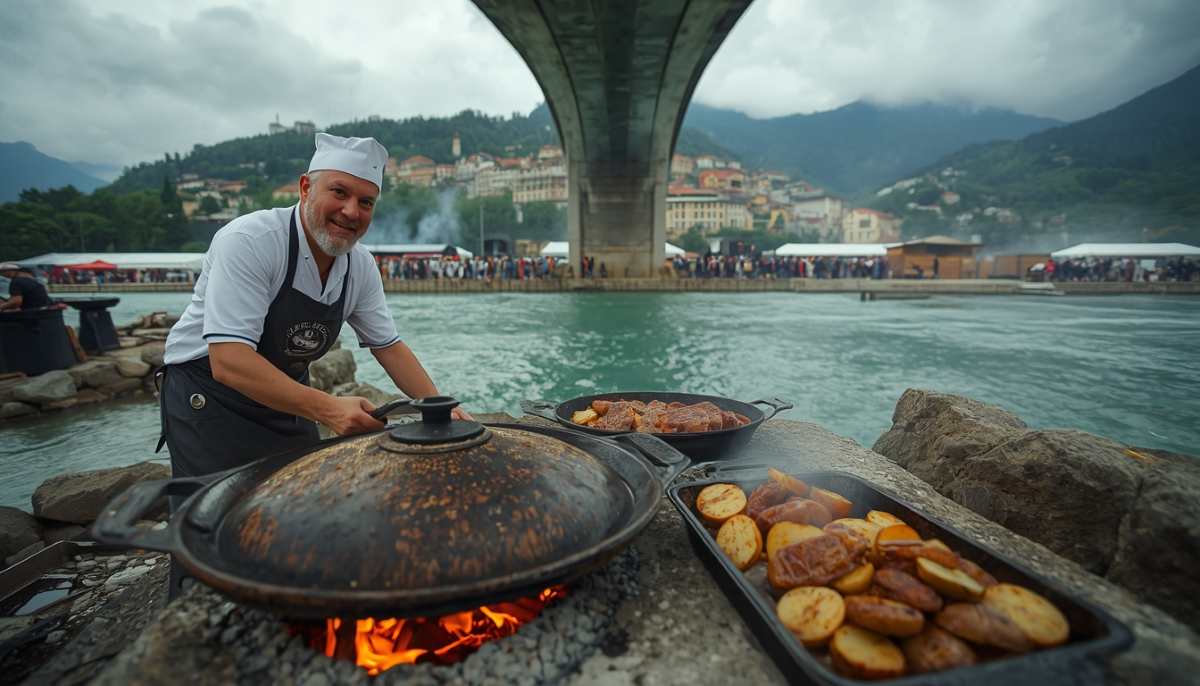
Image generated with Ai
The Balkans are witnessing a new phase of food tourism where the focus has shifted from standard international cuisine to hyper-local, heritage-driven gastronomy. If you want to experience an authentic taste of Montenegrin culture, there are few events that are more culturally and sensorially significant than the annual International Sač Fest in Danilovgrad. The growing festival takes place against the backdrop of the beautiful Zeta River and the modern Radovan Pavićević bridge and draws food lovers from all over the region to celebrate a very special, centuries-old method of cooking under the sač.
If you’re planning a culinary tour of Montenegro, you should know this tradition. The traditional Balkan way of cooking at the hearth uses a sač, a heavy, bell-shaped lid of iron or cast iron covered with live embers. The international competition is restricted to veal prepared under this heavy dome, but the technique is used for all sorts of things, from slow-roasted lamb to artisanal breads. For those wishing to taste the very flavours of this region, the path of this cuisine is a direct path into the heritage of the Danilovgrad municipality and the wider Montenegrin landscape.
The method of cooking under a sač is deeply rooted in the pastoral history of the Western Balkans. Historically used by shepherds and rural families who relied on open hearths, the technique utilizes indirect, sustained heat to tenderize meats and bake starches to perfection. A shallow baking dish is filled—in this case, with prime cuts of veal, root vegetables, potatoes, and local herbs—and covered with the heavy metal dome. Glowing wood embers are then heaped directly on top of the lid.
This process creates a mini-oven effect, allowing the ingredients to braise in their own juices while developing a rich, caramelized exterior. In Montenegrin cuisine, veal under the sač is not merely a dish served at celebratory gatherings; it is a culinary art form that demands patience, precision, and an intimate knowledge of wood-fire management. The slow-roasting process breaks down connective tissues completely, resulting in meat that falls away from the bone while retaining an intensely savoury profile infused with woodsmoke and local seasonings.
Advertisement
The third edition of the International Sač Fest cemented Danilovgrad’s reputation as a burgeoning capital for food tourism in Montenegro. On Saturday, the riverbanks beneath the Radovan Pavićević bridge transformed into a bustling open-air kitchen, hosting 92 competing teams from Montenegro and neighbouring countries. This high turnout reflects the explosive growth of regional culinary tourism, where local municipal authorities and tourism boards increasingly leverage traditional gastronomy to drive shoulder-season travel.
According to regional tourism development data provided by the National Tourism Organization of Montenegro, culinary festivals have become primary drivers of domestic and international visitor growth, increasing regional stays by a measurable margin over the past five years. The festival grounds buzzed with the synchronized movements of master cooks managing glowing coals, testing meat tenderness, and adjusting seasoning blends that have been passed down through generations. The rigorous judging criteria—focusing on meat texture, crust development, aroma, and presentation—turned a regional gathering into a high-stakes culinary championship, elevating traditional home-cooking techniques to a professional standard.
Beyond the fierce competition for the best-prepared veal, the 2026 festival introduced a significant charitable dimension, aligning the event with modern sustainable tourism practices. Visitors who flocked to the banks of the Zeta River were treated to an extensive daytime entertainment programme that included live acoustic performances, traditional folk music, and interactive cultural showcases. Crucially, the collaborative nature of the event allowed local humanitarian organizations to raise funds for regional community initiatives through food sales and donations.
This blending of culinary heritage with social responsibility provides travelers with a richer, more meaningful engagement with the host community. Rather than functioning as a closed competition, the festival invites public participation, allowing tourists to witness the cooking process firsthand, interact with regional chefs, and understand the communal spirit that defines Montenegrin hospitality. The integration of charitable giving ensures that the economic and social benefits of the festival flow directly back into the Danilovgrad community.
Advertisement
Advertisement
Strategic planning helps travellers who attend future editions of the International Sač Fest or who are exploring Danilovgrad independently. Situated in the heart of Montenegro, Danilovgrad is located in the fertile valley of the Zeta River. Podgorica, the capital city, and Cetinje, the historic cultural centre, are a short drive from Danilovgrad. Visitors should try and get there early in the morning to watch the setup part of the competition, where teams carefully prepare their ingredients and then seal them under the heavy iron domes.
Quaint guest houses right on the river and eco-lodges focusing on farm-to-table dining are some of the accommodation options in the area. Visitors to Danilovgrad at other times of the year who wish to eat out should order sač dishes in advance, since the genuine article requires a few hours’ slow-roasting over wood coals. Exploring the local cuisine allows visitors to gain a profound insight into a landscape where culinary traditions are fiercely protected and enthusiastically celebrated.
Advertisement
Tags: Danilovgrad tourism, International Sač Fest, Montenegro food festival, traditional Balkan cuisine, veal under sač
Advertisement
Advertisement












Monday, September 7, 2026

Monday, September 7, 2026

Monday, September 7, 2026

Monday, September 7, 2026

Monday, September 7, 2026

Monday, September 7, 2026

Monday, September 7, 2026

Monday, September 7, 2026

