
Romania Rail Travel Moves Towards Hydrogen as Ballard Secures Order for 12 Passenger Trains

Published
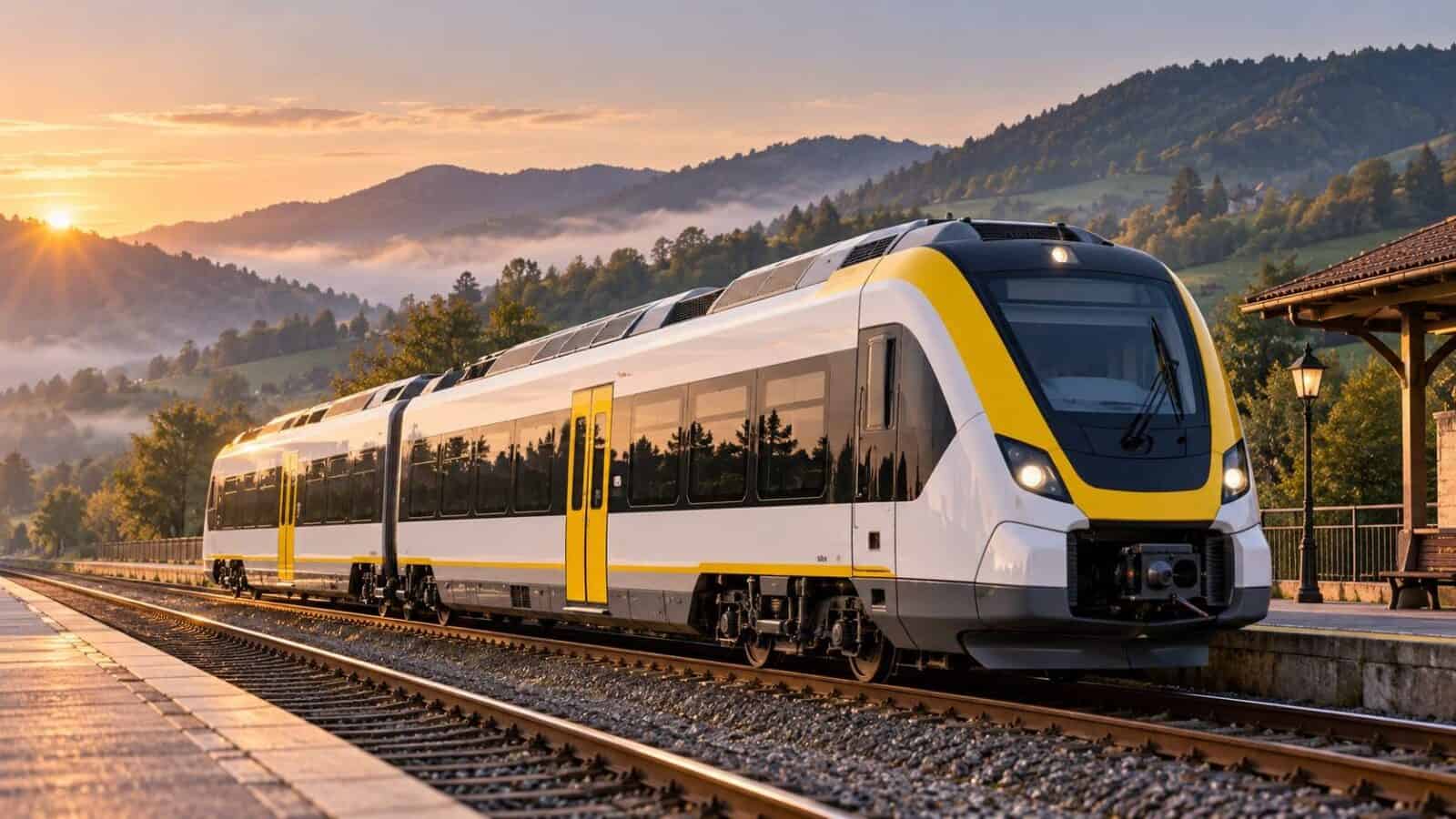
The use of hydrogen to drive railway trains in Romania has now taken one more step forward with the news of an order by Ballard. The company stated on October 7, 2026, that Siemens Mobility had ordered fuel cell modules for the fleet which was under development for Romania’s Railway Reform Authority. It was a positive development in terms of the project that aimed to replace diesel power by providing a newer technology for the region’s journey. Nonetheless, the travelling public should not confuse the manufacturing process with the actual commencement of services. The trains are likely to be in service in 2029.
An equipment order advances the passenger fleet
The latest development concerns the power systems inside the trains. Ballard is supplying fuel-cell equipment to Siemens Mobility, which is responsible for delivering the rolling stock.
According to Ballard’s official announcement, the order comprises 24 FCrail modules, each rated at 200 kW. Together, they provide 4.8 MW of installed fuel-cell capacity.
Deliveries are scheduled for 2027 and 2028. Those dates describe the equipment supply programme, rather than the introduction of a passenger timetable. Ballard
Advertisement
Advertisement
Romania rail travel has a longer project timeline
The train procurement predates this announcement. Siemens Mobility announced its contract with Romania’s Railway Reform Authority on 28 April 2026, covering twelve two-car Mireo Plus H units.
The Siemens contract announcement also includes maintenance and repairs for an initial fifteen years. Siemens identifies 2029 as the planned year for passenger operation. Siemens
Advertisement
Advertisement
That distinction gives the October announcement its proper context. It is a subsequent supply-chain milestone within an existing fleet programme.
| Project milestone | Officially published timing | Meaning for travellers |
|---|---|---|
| Siemens fleet contract announcement | 28 April 2026 | Procurement stage |
| Ballard equipment order announcement | 7 October 2026 | Propulsion supply milestone |
| Fuel-cell deliveries | 2027–2028 | Equipment delivery programme |
| Expected passenger operation | 2029 | Planned service introduction |
Sources: Ballard and Siemens Mobility.
Why hydrogen is being used
Siemens describes the train as an electric vehicle powered through hydrogen fuel cells and supported by batteries. Battery charging also uses energy recovered during braking.
The manufacturer positions the technology as an alternative to diesel operation on lines without overhead electrification. It reports zero local emissions during operation for the propulsion system. Siemens
That description needs careful handling in tourism reporting. Local operating emissions do not establish the environmental footprint of producing and transporting the hydrogen.
A credible environmental assessment must examine the fuel supply alongside the vehicle. Travellers should therefore treat broad claims about completely carbon-free journeys cautiously.
Advertisement
Advertisement
What the published specification tells passengers
Siemens specifies a maximum operating speed of 120 km/h for the Romanian units. Each trainset has 131 fixed seats and five folding seats, with provision for two units to operate together. Siemens
These figures describe the vehicles. They do not establish journey times, departure frequency or the number of tickets available on any particular service.
For passengers, the eventual timetable will be more useful than the headline speed. A successful regional journey depends on connections, station access and reliable information as well as the train itself.
An existing platform provides background
The Romanian programme follows earlier work with the same train platform. In December 2024, Siemens announced that its first Mireo Plus H units had received authorisation for passenger operation in Germany.
That announcement covered deployment in Berlin-Brandenburg and Bavaria. It provides background on the platform’s development, rather than proof of future performance in Romania. Siemens
Different operating conditions require their own assessment. Existing deployment should not be presented as a guarantee that every planned service will meet its intended schedule.
Advertisement
Advertisement
Tourism benefits depend on the eventual service
For the travel industry, the important question is how the fleet will fit into usable itineraries. New vehicles alone do not demonstrate improved access to a particular attraction.
The announcements reviewed do not supply a bookable Romanian timetable. They also do not establish tourist packages, promotional fares or guaranteed airport connections.
Hotels and tour operators therefore have a clear planning boundary. They can monitor the programme, but should base current customer itineraries on operating services.
Potential tourism benefits will need to be assessed against published routes and actual connections. An attractive train is only one part of a journey that visitors can confidently complete.
Maintenance matters beyond the launch
The long-term service element deserves attention because fleet availability matters after the first departure. Purchasing vehicles and keeping them ready for daily use are different responsibilities.
For visitors, reliability influences accommodation bookings, onward transport and the amount of time available at a destination. A missed connection can affect several parts of a holiday.
Advertisement
Advertisement
However, the existence of a maintenance contract does not quantify those future outcomes. Performance should eventually be judged through operating evidence.
Keep economic claims proportionate
The official releases reviewed do not provide a project-specific forecast for additional tourist arrivals, visitor spending or hotel occupancy. They also do not quantify Romanian tourism employment generated by this equipment order.
Adding those figures would create an unsupported link between procurement and tourism growth. National arrival statistics would not demonstrate the impact of trains that have yet to enter service.
The defensible economic story is about preparation for passenger transport. Claims about regional business gains should follow evidence of service coverage, demand and spending.
What travellers should watch next
The next useful passenger information will concern routes, operating arrangements and booking availability. These details will determine whether the fleet changes a practical travel choice.
Visitors planning trips before the proposed introduction should:
Advertisement
Advertisement
- Use published timetables for existing services.
- Check connections before reserving accommodation.
- Avoid treating procurement dates as departure dates.
The hydrogen order does not itself announce a new visa rule or aviation service. Those subjects require separate official evidence.
Traveller FAQs
Can I book one of these trains now?
The reviewed announcements provide procurement information, not booking availability for this fleet.
Will hydrogen trains automatically make journeys faster?
The vehicle specification alone cannot establish faster journeys. Route conditions and the eventual timetable determine travel times.
Does the announcement confirm new tourist routes?
Advertisement
Advertisement
No tourist itinerary is established in the reviewed releases. Travellers should wait for route and service information.
What the milestone means
This could be interpreted most effectively in the following way: the procurement process for the hydrogen-fueled fleet in Romania has moved into a new phase. The practical significance for tourists will manifest itself in the form of a timetable. Until this information becomes public knowledge, this news should be treated as transportation planning news, the tourist aspects being carefully clarified. It would be wise for hotels, guides and travel agencies to evaluate potential future possibilities based on confirmed services only. Journalistic work should obey the same rules. This differentiation between the procurement of means of transport and the carriage of passengers is crucial.
Official Sources
- Ballard Power Systems: 7 October 2026 fuel-cell order announcement
- Siemens Mobility: 28 April 2026 Romanian fleet contract announcement
- Siemens Mobility: December 2024 platform authorisation announcement
Advertisement
