

New York City Holds No 1 Position Outpacing Budapest, London, Strasbourg and More in Top 30 Christmas Holiday Destinations

Published
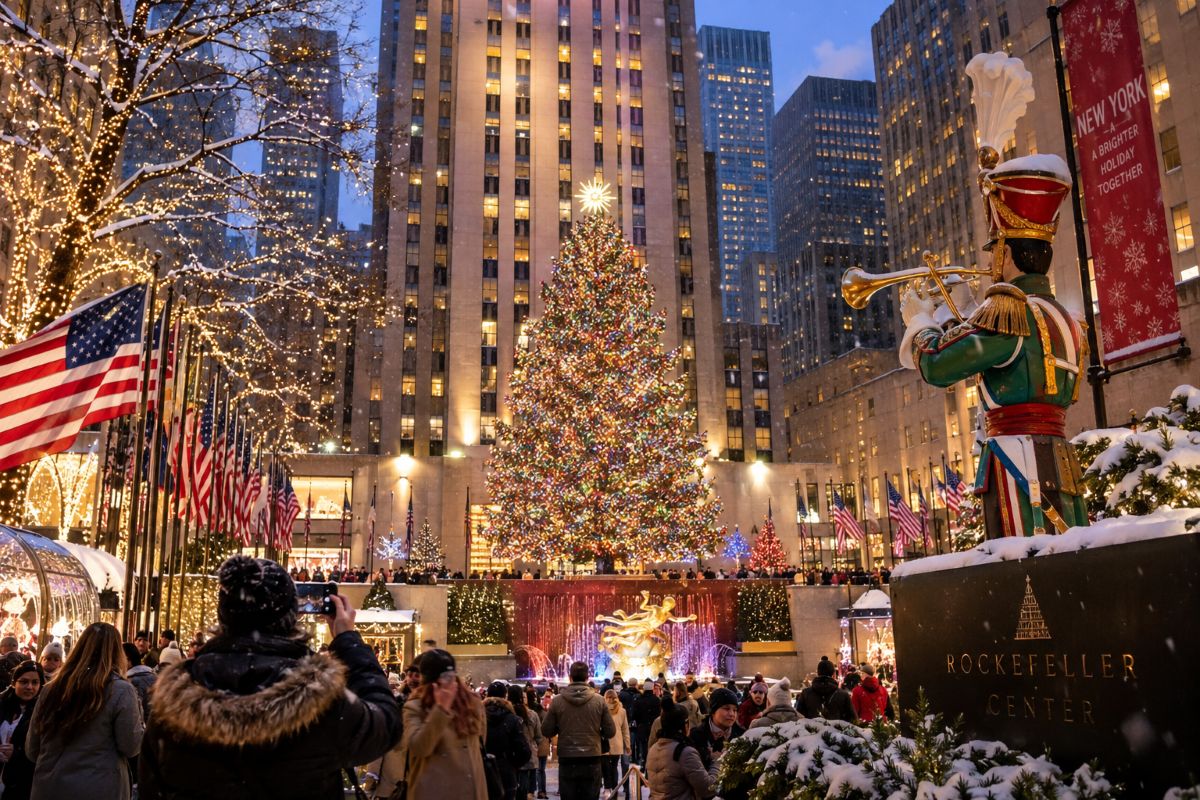
New York City Holds No 1 Position Outpacing Budapest, London, Strasbourg and More as the supplied Top 30 Christmas Holiday Destinations ranking puts the US metropolis at the top of a global festive travel list. The selection spans North America, Europe, Asia, Africa, South America, Oceania, the Caribbean and the Middle East. New York City leads with its famous urban Christmas atmosphere, while Budapest, London and Strasbourg follow with European markets, decorated streets and seasonal traditions. Nuremberg, Vienna, Amsterdam and Edinburgh also feature prominently. Further down the ranking, tropical and southern-hemisphere destinations such as Cancún, Saint Lucia, Cape Town, Wānaka and Dubai offer very different ways to spend the Christmas holiday.
Why Does New York City Hold the No 1 Position?
New York City takes the leading position because it represents a highly recognisable Christmas experience built around urban spectacle, entertainment, shopping and winter traditions. The city’s appeal is different from that of a traditional European Christmas-market destination. Instead of one historic market defining the experience, visitors can move through a much larger seasonal landscape across Manhattan and other boroughs.
Advertisement
Advertisement
For international travellers, New York also offers the advantage of combining Christmas travel with a wide range of museums, restaurants, entertainment venues and shopping districts. Christmas can therefore become part of a much broader city break.
The ranking places New York ahead of Budapest, London, Strasbourg and other major destinations. That top position reflects the list’s emphasis on overall festive atmosphere and the ability to build several different experiences into one holiday. It also demonstrates how Christmas tourism now extends beyond traditional market towns.
Advertisement
Advertisement
How Do Budapest, London and Strasbourg Challenge New York?
Budapest, London and Strasbourg occupy the next three positions and represent three distinct versions of European Christmas travel.
Budapest brings Central European architecture, festive markets, Danube views and a historic city setting. London offers a much larger urban Christmas programme, combining shopping streets, theatres, decorated neighbourhoods and seasonal events. Strasbourg provides a more concentrated Christmas-market experience, supported by its historic French and Alsatian identity.
Advertisement
Advertisement
These destinations are particularly attractive to travellers who want European heritage to remain central to the Christmas holiday.
| Ranking | Destination | Country | Christmas travel character |
|---|---|---|---|
| 1 | New York City | USA | Urban Christmas spectacle |
| 2 | Budapest | Hungary | Historic Central European atmosphere |
| 3 | London | United Kingdom | Major city, shopping and seasonal entertainment |
| 4 | Strasbourg | France | Historic Christmas-market experience |
| 5 | Nuremberg | Germany | Traditional German festive atmosphere |
| 6 | Vienna | Austria | Imperial architecture and Christmas traditions |
The comparison shows that the ranking is not based on one type of Christmas holiday. Each city offers a different interpretation of the season.
Why Are Nuremberg and Vienna So Strong in the Ranking?
Nuremberg and Vienna provide the traditional European Christmas atmosphere many travellers actively seek.
Nuremberg is closely associated with German festive culture, while Vienna combines imperial architecture, music, grand public spaces and seasonal markets. Both destinations offer a visual Christmas setting that differs sharply from the skyscrapers and commercial scale of New York City.
The ranking places Nuremberg fifth and Vienna sixth, showing the continued importance of Central European cities in international Christmas tourism.
Their appeal also comes from the wider city experience. A traveller can explore historic streets during the day and then move into a Christmas market or evening celebration after dark.
Advertisement
Advertisement
That combination makes Nuremberg and Vienna strong choices for visitors who want Christmas traditions to remain closely connected with architecture, history and local culture.
What Makes Amsterdam, Hamburg and Edinburgh Important Christmas Choices?
Amsterdam, Hamburg and Edinburgh extend the European strength of the ranking.
Amsterdam appears seventh, offering a festive experience shaped by canals, architecture, museums and city-centre celebrations. Hamburg follows at eighth and adds a major German urban setting with maritime character. Edinburgh, in ninth place, brings Scottish heritage, historic streets and a strong winter atmosphere.
These destinations demonstrate another major feature of the list: Christmas tourism can be driven by the character of the city itself rather than by markets alone.
Edinburgh is particularly different because its appeal combines Christmas travel with Scottish history and a distinctive old-town environment. Amsterdam offers a more cosmopolitan experience, while Hamburg creates a northern German alternative to traditional Bavarian or Central European Christmas destinations.
For travellers, the choice depends on whether the priority is history, nightlife, culture, shopping or a classic festive setting.
Advertisement
Advertisement
Why Is Rovaniemi the Standout Nordic Christmas Destination?
Rovaniemi occupies tenth place and is the first destination on the list whose identity is especially closely associated with Christmas itself.
Located in Finland, Rovaniemi is widely marketed around Arctic experiences, winter landscapes and Santa Claus-themed tourism. Its position makes it particularly appealing to families and travellers seeking snow rather than a traditional urban Christmas break.
The destination also broadens the geographical range of the ranking.
Most of the leading destinations are major cities in Europe or North America. Rovaniemi introduces a northern Arctic experience built around winter scenery and seasonal activities.
For travellers, the contrast is significant. New York offers a giant metropolitan Christmas, while Rovaniemi provides a much more nature-focused winter holiday. Both are Christmas destinations, but the experiences are almost completely different.
How Do Tokyo, Rome, Prague and Salzburg Add Global Variety?
The middle section of the ranking shows how Christmas travel crosses cultural boundaries.
Advertisement
Advertisement
Tokyo ranks 11th, bringing Japanese urban culture into a list dominated by European and North American destinations. Rome follows at 12th, where Christmas can be combined with historic architecture, religious heritage and Italian cuisine.
Prague ranks 13th, offering a strongly traditional Central European backdrop, while Salzburg at 14th adds Austrian heritage and musical associations.
Copenhagen rounds out the next group at 15th.
| Rank | Destination | Region | Distinctive appeal from the supplied list |
|---|---|---|---|
| 11 | Tokyo | Asia | Japanese city culture |
| 12 | Rome | Europe | Historic and religious heritage |
| 13 | Prague | Europe | Traditional Central European setting |
| 14 | Salzburg | Europe | Austrian heritage and music |
| 15 | Copenhagen | Europe | Nordic city atmosphere |
| 16 | Barcelona | Europe | Spanish urban and Mediterranean culture |
Together, these destinations demonstrate that Christmas travel is not geographically restricted to one traditional market corridor.
Why Do Warm-Weather Destinations Appear on a Christmas List?
The ranking becomes particularly interesting after Barcelona.
Cancún, Saint Lucia, Florida Keys and Dubai all provide alternatives for travellers who do not want a cold Christmas. Their inclusion reflects an important travel reality: Christmas holidays can mean sunshine, beaches and outdoor recreation rather than snow and markets.
Advertisement
Advertisement
Cancún brings a Mexican Caribbean setting. Saint Lucia offers tropical island scenery. The Florida Keys provide a warmer US escape, while Dubai combines festive travel with desert landscapes, luxury and modern architecture.
This creates a clear split within the Top 30.
One group is built around winter atmosphere, markets and historic European streets. The other is built around escaping winter altogether.
That difference gives travellers a wider range of choices depending on climate preference and the type of Christmas break they want.
How Diverse Is the Back Half of the Top 30?
The final positions reinforce the list’s international reach.
Cape Town represents Africa, with a southern-hemisphere summer Christmas experience. Buenos Aires introduces Argentina’s urban culture and South American festive atmosphere. Stowe and Jackson Hole provide winter mountain settings in the United States.
Advertisement
Advertisement
Saint Lucia adds the Caribbean, Wānaka brings New Zealand’s outdoor environment, and Basel and Bruges return the ranking to historic Europe.
Quebec City offers a North American destination with a strong European architectural character. Rio de Janeiro shifts the experience back to South America, while Bethlehem, Pennsylvania, brings a US town specifically associated with Christmas identity. Dubai closes the ranking with a modern Middle Eastern alternative.
The geographical range is therefore one of the list’s strongest features. It allows travellers to compare snowy mountain holidays, European markets, tropical escapes, historic cities and warm-weather destinations within one ranking.
What Does the Complete Top 30 Christmas List Look Like?
| Rank | Christmas destination | Country / territory |
|---|---|---|
| 1 | New York City | USA |
| 2 | Budapest | Hungary |
| 3 | London | United Kingdom |
| 4 | Strasbourg | France |
| 5 | Nuremberg | Germany |
| 6 | Vienna | Austria |
| 7 | Amsterdam | Netherlands |
| 8 | Hamburg | Germany |
| 9 | Edinburgh | United Kingdom |
| 10 | Rovaniemi | Finland |
| 11 | Tokyo | Japan |
| 12 | Rome | Italy |
| 13 | Prague | Czech Republic |
| 14 | Salzburg | Austria |
| 15 | Copenhagen | Denmark |
| 16 | Barcelona | Spain |
| 17 | Cancún | Mexico |
| 18 | Cape Town | South Africa |
| 19 | Buenos Aires | Argentina |
| 20 | Stowe | USA |
| 21 | Jackson Hole | USA |
| 22 | Saint Lucia | Caribbean |
| 23 | Wānaka | New Zealand |
| 24 | Basel | Switzerland |
| 25 | Bruges | Belgium |
| 26 | Quebec City | Canada |
| 27 | Florida Keys | USA |
| 28 | Rio de Janeiro | Brazil |
| 29 | Bethlehem, Pennsylvania | USA |
| 30 | Dubai | UAE |
The full list confirms that the ranking covers several distinct Christmas travel styles rather than simply naming 30 similar European cities.
What Should Travellers Consider Before Choosing a Christmas Destination?
The most useful lesson from the ranking is that travellers should first decide what type of Christmas they want.
Those seeking festive markets and old-world architecture can focus on Budapest, Strasbourg, Nuremberg, Vienna, Prague, Salzburg, Basel and Bruges. Travellers wanting a major international city can consider New York City, London, Tokyo or Barcelona.
Advertisement
Advertisement
Families looking for a more overtly Christmas-themed winter experience may be drawn towards Rovaniemi, while mountain travellers can look towards Stowe, Jackson Hole or Wānaka.
For sunshine, Cancún, Saint Lucia, Cape Town, the Florida Keys and Dubai offer radically different seasonal experiences.
New York’s No 1 position therefore does not eliminate the appeal of the other 29 destinations. Instead, it provides a starting point for a much wider conversation about what modern Christmas travel can look like.
Comment From Anup Keshan, Founder and Editor-in-Chief of Travel And Tour World
“Christmas travel has become remarkably diverse, and this list captures that change very clearly. New York City offers the scale and energy of a global metropolis, while Budapest, Strasbourg, Vienna and other European destinations deliver historic streets and traditional festive settings. At the same time, travellers can now choose completely different Christmas experiences in places such as Rovaniemi, Cape Town, Saint Lucia, Cancún or Dubai. This variety is valuable for the tourism industry because it encourages destinations to compete through culture, experiences, seasonal events and distinctive local identity. For travellers, the key is to choose a destination that matches the kind of Christmas experience they genuinely want.”
Conclusion: Why Does New York City Lead While So Many Destinations Compete?
New York City Holds No 1 Position Outpacing Budapest, London, Strasbourg and More because the supplied ranking places the city at the centre of a remarkably diverse global Christmas travel landscape. The reason is its ability to combine festive atmosphere with shopping, entertainment, culture and a huge metropolitan experience. Yet the list also proves there is no single formula for a successful Christmas holiday. Budapest and Vienna offer heritage, Rovaniemi offers Arctic winter, Cancún and Saint Lucia offer sunshine, while Cape Town, Wānaka and Rio de Janeiro bring southern-hemisphere summer travel. The Top 30 therefore gives travellers one powerful message: Christmas can be celebrated almost anywhere, but the experience changes dramatically with the destination.
Advertisement
