
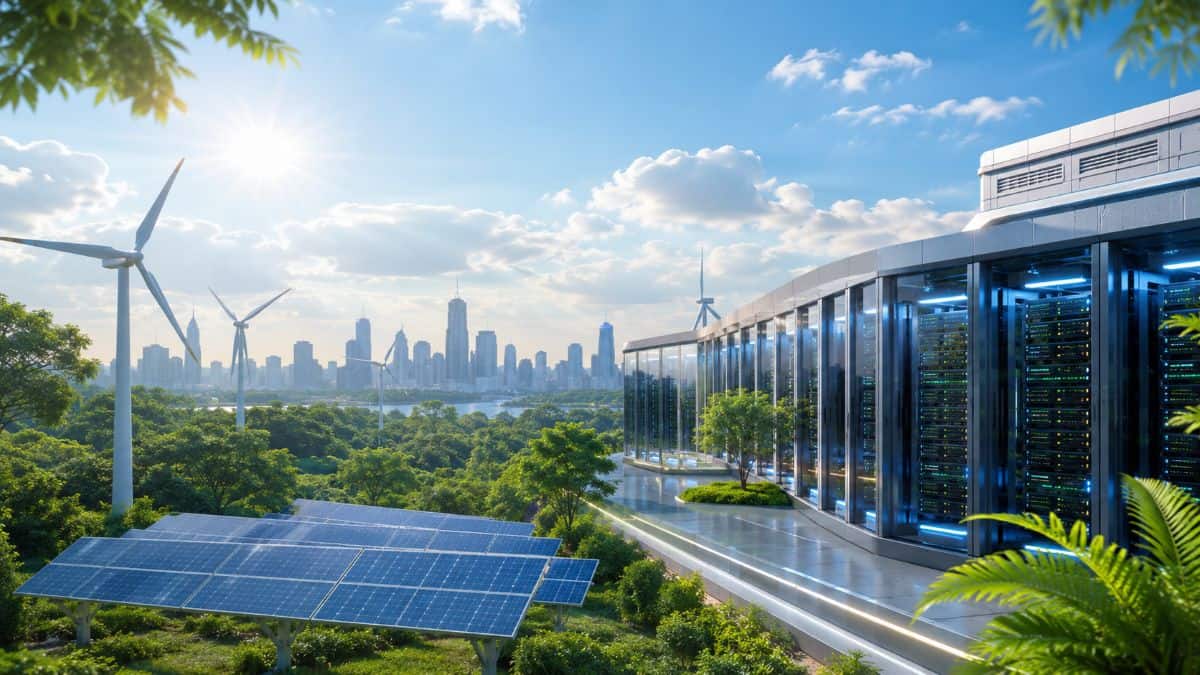
Image generated with Ai
Thailand is accelerating efforts to build a resilient artificial intelligence ecosystem by placing clean, reliable, and affordable electricity at the center of its long-term development strategy. As global demand for AI infrastructure continues to surge, policymakers are increasingly recognizing that advanced digital technologies cannot thrive without equally advanced energy systems. The country’s latest policy direction demonstrates that future competitiveness will depend not only on computing power but also on sustainable electricity capable of supporting large-scale data centres and next-generation digital industries.
Speaking during the Huawei Thailand Digital & AI Summit 2026 in Bangkok, Energy Regulatory Commission (ERC) Secretary-General Dr. Poonpat Leesombatpaiboon outlined how Thailand is preparing its electricity sector for the AI era. He emphasized that dependable energy infrastructure will determine whether the country can successfully establish itself as a leading regional destination for AI investment. His remarks reflected Thailand’s broader strategy of balancing rapid technological expansion with environmental responsibility, regulatory modernization, and long-term economic resilience.
| Key Focus Area | Current Direction |
|---|---|
| AI Infrastructure | Expansion of data centres and digital economy |
| Energy Strategy | Reliable, affordable and clean electricity |
| National Objective | Regional AI hub |
| Long-Term Goal | Carbon neutrality by 2050 |
| Renewable Priority | Solar and wind energy |
| Emerging Technology | Small modular nuclear reactors under consideration |
Thailand’s energy regulator believes artificial intelligence represents the next major phase of economic transformation, but its success depends entirely on the strength of supporting infrastructure.
According to Dr. Poonpat, every technological revolution has relied on foundational infrastructure. While previous eras depended on steam engines or telecommunications networks, today’s AI economy requires two equally important pillars: advanced intelligence and uninterrupted energy supply.
Advertisement
Advertisement
This perspective places electricity at the center of Thailand’s digital transformation agenda, ensuring AI development remains supported by dependable power systems capable of handling rapidly increasing demand.
| Infrastructure Indicator | Status |
|---|---|
| Estimated Data Centre Demand | Nearly 30,000 MW |
| Carbon Reduction Target | At least 47% by 2035 |
| Carbon Neutrality Target | 2050 |
| Renewable Energy Expansion | Significant increase under future power plan |
One of the biggest challenges highlighted during the summit is the extraordinary electricity demand expected from AI-driven data centres.
With projected demand approaching 30,000 megawatts, Thailand faces the dual responsibility of expanding generation capacity while continuing its transition toward lower-carbon energy sources.
Meeting these objectives requires careful planning that avoids compromising either economic growth or climate commitments. Solar and wind energy are expected to play increasingly important roles over the coming decades, while emerging technologies such as small modular nuclear reactors remain longer-term possibilities.
Advertisement
Advertisement
The balancing act involves ensuring sufficient power availability without undermining national sustainability targets.
| Regulatory Reform | Purpose |
|---|---|
| Direct Power Purchase Agreements | Enable direct clean energy procurement |
| Third-Party Grid Access | Improve electricity market flexibility |
| Regulatory Sandbox | Test innovative energy models |
| Peer-to-Peer Energy Trading | Future market development |
Thailand’s Energy Regulatory Commission is also redefining its own responsibilities.
Rather than acting solely as an oversight body for electricity and natural gas markets, the regulator is expanding its role to encourage innovation while maintaining system stability.
Recent reforms include allowing greater third-party access to transmission infrastructure, enabling businesses to purchase electricity directly from clean energy producers through Direct Power Purchase Agreements (Direct PPAs), and testing innovative regulatory approaches before wider implementation.
These initiatives aim to create a more competitive electricity market capable of supporting rapidly expanding AI infrastructure.
| Smart Grid Component | Expected Benefit |
|---|---|
| Battery Energy Storage Systems | Grid stability |
| Grid-forming Inverters | Improved reliability |
| Smart Transmission Networks | Better energy management |
| Digital Monitoring | Enhanced power quality |
As renewable energy becomes a larger share of electricity generation, maintaining grid reliability becomes increasingly complex.
Thailand’s future electricity system will require advanced smart grid technologies capable of balancing intermittent renewable generation while delivering stable power to highly sensitive AI facilities.
Battery storage systems, digital monitoring technologies, and modern transmission infrastructure are expected to become critical investments over the coming years.
Reliable electricity quality is particularly important because AI data centres require uninterrupted operations with minimal voltage fluctuations.
| Clean Energy Initiative | Industry Benefit |
|---|---|
| Utility Green Tariff | Dedicated renewable electricity access |
| Thailand Power Map | Investment site selection |
| Expanded Direct PPAs | Flexible clean energy sourcing |
| Grid Capacity Planning | Faster infrastructure decisions |
Thailand is introducing new tools to help businesses secure renewable electricity more efficiently.
The Utility Green Tariff provides companies with access to dedicated clean energy supplies, while the Thailand Power Map assists investors in identifying locations where electricity infrastructure can support major projects.
The recent expansion of Direct Power Purchase Agreements removes previous trading limitations, enabling industries with substantial electricity demand—including AI data centres—to secure renewable power more directly.
These initiatives improve investment certainty while encouraging additional renewable energy development.
| Policy Principle | Objective |
|---|---|
| Consumer Protection | Prevent unnecessary public costs |
| Fair Grid Charges | Balanced infrastructure investment |
| Inclusive Energy Transition | Equal access to benefits |
| Market Transparency | Strong regulatory confidence |
While encouraging private investment, Thailand’s regulator is also emphasizing fairness.
Officials acknowledge that large industrial consumers seeking premium renewable electricity should not create disproportionate costs for residential consumers.
Future grid service charges are therefore being designed to distribute infrastructure expenses fairly while maintaining affordable electricity for households, hospitals, local businesses, and manufacturers.
This balanced approach seeks to support economic transformation without increasing inequality across the energy system.
| Competitive Advantage | Future Importance |
|---|---|
| Reliable Electricity | Critical |
| Renewable Energy Availability | Very High |
| Stable Grid Infrastructure | Essential |
| Affordable Energy Pricing | High |
| Regulatory Certainty | Increasingly Important |
Historically, affordable electricity helped attract manufacturing investment into Thailand.
As AI becomes a defining industry of the global economy, reliable clean electricity may become an even stronger competitive advantage than low energy prices alone.
Investors evaluating locations for hyperscale data centres increasingly consider renewable energy availability, grid stability, regulatory transparency, and long-term sustainability commitments alongside traditional business costs.
Thailand’s latest energy reforms are intended to strengthen each of these investment factors simultaneously.
By modernizing electricity markets while expanding renewable generation, the country is positioning itself to compete more effectively for digital infrastructure projects that are expected to shape economic growth over the coming decades.
Thailand’s evolving energy strategy reflects a broader understanding that artificial intelligence and clean electricity are becoming inseparable components of future economic development. Through regulatory modernization, expanded renewable energy access, smarter electricity networks, and stronger investment frameworks, the country is building the foundations required for sustainable AI growth. As digital transformation accelerates worldwide, Thailand’s ability to deliver dependable, affordable, and environmentally responsible electricity could become one of its strongest advantages in attracting long-term technology investment while supporting national climate objectives.
1. Why is clean energy important for Thailand’s AI ambitions?
AI data centres require continuous, reliable electricity, making clean and stable power essential for long-term digital growth.
2. What role does the Energy Regulatory Commission play?
The ERC regulates Thailand’s electricity sector while introducing reforms that support renewable energy and AI infrastructure.
3. What are Direct Power Purchase Agreements?
Direct PPAs allow businesses to purchase electricity directly from renewable energy producers through approved transmission networks.
4. How much electricity could AI data centres require in Thailand?
Projected demand from data centres is approaching 30,000 megawatts.
5. What renewable energy sources are expected to expand?
Solar and wind power are expected to remain the primary renewable energy sources in the near future.
6. What is the Utility Green Tariff?
It is a dedicated electricity pricing option designed for businesses seeking renewable power supplies.
7. Why are smart grids important for AI infrastructure?
Smart grids improve reliability, manage renewable energy efficiently, and maintain the stable electricity quality required by data centres.
8. What is Thailand’s carbon neutrality target?
Thailand aims to achieve carbon neutrality by 2050.
9. How do these reforms benefit investors?
They improve regulatory certainty, expand renewable energy access, and strengthen long-term infrastructure planning.
10. How could clean energy improve Thailand’s competitiveness?
Reliable renewable electricity can attract AI companies, cloud providers, and global technology investors seeking sustainable locations for future expansion.
Advertisement
Advertisement
Advertisement













Friday, September 4, 2026

Friday, September 4, 2026

Friday, September 4, 2026

Friday, September 4, 2026

Thursday, September 3, 2026

Wednesday, September 2, 2026

Friday, September 4, 2026

Friday, September 4, 2026


