
Vietnam Redefines Modern Travel By Turning Ancient Culture And Eco Luxury Into The Pride Of Asia

Published
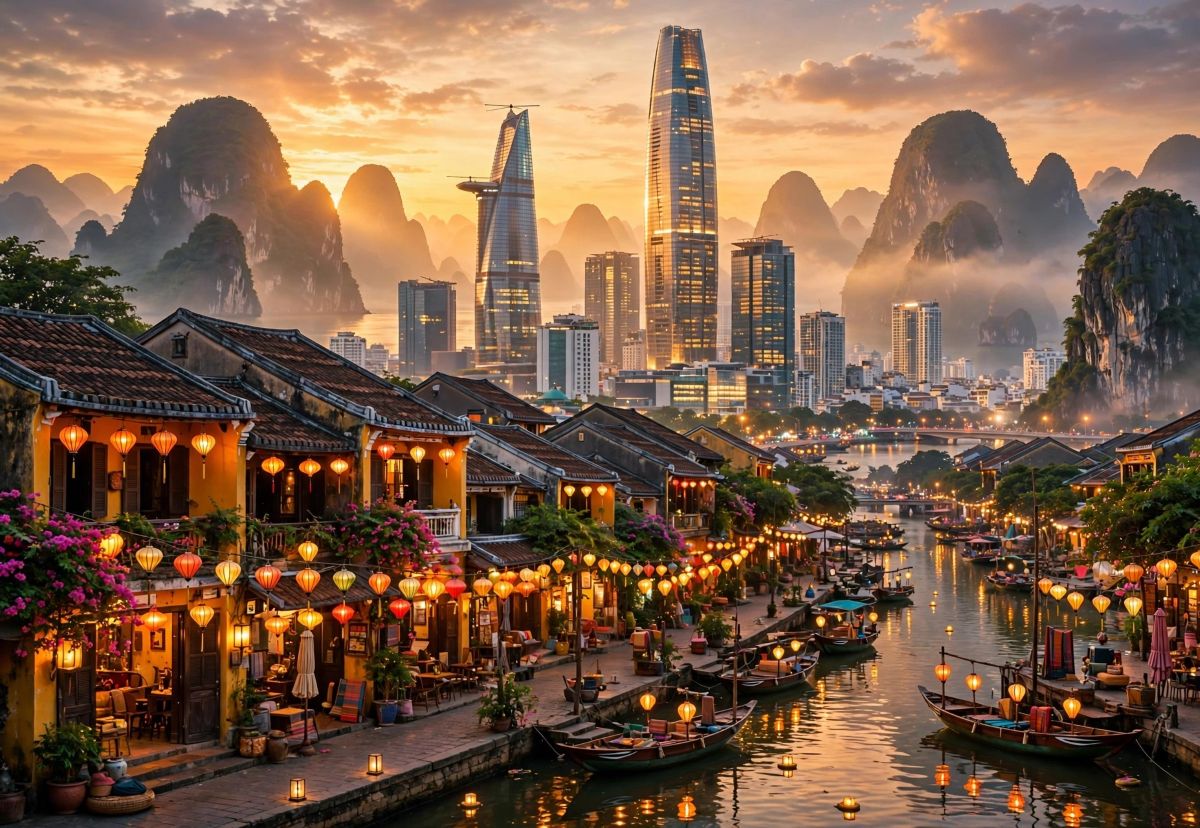
Image generated with Ai
Vietnam’s energy is hard to miss. Visitors explore the intensely busy streets of Ha Noi or take in the sunsets over Ha Long Bay. There’s a lot more of Vietnam’s charm beyond the tourist spots, but previously, the country’s real magic was often sacrificed, in their attempt to attract the most tourists by racing to fill the country’s transportation stations and getting tourists to their destinations in the quickest (often most crammed and time efficient) way. This is no longer the case. With the future in their sights, while the rest of the world focuses on packing travel and moving quickly, Vietnam is focused on slow travel and tourism. They are keeping travelers on site, offering travelers more opportunities to build their travel memories and creating extensive travel souvenirs to share on their return. Travelers enjoy the experiences they have, and this new travel policy helps travelers create and sustain those.
Re-engineering National Progress: Politburo Sets Sights on Making Tourism Key Economic Pillar Through High-Quality Sustainable Development
Advertisement
Advertisement
A major structural shift has occurred as the Politburo sets sights on making tourism key economic pillar across the entire territory of Vietnam. Central leadership formally declared that state policies will move away from chasing raw visitor volumes. Instead, future efforts will prioritize high-end service standards, eco-friendly practices, extended stays, and larger daily spending per guest. Consequently, public administration is transitioning toward an integrated service system. International tourists visiting Vietnam can expect modernized transport hubs, broadened visa-free entry, faster customs processing, and interconnected digital services nationwide.
Furthermore, this sweeping national strategy aims to position Vietnam as a leading destination within Southeast Asia before the decade ends. By implementing legal frameworks for green financing, tax-free retail, and waterfront development, the government expects massive financial returns. Meanwhile, global travelers will gain from seamless high-speed links connecting ancient cultural sites directly to luxury seaside resorts. This overall approach ensures visitors experience authentic regional heritage while supporting long-term economic stability.
Advertisement
Advertisement
Strategic Financial Benchmarks: Massive Macroeconomic Targets and Long-Term Projections
Advertisement
Advertisement
State financial projections indicate that the travel sector will contribute 10% to 12% of Vietnam’s gross domestic product by 2030. Looking further ahead to 2045, official forecasts show the industry generating 14% to 15% of national wealth, placing the country among the top 30 most competitive travel destinations globally. To reach these targets, planners aim to attract 45 million to 50 million international tourists alongside 160 million domestic vacationers by 2030, yielding annual revenues between $80 billion and $90 billion. By 2045, the country targets 70 million foreign arrivals annually.
To host these unprecedented arrival numbers, national mandates require building enough infrastructure to supply 1.5 million guest rooms by 2030. Additionally, this economic model forecasts generating 2.3 million direct jobs and 3.5 million indirect roles.
These economic targets represent a major overhaul of the regional hospitality market. Clear guidelines provide policy stability, reassuring real estate developers, foreign investors, and international transport operators. Global consumers will enjoy superior hospitality standards, modernized lodging choices, and faster transportation.
Unlocking Regional Growth Engines: Strategic Expansion Across Major Cultural and Coastal Hubs
Official policy focuses key development efforts on five core growth anchors: Ha Noi, Ho Chi Minh City, Da Nang, designated historic heritage cities, and tropical Phu Quoc Island. These primary hubs will serve as economic engines driving growth across 10 regional tourism centers and 20 specialized national tourism areas. Meanwhile, natural landmarks such as Ha Long Bay will receive upgraded environmental safeguards to preserve delicate ecosystems amidst growing international popularity.
Advertisement
Advertisement
For global travelers, this targeted investment strategy promises effortless journeys between bustling urban centers and quiet natural retreats. Specialized initiatives will introduce premium products, including luxury wellness programs, culinary tours, sports excursions, maritime cruises, and active night-time commercial districts in major cities. Visitors can spend their mornings exploring historic quarters and their evenings enjoying world-class dining and entertainment.
Driving Economic Transformations: Building Cutting-Edge Infrastructure and Nationwide Ecosystems
To support incoming global visitors, government authorities outlined physical infrastructure plans focused on multimodal transport networks. Funding will prioritize modernizing international airports, constructing high-speed rail lines, expanding deep-water sea ports, and building luxury marinas. These transit upgrades will link urban arrival hubs directly to remote eco-tourism reserves, minimizing travel times.
Simultaneously, state directives require establishing a unified digital network to support visitor services across every province. This centralized system will combine national tourist databases, interactive digital mapping tools, electronic ticketing platforms, and artificial intelligence models. These smart systems will monitor destination capacities, gather guest feedback, and coordinate emergency responses, creating a smooth journey for tech-savvy international travelers.
Expanding High-End Duty-Free Outlets and Shopping Tourism Infrastructure Across Strategic Travel Hubs
Advertisement
Advertisement
Vietnam is actively transforming its retail landscape by introducing comprehensive duty-free luxury ecosystems and financial incentives. This strategic move aims to elevate average tourist spending and position the nation as a premier retail destination in Southeast Asia. Central to this initiative is the implementation of streamlined value-added tax (VAT) refund mechanisms across qualifying luxury retail centers, international airports, land border crossings, and major seaports.
By building international-standard outlet malls and high-end duty-free complexes in major urban gateways such as Ha Noi, Ho Chi Minh City, and Da Nang, the country seeks to capture a larger share of high-yield international traveler expenditure. Shifting the market focus from high-volume, low-spending tour groups to affluent retail tourists will be instrumental in achieving the national goal of $80 billion to $90 billion in total travel revenues by 2030.
Establishing National Flagship Tourism Conglomerates and Corporate Enterprises for Global Competitiveness
To strengthen market positioning, government policy mandates a thorough restructuring of the domestic business landscape by fostering large-scale public and private travel enterprises. These flagship corporations are envisioned to manage multi-service destinations and compete effectively across international markets. The strategic target calls for establishing 15 large-scale tourism corporations possessing strong national brand identity and global competitiveness by 2030.
This corporate evolution marks a transition away from fragmented, small-scale operators toward unified business networks that seamlessly integrate aviation, lodging, transport logistics, and entertainment services. Furthermore, policy frameworks encourage strategic investors to spearhead multi-billion-dollar infrastructure developments and mega-resorts across designated growth regions, ensuring long-term operational resilience and consistent service quality.
Advertisement
Advertisement
Fostering Emerging Economic Models Including Night-Time Entertainment, Riverfront, and Coastal Economies
National development plans emphasize extending economic activities beyond daytime sightseeing through the establishment of vibrant 24-hour commercial districts, riverfront cultural corridors, and luxury marine transit hubs. Comprehensive legal frameworks will support the night-time economy, allowing regulated entertainment, dining, and shopping zones in Ha Noi, Ho Chi Minh City, and Da Nang to operate seamlessly into the late-night hours.
In parallel, specialized riverine and coastal economic corridors are being created along key waterways and island destinations, notably Phu Quoc Island and Ha Long Bay. Government frameworks also support sharing-economy models and integrated multi-purpose complexes that combine sports facilities, convention centers, live cultural performances, and licensed casino entertainment into unified resort ecosystems.
Accelerating Specialized High-Value Sectors: MICE, Medical Wellness, and Ecotourism Expansion
To encourage longer stays and increase visitor spend, policy guidelines prioritize high-yield niche segments such as business conventions, healthcare travel, and nature-based tourism. Infrastructure development heavily emphasizes the MICE (Meetings, Incentives, Conferences, and Exhibitions) sector, funding world-class convention and exhibition centers in primary regional growth hubs.
Advertisement
Advertisement
Additionally, the strategy encourages the development of medical, wellness, and therapeutic tourism programs that pair traditional health practices with modern luxury resort services. Nature-focused initiatives focus on expanding mountain ecotourism, luxury railway journeys, and marine eco-resorts, all governed by strict environmental carrying-capacity limits to safeguard vulnerable ecosystems.
Overhauling Labor Force Capacity to Build a World-Class Hospitality Workforce
Meeting international luxury service expectations requires a comprehensive overhaul of vocational education, digital capabilities, and language proficiency across the national labor force. National targets dictate scaling the industry workforce to 2.3 million direct employees and 3.5 million indirect auxiliary workers by 2030.
To achieve this workforce expansion, state programs provide specialized credit access, preferential training funds, and upskilling initiatives focused on service excellence, digital literacy, and foreign language skills. Professional hospitality certification frameworks are being standardized to match regional Southeast Asian and international quality benchmarks, ensuring seamless service execution across all customer touchpoints.
Institutionalizing Green Financial Mechanisms and Preferential Loans for Sustainable Projects
Advertisement
Advertisement
Transitioning toward low-carbon operations relies on unlocking public and private capital to fund eco-friendly hospitality infrastructure, renewable energy systems, and advanced waste management facilities. Financial institutions are establishing credit guarantees, interest-rate subsidies, and preferential loan programs specifically tailored for sustainable tourism initiatives.
The national Tourism Development Support Fund will play a direct role in financing green technology adoption and ecological preservation projects. Furthermore, policy mandates require circular economic models, modern solid waste and wastewater treatment systems, and strict zero-single-use-plastic policies across all 20 national tourism areas.
Modernizing National Border Governance and Visa Exemption Regimes for Key Source Markets
Streamlining entry and exit protocols remains essential for attracting high-spending, long-stay international travelers. State authorities are researching and executing expanded bilateral and unilateral visa waivers alongside flexible, multi-entry e-visa arrangements targeting prioritized global source markets.
To reduce processing delays at entry points, automated biometric border gates (e-gates) are being deployed across major international airports and seaports. These administrative and technological updates are specifically designed to extend average visitor stays well past traditional short-haul travel durations, maximizing total economic impact per arrival.
Advertisement
Advertisement
Deploying Artificial Intelligence and Big Data for Global Destination Marketing and Brand Building
National marketing strategies are undergoing a digital transformation, replacing traditional physical promotion with target-driven campaigns powered by big data and artificial intelligence. Central to this effort is a unified National Tourism Database and digital platform that incorporates real-time visitor analytics, digital ticketing, and automated AI travel assistants.
Promotion efforts will also deploy a network of digital tourism ambassadors while leveraging diplomatic missions abroad to execute targeted marketing campaigns in key global markets. Predictive AI tools will evaluate destination carrying capacities in real time, manage crisis communications, and safeguard the nation’s global reputation as a safe, high-quality travel destination.
The Final Verdict
These types of changes go beyond achieving targets for bookings and econometric estimates. They signify a nation crossing a new frontier. If you have had an affinity for Vietnam with its old-town streets lit by lanterns and the empty dawns of both Da Nang and Ho Chi Minh City, this is your opportunity to enjoy this country of yours at your own pace. There is no question that this country’s spirit will be retained with sustainability, culture and personal touch as the pillars of this growth. This country has a spirit that unites beauty and balance and ensures its eternity. The world will experience this country with a new sense of technology and infrastructure and feel this spirit of a warm and strong welcome that will stay with them forever.
Advertisement
